
How Oil and Gas Technology is Unlocking the Next Generation of Geothermal Energy
Techniques perfected during the shale boom, from horizontal drilling to hydraulic fracturing, are being repurposed to access near-limitless, 24/7 clean geothermal power.
By Factlen Editorial Team
- Geothermal Innovators
- Argue that adapting oil and gas technology is the key to unlocking scalable, 24/7 clean baseload power.
- Fossil Fuel Workforce
- Emphasize that the geothermal boom offers a seamless, high-paying transition for existing oil and gas workers without requiring retraining.
- Energy Researchers
- Focus on the vast gigawatt-scale potential of engineered reservoirs and the economic logic of repurposing abandoned infrastructure.
What's not represented
- · Environmental groups concerned about the water usage required for hydraulic fracturing in geothermal systems.
- · Local communities living near proposed EGS sites who may have concerns about induced seismicity.
Why this matters
Geothermal energy provides round-the-clock, weather-independent clean power, but it was historically limited to rare volcanic regions. By adapting existing oil and gas tools, the energy industry can now engineer this baseload power anywhere, utilizing the exact same workforce and infrastructure that powered the fossil fuel era.
Key points
- Geothermal energy is expanding beyond natural hot springs by using oil and gas drilling techniques.
- Enhanced Geothermal Systems (EGS) use horizontal drilling and fracturing to harvest heat from dry rock.
- The U.S. could unlock up to 90 gigawatts of clean, 24/7 geothermal power by 2050.
- Millions of abandoned oil wells are being evaluated for retrofitting into geothermal co-production sites.
- The transition requires almost no retraining for the existing oil and gas workforce.
The energy transition has long been framed as a battle between fossil fuels and renewables. But beneath the surface, a surprising and highly pragmatic alliance is forming.[7]
The ultimate clean energy source—geothermal—has historically been limited by geography. For decades, harnessing the Earth's subterranean heat required finding rare, naturally occurring hot springs or highly permeable rock formations near tectonic fault lines.[2]
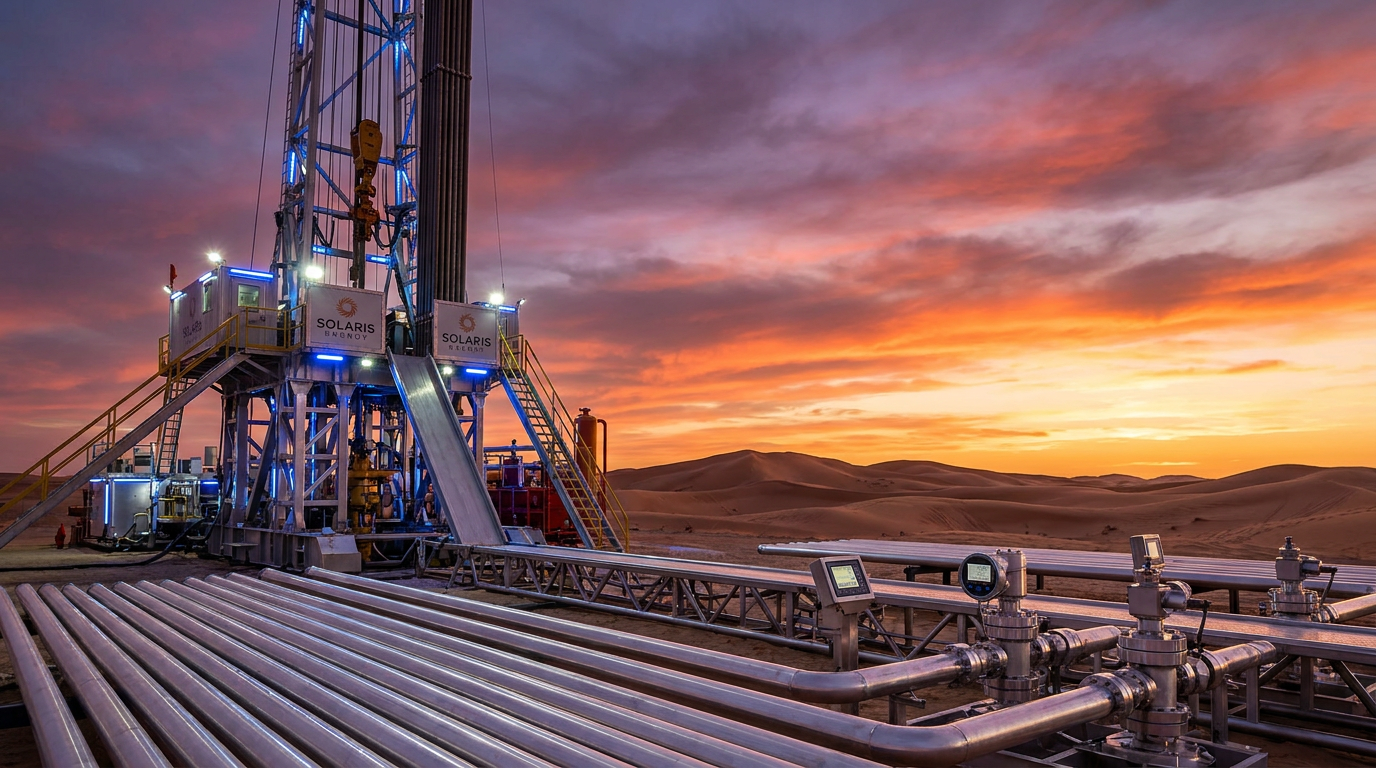
Enter the legacy of the shale boom. The exact technologies that unlocked vast reserves of oil and natural gas over the last twenty years—precision horizontal drilling, hydraulic fracturing, and fiber-optic subsurface sensing—are now being deployed to engineer geothermal reservoirs almost anywhere on Earth.[1]
This breakthrough is known as Enhanced Geothermal Systems (EGS). Companies like Fervo Energy are leading the charge, utilizing heavy-duty oilfield equipment to drill vertically for thousands of feet before turning the drill bit 90 degrees to bore horizontally through solid, scorching-hot granite.[1]
Once the horizontal wellbore is established, operators use high-pressure fluid to create microscopic fractures in the rock, a technique directly adapted from shale extraction. But instead of extracting hydrocarbons, they circulate water through these artificial fractures to absorb the Earth's immense, naturally occurring heat.[1]

The superheated water is then pumped back to the surface, where it drives turbines to generate zero-emission electricity. Because the water is reinjected in a closed loop, the system produces continuous, 24/7 baseload power without the emissions associated with fossil fuels.[3]
The U.S. Department of Energy's Utah FORGE laboratory has been instrumental in testing and validating these methods. By providing a dedicated field site for researchers to experiment with oil and gas tools in hot granite, the lab has proven that EGS can work safely and efficiently at a commercial scale.[3]
The potential scale of this technological crossover is staggering. The U.S. Energy Information Administration projects that advances in EGS could unlock up to 90 gigawatts of economically viable geothermal capacity nationwide by 2050—enough to power tens of millions of homes continuously.[2]

The potential scale of this technological crossover is staggering.
The timeline for this expansion is already underway. Fervo Energy's Cape Station project in Utah is set to become the first large-scale commercial EGS generator in the United States, with its initial 53-megawatt phase coming online in mid-2026.[2]
Beyond drilling new wells, the industry is also looking at its massive inventory of existing, aging infrastructure. The United States alone is home to between two and three million abandoned or disused oil and gas wells, many of which are considered environmental liabilities.[4]
Toward the end of their productive lives, many of these aging wells produce a fluid mixture that is 98 percent hot water and only 2 percent oil. Startups like Gradient Geothermal are retrofitting these sites, transforming them into co-production facilities that harvest thermal energy from the briny water before it is disposed of.[4]
Repurposing existing wells sidesteps the massive capital expenditure of drilling from scratch, which is traditionally the most expensive part of any geothermal project. It also provides a financial incentive for operators to properly manage and eventually plug aging infrastructure, mitigating the risk of fugitive methane emissions.[4]

Academic institutions are exploring how this concept can scale globally. Researchers at Heriot-Watt University in Scotland are currently investigating how offshore infrastructure in the North Sea could be repurposed, potentially turning depleted hydrocarbon reservoirs into massive geothermal batteries for Europe.[5]
Perhaps the most profound shift, however, is happening within the workforce. The transition to geothermal energy requires almost zero retraining for the men and women who have spent their careers in the oil and gas sector.[6]
Roughnecks, petroleum engineers, geologists, and drill operators already possess the exact skills needed to scale EGS. According to industry advocates at Geothermal Rising, over 300,000 current fossil fuel workers have directly transferable expertise, offering a seamless and equitable transition into the green energy economy.[6]

Challenges certainly remain. EGS projects require immense upfront capital, and navigating the complex regulatory frameworks originally designed for traditional oil extraction can significantly slow down geothermal permitting and deployment.[5]
Additionally, reservoir engineers must carefully manage the thermal decline of these engineered systems over decades, ensuring that the underground rock does not cool faster than the Earth's core can reheat it.[1]
Yet, the momentum is undeniable. By leveraging the hard-won innovations, infrastructure, and human capital of the oil patch, the world is unlocking a renewable energy source that runs rain or shine—proving that the path to a clean energy future might just be paved by the fossil fuel industry itself.[7]
How we got here
2000s–2010s
The shale boom perfects horizontal drilling and hydraulic fracturing for oil and gas extraction.
2021
Fervo Energy launches Project Red in Nevada, applying oilfield tech to geothermal energy.
2023
The U.S. Department of Energy funds the Utah FORGE laboratory to test EGS technologies in hot granite.
June 2026
Fervo Energy's Cape Station in Utah is scheduled to bring its first 53-megawatt EGS phase online.
2050
The EIA projects that EGS could provide up to 90 gigawatts of clean baseload power to the U.S. grid.
Viewpoints in depth
The Innovators' View
Argue that adapting oil and gas technology is the key to unlocking scalable, 24/7 clean baseload power.
Geothermal startups and engineering firms view the legacy of the shale boom not as an environmental liability, but as a massive technological head start. By taking tools that cost billions of dollars to perfect—such as polycrystalline diamond drill bits and fiber-optic downhole sensors—and applying them to hot rock, these innovators believe they have solved the clean energy trilemma. They argue that EGS is the only renewable resource capable of providing the reliable, round-the-clock baseload power needed to replace coal and natural gas plants without relying on massive battery storage.
The Workforce Perspective
Emphasize that the geothermal boom offers a seamless, high-paying transition for existing oil and gas workers without requiring retraining.
For labor advocates and industry groups like Geothermal Rising, the rise of EGS represents a lifeline for communities historically dependent on fossil fuel extraction. Unlike the transition to solar or wind—which often requires entirely different skill sets—geothermal development relies on the exact same roughnecks, derrickhands, and reservoir engineers who currently staff oil rigs. This perspective champions geothermal as the most equitable path forward in the energy transition, ensuring that highly skilled workers are not left behind as the world decarbonizes.
The Research & Grid Outlook
Focus on the vast gigawatt-scale potential of engineered reservoirs and the economic logic of repurposing abandoned infrastructure.
Government agencies and academic researchers focus on the macroeconomic and grid-level impacts of widespread geothermal adoption. Institutions like the U.S. Energy Information Administration and Heriot-Watt University highlight the sheer volume of untapped energy beneath our feet, projecting that EGS could eventually supply tens of gigawatts of power. Furthermore, researchers emphasize the dual benefit of retrofitting abandoned oil wells: it drastically lowers the capital expenditure required to generate clean electricity while simultaneously providing a financial mechanism to safely plug wells that might otherwise leak methane into the atmosphere.
What we don't know
- How quickly regulatory bodies will adapt oil and gas permitting rules to accommodate the rapid deployment of geothermal wells.
- The long-term thermal decline rate of engineered reservoirs over a 30-to-50-year lifespan.
- Whether the economic incentives for retrofitting abandoned wells will be strong enough to scale without additional government subsidies.
Key terms
- Enhanced Geothermal Systems (EGS)
- Man-made underground reservoirs created by injecting fluid into hot, impermeable rock to create fractures, allowing water to circulate and harvest heat.
- Horizontal Drilling
- A technique where a well is drilled vertically to a certain depth and then steered horizontally to expose more of the rock formation to the wellbore.
- Baseload Power
- The minimum amount of electric power needed to be supplied to the electrical grid at any given time, requiring energy sources that run continuously, 24/7.
- Co-production
- The simultaneous extraction of two resources from a single well, such as harvesting geothermal heat from the hot wastewater produced by an aging oil well.
Frequently asked
What is an Enhanced Geothermal System (EGS)?
EGS is a man-made geothermal reservoir created by drilling into hot, dry rock and injecting fluid to create fractures. This allows water to circulate and absorb heat in areas where natural hot springs don't exist.
Can old oil wells really produce electricity?
Yes. Many aging oil wells produce a mixture that is mostly hot water. By retrofitting the wellhead, companies can extract the thermal energy from this water to generate power before the water is disposed of.
Do oil and gas workers need to be retrained for geothermal?
In most cases, no. The skills required for geothermal exploration—such as directional drilling, reservoir engineering, and geology—are identical to those used in the oil and gas industry.
Sources
Source coverage
7 outlets
3 viewpoints surfaced







[1]Fervo EnergyGeothermal Innovators
Fervo Energy: Leveraging Innovation in Geoscience
Read on Fervo Energy →[2]U.S. Energy Information AdministrationEnergy Researchers
Enhanced geothermal systems could expand U.S. renewable energy capacity
Read on U.S. Energy Information Administration →[3]Utah FORGEGeothermal Innovators
Utah FORGE: Advancing Enhanced Geothermal Systems
Read on Utah FORGE →[4]Climate Adaptation PlatformGeothermal Innovators
Repurposing Disused Oil Wells for Geothermal Energy
Read on Climate Adaptation Platform →[5]Heriot-Watt UniversityEnergy Researchers
Repurposing oil and gas wells for geothermal energy
Read on Heriot-Watt University →[6]Geothermal RisingFossil Fuel Workforce
Geothermal Energy and the Oil & Gas Sector: A Path to Transition
Read on Geothermal Rising →[7]Factlen Editorial Team
Synthesis by Factlen editorial team
Read on Factlen Editorial Team →
Every angle. Every day.
Get energy stories with full source coverage and perspective breakdowns delivered to your inbox.