
Nebojsa Simić's Triumphant Return Highlights Handball's Grueling Injury Landscape
As the European handball season reaches its climax, MT Melsungen goalkeeper Nebojsa Simić's return from a devastating 10-month knee injury underscores the sport's physical toll. Amid high-profile absences across major clubs, new sports science research is shedding light on the long road back from severe joint reconstruction.

Share this story
The European handball season is reaching its zenith with the continental club finals, but the defining narrative of the 2025-2026 campaign is as much about who is on the court as who is missing. Handball remains one of the world's most physically demanding sports, and the sheer attrition rate this year has tested the depth of every major club and national team. Yet, amid the grueling schedule, the season has also delivered remarkable stories of resilience and medical triumph.
The emotional centerpiece of the European club finals is the return of Nebojsa Simić. In April 2025, the MT Melsungen and Montenegro goalkeeper suffered a catastrophic knee injury, tearing all his ligaments and both menisci. The initial prognosis was grim, requiring a surgery that lasted over two hours and a grueling rehabilitation process that kept him sidelined for ten months.
Simić's return to the court in early 2026 was nothing short of a medical marvel. He steadily reclaimed his form, ultimately helping MT Melsungen navigate a difficult European League campaign to secure their spot at the Winamax EHF Finals in Hamburg. For a player who admitted his knee will never feel exactly as it did before, the comeback highlights the sheer willpower required to survive at the sport's highest level.
The science behind such recoveries underscores just how difficult Simić's journey was. A May 2026 study published in the Journal of Human Sport and Exercise tracked elite handball players returning from anterior cruciate ligament (ACL) reconstruction. The researchers found that athletes often suffer from persistent neuromuscular deficits and strength asymmetries for up to 24 months after being cleared to play.[2]
These lingering deficits make the return to the court highly precarious. The study recorded an alarming 35.3 percent reinjury rate among the monitored elite players, with most setbacks occurring within the first six months of their return. The data paints a stark picture of the risks inherent in a sport defined by explosive lateral movements, sudden stops, and high-impact mid-air collisions.[2]
For those who cannot make it back in time, injuries have dramatically reshaped the competitive landscape. During the Machineseeker EHF Champions League quarter-finals, Hungarian powerhouse Veszprém saw their fortunes turn when star centre back Luka Cindrić went down with an injury. The loss of their primary playmaker shifted the momentum, allowing Füchse Berlin to erase a deficit and punch their ticket to the FINAL4 in Cologne.
The international stage has been equally unforgiving. Ahead of the Men's EHF EURO 2026, the French national team suffered a devastating blow when Nedim Remili—the reigning MVP of the 2024 tournament—was ruled out. Remili experienced severe calf pain during his rehabilitation for a separate thigh issue, and an urgent scan revealed an acute injury that forced him off the squad just days before the tournament began in Oslo.[1]
Norway faced a nearly identical crisis when star right back Harald Reinkind sustained a tear in the connective tissue under his foot. Medical examinations confirmed that only prolonged rest could heal the tissue, ruling the veteran out of the European Championship and forcing the Norwegian side to rely on a vastly inexperienced backcourt pairing.
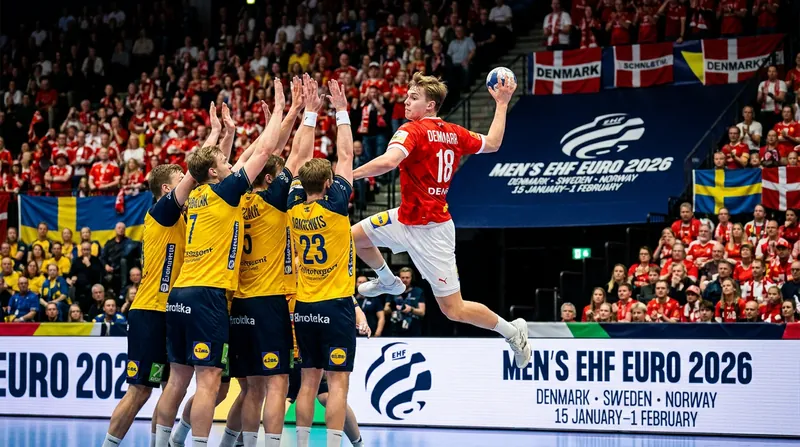
Perhaps no team endured a more bizarre injury crisis than Denmark during their run to the EURO final. The Danish squad began the tournament with a deep rotation of line players, but a staggering wave of attrition decimated the position. Lukas Jorgensen was lost to a severe cruciate ligament injury, Emil Bergholt suffered a tournament-ending foot injury, and replacement Andreas Magaard was sidelined by severe knee problems shortly after arriving.
With the physical toll mounting across both club and international calendars, the sports medicine community is pushing for systemic changes. A recent editorial in Medical Research Archives emphasized the urgent need to improve player compliance with preventative routines, particularly for shoulder injuries, which remain ubiquitous in the sport.[3]
Researchers noted that while effective prevention programs exist, players frequently skip them due to a perceived lack of time or motivation. To combat this, sports scientists are now urging coaching staffs to integrate behavioral skills training and to directly link preventative exercises to highly valued performance metrics, such as throwing velocity, to ensure athletes buy into the regimens.[3]
As the final trophies of the European season are lifted, the loudest applause will be reserved for the champions. But the quiet victories belong to the training rooms—to players like Simić who fought their way back from the brink, and to the medical staffs working tirelessly to keep the world's best athletes on the floor.
Key points
- MT Melsungen goalkeeper Nebojsa Simić has returned to the court after a 10-month absence following a devastating knee injury.
- A new 2026 study reveals that elite handball players often suffer from persistent neuromuscular deficits for up to two years after ACL reconstruction.
- The grueling 2025-2026 season saw major stars like Nedim Remili and Harald Reinkind miss crucial international tournaments due to injury.
- Sports scientists are urging clubs to better integrate injury prevention routines by linking them directly to performance metrics.
How we got here
April 2025
MT Melsungen goalkeeper Nebojsa Simić suffers a catastrophic knee injury, tearing all ligaments and both menisci.
January 2026
Major stars including France's Nedim Remili and Norway's Harald Reinkind are ruled out of the EHF EURO due to severe injuries.
February 2026
After 10 months of grueling rehabilitation, Simić makes his triumphant return to the court.
May 2026
New sports science research reveals that neuromuscular deficits can persist for up to 24 months post-ACL reconstruction in elite handball players.
- Medical & Sports Science Community
- Researchers and team doctors pushing for data-driven recovery and better prevention.
- National & Club Management
- Coaches and executives forced to manage depleted squads and tactical crises.
- Rehabilitating Athletes
- Players navigating the grueling physical and psychological toll of long-term recovery.
Perspectives this story doesn't cover
- Grassroots youth coaches managing injury prevention
- Insurance providers for elite sports clubs
Sources
Source coverage
3 outlets
3 viewpoints surfaced



- [1]Handball PlanetNational & Club Management
Huge shock for France ahead of EHF EURO 2026: Nedim Remili ruled out with injury
Read on Handball Planet → - [2]Journal of Human Sport and ExerciseMedical & Sports Science Community
Persistent neuromuscular deficits and injury risk after return to play: A 24-month prospective follow-up in elite handball players following ACL reconstruction
Read on Journal of Human Sport and Exercise → - [3]Medical Research ArchivesMedical & Sports Science Community
Improving compliance with shoulder injury prevention programs in handball
Read on Medical Research Archives →
More in Sports
See all →Injury
Global Handball Medical Desk: New Surveillance Project Launches as Stars Target 2026 Returns
5 sources
Standings
Germany and Argentina Claim Historic Triple Crowns as 2026 Beach Handball World Championship Concludes
5 sources
Injury
Global Handball Injury Desk: Vlah and Bánhidi Headline Summer Returns Ahead of Expanded Champions League
2 sources
Standings
Elite Eight Emerge at Men's 20 EHF EURO 2026 as World Championship Berths Are Clinched
3 sources
Comments
Every angle. Every day.
Get Sports stories with full source coverage and perspective breakdowns, free every day.