
The 80% Rule is Changing: How to Maximize Your EV Battery Lifespan
Modern electric vehicle batteries are degrading far slower than early estimates predicted, but maximizing their lifespan requires understanding your specific battery chemistry and unlearning the habits of the gasoline era.
By Factlen Editorial Team
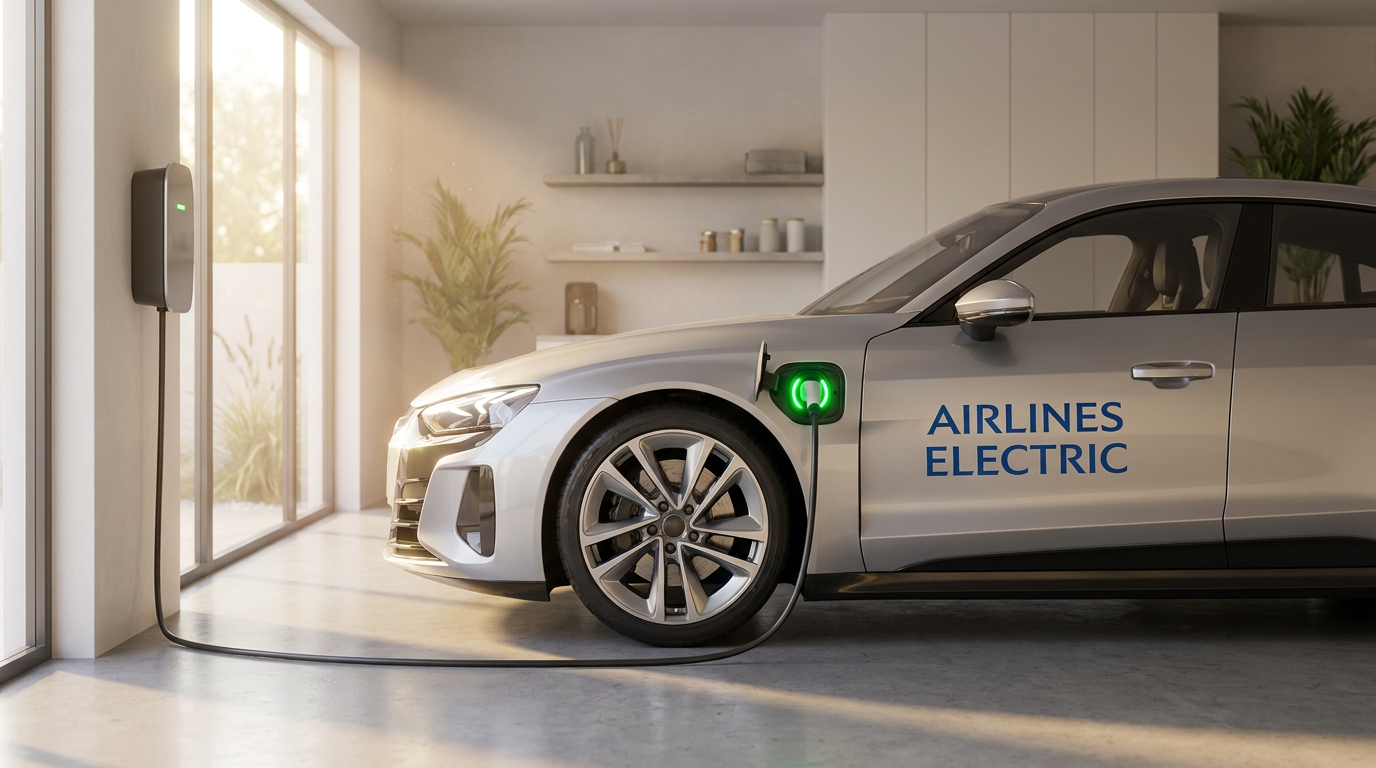
- Battery Chemists & Engineers
- Focuses on the chemical differences between cell structures and the critical importance of thermal management in preventing degradation.
- Consumer Advocates
- Emphasizes the total cost of ownership, pushing back against the myth that EVs are disposable by highlighting long-term maintenance savings.
- Automotive Journalists
- Translates complex engineering guidelines into practical, everyday charging habits for the average driver.
- Independent Analysts
- Synthesizes fleet data and manufacturer guidance to provide a definitive, evidence-based view on EV longevity.
What's not represented
- · Used EV Dealerships
- · Grid Operators managing overnight charging loads
Why this matters
Replacing an EV battery out of pocket can cost upwards of $15,000, making battery health the single most critical factor in electric vehicle ownership. Understanding your specific battery chemistry and adopting simple charging habits can extend your vehicle's lifespan by hundreds of thousands of miles.
Key points
- Modern EV batteries degrade at an average rate of just 1.8% per year, meaning most will outlast the vehicle itself.
- The '80% charging rule' only applies to NMC batteries; newer LFP batteries actually require frequent 100% charges.
- Extreme heat combined with a high state of charge is the leading cause of premature battery degradation.
- Consumer Reports data shows EVs cost roughly 50% less to maintain over their lifetime compared to gas cars.
- Level 2 home charging is the best method for preserving battery health, while frequent DC fast charging should be avoided.
The transition from internal combustion engines to electric vehicles fundamentally changes the nature of automotive maintenance. Gone are the days of oil changes, spark plug replacements, and transmission fluid flushes. In their place is a singular, high-stakes focus: the health of the high-voltage lithium-ion battery pack.[4][6]
For years, the looming threat of a $10,000 to $15,000 battery replacement has been the primary source of anxiety for prospective EV buyers. The fear that an electric car might become a disposable appliance after a decade has fueled skepticism and kept many drivers tethered to the gas pump.[3][6]
However, a massive influx of real-world data in 2026 paints a vastly more optimistic picture. According to a comprehensive fleet study by Geotab analyzing thousands of vehicles, the average modern EV battery degrades at a rate of just 1.8% per year.[2]
At that microscopic rate of decay, a standard EV battery is mathematically projected to outlast the usable life of the vehicle's chassis, easily providing 15 to 20 years of reliable service before dropping to a heavily compromised range.[2]
This longevity translates directly into financial savings. Consumer Reports data confirms that battery electric vehicles (BEVs) cost roughly 50% less to maintain and repair over a 200,000-mile lifetime compared to their gas-powered counterparts.[1]

But achieving this maximum lifespan requires owners to unlearn the "fill it up" mentality of the gasoline era. The most critical factor in EV maintenance is understanding that not all batteries are created equal, and the rules of charging depend entirely on the chemistry hidden beneath the floorboards.[3][4]
The automotive industry currently relies on two dominant battery chemistries: Nickel Manganese Cobalt (NMC) and Lithium Iron Phosphate (LFP). According to industry surveys, a staggering majority of drivers do not know which chemistry powers their vehicle, leading to habits that can inadvertently accelerate degradation.[3]
NMC batteries, found in long-range vehicles from manufacturers like Rivian, BMW, and Tesla's Long Range models, are prized for their high energy density. They pack more power into a smaller, lighter footprint, making them the undisputed kings of highway range.[3][5]
NMC batteries, found in long-range vehicles from manufacturers like Rivian, BMW, and Tesla's Long Range models, are prized for their high energy density.
However, NMC chemistry is highly sensitive to high voltage. Routinely charging an NMC battery to 100% and leaving it parked causes chemical stress that accelerates capacity loss. For these vehicles, the golden rule of EV ownership remains absolute: set the daily charge limit to 80%, reserving a full charge only for long road trips.[3][4][5]
Conversely, LFP batteries—increasingly standard in entry-level models from Tesla, BYD, and Ford—operate under entirely different rules. LFP cells are heavier and slightly less energy-dense, but they are incredibly robust and thermally stable.[3]
In fact, automakers explicitly instruct LFP owners to charge their vehicles to 100% at least once a week, and often daily. This full charge is necessary for the vehicle's Battery Management System (BMS) to accurately calibrate the remaining range. Applying the "80% rule" to an LFP battery is not only unnecessary, but it can also confuse the car's software.[3]

Beyond chemistry, the universal enemy of all lithium-ion batteries is extreme heat. Calendar aging—the natural degradation of battery cells over time—doubles when a battery sits at a high state of charge in temperatures exceeding 86°F (30°C).[3][4]
Parking a fully charged EV on hot asphalt in the middle of summer is the equivalent of redlining a cold gas engine. To mitigate this, experts recommend parking in the shade or a garage whenever possible, and leaving the vehicle plugged in so the thermal management system can draw grid power to actively cool the pack.[4][5]
Cold weather, while notorious for temporarily slashing driving range by up to 30%, is actually less destructive to the long-term chemical health of the battery. The primary risk in winter is charging a freezing battery too quickly, which is why modern EVs automatically "pre-condition" or warm the battery before initiating a high-speed charge.[4][5]

The method of charging also plays a pivotal role in longevity. DC Fast Chargers are incredibly convenient for road trips, but they force massive amounts of electricity into the pack, generating significant heat. Relying on fast chargers for daily use will demonstrably shorten a battery's lifespan.[2][4]
The gold standard for battery health is Level 2 AC charging at home. This slower, gentler method keeps thermal stress to a minimum and allows the BMS to carefully balance the voltage across thousands of individual cells overnight.[2][4]
Ultimately, the burden of battery maintenance is increasingly shifting from the driver to the vehicle's software. Advanced Battery Management Systems act as the brain of the EV, constantly adjusting charging curves, managing liquid cooling loops, and protecting the cells from user error.[5][6]

With over-the-air updates continuously refining these algorithms, the modern electric vehicle is designed to idiot-proof its own longevity. By simply plugging in at home, respecting the chemistry's charge limits, and letting the software do the heavy lifting, drivers can ensure their battery easily outlives the car it powers.[5][7]
How we got here
2010s
Early EVs rely on passive air cooling, leading to rapid battery degradation in hot climates and fueling consumer anxiety.
2019
Industry data shows average annual battery degradation at 2.3%, prompting manufacturers to invest heavily in liquid thermal management.
2021
Automakers begin a massive shift toward LFP chemistry for standard-range models, fundamentally changing the rules of daily charging.
2024
Large-scale fleet studies reveal that modern liquid-cooled batteries degrade at just 1.8% annually, mathematically outlasting the vehicle chassis.
2026
Advanced Battery Management Systems and over-the-air updates largely automate battery health, shifting the focus from user habits to software optimization.
Viewpoints in depth
Battery Chemists & Engineers
Focuses on the chemical differences between LFP and NMC, and why heat is the ultimate enemy of lithium-ion structures.
From an engineering perspective, battery degradation is a battle against thermodynamics and chemical stress. Engineers emphasize that while NMC cells offer superior energy density for long-range driving, their chemical structure becomes unstable when held at maximum voltage, leading to micro-cracking in the cathode. Conversely, the iron-phosphate bonds in LFP batteries are incredibly stable, allowing them to endure 100% charges without the same structural fatigue. Across both chemistries, engineers point to heat as the universal catalyst for degradation, which is why modern liquid cooling systems are considered the most critical component of an EV's powertrain.
Consumer Advocates
Focuses on the total cost of ownership and pushing back against the myth that EVs are disposable.
Consumer advocacy groups look at the data through the lens of long-term financial impact. For years, the narrative that an EV would require a $15,000 battery replacement at year ten kept budget-conscious buyers away. Advocates now point to massive fleet studies showing 1.8% annual degradation as proof that this fear is largely unfounded. They highlight that when factoring in the elimination of oil changes, transmission repairs, and exhaust system maintenance, EVs offer a 50% reduction in lifetime maintenance costs, making them a significantly better long-term investment than internal combustion vehicles.
Automakers
Focuses on the role of software in idiot-proofing the charging experience and protecting warranty liabilities.
For manufacturers, battery health is a massive financial liability due to federally mandated 8-year/100,000-mile warranties. To protect themselves, automakers have turned to software. They emphasize the role of the Battery Management System (BMS), which actively prevents drivers from ruining their own cars. The BMS limits charging speeds when the battery is too hot or too cold, hides a portion of the battery's true capacity as an unusable 'buffer,' and uses over-the-air updates to refine thermal management algorithms long after the car has left the dealership lot.
What we don't know
- How the next generation of ultra-fast 350kW+ chargers will impact long-term battery health over a 10-year period.
- Whether solid-state batteries, currently in late-stage development, will render current charging rules obsolete by the end of the decade.
Key terms
- LFP (Lithium Iron Phosphate)
- A highly durable battery chemistry that handles 100% charges well and offers a massive cycle life, though it is slightly heavier.
- NMC (Nickel Manganese Cobalt)
- An energy-dense battery chemistry ideal for long-range driving, but which degrades faster if routinely charged past 80%.
- BMS (Battery Management System)
- The vehicle's onboard computer that monitors cell temperatures, balances voltage, and protects the battery from extreme stress.
- State of Charge (SoC)
- The current energy level of the battery, expressed as a percentage from 0% (empty) to 100% (full).
- Calendar Aging
- The natural degradation of battery cells over time, which accelerates dramatically when exposed to high heat and high voltage.
- Pre-conditioning
- A software feature that uses grid or battery power to warm the cells to an optimal temperature before initiating a high-speed DC fast charge.
Frequently asked
Should I charge my EV to 100% every night?
It depends entirely on your battery chemistry. LFP batteries require frequent 100% charges to calibrate the software, while NMC batteries should be capped at 80% for daily use to prevent premature degradation.
Does fast charging ruin the battery?
Frequent use of DC fast chargers generates excessive heat that can accelerate capacity loss over time. For optimal longevity, experts recommend using Level 2 home chargers for daily needs and reserving fast chargers for road trips.
How long will an EV battery actually last?
Modern liquid-cooled EV batteries degrade at an average rate of just 1.8% per year. At this rate, the battery pack is projected to last 15 to 20 years, often outliving the mechanical components of the vehicle itself.
What happens if my battery fails early?
Federal law mandates that all EV batteries are warrantied for a minimum of 8 years or 100,000 miles. If the battery's capacity drops below a certain threshold (usually 70% to 75%) during this period, the manufacturer will replace or repair it free of charge.
Sources
Source coverage
7 outlets
4 viewpoints surfaced







[1]Consumer ReportsConsumer Advocates
Comparing Fuel and Maintenance Costs of Electric and Gas-Powered Vehicles
Read on Consumer Reports →[2]GeotabBattery Chemists & Engineers
EV battery health: What 10,000 vehicles tell us about battery degradation
Read on Geotab →[3]MotorWattAutomotive Journalists
LFP vs. NMC: Why the 80% Charging Rule is Dead for Half of New EVs
Read on MotorWatt →[4]Kelley Blue BookAutomotive Journalists
EV Battery Health: The Essential Guide
Read on Kelley Blue Book →[5]ChevroletBattery Chemists & Engineers
How to take care of your electric vehicle (EV) battery
Read on Chevrolet →[6]JalopnikAutomotive Journalists
Growing pains for EVs, tech pains for all cars
Read on Jalopnik →[7]Factlen Editorial TeamIndependent Analysts
Synthesis by Factlen editorial team
Read on Factlen Editorial Team →

Every angle. Every day.
Get automotive stories with full source coverage and perspective breakdowns delivered to your inbox.