
IFSC World Cup Injury Report: Top Climbers Return to the Wall After Grueling Recoveries
As the 2026 IFSC World Cup season heats up, several elite climbers are making triumphant returns from major injuries, highlighting the intense physical toll of modern competition climbing and the resilience required to stay on top.
By Factlen Editorial Team
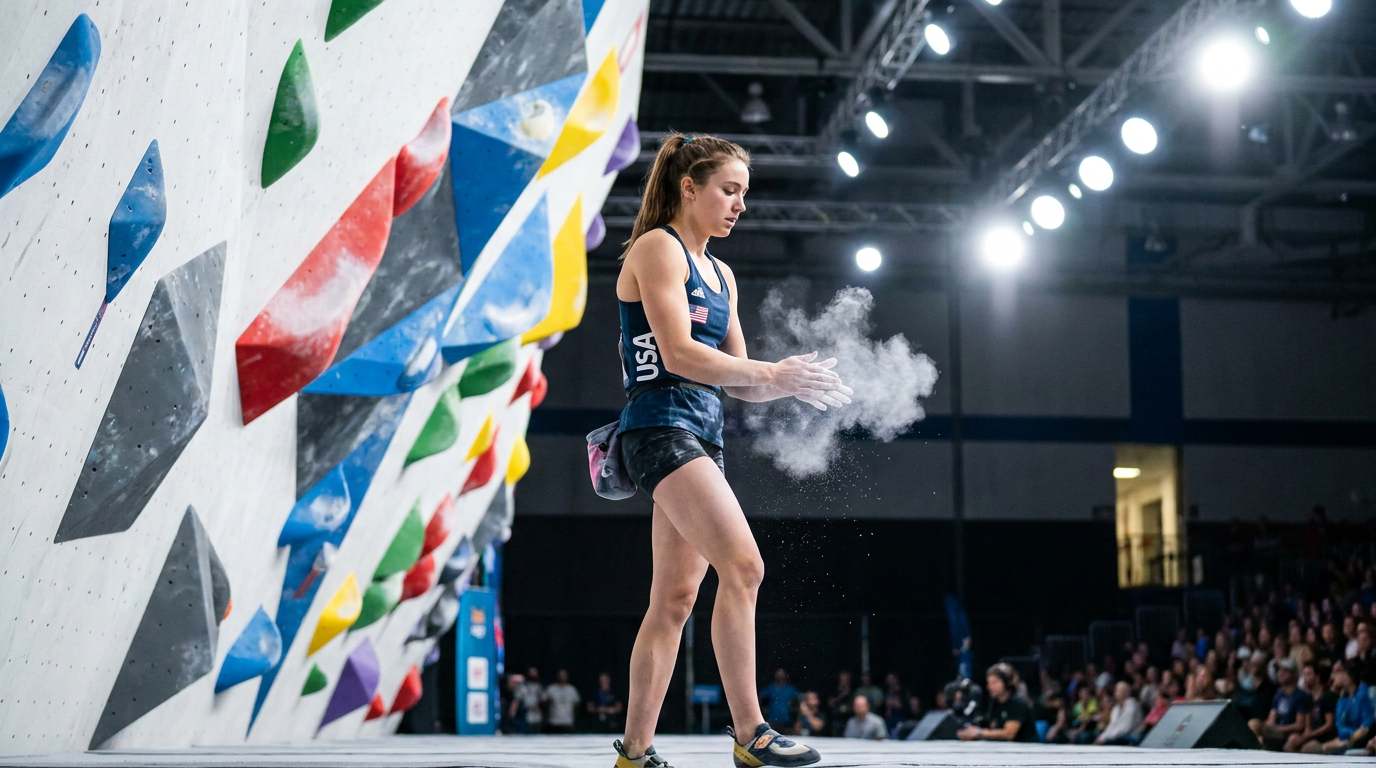
- Recovering Athletes
- Emphasize the mental battle of trusting injured joints again and the frustration of missing major competitions.
- Medical & Coaching Staff
- Focus on load management, adapting training around injuries, and the necessity of skipping events to prevent long-term damage.
- Veterans & Champions
- View injuries as inevitable learning opportunities that ultimately build mental resilience and tactical patience.
What's not represented
- · Routesetters who design the dynamic boulders
- · Fans and spectators attending events without their local heroes
Why this matters
As competition climbing pushes the boundaries of human athleticism, the physical toll on athletes has never been higher. Understanding how elite climbers navigate and recover from severe injuries highlights the crucial role of sports medicine and mental resilience in modern athletics.
Key points
- American star Natalia Grossman has successfully returned to the World Cup circuit after a grueling six-month recovery from a torn ACL and meniscus.
- Melina Costanza is competing in a full slate of Boulder World Cups for the first time since 2022 after overcoming knee issues.
- Austrian lead specialist Jessica Pilz was forced to skip her home World Cup in Innsbruck last season due to severe finger inflammation.
- Janja Garnbret credits her recovery from a 2023 broken toe for building the mental resilience needed to overcome future injury scares.
- National climbing teams are increasingly prioritizing load management and preventative physiotherapy to protect athletes' long-term health.
As the 2026 IFSC World Cup season kicks into high gear, the competition circuit is celebrating the return of several elite athletes who spent the past year battling severe injuries. The modern climbing calendar is notoriously grueling, demanding peak physical performance across multiple continents in a compressed timeframe.
The most triumphant return of the current cycle belongs to American star Natalia Grossman. In February 2025, Grossman sustained a torn ACL and meniscus in her left knee during a routine training session, a devastating blow that forced her off the wall and into the operating room.[1]
Grossman underwent surgery and committed to a grueling six-month rehabilitation process. Documenting her journey with a "smile and fight" mantra, she slowly rebuilt her strength before returning to competition late last year, winning gold at the North American Cup and proving she was ready for the 2026 World Cup circuit.[1]
Lower-body injuries like Grossman's are becoming increasingly common as competition bouldering evolves. Modern routesetting heavily favors "parkour-style" run-and-jumps and aggressive drop-knees, placing immense rotational and impact stress on the joints.[1]

Grossman admitted she was highly apprehensive about a massive run-and-jump move in her first competition back—a dynamic sequence she hadn't attempted in over half a year due to her recovering knee.[1]
Fellow American Melina Costanza is also making a full return to the World Cup boulder circuit in 2026 after battling her own knee issues last season.[3]
Costanza noted that the 2026 season marks her first time competing in a full slate of Boulder World Cups since 2022. "I had injured my knee last season, and this year I haven't had any knee issues so far… so I'm feeling healthy and excited," she reported ahead of the season opener in Keqiao.[3]
Costanza noted that the 2026 season marks her first time competing in a full slate of Boulder World Cups since 2022.
While lower-body injuries are rising in bouldering, traditional finger and tendon injuries continue to plague the lead climbing specialists. Austrian Olympic bronze medalist Jessica Pilz was forced to withdraw from her home World Cup in Innsbruck last season due to severe finger inflammation.[2]

Pilz noted that the aggressive holds and heavy crimps set on the Innsbruck wall would have been too risky for her recovering finger. "It hurts when people buy tickets just to see you climb and then you can't be there," she explained, highlighting the emotional toll of sitting out a major event.[2]
Canadian climber Madison Richardson faced a different soft-tissue nightmare: a torn hamstring sustained while sprinting. Richardson noted that hamstrings are "stubborn muscles" that completely derailed her training momentum just weeks before the World Cup season began.[6]
Richardson's recovery required a complete overhaul of her training program. She shifted to low-angle spray walls and careful slab sessions to maintain her technique without overloading the healing tendon, a testament to the creative adaptations required by professional climbers.[6]
Even the sport's most dominant force, Slovenia's Janja Garnbret, has had to learn how to navigate the mental and physical hurdles of injury. Garnbret suffered a fractured big toe in 2023, her first major career injury, which forced her to skip multiple World Cups.[4][5]

Garnbret adapted by training on one leg and focusing entirely on upper-body strength. She later reflected that the injury made her mentally stronger, teaching her how to overcome the fear of re-injury and trust her body again.[4]
That mental resilience paid off when Garnbret survived a terrifying finger-injury scare during the Paris Olympics, pushing through the pain and uncertainty to secure gold.[4]
As the 2026 season progresses, the focus across national teams has shifted heavily toward load management and preventative physiotherapy. Athletes are increasingly willing to skip events to protect their long-term health, ensuring that when they do step onto the mats, they are ready to compete at their absolute best.
How we got here
Feb 2023
Janja Garnbret fractures her big toe during a training session, forcing her to adapt to one-legged training.
Feb 2025
Natalia Grossman sustains a torn ACL and meniscus, requiring surgery and a six-month hiatus.
Mar 2025
Madison Richardson tears her hamstring, derailing her start to the World Cup season.
Jun 2025
Jessica Pilz withdraws from her home World Cup in Innsbruck due to severe finger inflammation.
Aug 2025
Grossman makes a triumphant return, winning gold at the North American Cup.
Apr 2026
Melina Costanza returns to the World Cup boulder circuit feeling fully healthy after 2025 knee issues.
Viewpoints in depth
The Athletes' Mental Battle
The psychological hurdle of returning to the wall after a severe injury.
For climbers, the physical rehabilitation is often secondary to the mental recovery. Athletes like Natalia Grossman and Janja Garnbret have spoken openly about the fear of re-injury, particularly when facing the exact style of move—such as a dynamic run-and-jump or a precarious slab—that caused the original trauma. Overcoming this hesitation requires immense trust in their surgical repairs and months of progressive exposure to high-impact movements.
The Medical and Coaching Strategy
The shift toward load management and preventative care in competition climbing.
As the IFSC calendar expands and the physical demands of modern routesetting increase, coaches and physiotherapists are prioritizing load management. This means athletes are increasingly advised to skip events at the first sign of tendonitis or joint inflammation, rather than pushing through the pain. The goal is to salvage the athlete's long-term career, even if it means sacrificing short-term World Cup points or disappointing local crowds.
What we don't know
- Whether the IFSC will adjust routesetting guidelines to reduce the frequency of high-impact lower-body injuries.
- How the condensed 2026 World Cup schedule will affect the long-term joint health of athletes competing in both boulder and lead disciplines.
Key terms
- ACL (Anterior Cruciate Ligament)
- A crucial ligament in the knee that provides stability, often injured during dynamic, twisting movements or heavy landings.
- Meniscus
- A piece of cartilage in the knee that acts as a shock absorber; tears often accompany ACL injuries in climbing.
- Crimp
- A very small climbing hold that only allows the climber to use the tips of their fingers, placing immense strain on finger tendons and pulleys.
- Run-and-jump
- A dynamic, parkour-style movement in competition bouldering where the climber runs across volumes to generate momentum for a jump.
- Drop-knee
- A technique where a climber twists one knee downward to bring their hip closer to the wall, placing significant rotational stress on the knee joint.
- Slab climbing
- A style of climbing on a wall that is less than vertical, requiring precise footwork, balance, and flexibility rather than pure upper-body strength.
Frequently asked
Why are knee injuries becoming more common in sport climbing?
Modern competition bouldering features 'parkour-style' routes with dynamic run-and-jumps and heavy drop-knees, which place immense rotational and impact stress on the lower body.
How long does it take to recover from a torn ACL in climbing?
Recovery typically takes at least six to nine months of intensive surgery and physical therapy before an athlete can safely handle the high-impact landings of competition bouldering.
Do climbers compete with finger injuries?
While climbers historically pushed through minor finger tweaks, modern medical staff increasingly advise athletes to withdraw from competitions to prevent chronic inflammation or full tendon ruptures.
How did Janja Garnbret train with a broken toe?
Garnbret adapted her routine to focus entirely on upper-body strength and core conditioning, effectively climbing with only one functional foot until her toe healed.
Sources
Source coverage
6 outlets
3 viewpoints surfaced






[1]Climbing MagazineRecovering Athletes
Natalia Grossman Takes Gold in Stunning Post-Injury Comeback
Read on Climbing Magazine →[2]World Climbing SeriesMedical & Coaching Staff
Pilz: 'Too risky to compete'
Read on World Climbing Series →[3]International Federation of Sport ClimbingMedical & Coaching Staff
Costanza Ready for a Full Return
Read on International Federation of Sport Climbing →[4]OlympicsVeterans & Champions
Janja Garnbret: 'I was able to overcome the fears'
Read on Olympics →[5]Gripped MagazineVeterans & Champions
Janja Garnbret is Sitting Out World Cups in Asia and the U.S.
Read on Gripped Magazine →[6]Richardson's ClimbingRecovering Athletes
2025 IFSC World Cup Season Debrief: What's Next?
Read on Richardson's Climbing →
More in sports
See all 11 stories →Injury
Petra Vlhova Targets Full World Cup Return Following Two-Year Injury Saga
0 sources
Standings
Odermatt and Shiffrin Cement Legacies as 2025-2026 FIS Alpine Ski World Cup Concludes
0 sources
Tennis Icon Return
Serena Williams Announces Shock Comeback to Professional Tennis at Queen's Club
0 sources
Injury
Nyjah Huston Vows to Return to Skateboarding Following Second Major Crash of 2026
0 sources

Every angle. Every day.
Get sports stories with full source coverage and perspective breakdowns delivered to your inbox.