
ISU Announces 2026-2027 Grand Prix Assignments, Setting the Stage for the Post-Olympic Race to Chongqing
The International Skating Union has unveiled the assignments for the 2026-2027 Grand Prix series, officially kicking off the post-Olympic race. With doubled prize money and a mix of reigning champions and new partnerships, the six-event circuit will determine who qualifies for December's elite Grand Prix Final in China.
By Ryder James
The dust has barely settled on the 2026 Milano Cortina Winter Olympics, but the race for the next era of figure skating supremacy has officially begun. On Tuesday, the International Skating Union (ISU) released the assignments for the 2026-2027 Grand Prix of Figure Skating, mapping out the six-week global gauntlet that will define the sport's post-Olympic landscape.[3]
The Grand Prix series serves as the sport's premier autumn circuit, featuring approximately 150 of the world's top athletes. Skaters will compete across six invitational events in North America, Europe, and Asia, accumulating points based on their placements. Only the top six competitors in each of the four disciplines will survive the cut and qualify for the prestigious Grand Prix Final, scheduled for December 10–13 in Chongqing, China.[1]
This year, the race to Chongqing carries unprecedented financial weight. At the 60th ISU Ordinary Congress held last week in Tenerife, Spain, officials approved a historic overhaul of the sport's compensation structure. Total prize money for the 2026-2027 season will more than double, surging from $5.4 million to $11.1 million—a move designed to reward athletes and increase the commercial stakes of the weekly standings.[3][4]
In the women's discipline, all eyes are on American superstar Alysa Liu. After capturing double gold at the Milano Cortina Games, Liu opted out of the subsequent World Championships to participate in media tours and the Met Gala. Now, she is officially returning to competitive ice, headlining the U.S. contingent at Skate America in Everett, Washington, before heading to the Finlandia Trophy in Helsinki.[2]
Liu's path to the Final will not be uncontested. The women's field is packed with formidable challengers eager to seize the post-Olympic momentum. Reigning U.S. champion and 2024 Grand Prix Final winner Amber Glenn will join Liu at Skate America, while international standouts like Belgium's World bronze medalist Nina Pinzarrone and Japan's two-time World medalist Mone Chiba are strategically positioned across the circuit to rack up qualifying points.
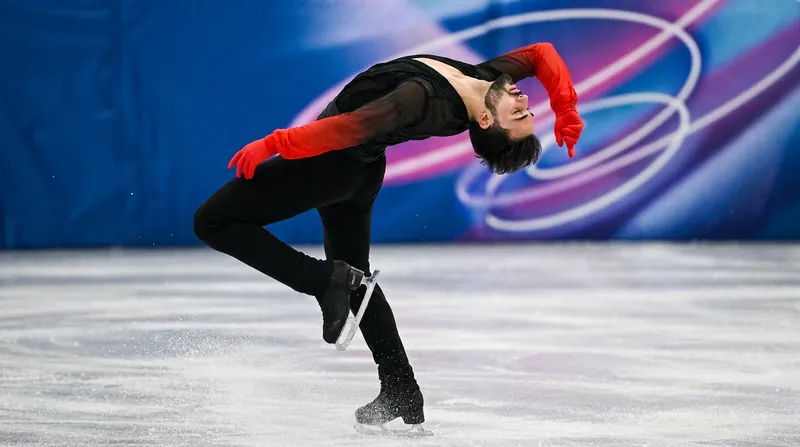
The men's standings race promises a clash of contrasting styles and reigning champions. Kazakhstan's Mikhail Shaidorov will make his first major international appearance since his stunning Olympic victory in Milan. Shaidorov is slated to open his Grand Prix campaign at the Grand Prix de France in Angers, where he will face off against home-ice favorite and two-time European Champion Adam Siao Him Fa.[1]
Meanwhile, the American men are bringing heavy artillery to the circuit. Three-time and reigning World Champion Ilia Malinin—the self-proclaimed 'Quad God'—will look to assert his dominance early at Skate America before traveling to Tokyo for the NHK Trophy. He will be joined on the U.S. roster by veteran fan-favorite Jason Brown, who continues to defy the sport's typical retirement timeline.[1]
The post-Olympic season is notoriously volatile, characterized by retirements and dramatic reshufflings that instantly alter the global standings. This year's ice dance circuit features several blockbuster new partnerships. The newly formed Canadian-American powerhouse duo of Marjorie Lajoie and Jean-Luc Baker will make their highly anticipated debut, while an intriguing new pairing of Laurence Fournier-Beaudry and Guillaume Cizeron is set to compete in France.[1][3][5]
To ensure the integrity of the standings race, the ISU is rolling out significant judging reforms. Following data analysis of over 500 judges, the federation is implementing a new AI-assisted evaluation tool developed with the firm Maelstrom. The system is designed to track judge consistency and fairness throughout the Grand Prix series, ensuring that the athletes who qualify for Chongqing do so on an unimpeachable technical basis.[4]
Before the Grand Prix series officially kicks off in late October, skaters will test their new programs at Challenger Series events beginning in August. But with the assignments now locked in, the strategic roadmap is clear. For returning champions, the autumn circuit is a test of longevity; for newly formed teams and rising stars, it is the first critical opportunity to climb the world standings in the long march toward 2030.[3]
Key points
- The ISU has released the 2026-2027 Grand Prix assignments, featuring six events across North America, Europe, and Asia.
- The top six skaters in each discipline will qualify for the Grand Prix Final in Chongqing, China, this December.
- Reigning Olympic champions Alysa Liu and Mikhail Shaidorov are set to return to the circuit alongside World Champion Ilia Malinin.
- The upcoming season features a historic financial boost, with total prize money doubling to $11.1 million.
- A new AI-assisted evaluation tool will be used to monitor judge consistency and fairness throughout the standings race.
How we got here
Feb 2026
The Milano Cortina Winter Olympics conclude, crowning a new generation of gold medalists.
Jun 10-12, 2026
The ISU Congress in Tenerife approves a massive prize money increase and new judging evaluation tools.
Jun 16, 2026
The ISU officially announces the athlete assignments for the 2026-2027 Grand Prix series.
Oct 23, 2026
The Grand Prix series kicks off with the Grand Prix de France in Angers.
Dec 10, 2026
The top six skaters in each discipline will meet at the Grand Prix Final in Chongqing, China.
- Returning Champions
- Olympic and World medalists focused on defending their titles and capitalizing on the new prize money.
- New Partnerships & Challengers
- Rising stars and newly formed teams using the post-Olympic vacuum to climb the world standings.
- ISU Leadership
- Governing officials prioritizing commercial growth, athlete compensation, and judging transparency.
Perspectives this story doesn't cover
- Recently retired skaters transitioning out of the sport
- Local organizing committees hosting the events
Sources
Source coverage
5 outlets
3 viewpoints surfaced





- [1]Olympics.comReturning Champions
ISU Figure Skating Grand Prix Series 2026-27: Olympic champions Alysa Liu, Mikhail Shaidorov set to feature
Read on Olympics.com → - [2]ForbesReturning Champions
Alysa Liu Set To Return To Figure Skating Competition In 2026
Read on Forbes → - [3]Golden SkateISU Leadership
ISU Announces 2026-27 International Figure Skating Events
Read on Golden Skate → - [4]Inside the GamesISU Leadership
ISU Congress 2026: Elections Shape Figure Skating Leadership for the Next Olympic Cycle
Read on Inside the Games → - [5]Skate CanadaNew Partnerships & Challengers
Canada's Top Skaters Named to 2026-2027 ISU Grand Prix of Figure Skating Series
Read on Skate Canada →
More in Sports
See all →Injury
Figure Skating Injury Report: Sadovsky and Yamamoto Cleared for Grand Prix Action as Thorngren Transitions to Coaching
6 sources

Injury
Figure Skating Injury Report: Britschgi Cleared for Grand Prix as Behr and Kwan Highlight Global Resilience
5 sources
Injury
Minkyu Seo Balances Ankle Rehabilitation With Ambitious Senior Grand Prix Debut
3 sources
Injury
Figure Skating Injury Report: Aymoz, Howe, and Glenn Showcase Resilience Ahead of 2026-27 Season
2 sources
Comments
Every angle. Every day.
Get Sports stories with full source coverage and perspective breakdowns, free every day.