
Volleyball Injury Report: Global Stars Make Triumphant Returns for 2026 VNL
As the 2026 Volleyball Nations League begins, national teams are welcoming back marquee players from severe injuries, highlighting the resilience required at the sport's highest level.
By Factlen Editorial Team
- Rehabilitating Athletes
- Focuses on the mental and physical toll of recovery and the emotional triumph of returning to play.
- National Team Coaches
- Prioritizes roster depth, load management, and using injuries as an opportunity to develop younger talent.
- Tournament Analysts
- Evaluates how the return or absence of star players shifts the competitive balance and title odds of the VNL.
Why this matters
Injuries in professional volleyball can derail entire Olympic cycles, making the successful return of global stars a crucial indicator of a national team's medal hopes. For fans and developing athletes, these comebacks offer a masterclass in resilience and the evolving science of sports rehabilitation.
The 2026 international volleyball season has officially commenced, and the defining narrative of the early Volleyball Nations League (VNL) campaign is one of profound resilience. Across the globe, national teams are welcoming back marquee players who spent the past year battling severe injuries, enduring grueling rehabilitations, and watching from the sidelines. As the grueling transition from the professional club calendar to the international stage takes its toll, the return of these athletes provides a massive emotional and tactical lift to their respective squads. For fans, the VNL is not just a showcase of the world's best talent, but a celebration of the physical and mental fortitude required to compete at the highest level.[2]
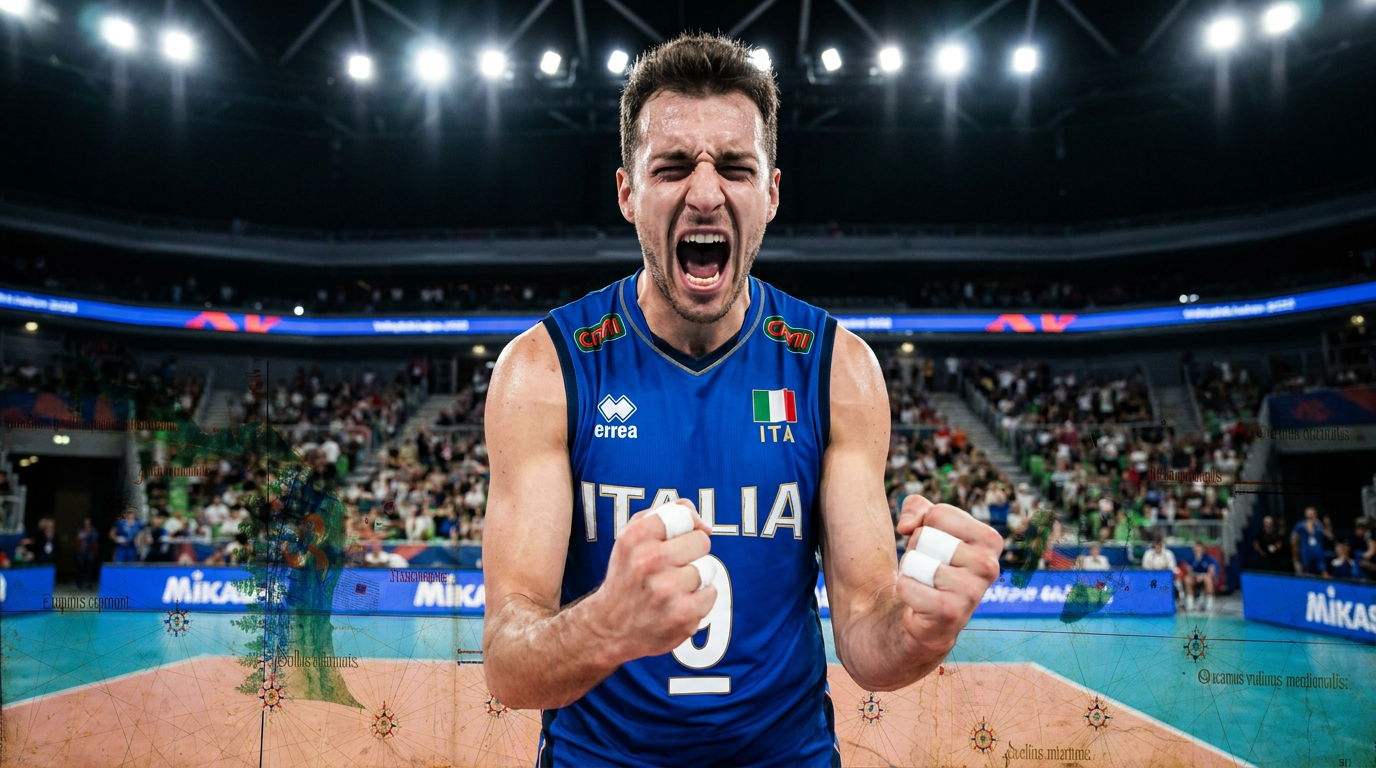
Nowhere is this resurgence more impactful than within the Italian men's national team. The reigning world champions and VNL runners-up have enlisted 13 of the 14 athletes who secured their world title, bolstered significantly by the highly anticipated return of star outside hitter Daniele Lavia. Lavia was forced to skip the World Championship after suffering a severe hand injury that ultimately required two separate, complex surgeries to fully repair. His prolonged absence left a noticeable void in the Italian offensive lineup and defensive passing schemes, making his recent return to competitive play a deeply emotional milestone for both the player and the national program.[1][2][3]
Lavia’s comeback began during the Coppa Italia with his club team, Itas Trentino, and has now culminated in his return to the international stage. Reflecting on the agonizing months away from the sport, Lavia admitted that the mental toll of watching his teammates compete without him was often heavier than the physical pain of recovery. "Mentally, watching my teammates suffer and celebrate without me was hard," he confessed, noting that the roar of the crowd upon his return made his legs shake. His successful rehabilitation is a testament to the rigorous medical protocols and psychological support systems now standard in elite volleyball.[1][3]
Italy’s offensive firepower is further reinforced by the return of Alessandro Michieletto, the 2025 World Championship MVP, who missed the final weeks of the grueling Italian SuperLega club season due to his own injury struggles. Having both Lavia and Michieletto back in the starting rotation instantly elevates Italy's status as the definitive team to beat in the 2026 VNL. Their synchronized return not only restores the team's tactical versatility and aerial dominance but also injects a renewed sense of confidence into the locker room, proving that the squad can weather significant physical setbacks and emerge fully intact for the summer campaign.[2]

Having both Lavia and Michieletto back in the starting rotation instantly elevates Italy's status as the definitive team to beat in the 2026 VNL.
Meanwhile, the world's top-ranked men's team, Poland, is celebrating a crucial comeback of its own. Captain Aleksander Śliwka has officially rejoined the active roster for the 2026 VNL campaign, bringing a massive psychological boost to the squad. Śliwka’s arduous journey back to the court began in July 2025, when an awkward landing during a training collision resulted in a severe ankle injury that abruptly ended his participation in the VNL pool stage in Gdańsk. His return to the Polish lineup provides critical veteran leadership, elite serve-receive passing, and emotional stability as the defending VNL champions look to fend off a surging Italian squad and maintain their dominance atop the FIVB World Rankings.[2][6]
While the men's tournament is currently defined by these triumphant returns, the women's VNL circuit is navigating the harsh realities of the sport's immense physical demands. The Chinese women's national team entered the 2026 campaign grappling with an unexpected injury crisis that has forced head coach Zhao Yong to drastically alter his tactical approach just weeks before the tournament. The most significant blow came when 23-year-old rising star Wu Mengjie, who led China's attack in the previous VNL with a staggering average of 18.92 points per match, suffered a severe knee injury during a high-intensity training session. Medical experts confirmed that Wu requires immediate surgery, ruling her out for the entirety of the summer competition.[4][5]
Compounding China's offensive challenges, key outside hitter Li Yingying is still actively rehabilitating a severe right ankle injury sustained during the grueling domestic league playoffs, and young opposite hitter Ji Yuxiao was also forced to leave the national training camp due to physical ailments. Despite these frustrating setbacks, the Chinese program is framing the crisis as a vital, albeit forced, development opportunity. Coach Zhao has emphasized that the sudden absence of these primary scorers forces younger, unproven athletes to step into high-pressure roles against elite international competition. "Injury issues are currently the biggest challenge for the team," Zhao noted in a recent press conference, but he remains optimistic about the long-term benefits of testing his bench depth under fire.[4][5]

To stabilize the roster and guide the incoming youth, China is leaning heavily on returning, battle-tested veterans like Gong Xiangyu, Wang Yuanyuan, and Diao Linyu. These experienced players are tasked with anchoring the team's defensive schemes, managing the tempo of the game, and mentoring the younger athletes suddenly thrust into the international spotlight. This dynamic—where injuries to star players catalyze the rapid growth of the next generation—is a fundamental, unavoidable aspect of international volleyball. It highlights the delicate, often precarious balance national team coaches must strike between pursuing immediate tournament victories and cultivating a deep, resilient roster capable of enduring the grueling four-year Olympic cycle.[4][5]
The contrasting narratives of the 2026 VNL—Italy and Poland celebrating the emotional return of their cornerstones, while China adapts on the fly to the sudden loss of theirs—underscore the omnipresent specter of injury in modern volleyball. The sport's ever-increasing speed, power, and verticality place immense, repetitive stress on athletes' joints, making comprehensive load management and advanced rehabilitation sciences more critical than ever before. As the global tournament progresses through its various host cities, the teams that ultimately reach the podium will be those that not only execute their tactical game plans flawlessly but also navigate the physical attrition of the season with the greatest resilience.[1][2][3]
Viewpoints in depth
The Athlete's Recovery Journey
The immense psychological and physical hurdles of returning to elite volleyball.
For players like Daniele Lavia and Aleksander Śliwka, the path back to the court is rarely linear. Beyond the physical healing of bones and ligaments, athletes must overcome the psychological trauma of the initial injury and the isolating monotony of rehabilitation. Rebuilding trust in a surgically repaired joint takes months of specialized physical therapy, often while watching their teams compete in major international tournaments without them. When they finally return, the initial matches are as much a test of mental confidence as they are of physical readiness, requiring players to aggressively attack the ball without hesitation.
The Coaching Calculus
How national programs adapt tactically when star players go down.
National team coaches face a unique dilemma when injuries strike: they cannot trade for replacements or sign free agents. When a primary scorer like China's Wu Mengjie is sidelined, the entire offensive system must be recalibrated using the existing player pool. Coaches often use these crises to accelerate the development of younger players, throwing them into high-stakes VNL matches to build their experience for the Olympic cycle. Simultaneously, they must lean heavily on healthy veterans to maintain defensive stability and court leadership, turning a roster setback into a long-term investment in program depth.
What we don't know
- Whether returning players like Lavia and Śliwka will be able to sustain their pre-injury performance levels throughout the grueling VNL schedule.
- How quickly China's younger players will adapt to the international speed of play in the absence of their primary scorers.
Sources
Source coverage
6 outlets
3 viewpoints surfaced






[1]FIVBRehabilitating Athletes
Daniele Lavia is back where he truly belongs
Read on FIVB →[2]Volleyball WorldTournament Analysts
A star-studded field of players foretells a spectacular men's Volleyball Nations League (VNL) 2026 season
Read on Volleyball World →[3]WorldOfVolleyRehabilitating Athletes
ITA M: Daniele Lavia Recovering After Successful Hand Surgery
Read on WorldOfVolley →[4]South China Morning PostNational Team Coaches
China women's volleyball team hit by injuries as key players pull out of Nations League
Read on South China Morning Post →[5]XinhuaNational Team Coaches
China's star spiker Wu to miss VNL with knee injury
Read on Xinhua →[6]VolleyTimesTournament Analysts
Aleksander Śliwka Injured and out of VNL Pool Stage in Gdańsk
Read on VolleyTimes →
More in sports
See all 10 stories →Esports Ecosystem
The Year Esports Went National: How 2026 Redefined Competitive Gaming
0 sources
Standings
BWF Race to Finals Standings: Youth Movement Scrambles the Leaderboard as Summer Circuit Heats Up
0 sources
F1 2026
How Formula 1's 2026 Regulations Will Radically Rewire the Sport
0 sources
Winter Sports Tech
How Smart Armor and Airbag Tech Are Revolutionizing Snowboard Safety
0 sources

Every angle. Every day.
Get sports stories with full source coverage and perspective breakdowns delivered to your inbox.