
Senate Narrowly Rejects Resolution to Limit Presidential War Powers in Iran
The US Senate blocked a measure aimed at forcing an end to military hostilities in Iran, falling one vote short as lawmakers demand details on a secret US-Iran agreement.
By Factlen Editorial Team
- Congressional War Powers Advocates
- Lawmakers arguing that the executive branch has illegally bypassed Congress to wage a monthslong conflict.
- Executive Authority Defenders
- Supporters of the administration who maintain the president has the constitutional mandate to direct military operations.
- Transparency Skeptics
- Lawmakers and observers demanding the administration release the secret US-Iran framework agreement before further action.
What's not represented
- · Iranian government officials and diplomats
- · US military personnel deployed in the region
- · Civilian populations affected by the conflict
Why this matters
This vote represents a critical test of the constitutional balance of power between the president and Congress over the ability to wage war. The outcome directly impacts the deployment of US troops in the Middle East and the future of the fragile US-Iran framework agreement.
Key points
- The US Senate rejected a War Powers Resolution 47-48 that would have forced an end to military hostilities in Iran.
- Four Republicans crossed party lines to support the measure, while one Democrat voted against it.
- The vote occurred just days after the administration announced a secret framework agreement with Tehran.
- Lawmakers from both parties are demanding the White House release the full text of the US-Iran deal.
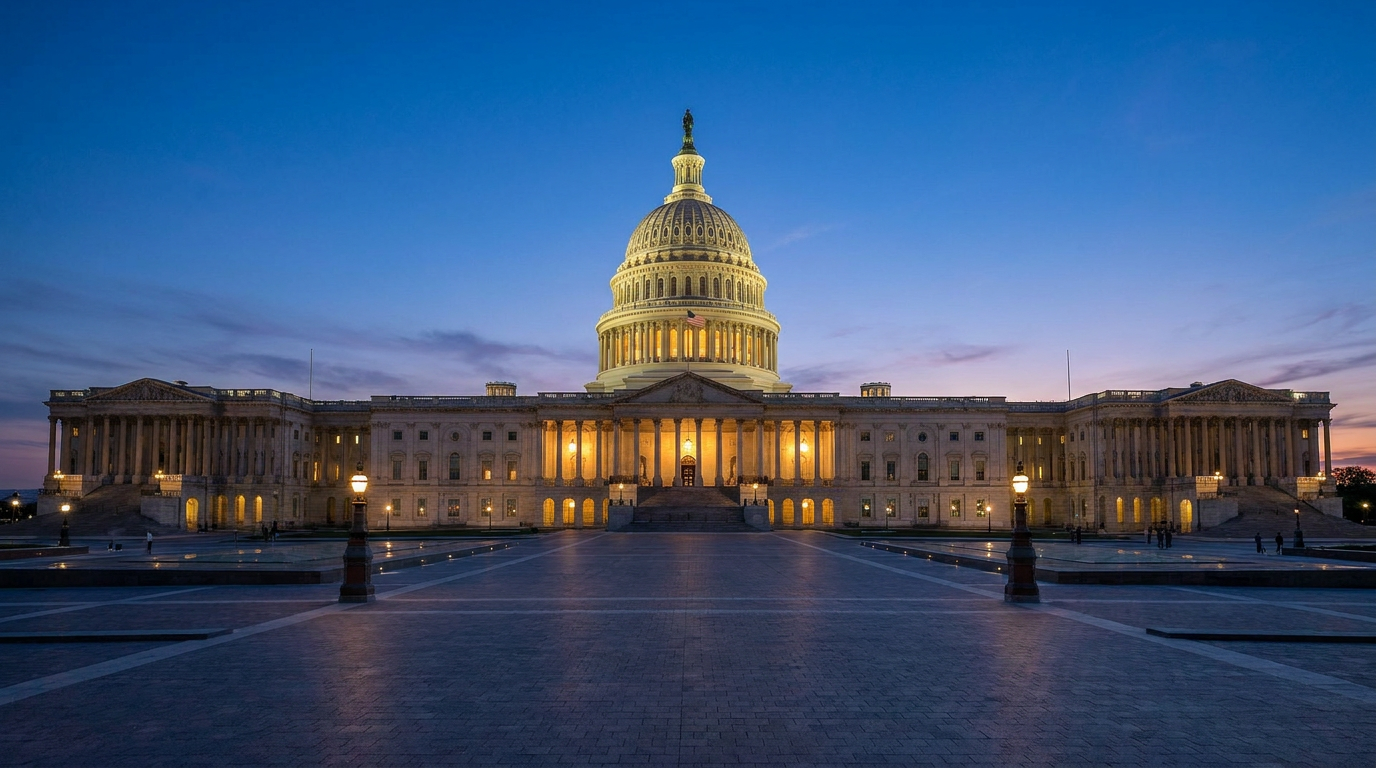
The United States Senate narrowly rejected a resolution on Tuesday that would have forced President Donald Trump to end military hostilities against Iran, falling a single vote short of advancing the measure. The legislative clash arrives at a highly volatile moment in the monthslong conflict, testing the constitutional balance of power between the executive branch and Congress. The procedural motion to discharge the resolution out of committee failed in a 47-48 vote, underscoring the deep and persistent divisions on Capitol Hill regarding the United States' military footprint in the Middle East. The vote marks the latest chapter in an ongoing struggle to rein in presidential war powers, a fight that has gained renewed urgency as the administration navigates a fragile and highly secretive diplomatic process with Tehran.[1][2]
The roll call for the 47-48 vote revealed a fracturing of traditional partisan lines, reflecting growing unease with the military campaign's trajectory. Four Republicans—Senators Susan Collins of Maine, Bill Cassidy of Louisiana, Lisa Murkowski of Alaska, and Rand Paul of Kentucky—crossed the aisle to support the Democratic-led effort. Their defection highlights a persistent bloc of GOP lawmakers who are increasingly uncomfortable with open-ended military engagements. Conversely, Senator John Fetterman of Pennsylvania was the sole Democrat to oppose the motion, preventing the resolution from reaching the 50-vote threshold needed to advance. The razor-thin margin demonstrates how closely divided the chamber remains on the question of executive authority and overseas intervention.[2][3][4]
The timing of the vote is particularly significant, coming just days after the Trump administration announced a secret framework agreement with Tehran aimed at ending the fighting. The conflict, officially designated as Operation Epic Fury, has raged for months, prompting widespread domestic debate over its objectives and costs. While the administration touts the recent diplomatic breakthrough as a major victory that effectively ends the need for congressional intervention, skeptics in the Senate argue that the lack of transparency surrounding the deal makes it impossible to evaluate whether the threat of continued hostilities has truly passed.[2][3]

Introduced by Senator Raphael Warnock of Georgia, the war powers measure sought to mandate the immediate withdrawal of United States Armed Forces from hostilities in or against Iran. The resolution explicitly stated that troops must be removed unless their deployment is authorized by a formal congressional declaration of war or a specific statutory authorization for the use of military force. Proponents of the bill argue that the Constitution vests the power to declare war exclusively in the legislative branch, and that the executive branch has illegally bypassed Congress by sustaining a monthslong military campaign without seeking proper legal consent.[2][4]
The White House has consistently and forcefully pushed back against the legislative effort, deploying a dual legal and practical defense. The administration argues that the 1973 War Powers Resolution is an unconstitutional infringement on the president's inherent Article II authority as Commander in Chief to defend national security interests. Furthermore, executive branch officials assert that the recent ceasefire and the emerging framework agreement with Iran have effectively terminated active hostilities. From the administration's perspective, the congressional measure is not only legally flawed but also practically moot, as the military operations it seeks to halt are already winding down.[2][3]
The White House has consistently and forcefully pushed back against the legislative effort, deploying a dual legal and practical defense.
Despite the administration's confident public posture, Republican support for the conflict has shown visible signs of fracturing in recent weeks. Lawmakers like Senator Cassidy have publicly criticized the Pentagon and the White House for leaving Congress "in the dark" regarding the strategic objectives, financial costs, and exit strategy of Operation Epic Fury. This growing frustration over a lack of communication has driven some conservative members to align with Democrats, arguing that regardless of their stance on Iran, the executive branch must respect the oversight role of the legislature and provide regular, detailed briefings on military operations.[6]
Senate Minority Leader Chuck Schumer and other prominent Democrats view Tuesday's vote not as a defeat, but as a clear sign of cracking Republican resolve. Schumer vowed to continue pressuring the administration to seek legal authority for its military actions, noting that the pressure campaign is slowly working to peel away GOP support. Democratic leadership indicated that they are actively trying to win over a few more Republican members to move future iterations of the resolution forward, believing that continued public scrutiny and the administration's reluctance to share information will eventually tip the scales in their favor.[2][3][6]

Adding a significant layer of tension to the debate is the undisclosed United States-Iran memorandum of understanding. Senate Majority Leader John Thune and other top lawmakers have formally demanded that the administration provide the full text of the agreement to Congress and dispatch senior officials to Capitol Hill to brief members on the specific terms. The secrecy surrounding the deal has fueled bipartisan anxiety, with lawmakers arguing that they cannot fulfill their constitutional duties or make informed decisions about war powers without understanding the concessions, commitments, and enforcement mechanisms embedded in the diplomatic framework.[2][4]
Speaking from the sidelines of the G7 summit in France, President Trump addressed the growing congressional demands for transparency regarding the Iran deal. He pledged to release the full document to the public, promising to hold a comprehensive press conference where he would read the digitally signed agreement "word by word." The president's commitment to publicize the memorandum is seen as an attempt to bypass congressional skeptics and appeal directly to the American public, framing the agreement as a historic achievement that justifies his administration's unilateral approach to the conflict.[4]
Even if Democrats eventually manage to secure the necessary votes to pass the war powers resolution in both the Senate and the House of Representatives, the measure would face a virtually certain presidential veto. Overriding a veto requires a steep two-thirds majority in both chambers—a daunting legislative threshold that no war powers resolution has ever successfully met in the half-century since the law was enacted. This reality underscores the immense difficulty Congress faces when attempting to legally compel a sitting president to alter the course of an ongoing military operation.[3]

The current struggle over war powers is the latest iteration of a recurring theme in modern American history, but the sheer scale and duration of the Iran conflict have brought the 1973 law to the absolute forefront of the national political debate. The standoff is testing the fundamental balance of power between the executive and legislative branches, raising profound questions about how the United States initiates, sustains, and concludes armed conflicts in the twenty-first century. Legal scholars and political analysts alike are watching the proceedings closely, noting that the outcome could set a lasting precedent for future presidencies.[2][3]
Beyond the borders of the United States, international observers and allied nations are closely monitoring the congressional standoff. The durability of the newly minted United States-Iran framework agreement could ultimately hinge on whether the Trump administration can maintain sufficient domestic political support to implement its terms. Global analysts warn that the deep bipartisan divisions over the administration's Middle East strategy could undermine the credibility of the deal, as foreign adversaries and partners alike weigh the possibility that a fractured Congress might attempt to derail the diplomatic progress or impose new sanctions.[4][5]
How we got here
February 2026
Operation Epic Fury begins, initiating monthslong US-Iran hostilities.
April 2026
A temporary ceasefire takes effect between US and Iranian forces.
May 19, 2026
The Senate successfully advances a preliminary war powers resolution for the first time in a 50-47 vote.
June 14, 2026
The Trump administration announces a framework agreement with Tehran to end the conflict.
June 16, 2026
The Senate narrowly rejects the latest War Powers Resolution in a 47-48 vote.
Viewpoints in depth
Congressional War Powers Advocates
Lawmakers arguing that the executive branch has illegally bypassed Congress to wage a monthslong conflict.
Proponents of the resolution, including nearly all Senate Democrats and a handful of Republicans, argue that the Constitution vests the power to declare war exclusively in Congress. They contend that 'Operation Epic Fury' has dragged the United States into a costly and chaotic conflict without a clear strategy or legal authorization. By invoking the 1973 War Powers Resolution, this camp seeks to reassert legislative oversight and force the administration to either justify the military campaign to the American public or withdraw forces entirely.
Executive Authority Defenders
Supporters of the administration who maintain the president has the constitutional mandate to direct military operations.
The administration and its allies in the Senate argue that the president possesses inherent Article II authority to defend national security interests without prior congressional approval. Furthermore, they assert that the War Powers Resolution itself is an unconstitutional infringement on executive power. In the context of the Iran conflict, defenders point to the recent ceasefire and the emerging framework agreement as evidence that active hostilities have concluded, rendering the legislative effort to withdraw troops both unnecessary and legally moot.
Transparency Skeptics
Lawmakers and observers demanding the administration release the secret US-Iran framework agreement before further action.
A growing bloc of lawmakers—including Republican leadership—are withholding full support until the administration provides clarity on the diplomatic front. Frustrated by being left 'in the dark' regarding the terms of the US-Iran memorandum of understanding, these skeptics are demanding formal briefings and the full text of the agreement. They argue that Congress cannot fulfill its oversight role or evaluate the necessity of a war powers resolution without understanding the concessions and commitments made during the secret negotiations.
What we don't know
- The specific terms and concessions included in the undisclosed US-Iran framework agreement.
- Whether Democrats can win over additional Republican senators for future war powers votes.
- How the Iranian government will respond to the ongoing congressional divisions over the conflict.
Key terms
- War Powers Resolution of 1973
- A federal law intended to check the US president's power to commit the nation to an armed conflict without the consent of Congress.
- Operation Epic Fury
- The military designation for the monthslong armed conflict between the United States and Iran.
- Motion to Discharge
- A parliamentary procedure used to bring a bill out of committee and directly to the Senate floor for a vote.
Frequently asked
What is the War Powers Resolution?
The War Powers Resolution is a 1973 law designed to limit the president's ability to commit US forces to an armed conflict without the explicit consent of Congress.
Why did the Senate vote fail?
The procedural motion failed 47-48 because Democrats could not secure enough Republican defectors to overcome the majority, and one Democrat voted against the measure.
What is the US-Iran framework agreement?
It is a recently announced, undisclosed memorandum of understanding between Washington and Tehran aimed at ending the monthslong military conflict.
Sources
Source coverage
6 outlets
3 viewpoints surfaced






[1]The New York TimesCongressional War Powers Advocates
Republicans Again Block War Powers Measure in the Senate
Read on The New York Times →[2]CBS NewsTransparency Skeptics
Senate rejects latest resolution to limit Trump's Iran war powers
Read on CBS News →[3]The Washington PostExecutive Authority Defenders
Senate rejects resolution to block Trump from further strikes on Iran
Read on The Washington Post →[4]Anadolu AgencyTransparency Skeptics
US Senate blocks Iran war powers resolution after US-Iran deal announcement
Read on Anadolu Agency →[5]Yeni ŞafakTransparency Skeptics
US Senate rejects Iran war powers resolution after deal
Read on Yeni Şafak →[6]The GuardianCongressional War Powers Advocates
US Senate votes to advance resolution to curb Trump's Iran war powers
Read on The Guardian →


Every angle. Every day.
Get news politics stories with full source coverage and perspective breakdowns delivered to your inbox.