
Open-Source AI Reaches Frontier Parity with MiniMax M3 Release
The release of MiniMax M3 and other highly capable open-weight models marks a turning point where freely available AI systems now match or exceed proprietary models in complex coding and reasoning tasks.
By Factlen Editorial Team

- Open-Source Advocates
- Championing the democratization of AI to break reliance on proprietary APIs.
- Enterprise Architects
- Prioritizing data sovereignty, security, and local deployment for corporate workflows.
- Industry Analysts
- Tracking the rapid commoditization of AI capabilities and its impact on the market.
What's not represented
- · Proprietary AI Lab Executives
- · Cloud Infrastructure Providers
Why this matters
For developers, researchers, and enterprises, this breaks the reliance on expensive, closed-API gatekeepers. It allows anyone with sufficient hardware to build, customize, and deploy world-class, privacy-secure AI agents locally without sending sensitive data to the cloud.
Key points
- The open-source MiniMax M3 model achieved a 59.0% score on the SWE-bench Pro evaluation, surpassing several closed-source frontier APIs.
- NVIDIA released the 550-billion-parameter Nemotron 3 Ultra under a fully permissive license, removing commercial use thresholds.
- Enterprise adoption of agentic AI workflows has reached 42%, driven heavily by the healthcare and financial services sectors.
- New desktop AI accelerators are enabling developers to run massive open-weight models locally, bypassing cloud infrastructure.
The landscape of artificial intelligence shifted dramatically in June 2026, marking a watershed moment for the open-source community. For years, the most capable AI systems were locked behind proprietary APIs, controlled by a handful of well-funded tech giants. Independent developers and enterprise architects were forced to rent access to frontier models, often compromising on data privacy and system control. That dynamic has now fractured. A wave of highly capable open-weight models has flooded the ecosystem, demonstrating that decentralized, freely available AI can match or even exceed the performance of the industry's most expensive commercial offerings. This transition is not merely a theoretical milestone; it is actively reshaping how software is built, how enterprises deploy autonomous agents, and who gets to participate in the next era of technological infrastructure.[1][5]
The catalyst for this shift was the June 1 release of MiniMax M3, a model that immediately rewrote the expectations for open-weight capabilities. MiniMax M3 is the first open model to combine frontier-tier software engineering proficiency with a massive one-million-token context window and native multi-modal computer use. Built entirely on a novel sparse attention architecture, the model is designed to process dense streams of video and image inputs while directly interacting with operating system interfaces. In rigorous independent testing, MiniMax M3 achieved a 59.0% score on the SWE-bench Pro evaluation, a benchmark that tests an AI's ability to autonomously resolve real-world GitHub issues. This score notably edged past several premium closed-source APIs, including GPT-5.5 and Gemini 3.1 Pro, proving that open-source labs can compete at the absolute bleeding edge of reasoning and code generation.[1][2][3]

MiniMax M3 is not an isolated anomaly. The broader open-source ecosystem has seen a flurry of high-impact releases throughout early June. NVIDIA launched the Nemotron 3 Ultra, a massive 550-billion-parameter model that stands out for its fully permissive licensing, allowing commercial use with no user count or revenue thresholds. This clean legal framework is particularly attractive to enterprise teams navigating the complex compliance constraints of modified open-source licenses. Simultaneously, Moonshot AI released Kimi K2.7 Code, a highly efficient Mixture-of-Experts model that activates 32 billion parameters per token. Kimi K2.7 delivers roughly 30% fewer reasoning tokens than its predecessor while scoring higher on internal coding benchmarks, highlighting a broader industry trend toward extreme computational efficiency alongside raw power.[2][4]
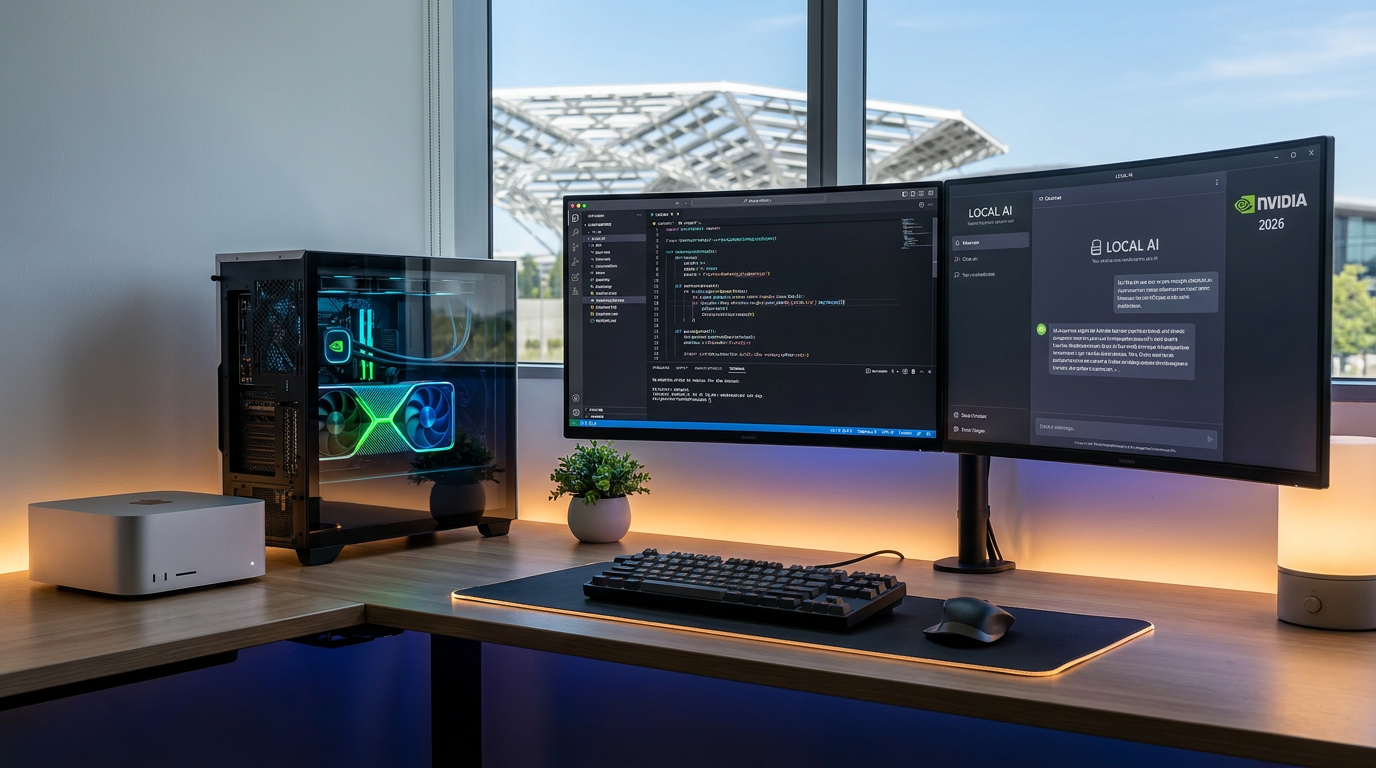
This software renaissance is being accelerated by a parallel revolution in localized hardware. The traditional bottleneck for open-source AI was the sheer computing power required to run massive models, forcing most developers to rely on cloud providers regardless of the model's license. However, the launch of dedicated desktop AI accelerators, such as the NVIDIA RTX Spark Superchip, has fundamentally altered the deployment equation. Combining CPU and GPU capabilities with up to 128 gigabytes of unified memory, these new consumer-grade superchips deliver a petaflop of AI compute directly to workstation laptops. This hardware convergence means that developers can now download a frontier-tier model like MiniMax M3 and run it entirely locally, with zero latency and zero data leaving their physical machine.[1][5]

This software renaissance is being accelerated by a parallel revolution in localized hardware.
The implications for enterprise architecture are profound. As of June 2026, enterprise adoption of autonomous agentic workflows has reached 42 percent, with healthcare and financial services leading the charge. These industries handle highly sensitive data and have historically hesitated to send proprietary information or patient records through external APIs. The combination of highly efficient sparse models, local-first system integration tools, and dedicated hardware allows these sectors to deploy highly secure, context-aware systems entirely within their own infrastructure. Financial institutions are already utilizing localized models for real-time fraud detection, processing millions of transactions per second with near-zero false positive rates, all while maintaining absolute data sovereignty.[1][6]
The developer community is rapidly adapting to this new paradigm, shifting away from standard dense transformer configurations toward these advanced sparse attention mechanisms. Tools like Ollama have streamlined the deployment process, allowing developers to download, quantize, and launch open-weight models with a single terminal command. Furthermore, frameworks like OpenClaw and LangGraph are enabling developers to build complex, multi-step agentic workflows that leverage these local models. Instead of simple chatbots, developers are building autonomous agents capable of navigating file systems, writing and debugging code, and executing complex research tasks across the web, entirely powered by open-source intelligence.[1][3][5]

While the open-source surge is overwhelmingly positive for developers and researchers, it presents a complex challenge for proprietary AI labs. Companies that have raised billions of dollars based on the premise of maintaining a monopoly on frontier intelligence are now facing a highly commoditized market. If an open-weight model can perform complex software engineering tasks as well as a paid API, the economic moat of the proprietary labs begins to erode. This is forcing commercial providers to pivot, focusing less on raw model access and more on enterprise integration, specialized vertical applications, and massive-scale infrastructure that remains difficult to replicate locally.[2][4][6]
Ultimately, the June 2026 open-source AI releases represent a massive democratization of technological capability. By decentralizing access to frontier-tier reasoning, the industry has ensured that the next wave of innovation will not be confined to a few well-funded laboratories in Silicon Valley. Researchers in developing nations, independent software engineers, and small startups now possess the same foundational tools as the world's largest corporations. As these models continue to shrink in computational cost while growing in capability, the barrier to entry for building transformative AI applications has effectively dropped to zero, setting the stage for an unprecedented explosion of localized, privacy-first innovation.[1][3][5]
How we got here
January 2025
DeepSeek-R1 release challenges the industry's assumptions about the compute required to reach top-tier reasoning performance.
April 2025
Meta releases the Llama 4 generation, introducing native multimodality to the open-weight ecosystem.
May 2026
Proprietary labs release GPT-5.5 and Claude Opus 4.8, setting new high-water marks for software engineering benchmarks.
June 1, 2026
MiniMax M3 launches, becoming the first open-weight model to match frontier proprietary APIs on the SWE-bench Pro evaluation.
Viewpoints in depth
Open-Source Advocates
Developers and researchers who view open-weight models as essential for innovation and transparency.
This camp argues that the concentration of AI capabilities within a few massive corporations poses a systemic risk to technological progress. They view releases like MiniMax M3 and Nemotron 3 Ultra not just as technical achievements, but as necessary democratizing forces. By making frontier-tier reasoning freely available, they believe the industry can avoid a future where independent developers are permanently reliant on paid, opaque APIs that can be altered or deprecated without warning.
Enterprise Architects
IT leaders focused on deploying AI securely within corporate infrastructure.
For enterprise architects, the appeal of open-source AI is primarily about data sovereignty and cost control. Sending highly sensitive financial data or patient records to third-party cloud providers introduces unacceptable compliance risks. This group values models that can be run entirely locally on dedicated hardware, ensuring that proprietary workflows remain secure. They are particularly enthusiastic about permissive licenses that allow for commercial deployment without complex revenue-sharing agreements.
Proprietary AI Labs
Commercial entities building closed-source, API-driven frontier models.
While generally quiet on the rapid advancement of open-source competitors, proprietary labs emphasize the massive infrastructure and safety guardrails required to run AI at scale. They argue that while open-weight models are impressive, commercial APIs still offer superior reliability, continuous updates, and integrated enterprise support. This camp is increasingly pivoting toward specialized vertical applications and massive-scale agentic networks that remain difficult for local hardware to replicate.
What we don't know
- How proprietary AI labs will adjust their pricing models in response to frontier-tier open-weight alternatives.
- Whether the rapid pace of open-source advancement will prompt stricter regulatory oversight from governments.
- The long-term sustainability of the funding models supporting massive open-source AI research labs.
Key terms
- Open-weight model
- An AI system where the underlying parameters and architecture are made publicly available for anyone to download and use, though sometimes with commercial restrictions.
- Sparse Attention
- A highly efficient neural network architecture that allows an AI to process massive amounts of information (like a 1-million-token context window) without requiring exponentially more computing power.
- SWE-bench Pro
- A rigorous industry benchmark that evaluates an AI model's ability to autonomously resolve real-world software engineering issues from GitHub.
- Agentic workflow
- A system where an AI does not just answer questions, but autonomously executes a multi-step process, uses tools, and interacts with software environments to achieve a goal.
Frequently asked
Can I run MiniMax M3 on my personal computer?
Running the full MiniMax M3 model requires significant hardware, typically a high-end workstation or dedicated AI accelerator chip like the RTX Spark. However, smaller quantized versions can run on advanced consumer laptops.
Is open-source AI completely free to use?
It depends on the license. Models like Nemotron 3 Ultra are fully permissive, while others use modified licenses that require paid agreements if a company exceeds certain revenue or user thresholds.
How does MiniMax M3 compare to ChatGPT?
In specific software engineering benchmarks like SWE-bench Pro, MiniMax M3 has scored slightly higher than GPT-5.5. However, proprietary models often maintain advantages in general knowledge breadth and integrated ecosystem support.
Sources
Source coverage
6 outlets
3 viewpoints surfaced





[1]devFlokersOpen-Source Advocates
Open-Source AI June 2026: New Models, Agents & Papers
Read on devFlokers →[2]Build Fast with AIEnterprise Architects
Best AI Models June 2026: Full Ranked Leaderboard
Read on Build Fast with AI →[3]Kilo CodeOpen-Source Advocates
Best Open-Source & Open-Weight Coding Models (2026)
Read on Kilo Code →[4]LLM StatsIndustry Analysts
AI Updates Today (June 2026) – Latest AI Model Releases
Read on LLM Stats →[5]Thunder ComputeOpen-Source Advocates
Best Open Source LLMs (June 2026)
Read on Thunder Compute →[6]Prompt AI LearningEnterprise Architects
State of AI June 2026: Agentic Growth & Governance
Read on Prompt AI Learning →

More in ai
See all 7 stories →Medicine Safety
UK Launches First-of-its-Kind AI Sandbox to Predict Medicine Safety and Reduce Animal Testing
0 sources

On-Device AI
How to Run Powerful AI Locally: The 2026 Guide to On-Device LLMs
0 sources
On-Device AI
How Small Language Models Brought AI Out of the Cloud and Onto Your Devices
0 sources

Local AI
How Open-Source AI Models Are Running Locally on Consumer Hardware in 2026
0 sources

Every angle. Every day.
Get ai stories with full source coverage and perspective breakdowns delivered to your inbox.