
Oil Plunges Below $80 as U.S.-Iran Deal Reopens the Strait of Hormuz
Global crude prices have dropped below $80 a barrel following a diplomatic breakthrough between the U.S. and Iran that secures the Strait of Hormuz. The sudden influx of Iranian supply is prompting Wall Street to slash price forecasts, offering a potential lifeline for global inflation.
By Factlen Editorial Team
- Energy Consumers & Central Banks
- View the deal as a massive economic relief valve that lowers inflation and reduces the need for aggressive interest rate hikes.
- OPEC+ Producers
- Face the challenge of a sudden supply glut that threatens their oil revenues and complicates production quotas.
- Geopolitical Analysts
- Focus on the shifting diplomatic power dynamics, particularly Pakistan's emergence as a successful mediator.
What's not represented
- · Environmental organizations tracking the impact of increased fossil fuel transit
- · Shipping insurance underwriters adjusting risk models
Why this matters
A sustained drop in global oil prices directly lowers the cost of gasoline and consumer goods, potentially halting the resurgence of inflation and saving households from further interest rate hikes.
Key points
- Brent crude fell below $80 a barrel following a U.S.-Iran diplomatic deal.
- The agreement secures the Strait of Hormuz, a chokepoint for 20% of global oil.
- Pakistan brokered the deal, gaining significant diplomatic leverage.
- Lower energy costs may prevent the Federal Reserve from hiking rates in September.
- OPEC+ faces a potential supply glut as Iranian oil floods the market.
The global energy market experienced a seismic shift on Tuesday as Brent crude tumbled below $80 a barrel for the first time in over three months. The catalyst is a landmark diplomatic agreement between the United States and Iran, quietly brokered by Pakistan, designed to secure safe commercial passage through the Strait of Hormuz.[1][5]
For months, the threat of conflict in the vital waterway had baked a hefty geopolitical risk premium into global oil prices. Commercial vessels faced regular threats, prompting the U.S. military to launch a defense program for ships navigating the corridor. Now, with a formal peace deal on the table, that premium is rapidly evaporating.[3]
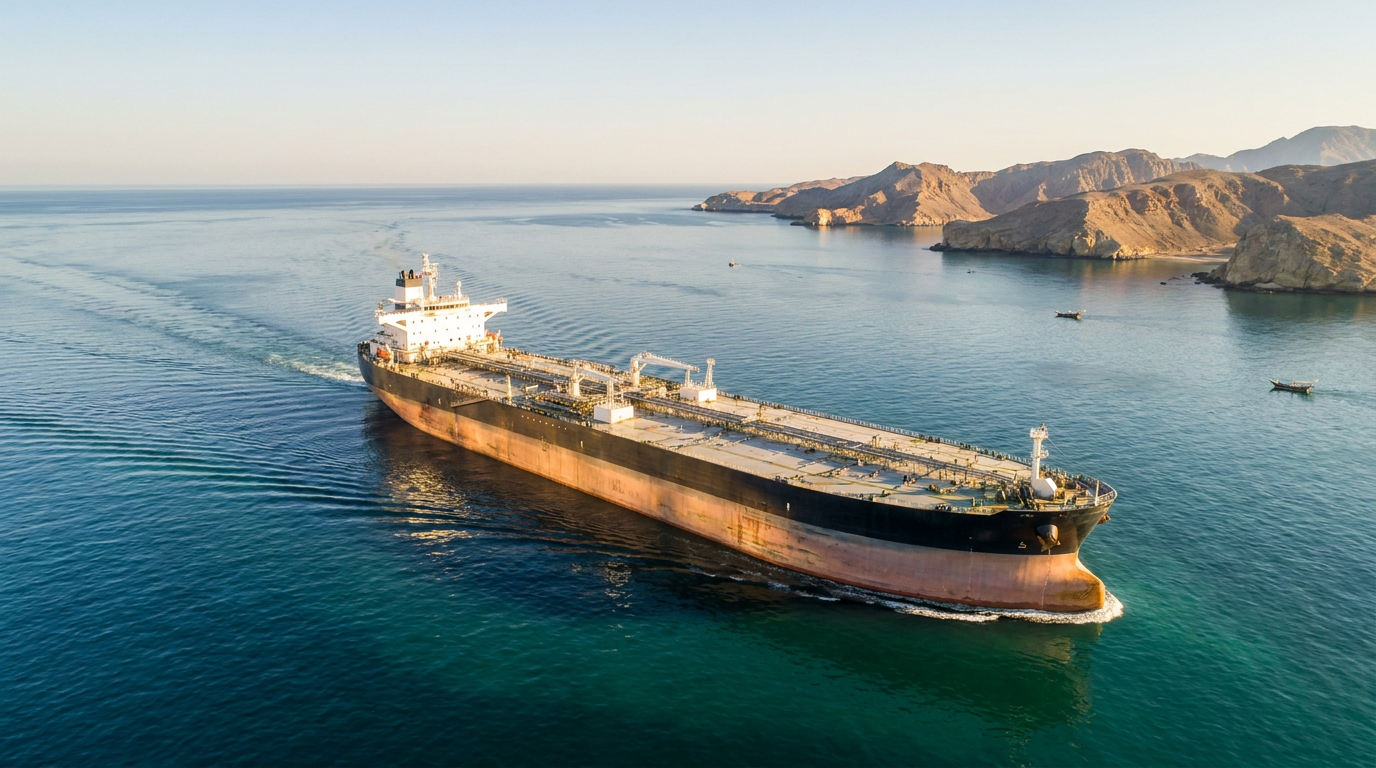
The immediate market reaction reflects the sheer volume of crude expected to flood global supply chains. Tehran has already begun repositioning its fleet of oil tankers in anticipation of the deal's signing, signaling its intent to immediately resume large-scale exports and reclaim its market share.[2]

Financial institutions are scrambling to adjust their models in real-time. Leading Wall Street banks have begun slashing their price forecasts for the remainder of 2026, with regional crude benchmarks collapsing in tandem. Analysts note that the market is transitioning from a mindset of scarcity and disruption to one of sudden abundance.[1][8]
To understand the magnitude of this price action, one must look at the geography of the Strait of Hormuz. The narrow waterway between Oman and Iran is the world's most critical oil transit chokepoint, handling roughly a fifth of total global oil consumption on any given day.[9]
When tensions flare in the Strait, the entire global economy feels the friction. Insurance premiums for shipping skyrocket, transit times increase as vessels take longer routes, and the baseline cost of energy rises for manufacturing and transportation sectors worldwide. The removal of this bottleneck acts as an immediate stimulus.[9]

The sudden de-escalation is a massive boon for central banks, particularly the U.S. Federal Reserve. Prior to the deal, institutions like Citadel Securities were warning that persistent, broad-based inflation could force the Fed to resume a series of interest rate hikes as early as September.[6]
The sudden de-escalation is a massive boon for central banks, particularly the U.S.
Energy costs are a primary driver of headline inflation, bleeding into the prices of everything from airline tickets to groceries. A sustained decline in crude prices back to pre-conflict levels would reverberate positively through the economy, potentially giving Fed Chair Kevin Warsh the breathing room needed to hold rates steady.[4][7]
Market commentators are already projecting the consumer benefits of the geopolitical breakthrough. Financial analysts argue that a sustained drop in oil prices acts as a de facto tax cut for the middle class, freeing up discretionary income that had been swallowed by fuel and heating costs over the past year.[4]
However, the influx of Iranian oil presents a complex challenge for the broader OPEC+ alliance. Traditional heavyweights like Saudi Arabia and Russia now face the prospect of a sudden supply glut that could depress revenues crucial to their national budgets and domestic spending programs.[8]
The cartel may be forced to convene an emergency meeting to discuss deepening production cuts to offset the Iranian barrels. Yet, convincing member states to voluntarily surrender market share while Iran ramps up exports has historically been a fraught diplomatic exercise that tests the unity of the alliance.[8]
The geopolitical architecture of the deal is equally significant. Pakistan's role as the quiet broker has minted new diplomatic currency for Islamabad, turning rare access to both Washington and Tehran into a tangible global economic victory that few anticipated.[5]

Observers note that Pakistan's reputational gains may outlast the immediate oil market volatility. By successfully mediating a pause that calmed the Strait of Hormuz, Islamabad has positioned itself as a crucial intermediary in future Middle Eastern and South Asian security negotiations.[5]
Despite the market euphoria, significant uncertainties remain regarding the physical execution of the deal. Iran's oil sector infrastructure has suffered from years of sanctions and underinvestment, raising questions about exactly how quickly it can scale production beyond the initial release of stored reserves.[8]
Furthermore, the "dark fleet" of tankers that Iran previously used to bypass sanctions must now be integrated into the legitimate, transparent global shipping market. This presents a logistical and regulatory hurdle that could temporarily slow the pace of exports as vessels undergo compliance checks.[2][3]

How we got here
Early 2026
Tensions escalate in the Strait of Hormuz, prompting the U.S. to defend commercial vessels from regular threats.
Spring 2026
Pakistan begins quiet diplomatic mediation between Washington and Tehran.
June 2026
Iran begins repositioning its oil tankers in anticipation of a formal agreement.
June 16, 2026
News of the impending deal breaks, sending Brent crude prices tumbling below $80 a barrel.
Viewpoints in depth
Energy Consumers & Central Banks
View the deal as a massive economic relief valve that lowers inflation and reduces the need for aggressive interest rate hikes.
For central bankers and everyday consumers, the reopening of the Strait and the influx of Iranian oil is a best-case scenario. Institutions like the Federal Reserve had been bracing for persistent inflation driven by energy costs, with some analysts predicting a return to rate hikes by September. A sustained drop in crude prices acts as a natural cooling mechanism for the economy, lowering the cost of manufacturing, shipping, and daily commuting. This effectively functions as a tax cut for the middle class, freeing up discretionary spending without requiring central bank intervention.
OPEC+ Producers
Face the challenge of a sudden supply glut that threatens their oil revenues and complicates production quotas.
While consumers celebrate, traditional energy heavyweights within the OPEC+ alliance are forced into a defensive posture. Countries like Saudi Arabia and Russia rely on elevated oil prices to fund their national budgets and domestic projects. The sudden addition of millions of Iranian barrels to the global market threatens to depress prices long-term. This dynamic places immense pressure on the cartel to negotiate new, deeper production cuts to artificially constrain supply—a diplomatically fraught process that often leads to internal friction over market share.
Geopolitical Analysts
Focus on the shifting diplomatic power dynamics, particularly Pakistan's emergence as a successful mediator.
Foreign policy experts are looking past the immediate commodity price action to analyze the structural shifts in Middle Eastern diplomacy. Pakistan's ability to quietly broker a deal between two historic adversaries has minted significant diplomatic currency for Islamabad. Analysts suggest this success proves that middle-power nations can effectively mediate high-stakes global security issues, potentially reducing the reliance on traditional Western or Chinese diplomatic channels in future regional disputes.
What we don't know
- How quickly Iran can physically scale its oil production given years of underinvestment in its infrastructure.
- Whether OPEC+ will agree to voluntary production cuts to offset the new Iranian supply.
- How long the diplomatic truce between the U.S. and Iran will hold under domestic political pressures.
Key terms
- Brent Crude
- A major trading classification of sweet light crude oil that serves as a benchmark price for purchases of oil worldwide.
- Strait of Hormuz
- A narrow waterway between the Persian Gulf and the Gulf of Oman through which roughly 20% of the world's oil supply passes.
- Headline Inflation
- The raw inflation figure reported through the Consumer Price Index (CPI) that includes volatile commodities like food and energy prices.
- Dark Fleet
- A network of commercial vessels that operate outside standard maritime regulations, often turning off tracking transponders to transport sanctioned goods like oil.
Frequently asked
Why did oil prices drop so suddenly?
A diplomatic deal between the U.S. and Iran has secured the Strait of Hormuz, removing the geopolitical risk premium and allowing millions of barrels of Iranian oil to re-enter the global market.
How does this affect inflation and interest rates?
Lower oil prices reduce the cost of transportation and manufacturing, which lowers overall inflation. This gives central banks like the Federal Reserve more room to pause or avoid future interest rate hikes.
What role did Pakistan play in the agreement?
Pakistan acted as a quiet diplomatic broker between Washington and Tehran, using its unique access to both governments to negotiate the pause in hostilities.
Sources
Source coverage
9 outlets
3 viewpoints surfaced





[1]BloombergEnergy Consumers & Central Banks
Oil Falls Below $80 With US-Iran Deal Set to Add Wave of Supply
Read on Bloomberg →Iran Is Moving Its Oil Tankers Around Ahead of US Deal Signing
Read on Bloomberg →US Says It Defended Dark Ships in Hormuz Against Regular Threats
Read on Bloomberg →[4]CNBCEnergy Consumers & Central Banks
Jim Cramer: Why we're headed back to pre-Iran war oil prices and what it means
Read on CNBC →[5]ForbesGeopolitical Analysts
How Pakistan Turned Rare Access Into Diplomatic Currency In The U.S.-Iran Deal
Read on Forbes →Citadel Securities Sees Risk of Fed Starting Hiking in September
Read on Bloomberg →Fed Chair Warsh expected to withhold 'dot' from central bank's interest rate outlook
Read on CNBC →[8]ReutersOPEC+ Producers
Global markets rally as Strait of Hormuz tensions ease
Read on Reuters →[9]U.S. Energy Information Administration
Strait of Hormuz remains the world's most critical chokepoint for oil transit
Read on U.S. Energy Information Administration →


Every angle. Every day.
Get business stories with full source coverage and perspective breakdowns delivered to your inbox.