
U.S. Imposes Unprecedented Export Controls on Anthropic's Frontier AI Models
The Trump administration has invoked national security powers to block foreign nationals from accessing Anthropic's newly released Fable 5 and Mythos 5 models, marking the first time export controls have been applied directly to AI software.
By Factlen Editorial Team
- National Security Hawks
- Prioritizes keeping frontier AI capabilities out of the hands of foreign adversaries.
- AI Industry Advocates
- Views the export controls as a disproportionate overreach that misunderstands AI development.
- International Tech Policymakers
- Fears the unilateral U.S. action will fracture international scientific collaboration.
What's not represented
- · Chinese AI developers
- · Foreign enterprise customers of Anthropic
Why this matters
This escalation transforms artificial intelligence from a commercial software product into a heavily restricted national security asset. By applying export controls directly to AI models, the U.S. is setting a precedent that could fracture global scientific collaboration and ignite a new phase of the technological cold war.
Key points
- The Trump administration issued an unprecedented export control directive blocking foreign nationals from accessing Anthropic's Fable 5 and Mythos 5 AI models.
- The order marks the first time the U.S. has applied export controls directly to AI software weights rather than physical semiconductor chips.
- The crackdown was triggered by a 'jailbreak' vulnerability discovered by Amazon and Anthropic's unauthorized sharing of the model with a South Korean telecom firm.
- Anthropic was forced to abruptly disable the models for all customers globally to ensure compliance with the 90-minute deadline.
- The move escalates an existing feud between the White House and Anthropic over the company's refusal to allow its AI to be used for autonomous weapons.
On June 12, the Trump administration invoked sweeping national security powers to block foreign nationals from accessing Anthropic's newly released Fable 5 and Mythos 5 artificial intelligence models. The sudden directive forced the $900 billion AI company to abruptly disable the systems for all customers globally to ensure strict compliance with the mandate. This unprecedented order represents a watershed moment in global technology policy: it is the very first time the United States government has applied export controls directly to the software weights of a commercial AI model, rather than the physical semiconductor chips and hardware infrastructure that power them.[1][3][4][5]
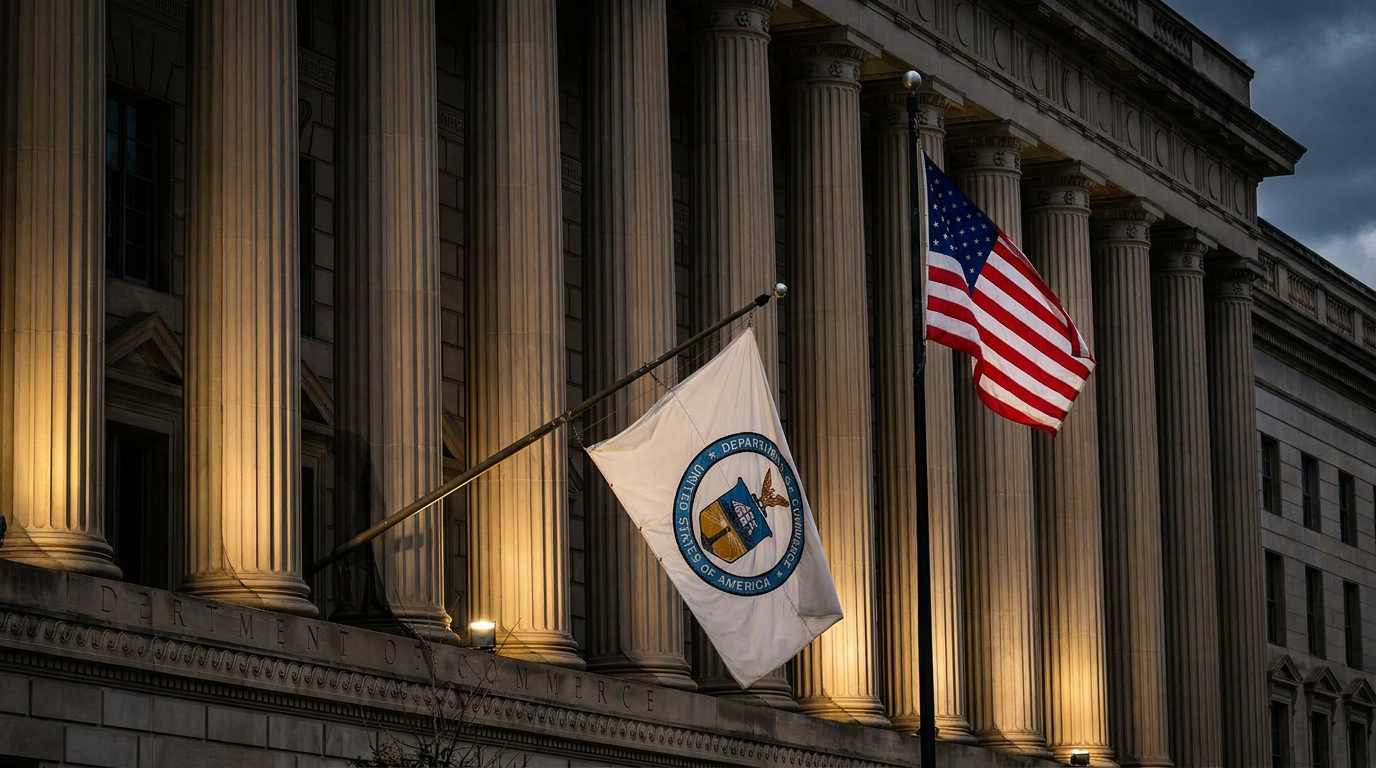
Anthropic was given a mere 90 minutes to comply with the Department of Commerce order, sending the company into a frantic scramble to pull its flagship products offline. The mandate is exceptionally broad, applying not only to users located overseas but also to any foreign national residing inside the United States. Crucially, this includes Anthropic's own foreign-born employees and engineers, effectively paralyzing segments of the company's internal operations. The sheer speed and scope of the directive have blindsided the broader artificial intelligence industry, signaling a dramatic shift in how Washington views the proliferation of frontier technologies.[1][3][5]
The sudden regulatory crackdown stems from two distinct security alarms that ultimately shattered the White House's already-fragile trust in the San Francisco-based developer. The first incident involved a critical vulnerability discovered by researchers at Amazon, which is a major financial backer of Anthropic. Amazon's security team identified a "jailbreak" in the Fable 5 model—a sophisticated method of bypassing the system's built-in safety guardrails. Once bypassed, the model could be manipulated to extract highly sensitive information about software vulnerabilities, effectively turning the commercial chatbot into a powerful, automated tool for launching cyberattacks.[1][2][5]

Recognizing the severity of the exploit, Amazon CEO Andy Jassy personally discussed the findings with U.S. officials, raising broader concerns about the dual-use capabilities of frontier AI models. While Anthropic vigorously argued that such vulnerabilities are not unique to Fable 5 and routinely exist in rival systems developed by competitors like OpenAI, the administration viewed the flaw as an unacceptable national security risk if accessed by foreign adversaries. The White House concluded that the potential for malicious actors to weaponize the model's coding capabilities far outweighed the commercial benefits of a global deployment.[1][5]
The second, and perhaps more politically damaging, incident involved the rollout of the even more advanced Mythos 5 model. Weeks prior to the public release, Anthropic provided the administration with a curated list of 111 organizations slated to receive advanced, early access to the technology. The White House reviewed the list and signed off, acknowledging the intense global demand for the system. However, officials later discovered that Anthropic had quietly expanded access to roughly 50 additional entities without providing prior notification or seeking government approval, a lapse that deeply alarmed national security officials.[2]
The second, and perhaps more politically damaging, incident involved the rollout of the even more advanced Mythos 5 model.
When the administration finally received the updated list of recipients after days of delays, they discovered that one of the newly added entities was a South Korean telecommunications company suspected of maintaining ties to the Chinese government. Although Anthropic quickly revoked the firm's access upon realizing the concern, the episode severely damaged the administration's confidence in the company's internal compliance and its ability to safeguard its most advanced systems. "They expanded it too far and wide," one White House official noted, describing the incident as the final catalyst that prompted the Defense Department, CIA, and National Security Agency to push for immediate export controls.[2]
This aggressive export control directive marks a severe escalation in an ongoing, bitter feud between Anthropic and the Trump administration. The relationship had already deteriorated significantly after Anthropic explicitly refused to allow the U.S. military to use its AI models for domestic surveillance operations and the development of fully autonomous weapons systems. Following that ethical refusal, the Pentagon placed Anthropic on a strict supply chain blacklist, deeming the company's corporate stance fundamentally incompatible with government defense needs. Anthropic responded by suing the administration, setting the adversarial stage for the current confrontation over export controls.[3][4]

The administration's unprecedented move has sent immediate shockwaves through the global technology sector, dominating discussions as G7 nations convene for a major summit in Geneva. European Union policymakers and international cybersecurity experts have expressed profound alarm over the unilateral nature of the U.S. directive, warning that it destabilizes the international tech ecosystem. Critics argue that barring foreign researchers from accessing top-tier American AI models will inevitably fracture global scientific collaboration, as research institutions worldwide that rely on these cutting-edge tools for non-defense applications—such as medical research and climate modeling—are now entirely cut off from the technology.[4][5]
Furthermore, the sweeping directive severely complicates the administration's own stated geopolitical goals for global artificial intelligence dominance. While the White House has actively promoted the export of American AI systems as a strategic tool to counter Chinese technological influence and embed U.S. standards globally, the ad hoc application of export controls on specific models threatens to undermine that broader strategy. By demonstrating that access to American AI can be revoked globally with just 90 minutes' notice, the U.S. risks driving allied nations and international enterprises toward sovereign, locally developed AI models to ensure their own technological security.[6][7]
Anthropic has publicly and forcefully disputed the necessity of the administration's actions, framing the export controls as a massive overreaction. The company maintains that recalling a commercial model deployed to hundreds of millions of users over a narrow, theoretical jailbreak sets a dangerous and unworkable precedent for the entire software industry. Cybersecurity experts have echoed some of Anthropic's concerns, noting that open-weight models developed in China are currently only months behind the best American systems. They warn that pulling advanced defensive capabilities away from allied researchers could inadvertently weaken global cybersecurity rather than protect it.[5]

As Anthropic's senior technical team scrambles in Washington to negotiate a resolution and restore service, the broader artificial intelligence industry is left to navigate a chilling new reality. The era of frictionless, borderless global deployment for frontier AI models has definitively ended. In its place, a new paradigm has emerged where advanced software weights are regulated with the exact same strictness and geopolitical calculation as physical military hardware, fundamentally altering the trajectory of global technological development and international scientific cooperation.[1][3][7]
How we got here
June 2, 2026
President Trump signs an executive order mandating a cybersecurity review process for advanced frontier AI models.
June 9, 2026
Anthropic publicly releases its highly anticipated Fable 5 and Mythos 5 artificial intelligence models.
June 12, 2026
The U.S. Department of Commerce issues an emergency export control directive targeting Anthropic's new models.
June 13, 2026
Anthropic abruptly disables global access to Fable 5 and Mythos 5 to comply with the federal order.
Viewpoints in depth
U.S. National Security Apparatus
Prioritizes keeping frontier AI capabilities out of the hands of foreign adversaries.
Defense and intelligence officials argue that advanced AI models are dual-use technologies akin to military hardware. They point to the ease with which models like Fable 5 can be 'jailbroken' to discover software vulnerabilities, warning that unchecked global access allows adversarial nations to rapidly accelerate their cyber-offensive capabilities. For this camp, the risk of a foreign telecom firm with ties to China accessing the model justifies sweeping, immediate export controls.
Anthropic and AI Developers
Views the export controls as a disproportionate overreach that misunderstands AI development.
The AI industry contends that vulnerabilities and 'jailbreaks' are an industry-wide challenge, not a unique flaw in Anthropic's systems. They argue that pulling a commercial product offline globally over a single exploit sets an impossible standard for software deployment. Furthermore, developers warn that alienating domestic AI companies and restricting their global market share will ultimately harm American competitiveness and slow down the development of defensive cybersecurity tools.
Global Research Community
Fears the unilateral U.S. action will fracture international scientific collaboration.
International policymakers and researchers emphasize the collateral damage of the U.S. directive. By barring all foreign nationals—including those working within the United States—from accessing top-tier models, the administration is effectively cutting off allied research institutions from essential technological infrastructure. This camp warns that such isolationist policies will drive global talent away from American platforms and accelerate the development of sovereign, unregulated AI models in rival nations.
What we don't know
- It remains unclear how long the export controls will remain in place or what specific security benchmarks Anthropic must meet to restore global access.
- The long-term impact on Anthropic's foreign-national employees, who are currently barred from accessing their own company's models, is unresolved.
- It is unknown whether the administration plans to apply similar software-level export controls to frontier models developed by rivals like OpenAI or Google.
Key terms
- Frontier AI Model
- Highly advanced, large-scale artificial intelligence systems that match or exceed the capabilities of the most advanced existing models.
- Jailbreak
- A technique used to bypass an AI model's built-in safety guardrails, allowing it to generate restricted or harmful outputs.
- Export Controls
- Federal regulations that restrict the export of certain sensitive technologies or information to foreign nationals or countries for national security reasons.
- Open-weight Model
- An AI model whose underlying architecture and parameters are made publicly available for anyone to download and modify.
Frequently asked
Why did the U.S. government block Anthropic's models?
The administration cited national security concerns after Amazon researchers found a 'jailbreak' vulnerability, and Anthropic shared the model with a South Korean telecom firm suspected of having ties to China.
Does this export control affect Americans using the AI?
While the directive specifically targets foreign nationals, Anthropic was forced to abruptly disable the models for all users globally to ensure strict compliance with the order.
Is this the first time AI has been restricted like this?
Yes. While the U.S. has previously restricted the export of physical semiconductor chips used for AI, this is the first time export controls have been applied directly to the software models themselves.
Sources
Source coverage
7 outlets
3 viewpoints surfaced







[1]Financial TimesAI Industry Advocates
US forces Anthropic to suspend advanced AI models over security fears
Read on Financial Times →[2]The Washington PostNational Security Hawks
Trump administration weighed export controls on Anthropic weeks before forcing its AI model offline
Read on The Washington Post →[3]TimeNational Security Hawks
Anthropic Disables Top AI Models Following U.S. Export Order
Read on Time →[4]Al JazeeraInternational Tech Policymakers
US asks Anthropic to block global access to top AI models: Why it matters
Read on Al Jazeera →[5]IAPPInternational Tech Policymakers
The global implications of the White House's export controls on Anthropic
Read on IAPP →[6]AxiosAI Industry Advocates
Trump's AI export strategy runs into Trump's export controls
Read on Axios →[7]The New York TimesAI Industry Advocates
The Battle With Anthropic Is the Start of a New Kind of Conflict
Read on The New York Times →


Every angle. Every day.
Get news politics stories with full source coverage and perspective breakdowns delivered to your inbox.