
Senate Blocks War Powers Resolution as US-Iran Peace Deal Advances at G7
The US Senate narrowly defeated a measure to limit presidential war powers, giving the administration room to finalize a 60-day ceasefire and framework agreement with Iran.
By Factlen Editorial Team
- US Administration
- Frames the agreement as a historic victory that ends hostilities and forces Iran to the negotiating table.
- Congressional Skeptics
- Fears the administration is bypassing congressional oversight and rewarding a hostile regime.
- G7 Allies
- Welcomes the de-escalation as vital for stabilizing international energy markets and shipping.
- Security Analysts
- Urges caution, noting that a temporary truce does not dismantle Iran's nuclear infrastructure.
What's not represented
- · Iranian Civilians
- · Global Shipping Companies
- · Middle Eastern Regional Powers
Why this matters
The reopening of the Strait of Hormuz will immediately impact global oil prices and supply chains, while the 60-day negotiation window will determine whether the US and Iran can forge a lasting nuclear treaty or return to the brink of a major regional war.
Key points
- The US Senate blocked a resolution to limit presidential war powers in a 47-48 vote.
- The US and Iran have agreed to a framework memorandum of understanding.
- The deal establishes a 60-day ceasefire and reopens the Strait of Hormuz.
- US officials deny Iranian claims that billions in frozen assets will be immediately released.
- G7 allies welcomed the de-escalation and pledged to help secure maritime shipping routes.
The United States Senate narrowly defeated a resolution designed to limit presidential war powers on Tuesday, clearing a major domestic hurdle just as the administration announced a preliminary peace agreement with Iran. The 47-48 vote effectively preserves the White House's diplomatic and military leverage as it enters a critical 60-day negotiation window with Tehran.[1]
The failed resolution, spearheaded by Democratic Senator Raphael Warnock, would have required the president to withdraw US armed forces from hostilities with Iran unless explicitly authorized by Congress. While four Republicans crossed the aisle to support the measure, the effort fell one vote short. The legislative clash underscores deep congressional anxiety over the secret terms of the emerging US-Iran pact, with lawmakers from both parties demanding a full review of the agreement before any sanctions are permanently lifted.[1][2]

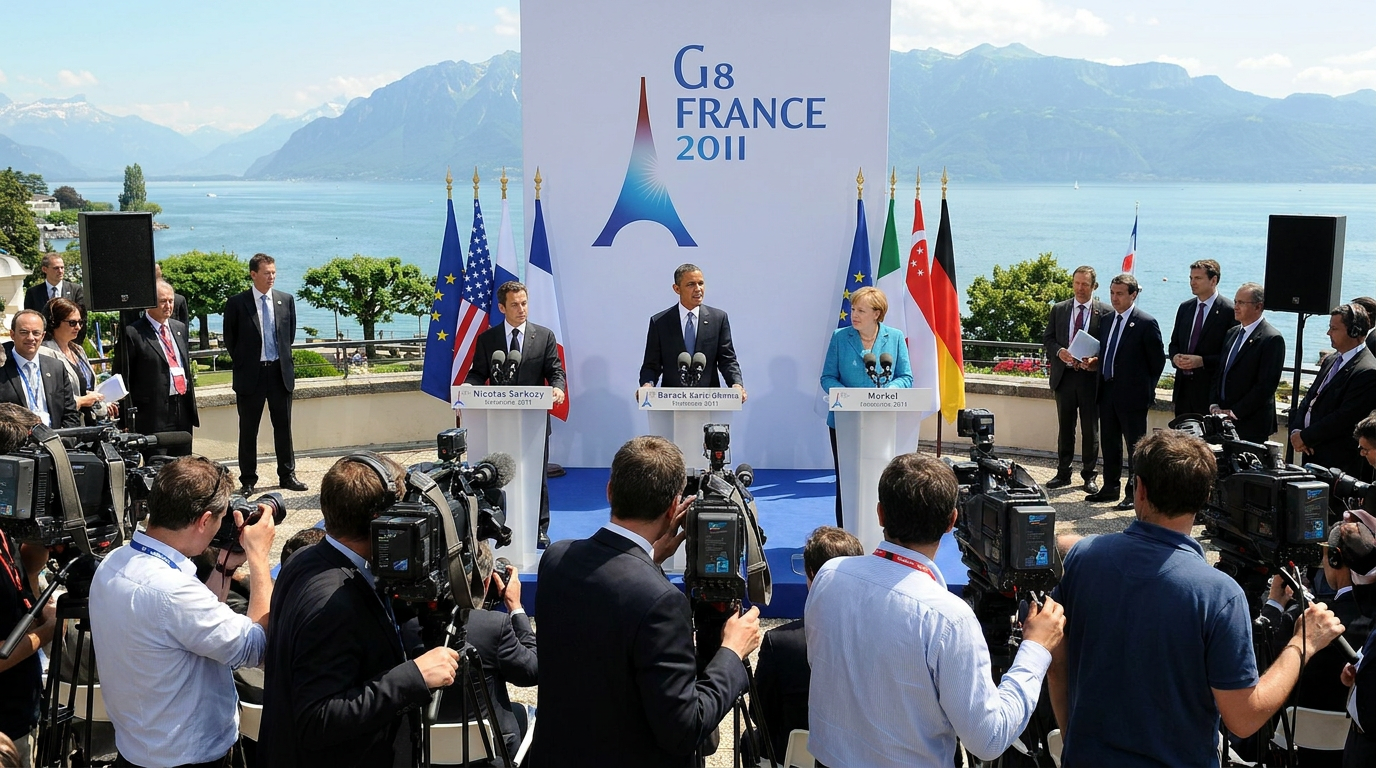
Thousands of miles away at the Group of Seven (G7) summit in Evian-les-Bains, France, the US administration touted the diplomatic breakthrough alongside international allies. The White House declared that a memorandum of understanding (MOU) was "all signed," signaling an end to the months-long conflict that has severely disrupted global energy markets and shipping routes.[1][3]
The core of the preliminary agreement centers on the immediate reopening of the Strait of Hormuz, a critical maritime chokepoint for global oil supplies. Under the MOU, Iran has agreed to clear naval mines it deployed in the waterway and allow shipping to resume without transit tolls. In exchange, the United States will lift its naval blockade on Iranian ports and grant temporary sanctions waivers allowing Tehran to sell oil on the global market for the next 60 days.[2][4]

The core of the preliminary agreement centers on the immediate reopening of the Strait of Hormuz, a critical maritime chokepoint for global oil supplies.
However, a fierce dispute has already erupted over the financial components of the deal. Iranian state media claims the agreement guarantees the immediate release of up to $24 billion in frozen Iranian assets held overseas, with half of that amount delivered before formal negotiations even begin. US officials have vehemently denied this characterization, telling reporters that the framework is strictly "pay-for-performance" and that no frozen funds will be released until Iran meets specific, verifiable commitments.[2]
The 60-day ceasefire is designed to provide a window for diplomats to forge a permanent treaty addressing Iran's nuclear program. Security analysts and non-proliferation experts caution that the MOU itself does not dismantle Iran's enriched uranium stockpile or its nuclear infrastructure. Instead, it defers the most intractable issues to a second, more detailed round of negotiations, leaving the ultimate success of the peace effort highly uncertain.[2][5]
Despite the domestic skepticism, international allies have broadly welcomed the de-escalation. At the G7 summit, European leaders expressed relief that the immediate threat of a wider regional war had subsided. French President Emmanuel Macron announced that France, in coordination with the United Kingdom, is preparing to deploy naval assets to the Strait of Hormuz to help clear mines and escort commercial vessels, ensuring the waterway remains open and secure.[3][4]

The diplomatic focus now shifts to Switzerland, where an official signing ceremony for the MOU is expected later this week. The ceremony will officially start the clock on the 60-day negotiation period. For the White House, the coming weeks will require a delicate balancing act: securing a verifiable nuclear accord with Tehran while convincing a skeptical Congress that the United States has not conceded too much in its pursuit of peace.[2][3]
If the negotiations collapse, the region could quickly return to the brink of war. The administration has publicly warned that a failure to reach a comprehensive nuclear accord would result in the resumption of military strikes and a renewed economic blockade. As global markets react to the fragile truce, the true test of the agreement will not be the signing ceremony in Geneva, but the grueling diplomatic marathon that follows.[5][6]
How we got here
Early 2026
Hostilities escalate, leading to a US naval blockade of Iranian ports and Iran deploying mines in the Strait of Hormuz.
June 15, 2026
The US and Iran agree to a framework memorandum of understanding, establishing a 60-day ceasefire.
June 16, 2026
The US Senate narrowly rejects a resolution (47-48) that would have limited the president's war powers.
June 19, 2026
An official signing ceremony for the MOU is expected to take place in Switzerland, triggering the 60-day negotiation window.
Viewpoints in depth
The US Administration's View
The White House frames the agreement as a historic victory that ends hostilities and forces Iran to the negotiating table.
Administration officials argue that the 'maximum pressure' campaign successfully brought Iran to the brink, resulting in a favorable memorandum of understanding. By securing the reopening of the Strait of Hormuz and maintaining a 'pay-for-performance' structure for sanctions relief, they contend the US retains all its leverage. The administration views the 60-day window as a strict probationary period where Iran must prove its willingness to dismantle its nuclear program or face renewed military action.
Congressional Skeptics
Lawmakers from both parties fear the administration is bypassing congressional oversight and rewarding a hostile regime.
Skeptics on Capitol Hill, including the 47 senators who voted to limit the president's war powers, argue that the White House is keeping Congress in the dark about the deal's true costs. They express deep concern over reports that Iran could access billions in frozen assets before fully dismantling its nuclear infrastructure. Furthermore, critics argue that a temporary 60-day ceasefire does not equate to lasting peace, and that lifting the naval blockade prematurely surrenders critical US leverage.
G7 Allies
European and global partners welcome the de-escalation as vital for stabilizing international energy markets.
For the G7 nations gathered in France, the primary concern has been the devastating economic impact of the closed Strait of Hormuz. Leaders have praised the de-escalation, focusing heavily on the resumption of global shipping. While European allies share US concerns about Iran's nuclear ambitions, they prioritize immediate regional stability and are actively committing naval resources to ensure the waterway remains open and free of mines.
What we don't know
- Whether Iran will fully comply with the terms required to receive permanent sanctions relief.
- The exact mechanisms by which the US will verify the dismantling of Iran's nuclear infrastructure.
- How much of the frozen Iranian assets will ultimately be released and on what timeline.
Key terms
- Strait of Hormuz
- A narrow, strategically critical waterway between the Persian Gulf and the Gulf of Oman through which a significant portion of the world's oil supply passes.
- War Powers Resolution
- A legislative measure designed to check the US president's power to commit the United States to an armed conflict without the consent of Congress.
- Memorandum of Understanding (MOU)
- A preliminary, non-binding agreement between two or more parties outlining the terms and details of a shared understanding, often serving as the foundation for a formal treaty.
- Sanctions Relief
- The temporary or permanent lifting of economic penalties imposed on a country, allowing it to resume international trade and access global financial systems.
Frequently asked
What did the US Senate vote on?
The Senate narrowly rejected a war powers resolution (47-48) that would have required the president to withdraw US forces from hostilities with Iran unless explicitly authorized by Congress.
What are the terms of the US-Iran memorandum?
The preliminary deal establishes a 60-day ceasefire, requires Iran to clear mines and reopen the Strait of Hormuz, and lifts the US naval blockade while offering temporary sanctions waivers.
Will Iran receive billions in frozen assets?
This is highly disputed. Iranian media claims up to $24 billion will be released, but US officials insist the deal is strictly 'pay-for-performance' and no funds will be unfrozen without verifiable compliance.
Does this agreement end Iran's nuclear program?
No. The memorandum serves as a temporary truce to allow for 60 days of negotiations, during which diplomats will attempt to forge a permanent treaty addressing Iran's enriched uranium stockpile.
Sources
Source coverage
6 outlets
4 viewpoints surfaced






[1]CBS NewsUS Administration
Senate rejects latest resolution to limit Trump's Iran war powers
Read on CBS News →[2]AxiosUS Administration
What's in the Iran deal Trump says he's ready to sign
Read on Axios →[3]Asharq Al AwsatG7 Allies
G7 Leaders Meet in France after US and Iran Declare Agreement to End War
Read on Asharq Al Awsat →[4]TF1G7 Allies
G7 will ensure US-Iran deal implemented, Strait of Hormuz reopens: French president
Read on TF1 →[5]PolitiFactCongressional Skeptics
Would Trump's Iran deal bring 'peace'? Here's why that is a stretch.
Read on PolitiFact →[6]Iran InternationalSecurity Analysts
FDD chief urges caution on Iran deal before terms are seen
Read on Iran International →

More in news politics
See all 5 stories →
Every angle. Every day.
Get news politics stories with full source coverage and perspective breakdowns delivered to your inbox.