
Fox to Acquire Roku for $22 Billion, Creating U.S. Television Juggernaut
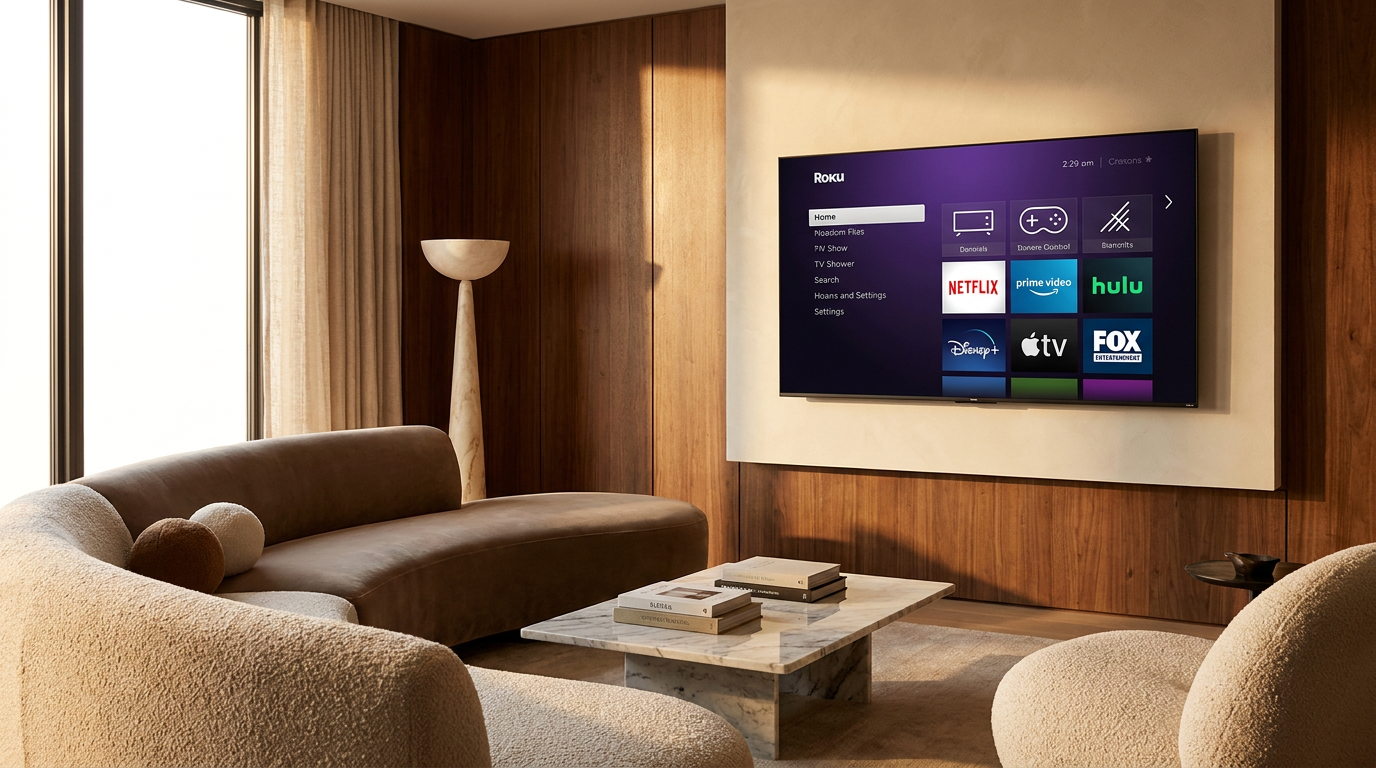
Fox Corporation has agreed to purchase streaming pioneer Roku in a $22 billion cash-and-stock deal, combining legacy live broadcasting with a massive digital distribution platform.
By Factlen Editorial Team
- Legacy Media Strategists
- Focus on Fox's need to secure digital distribution and pivot away from declining cable revenues.
- Streaming Tech Analysts
- Focus on Roku's hardware dominance, ad revenue potential, and the end of its independent status.
- Market Skeptics & Consumers
- Focus on integration risks, potential platform bias, and the negative impacts of industry consolidation.
What's not represented
- · Independent App Developers
- · Antitrust Regulators
Why this matters
This acquisition fundamentally reshapes how millions of households will access television, merging one of the largest producers of live sports and news with the operating system that powers their living rooms. For consumers and advertisers, it signals a massive consolidation of free, ad-supported streaming under a single corporate umbrella.
Key points
- Fox Corporation will acquire streaming platform Roku for $22 billion in a cash-and-stock deal.
- The merger creates the third-largest player in U.S. television based on viewing share.
- Fox aims to double its connected-TV ad revenues and offset the decline of traditional cable.
- Roku's 100 million global households will be integrated with Fox's live sports, news, and Tubi platform.
- The combined company expects to generate $400 million in operational cost savings.
- The deal is slated to close in the first half of 2027, pending regulatory approval.
Fox Corporation has struck a definitive agreement to acquire the streaming platform Roku in a cash-and-stock transaction valued at approximately $22 billion. The deal, officially announced on Monday, marks a seismic shift in the global media landscape, uniting the Murdoch family's legacy broadcast empire with the Silicon Valley pioneer that helped invent the modern streaming ecosystem. Under the terms of the agreement, Fox will pay $160 per share, representing a significant premium aimed at securing Roku's massive digital footprint. The acquisition underscores a growing urgency among traditional television networks to own the underlying technology that delivers their content, ensuring their long-term survival and relevance in an increasingly post-cable world.[2][3][4]
The strategic logic behind this mega-merger centers entirely on distribution and scale. By combining Fox's extensive portfolio of live programming—which includes the highly rated Fox News channel, Sunday NFL games, Major League Baseball, and exclusive FIFA World Cup broadcasts—with Roku's ubiquitous operating system, the new entity will instantly become the third-largest player in U.S. television based on total share of viewing. More importantly, it gives Fox direct, unfiltered access to the 100 million global households that currently rely on Roku devices and software to navigate their daily entertainment choices, bypassing traditional cable operators entirely.[2][3][4]
For Fox, the acquisition represents a necessary and aggressive pivot away from a steadily declining traditional television model. As cable and satellite subscriptions continue to erode year over year, legacy media conglomerates have been forced to find new ways to reach fragmented audiences and monetize their expensive content libraries. Industry analysts note that absorbing Roku's vast advertising infrastructure will more than double Fox's annual connected-TV advertising revenues. This effectively transforms the company from a pure content provider reliant on carriage fees into a dominant digital ad broker capable of competing with tech giants for marketing budgets.[1][2][6]

The financial architecture of the deal ensures that Fox retains firm operational control while offering Roku shareholders a vested stake in the combined company's future. Once the transaction officially closes, existing Fox shareholders are expected to own approximately 73 percent of the new corporate entity, with Roku shareholders holding the remaining 27 percent. Beyond the initial purchase price, executives from both companies have projected roughly $400 million in annual operational cost savings as the two corporate structures integrate their sales teams, engineering departments, and administrative overhead.[2][3][5]
A critical component of the merger's value proposition is how seamlessly it complements Fox's existing digital streaming assets, most notably Tubi. Fox acquired the free, ad-supported streaming service (FAST) in 2020 for a fraction of Roku's price, and it has recently turned a profit while growing its user base. By pairing Tubi's extensive on-demand library with The Roku Channel—Roku's own highly successful FAST offering—Fox is assembling an unparalleled juggernaut in the free streaming space. This combined inventory will be capable of commanding premium rates from advertisers seeking broad, highly targeted reach across diverse demographics.[3][4][5]

A critical component of the merger's value proposition is how seamlessly it complements Fox's existing digital streaming assets, most notably Tubi.
Despite the impending change in ownership, Fox executives have been quick to reassure the broader entertainment industry that Roku will not suddenly become a walled garden restricted to Fox content. The companies explicitly stated in their joint announcement that Roku will continue to operate as an 'open, partner-friendly platform.' This means competing streaming services like Netflix, Disney+, Amazon Prime Video, and Hulu will remain fully accessible and prominently featured on Roku devices. Maintaining this strict platform neutrality is essential to preserving Roku's market share against rival operating systems developed by Google, Amazon, and Apple.[4][5][6]
Roku's journey to this $22 billion exit serves as a defining chapter in the history of the streaming revolution. Founded by tech entrepreneur Anthony Wood, the company initially operated as a secretive hardware project within Netflix in the early 2000s before spinning off to release its first dedicated set-top box in 2008. Wood, who currently serves as Roku's CEO and has guided the company through numerous industry shifts, praised the acquisition in a public statement, calling it an 'extraordinary opportunity to accelerate our vision, scale faster and innovate more aggressively for viewers, partners and advertisers.'[4][5]
The broader context of the Fox-Roku deal is a massive wave of aggressive consolidation currently sweeping through the global media and entertainment sector. The announcement arrives just days after the United States Justice Department cleared the way for Paramount Skydance to acquire Warner Bros. Discovery in a staggering $110 billion merger that will combine Paramount+ with HBO Max. In an environment where trillion-dollar tech companies like Apple and Amazon are spending billions on live sports rights, legacy media companies are realizing that independent survival is nearly impossible, making massive scale the only viable defense.[2][6]

Wall Street's initial reaction to the announcement reflected the complex realities and inherent risks of merging a traditional media conglomerate with a digitally native tech platform. Fox shares experienced a slight decline in early trading as investors digested the massive price tag, while Roku's stock saw modest gains reflecting the acquisition premium. Market observers and financial analysts suggest that while the strategic rationale for the merger is undeniably sound, integrating a Silicon Valley engineering culture with a legacy broadcast network will present significant operational challenges and require delicate executive management.[1][3][5]
The historic acquisition is currently expected to close in the first half of 2027, pending intense regulatory scrutiny from antitrust watchdogs and final approval from both companies' shareholders. Until the ink is officially dry, both Fox and Roku will continue to operate as entirely independent entities. However, the television and advertising industries are already bracing for the long-term ripple effects of a combined corporate giant that will soon control both the programming message and the physical medium in more than 100 million living rooms around the world.[2][5][6]
How we got here
Early 2000s
Anthony Wood develops the initial Roku concept while working within Netflix.
2008
Roku spins off from Netflix and releases its first dedicated streaming set-top box.
2020
Fox acquires the free, ad-supported streaming service Tubi to begin its digital pivot.
June 12, 2026
The DOJ clears the Paramount-Warner Bros. Discovery merger, accelerating industry consolidation.
June 15, 2026
Fox and Roku officially announce their $22 billion merger agreement.
First Half 2027
The projected closing window for the Fox-Roku acquisition.
Viewpoints in depth
Legacy Media Strategists
Analysts focused on Fox's urgent need to secure digital distribution.
From the perspective of traditional media analysts, Fox had no choice but to make a massive digital acquisition. With cable and satellite subscriptions in terminal decline, Fox's highly profitable live sports and news programming risked losing its audience. By acquiring Roku, Fox bypasses the crowded app-subscription wars and directly owns the hardware and operating system that controls the television. This guarantees prime placement for Fox content and captures the lucrative connected-TV advertising market that is rapidly replacing traditional commercial breaks.
Streaming Tech Analysts
Industry experts evaluating Roku's transition from independent platform to corporate asset.
Tech analysts view the deal as a bittersweet milestone for Roku. While the $22 billion valuation rewards the company for pioneering the streaming set-top box, it also marks the end of its status as the industry's 'Switzerland'—a neutral platform beholden to no single content creator. While Fox has promised to keep the ecosystem open, tech observers warn that balancing Fox's internal content priorities with the needs of rival apps like Netflix and Disney+ will require delicate management to prevent users from migrating to Google or Amazon devices.
Consumer Advocates
Voices concerned about media consolidation and platform neutrality.
Consumer watchdogs and independent tech communities have expressed skepticism about the merger. Their primary concern is the unprecedented consolidation of media power, noting that the company producing the news and entertainment will now also control the algorithms recommending it. Critics worry that despite promises of an 'open platform,' the financial incentives to prioritize Fox and Tubi content over independent creators or competing networks could eventually degrade the user experience and limit consumer choice.
What we don't know
- How federal regulators will view the merger, especially following the recent approval of the Paramount-Warner Bros. Discovery deal.
- Whether competing streaming services will trust Roku's promise to remain an 'open, partner-friendly platform' under Fox's ownership.
- How the integration of a Silicon Valley tech firm and a legacy broadcast network will impact Roku's corporate culture and product roadmap.
Key terms
- Connected TV (CTV)
- A television set that is connected to the internet, either natively as a smart TV or via a device like a Roku box, allowing it to stream digital video.
- Free Ad-Supported Streaming TV (FAST)
- Streaming services like Tubi or The Roku Channel that offer free programming to viewers, generating revenue entirely through commercial breaks.
- Operating System (OS)
- The foundational software that runs a device; in this case, the interface that powers Roku TVs and allows users to download and launch apps.
- Walled Garden
- A closed technology ecosystem where the provider tightly controls the content and applications available to the user.
Frequently asked
Will my Roku device stop supporting Netflix or Disney+?
No. Fox and Roku have explicitly stated that the platform will remain 'open and partner-friendly,' meaning competing apps will continue to be available.
Why is Fox buying a hardware company?
Fox is primarily interested in Roku's operating system and its 100 million households, which will allow Fox to control digital distribution and double its streaming advertising revenue.
Will the Roku interface change immediately?
No immediate changes are expected. The deal will not officially close until the first half of 2027, and both companies will operate independently until then.
How much is Fox paying for Roku?
Fox is acquiring Roku for $160 per share in a mix of cash and stock, totaling approximately $22 billion.
Sources
Source coverage
6 outlets
3 viewpoints surfaced






[1]CNBCLegacy Media Strategists
How Roku fits into Fox's future – and what investors are missing about the deal
Read on CNBC →[2]CBS NewsLegacy Media Strategists
Fox Corp. is acquiring Roku in a $22 billion deal
Read on CBS News →[3]Los Angeles TimesLegacy Media Strategists
Fox Corp. to buy streaming platform Roku for $22 billion
Read on Los Angeles Times →[4]EngadgetStreaming Tech Analysts
Fox is acquiring Roku for $22 billion
Read on Engadget →[5]PBS NewsStreaming Tech Analysts
Fox Corp. to buy streaming pioneer Roku in a $22 billion deal
Read on PBS News →[6]SlashdotMarket Skeptics & Consumers
Fox Is Buying Roku For $22 Billion
Read on Slashdot →


Every angle. Every day.
Get business stories with full source coverage and perspective breakdowns delivered to your inbox.