
Global Table Tennis Injury Report: Updates on Aruna Quadri, Kristian Karlsson, and the WTT Circuit
Following a grueling spring schedule and the London World Championships, several top table tennis stars are managing significant injuries. Here is the latest on their recovery timelines and the impact on the summer circuit.
By Jackson Reed

- Player Health Advocates
- Emphasize the need for rest, workload management, and format changes to protect athletes from chronic injuries.
- National Team Management
- Focus on fielding the strongest possible lineups while navigating the immediate tactical impact of injuries during major tournaments.
- Tournament Organizers
- Balance the commercial need for star power at local events with the medical realities of athlete recovery.
The 2026 World Table Tennis (WTT) season has delivered spectacular matches and historic upsets, but the relentless international pace is taking a severe physical toll on the sport's elite athletes. Following the high-stakes ITTF World Team Table Tennis Championships in London this past May, several top-ranked players are currently navigating significant injuries that have disrupted their summer campaigns. From chronic shoulder issues to acute in-match muscle strains, the physical demands of the modern game are forcing a reckoning. As the summer circuit heats up with Contender and Champions events, national teams and medical staffs are increasingly prioritizing long-term rehabilitation over immediate tournament results, temporarily reshaping the competitive landscape of the global tour.[1][2]
One of the most notable absences from the recent WTT Contender Lagos was Nigerian powerhouse Aruna Quadri, a player whose explosive forehand has made him a global fan favorite. The top-ranked African player was forced to officially withdraw from the prestigious home-soil tournament due to ongoing physical struggles that originally flared up during the World Championships in London. Fans had highly anticipated his appearance at the Molade Okoya-Thomas Hall, where the electric atmosphere heavily favors the local hero, making his medical withdrawal a significant and disappointing storyline for the African table tennis community.[1]
According to Tournament Director Kweku Tandoh, doctors advised Quadri to undergo four weeks of complete rest to properly heal and protect his long-term career. 'The medical advice was very clear,' Tandoh noted, confirming that Quadri was not fully fit during his London campaign. While his absence was a blow to local fans hoping to see him clash with defending champion Dimitrij Ovtcharov, organizers emphasized that proper injury management is crucial for elite athletes facing a demanding global travel schedule. Tandoh stressed that player health must come first to ensure long-term success.[1]
Meanwhile, the Swedish national team is closely monitoring the condition of veteran standout Kristian Karlsson as they prepare for the next phase of the international calendar. During a critical group stage match against Hungary at the London World Championships, Karlsson called for a medical timeout midway through the third game after suffering a sudden and restrictive groin issue. The injury immediately altered the tone of the match, transforming what looked to be a routine progression into a tense physical battle as the Swedish bench watched their star player with clear concern.[2]
Despite visible discomfort, Karlsson chose to play through the pain rather than concede the match. He managed to close out the contest with a hard-fought 13-11 victory over Dávid Szántosi, ultimately sealing a 3-0 team win for Sweden and securing their path to the Round of 16. However, team staff noted that Karlsson had already been dealing with lingering muscle issues in the weeks prior, turning the immediate celebration into a period of cautious medical evaluation to prevent further aggravation.[2]
The Chinese national squad, often considered the deepest and most dominant in the world, has not been immune to the physical attrition of the 2026 season. World No. 1 Wang Chuqin experienced a painful and highly visible moment during a tense London matchup against Sweden's Anton Kallberg. The incident highlighted the razor-thin margins and high-speed physical risks inherent in the modern game, where players frequently push their bodies to the absolute limit to retrieve wide angles and maintain aggressive table positioning.
The Chinese national squad, often considered the deepest and most dominant in the world, has not been immune to the physical attrition of the 2026 season.
During the heat of the rally, Wang struck his left hand violently against the corner of the table, causing it to bleed and requiring an immediate medical timeout. Though he received first aid from the team trainer, had his finger heavily bandaged, and ultimately secured a decisive 3-0 victory, the disruption underscored the intense pressure on the Chinese squad. The brief pause in play even led to a momentary flare-up of frustration on the court, illustrating the immense psychological and physical strain these athletes operate under during major international finals.
Beyond acute in-match accidents, chronic overuse injuries are becoming a central theme across the global circuit. Chinese prodigy Lin Shidong has spent parts of the 2026 season battling rotator cuff tendinopathy—a degenerative shoulder issue directly linked to the sheer volume of international matches. The explosive arm power required for elite backhand loops places immense stress on the shoulder joint, and the relentless travel schedule leaves little time for the micro-tears to heal, turning minor inflammation into a tournament-ending condition.
The rising injury rate across multiple national teams has sparked broader conversations about player workload and the sustainability of the current competitive calendar. The WTT has previously acknowledged these concerns, noting that top-tier players who consistently reach the late stages of tournaments face an exhausting accumulation of matches. When athletes compete deep into the singles draw while simultaneously participating in doubles and mixed doubles events, their physical output multiplies rapidly over a single week, leaving them highly susceptible to fatigue-induced injuries.[3]
In response to the growing physical toll, the organization has implemented strategic format adjustments designed to protect the players. For instance, the WTT recently converted mixed doubles events at major finals to a strict knockout format, eliminating the grueling group stages to limit the total number of times players must take the court. These incremental changes reflect a growing consensus that the sport must evolve its scheduling to preserve the health and longevity of its biggest stars.[3]
Despite the wave of recent setbacks, the circuit also offers strong blueprints for successful rehabilitation and return. Women's World No. 1 Sun Yingsha recently demonstrated how patience pays off after suffering a severe ankle sprain and plantar fasciitis that collapsed her late 2025 campaign. The chronic sprains and secondary ligament damage forced her to withdraw from the WTT Finals semifinals, leaving fans and analysts deeply concerned about her future dominance and the heavy burden placed on her physical stamina.
Medical staff recommended a thorough eight-week rest period for Sun, forcing her to miss the early 2026 WTT Champions Doha tournament. Rather than rushing back to defend her ranking points, she strictly adhered to the prescribed rehabilitation timeline. This disciplined approach allowed the inflammation to subside and the torn ligaments to properly scar over, ensuring she did not return to the table with compromised mechanics that could trigger a secondary injury.
The careful approach worked flawlessly. Sun returned to the court at the Asian Cup in Haikou, gradually finding her rhythm to win her opening matches and eventually claim the singles title. 'As the ankle injury didn't trouble me anymore, I needed to examine my competitive state,' she noted after her victory, proving that a full recovery is possible with the right medical support. Her triumphant return serves as a powerful testament to the effectiveness of prioritizing rest over immediate competition.
As the table tennis world looks toward the second half of the year, the focus remains on the treatment tables just as much as the tournament tables. For sidelined players like Quadri and those managing chronic pain like Karlsson, Sun's successful return serves as a vital reminder that taking the necessary time to heal is the ultimate winning strategy. The sport's governing bodies, medical staffs, and fans alike are learning that preserving the health of these extraordinary athletes is the only way to ensure the longevity of the game's highest level.[1]
Key points
- Nigerian star Aruna Quadri missed the WTT Contender Lagos to undergo a four-week rest period.
- Sweden's Kristian Karlsson is being monitored after playing through a groin injury in London.
- China's Wang Chuqin suffered a hand injury during a tense match but secured a victory.
- The WTT has implemented format changes to help manage the growing physical workload of top players.
- Sun Yingsha successfully returned to competition after an eight-week recovery from an ankle injury.
Sources
Source coverage
3 outlets
3 viewpoints surfaced



- [1]Sports247 NigeriaPlayer Health Advocates
Aruna Quadri Injury Update: Nigerian Table Tennis Star Ruled Out Of WTT Contender Lagos 2026
Read on Sports247 Nigeria → - [2]European Table Tennis UnionNational Team Management
Sweden through, but KARLSSON injury tempers celebration
Read on European Table Tennis Union → - [3]Butterfly OnlinePlayer Health Advocates
WTT Announces Finals Format Changes to Limit Player Workload
Read on Butterfly Online →
Comments
More in sports
See all →Preview
Hawthorn Chases Top-Four Finish and Percentage Boost in High-Stakes Clash Against West Coast
7 sources

Preview
2026 Wuhan Open Preview: Xiao Guodong Chases Hat-Trick as World No. 1 Race Heats Up
6 sources
Recap
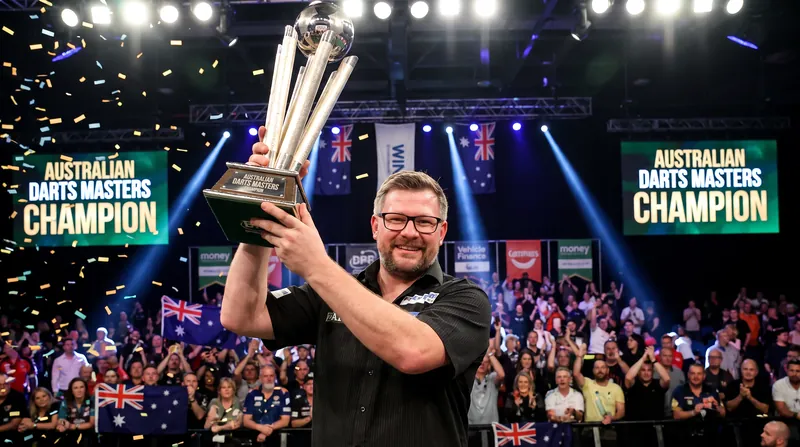
James Wade Ends Five-Year Televised Title Drought with Australian Darts Masters Victory
2 sources
Storyline
Jonny Lynch's First-Half Hat-Trick Powers Ireland Past Malaysia in Historic World Cup Run
6 sources

Every angle. Every day.
Get sports stories with full source coverage and perspective breakdowns delivered to your inbox.