
Scientists Identify 166,000 Square Kilometers of Coral Reefs Capable of Surviving Climate Change
A landmark global study has mapped vast stretches of climate-resilient coral reefs across 71 countries, tripling previous survival estimates and offering a concrete blueprint for ocean conservation.
By Factlen Editorial Team
- Marine Conservationists
- Focus on leveraging this data to expand Marine Protected Areas and meet the '30 by 30' global conservation targets.
- Climate & Marine Scientists
- Emphasize the biological mechanisms of resilience and the machine-learning methodology used to identify these refugia.
- Coastal Communities & NGOs
- Highlight the urgent need to protect these reefs to safeguard food security, local economies, and natural storm barriers.
What's not represented
- · Commercial Fishing Industry
- · Coastal Developers
Why this matters
Nearly a billion people rely on coral reefs for food, income, and coastal protection. Identifying and protecting these specific climate-resilient strongholds offers a concrete blueprint to save these vital ecosystems from total collapse.
Key points
- Scientists have mapped 166,000 square kilometers of coral reefs capable of surviving climate change.
- This new data triples previous estimates of climate-resilient coral coverage globally.
- Resilient reefs survive through three pathways: avoidance of heat, genetic resistance, and rapid recovery.
- More than half of these resilient reefs are located in Australia, the Bahamas, Cuba, Indonesia, and the Philippines.
- Currently, only 28 percent of these priority reefs are formally protected from local threats like overfishing and pollution.
- The findings provide a concrete roadmap for the global '30 by 30' ocean conservation initiative.
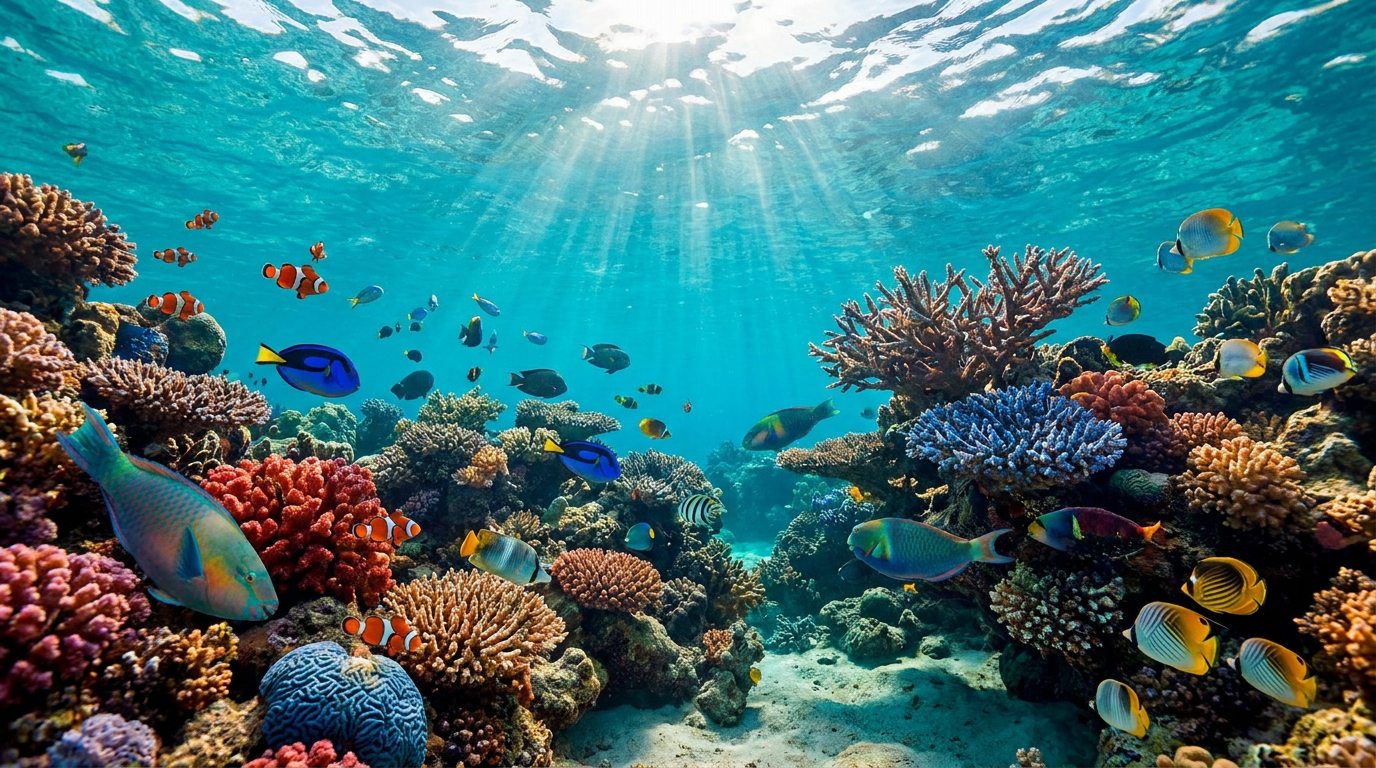
For years, the narrative surrounding the world's coral reefs has been one of inevitable, irreversible decline. Driven by record-breaking marine heatwaves, mass bleaching events have left vast swaths of vibrant underwater ecosystems ghostly white and starving. But a landmark global analysis is fundamentally challenging the assumption that tropical reefs are beyond saving.[1][3]
Unveiled at the Our Ocean Conference in Mombasa, Kenya, the new research identifies approximately 166,000 square kilometers of coral reefs that possess the biological and environmental conditions necessary to survive a warming world. This newly mapped area of climate-resilient coral spans 71 countries and 100 territories, representing a staggering tripling of previous survival estimates.[3][4][5]
The findings, spearheaded by the Wildlife Conservation Society and Macquarie University, serve as an evidence pack for global conservationists. "Coral reefs are often framed as ecosystems beyond saving," noted Dr. Emily Darling, director of coral conservation at the Wildlife Conservation Society. "This research shows otherwise: we know where the hope is and what we need now is political will."[3][6]

To build this unprecedented map, researchers did not rely on climate models alone. The team trained machine-learning algorithms on a massive dataset of 45,000 real-world coral surveys conducted over several decades. By cross-referencing these field observations with historical oceanographic data, the models pinpointed exactly where corals have historically survived severe thermal stress and projected where those conditions will persist into 2050.[3][4][6]
The study identifies three distinct biological and environmental pathways that grant these specific reefs their resilience: avoidance, resistance, and recovery. Each mechanism offers a different shield against the devastating impacts of marine heatwaves.[4][5]
The first pathway, known as "avoidance refugia," relies on geographic luck and local oceanography. These reefs are situated in rare oceanic cool spots where local hydrodynamics—such as deep-water upwellings or swift, cooler ocean currents—physically buffer the corals from the worst of the surface heat, keeping the local water temperatures stable even as global averages rise.[1][2]
The first pathway, known as "avoidance refugia," relies on geographic luck and local oceanography.
The second pathway is active thermal resistance. In these zones, often dubbed "super reefs" by marine scientists, corals have evolved unique genetic and physiological adaptations. These traits allow them to endure unusually high water temperatures without expelling the symbiotic algae that provide their primary source of food and their brilliant colors.[2][7]

The third pathway is rapid recovery. Reefs in this category may still bleach during extreme marine heatwaves, but they possess an extraordinary capacity to bounce back quickly. This resilience is typically driven by high rates of coral larval recruitment from nearby healthy reefs and a distinct lack of compounding local stressors like pollution.[4][5]
Geographically, the newly identified refugia are not evenly distributed across the globe. More than half of the resilient reef systems are concentrated within the waters of just five nations: Australia, the Bahamas, Cuba, Indonesia, and the Philippines. These regions now hold disproportionate importance for the future of marine biodiversity.[2]

Identifying these strongholds is only the first step; the data is explicitly designed to guide the global "30 by 30" initiative, which aims to bring 30 percent of the planet's land and marine environments under formal protection by the end of the decade. Currently, only about 28 percent of the identified priority reefs fall within established marine protected areas.[3][4][6]
This regulatory gap leaves over 119,000 square kilometers of highly resilient coral exposed to immediate, localized threats. While these specific reefs can survive climate change, they cannot survive dynamite fishing, bottom trawling, agricultural runoff, or coastal dredging. Protecting these thermal refugia from human-caused habitat destruction is critical to ensuring they survive long enough to eventually reseed neighboring, degraded reefs.[2][4]
The stakes extend far beyond the preservation of marine biodiversity for its own sake. Nearly one billion people globally depend directly on coral reefs for food security, local livelihoods, and natural infrastructure that protects vulnerable coastlines from storm surges and rising sea levels.[4]

Researchers maintain transparent uncertainty about the absolute limits of these refugia. If global greenhouse gas emissions continue unabated and ocean temperatures push past the most extreme modeled scenarios, even these robust strongholds could eventually succumb to the heat.[2][5]
Nevertheless, the expanded mapping provides a vital pivot from despair to targeted action. By pinpointing the exact coordinates of the ocean's most resilient corals, scientists have provided policymakers with a concrete, evidence-backed blueprint for saving one of the planet's most vital ecosystems.[3][4]
How we got here
2018
The original '50 Reefs' assessment is published, providing the first overview of coral reefs likely to withstand climate change.
2023–2024
Record-breaking marine heatwaves trigger the most severe global coral bleaching event ever recorded, devastating unprotected reefs.
June 2026
The new study is presented at the Our Ocean Conference in Kenya, tripling the estimated area of climate-resilient reefs to 166,000 square kilometers.
Viewpoints in depth
Marine Conservationists
Focus on leveraging this data to expand Marine Protected Areas and meet global conservation targets.
For conservation organizations, this data is a critical tool for policy enforcement. They argue that identifying climate refugia is meaningless if those specific areas are subsequently destroyed by bottom trawling, dynamite fishing, or agricultural runoff. Their primary goal is to use this map to guide the '30 by 30' initiative, ensuring that the 119,000 square kilometers of currently unprotected resilient reefs are quickly brought under formal legal protection.
Climate & Marine Scientists
Emphasize the biological mechanisms of resilience and the hard limits of thermal refugia.
Researchers are focused on the mechanisms—avoidance, resistance, and recovery—that allow these corals to survive. While they celebrate the discovery of these 'super reefs,' they also caution against complacency. Scientists stress that these refugia have thermal limits; if global greenhouse gas emissions are not drastically reduced and ocean temperatures exceed the models' upper bounds, even these highly resilient strongholds will eventually collapse.
Coastal Communities & NGOs
Highlight the urgent need to protect these reefs to safeguard human lives and local economies.
For the nearly one billion people living near these ecosystems, coral resilience is a matter of survival. NGOs and local leaders emphasize that healthy reefs provide essential protein through fisheries, support local tourism economies, and act as vital natural breakwaters that protect coastal infrastructure from increasingly severe tropical storms and rising sea levels.
What we don't know
- The absolute thermal threshold at which even these highly resilient 'super reefs' will succumb to bleaching.
- How quickly these resilient reefs can naturally reseed neighboring coral systems that have already died off.
- Whether governments will successfully mobilize the political will to protect the 119,000 square kilometers of refugia currently outside marine protected areas.
Key terms
- Climate Refugia
- Specific geographic areas that remain relatively buffered from contemporary climate change, allowing species to survive despite broader environmental shifts.
- Coral Bleaching
- A stress response where corals expel the symbiotic algae living in their tissues, turning them completely white and leaving them vulnerable to starvation and disease.
- Avoidance Refugia
- Reefs located in rare oceanic cool spots or areas with upwelling currents that physically shield them from the worst thermal stress.
- Thermal Resistance
- The genetic or physiological ability of certain corals to endure unusually high water temperatures without bleaching.
- 30 by 30
- A global conservation initiative aiming to formally protect 30 percent of the Earth's land and ocean environments by the year 2030.
Frequently asked
Are coral reefs completely safe from climate change now?
No. While the study identifies areas where reefs have the best chance of survival, they still face severe threats from extreme global warming, local pollution, and destructive fishing practices.
What makes a reef 'climate-resilient'?
Resilience comes from three pathways: avoiding heat stress via cooler ocean currents, genetically resisting high temperatures, or rapidly recovering after a bleaching event.
How did scientists find these specific reefs?
Researchers used machine-learning models trained on 45,000 real-world coral surveys and decades of oceanographic data to map potential refugia.
Where are these resilient reefs located?
They span 71 countries, with significant concentrations found in the waters of Australia, the Bahamas, Cuba, Indonesia, and the Philippines.
Sources
Source coverage
7 outlets
3 viewpoints surfaced







[1]The New York TimesClimate & Marine Scientists
New Coral Study Identifies Areas Where Reefs Are Hanging On
Read on The New York Times →[2]Inside Climate NewsCoastal Communities & NGOs
More Coral Reefs May Survive Climate Change Than Scientists Once Thought
Read on Inside Climate News →[3]The IndependentMarine Conservationists
Scientists just identified 166,000 sq km of coral reef capable of surviving climate change
Read on The Independent →[4]Oceanographic MagazineMarine Conservationists
Reef relief: Scientists map 165,000km² of climate resilient coral
Read on Oceanographic Magazine →[5]CBC NewsClimate & Marine Scientists
In good news for coral reefs, scientists identify where the toughest ones are
Read on CBC News →[6]Wildlife Conservation SocietyMarine Conservationists
Machine-learning and prioritization models reveal climate refugia for coral reefs into 2050
Read on Wildlife Conservation Society →[7]Woods Hole Oceanographic InstitutionClimate & Marine Scientists
Super Reefs Initiative: Identifying Climate-Resilient Corals
Read on Woods Hole Oceanographic Institution →

Every angle. Every day.
Get science stories with full source coverage and perspective breakdowns delivered to your inbox.