
The Science of the Snatch: How Olympic Weightlifters Generate Maximum Power
Olympic weightlifting is often mistaken for a pure test of strength, but the snatch is actually a complex biomechanical movement that generates more power than almost any other athletic action.
By Meera Iyer

The sport of Olympic weightlifting is often misunderstood as a pure test of brute strength. When a heavyweight lifter steps onto the platform and throws hundreds of pounds overhead in a fraction of a second, it looks like an act of raw, unbridled force.
In reality, the snatch—the first of the two lifts contested at the Olympics—is one of the most complex biomechanical movements in all of sports. It is less about how much weight a human can slowly grind upward, and more about solving a complex physics equation involving leverage, velocity, and gravity in under a second.[3]
To understand the snatch, one must first understand the difference between strength and power. Strength is simply the ability to apply force against a resistance, regardless of how long it takes. Power, however, is the product of force and velocity—how much weight you can move, multiplied by how fast you can move it. This is why the sport's terminology can be confusing; powerlifting focuses on absolute strength, while Olympic weightlifting is the true test of human power.
The numbers behind this distinction are staggering. Biomechanical research has shown that a 100-kilogram athlete performing a maximal deadlift or back squat produces roughly 1,100 watts of power. That same athlete performing the snatch or clean will produce nearly 3,000 watts of power overall, and an astonishing 5,500 watts during the most explosive phase of the lift. This massive energy output is why Olympic lifts have been a staple in the strength and conditioning programs of sprinters, football players, and track athletes for decades.
The snatch is executed in a continuous motion from the floor to an overhead position, but biomechanists divide it into distinct phases. It begins with the first pull, where the barbell is lifted from the floor to just above the knees. Unlike a traditional deadlift, the goal here is not to lift the bar as fast as possible, but to maintain a specific back angle and use the legs to drive the weight upward. It is a controlled setup designed to position the body for the explosion to come.
As the barbell passes the knees, the lifter enters the transition, or "scoop" phase. The knees slightly re-bend, and the torso becomes more vertical, shifting the athlete's center of mass. This momentary repositioning allows the lifter to bring the barbell into the crease of the hip, loading the body like a coiled spring. The transition is often where novice lifters fail, as it requires immense coordination to shift directions while holding a massive load.[1]
What follows is the second pull, the most violent and powerful phase of the snatch. The athlete explosively drives upward, a movement that culminates in what sports scientists call "triple extension." This refers to the simultaneous and rapid straightening of the hips, knees, and ankles. The ankles enter plantar flexion—pressing the toes down into the ground—while the hips and knees fire to propel the barbell upward, creating that peak output of over 5,500 watts.[2]
Triple extension is the holy grail of athletic performance. It is the exact same biomechanical sequence used when a basketball player leaps for a dunk, a sprinter pushes out of the starting blocks, or a volleyball player spikes a ball. By training the snatch, athletes train their central nervous system to recruit massive muscle groups in the exact sequence required for explosive real-world movement, drastically improving their rate of force development.[2]
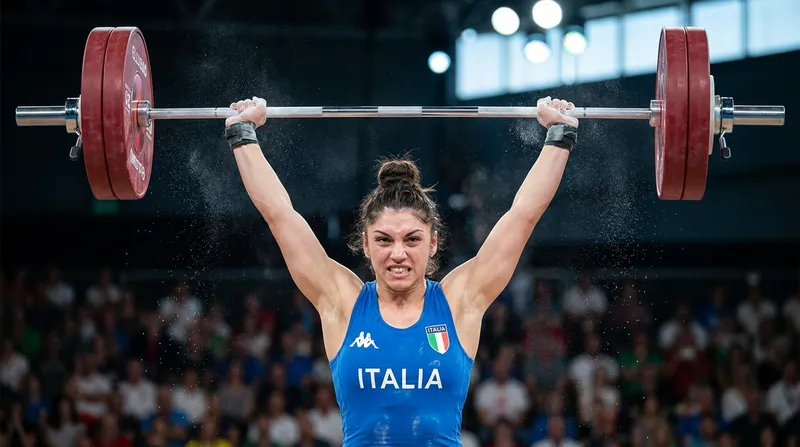
However, the second pull only generates enough momentum to elevate the barbell to roughly chest height. This introduces the great paradox of the snatch: the lifter does not actually pull the bar all the way overhead. Instead, once the barbell reaches its maximum velocity, the athlete must actively pull their own body underneath the floating weight. This phase, known as the turnover and catch, requires the lifter to rapidly drop into a deep overhead squat, locking their arms out before the barbell begins its descent.[3]
Tracking the barbell's path during this sequence reveals that it does not travel in a straight vertical line. Kinematic analysis shows an "S-curve" trajectory. The bar sweeps in toward the lifter's shins during the first pull, makes contact at the hips during the second pull, and loops slightly outward and back around as the lifter drops underneath it. Minimizing horizontal displacement while maximizing vertical velocity is the hallmark of elite technique.[1]
Despite the proven benefits of the snatch, a modern debate has emerged in the strength and conditioning community regarding its necessity. Some performance coaches argue that while Olympic lifts produce incredible power, bodyweight vertical jumps can actually yield even higher peak power outputs—sometimes exceeding 7,000 watts. Because the snatch requires months or years to master technically, some programs now favor simple plyometrics to achieve similar explosive benefits without the steep learning curve.
There is also a fierce debate within the weightlifting community itself regarding the concept of triple extension. Traditional coaching emphasizes achieving full extension—stretching the body as tall as possible on the toes—to maximize upward force. However, some modern biomechanists point to the "Russian technique," which argues that fully extending the ankles and hips takes too much time. By cutting the extension slightly short, the lifter can change direction and drop under the bar milliseconds faster, which is often the difference between a made and missed lift at the Olympic level.
These debates highlight the evolving nature of sports science, where high-speed cameras and force plates continually refine our understanding of human limits. Whether an athlete uses the snatch to shave tenths of a second off a sprint, or a dedicated weightlifter spends a lifetime perfecting the S-curve trajectory, the movement remains a masterclass in applied physics.[3]
Ultimately, the snatch stands alone in the world of strength sports. It demands the raw strength of a powerlifter, the explosive speed of a sprinter, and the spatial awareness of a gymnast. It is a fleeting, one-second display of biomechanical perfection that proves the human body is capable of generating extraordinary power when every joint and muscle fires in perfect harmony.[3]
The essentials
- The snatch generates up to 5,500 watts of power, vastly exceeding traditional powerlifting movements like the deadlift.
- The lift relies on 'triple extension'—the simultaneous firing of the hips, knees, and ankles to propel the barbell upward.
- Athletes do not lift the bar all the way overhead; they pull themselves underneath it once it reaches maximum velocity.
- The biomechanics of the snatch directly translate to sprinting and jumping, making it a staple in athletic conditioning.
- Some modern coaches debate whether the highly technical lifts are necessary, pointing out that vertical jumps can produce even higher peak power.
- Traditional Weightlifting Coaches
- Argue that mastering the Olympic lifts and achieving full triple extension is the gold standard for developing athletic power.
- Modern Biomechanists
- Focus on barbell trajectory efficiency, sometimes questioning if full extension is necessary to get under the bar quickly.
- Alternative Performance Coaches
- Argue that bodyweight plyometrics and jumps produce higher peak power without the steep technical learning curve of the snatch.
Perspectives this story doesn't cover
- Masters athletes adapting the lifts for aging and bone density
- CrossFit practitioners who perform the lifts for high repetitions rather than maximal weight
Sources
Source coverage
3 outlets
3 viewpoints surfaced



- [1]MDPIModern Biomechanists
Kinematic Analysis of the Snatch in Elite Weightlifters
Read on MDPI → - [2]CrossFitTraditional Weightlifting Coaches
A Closer Look at the Mechanics of the Snatch
Read on CrossFit → - [3]Factlen Editorial Team
Synthesis by Factlen editorial team
Read on Factlen Editorial Team →
More in Sports
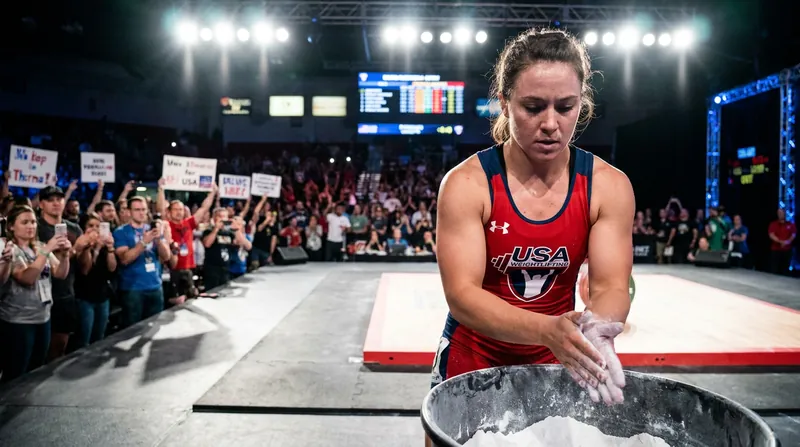
See all →Injury
Global Weightlifting Injury Report: Djuraev Navigates Hip Rehab as Charron Manages Chronic Knee Ahead of Glasgow
2 sources
Standings
The Race to Ningbo: Men's 65kg Global Standings Tighten as Ozbek, Mosquera, and Morris Collide
2 sources
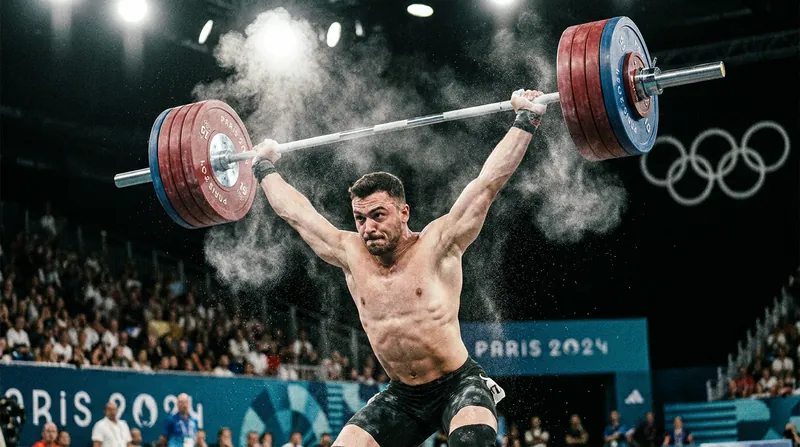
Injury
Global Weightlifting Injury Report: Suharevs and Koanda Mount Platform Returns as Medical Consensus Shifts
3 sources
Injury
Giulia Imperio Returns From Shoulder Surgery to Sweep Gold at the 2026 European Weightlifting Championships
5 sources
Comments
Every angle. Every day.
Get Sports stories with full source coverage and perspective breakdowns, free every day.