
How Personalized mRNA Vaccines Are Reprogramming the Immune System to Hunt Cancer
Built on the technology that ended the pandemic, bespoke mRNA vaccines are training patients' own cells to identify and destroy tumors. New clinical data shows the custom treatments are cutting recurrence rates in half.
By Factlen Editorial Team
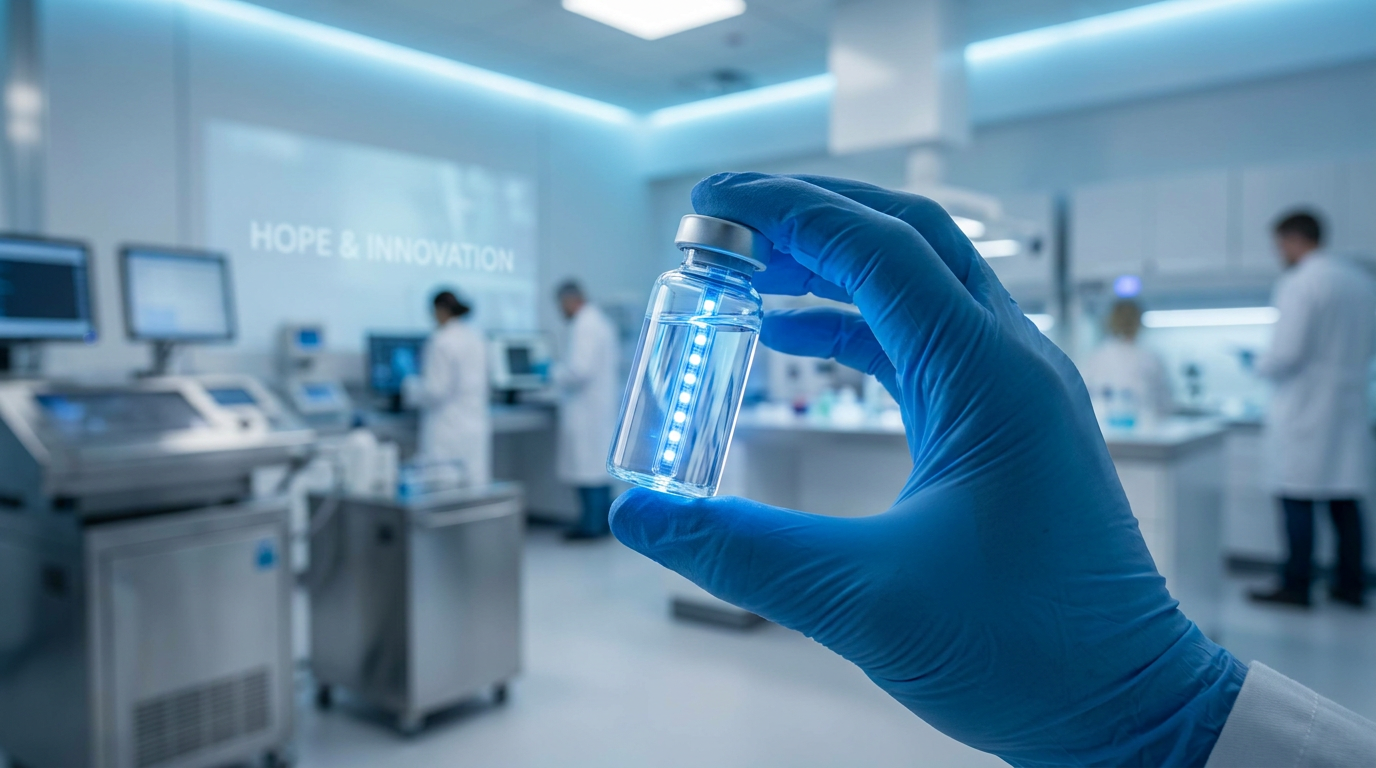
- Medical Researchers
- Focused on the biological mechanism, mRNA delivery, and sustained T-cell activation.
- Clinical Oncologists
- Focused on patient survival rates, trial data, and combining vaccines with existing immunotherapies.
- Health Policy Analysts
- Focused on the logistical bottlenecks, manufacturing costs, and funding challenges of bespoke treatments.
What's not represented
- · Patients navigating the high costs of experimental trials
- · Insurance providers evaluating coverage for bespoke therapies
Why this matters
For decades, cancer treatment relied on toxic chemicals that indiscriminately poisoned the body. Personalized mRNA vaccines represent a paradigm shift in medicine: turning the patient's own immune system into a highly specific, relentless assassin that targets only the disease.
Key points
- Unlike traditional preventative shots, most mRNA cancer vaccines are therapeutic treatments designed to hunt down existing tumors.
- Each vaccine is custom-built using the unique genetic mutations, or neoantigens, found in a specific patient's biopsy.
- Recent Phase 2 trial data shows the vaccines cut the risk of melanoma recurrence or death by 49% when paired with immunotherapy.
- New trials are beginning to test the technology's preventative potential in patients with high-risk genetic conditions like Lynch syndrome.
The word "vaccine" usually conjures images of childhood shots or winter flu clinics—preventative measures designed to stop a virus before it can take hold in the body. But a new class of medical technology is upending that definition entirely. Built on the exact same molecular foundation that helped end the global pandemic, messenger RNA (mRNA) cancer vaccines are not designed to prevent disease. Instead, they are highly advanced therapeutic weapons built to hunt down and destroy tumors that already exist. After decades of false starts and incremental progress, this technology is now being deployed against oncology's hardest targets, fundamentally changing how medicine approaches the disease.[7]
The core problem these vaccines solve is cancer's biological "invisibility cloak." Unlike a virus or a bacteria, which the body immediately recognizes as a foreign invader, a tumor is made of the patient's own cells gone rogue. Because these malignant cells perfectly masquerade as healthy tissue, the immune system often walks right past them, allowing the cancer to grow unchecked. To strip away this disguise, scientists are using mRNA to hand the immune system a highly specific, molecular "wanted poster" that highlights the subtle differences between a healthy cell and a cancerous one.[2][7]
The process of creating this wanted poster begins in the operating room. When a patient undergoes surgery to remove a tumor, a piece of that malignant tissue is preserved and sent to a specialized laboratory. There, scientists sequence the tumor's DNA to identify "neoantigens"—unique, mutated proteins that exist only on the surface of the cancer cells, and nowhere else in the patient's body. Because every single patient's cancer is driven by a unique set of genetic errors, these neoantigens vary wildly from person to person. A treatment that works for one patient's melanoma will be completely useless for another's.[1][2]
This biological reality is where the extreme personalization of the therapy comes into play. Once the sequencing is complete, artificial intelligence and bioinformatics tools analyze the data to select the most prominent and vulnerable neoantigens—often identifying up to 60 different targets for a single tumor. Scientists then synthesize a custom strand of messenger RNA that contains the exact genetic blueprint for these abnormal proteins. This bespoke mRNA strand is the core of the vaccine, serving as a temporary instruction manual for the patient's immune system.[2][3]

However, raw mRNA is incredibly fragile; if injected directly into the bloodstream, the body's natural enzymes would shred it to pieces in seconds. To protect the payload, the synthetic mRNA is encapsulated in a lipid nanoparticle—a microscopic, engineered bubble of fat. This lipid envelope is crucial to the vaccine's success. Because human cells are naturally receptive to fats, the lipid nanoparticle allows the vaccine to safely circulate through the body and seamlessly merge with the outer membrane of the patient's immune cells, delivering the mRNA safely inside.[1][2]
Once the lipid nanoparticle is absorbed by dendritic cells—the specialized sentinels of the human immune system—the real work begins. Inside the cell, the mRNA directs the ribosomes to manufacture the tumor neoantigens. The dendritic cells then display these newly minted, harmless cancer proteins on their outer surface. This presentation triggers a massive cellular alarm across the immune system. It specifically activates T-cells, the body's specialized microscopic assassins, training them to recognize and destroy any cell in the body bearing those exact mutated proteins.[1][3]
The clinical results of this complex biological mechanism are now moving from theoretical promise to tangible, life-saving reality. At the American Society of Clinical Oncology (ASCO) meeting in June 2026, pharmaceutical giants Moderna and MSD presented landmark five-year data for their personalized melanoma vaccine, known as intismeran. The results sent ripples through the medical community, demonstrating unprecedented long-term efficacy in patients who had their primary tumors surgically removed but remained at a dangerously high risk for the cancer returning and spreading.[4][6]
The clinical results of this complex biological mechanism are now moving from theoretical promise to tangible, life-saving reality.
According to the trial data, when the custom mRNA vaccine was combined with the standard immunotherapy drug Keytruda, it reduced the risk of cancer recurrence or death by a staggering 49% compared to patients who received Keytruda alone. Even more critically, the combination therapy reduced the risk of the cancer metastasizing—spreading to distant organs like the lungs or brain—by 59%. For oncologists accustomed to measuring progress in single-digit percentage points, cutting the risk of death and metastasis in half represents a generational leap forward.[4][6]

Other major players in the biotechnology sector are seeing similar, highly encouraging signals. BioNTech, the German company that co-developed the first authorized COVID-19 vaccine, is advancing its own suite of personalized candidates. In recent phase 2 trials for advanced melanoma, the company reported significant tumor shrinkage, particularly in patients who had exhausted all other available treatment options. The data suggests that mRNA vaccines could eventually replace the need for broad, damaging radiation therapy following tumor surgery.[3][6]
The technology is also rapidly expanding far beyond skin cancer. Large-scale clinical trials are currently underway targeting pancreatic cancer, glioblastoma, and head and neck squamous cell carcinomas. These are notoriously difficult, aggressive malignancies where traditional treatments often fall short and survival rates have remained stubbornly low for decades. By training the immune system to hunt down the microscopic disease left behind after surgery, researchers hope to turn these fatal diagnoses into manageable, chronic conditions.[4][6]
While the primary focus of the industry remains therapeutic—treating patients who already have cancer—the preventative potential of mRNA technology is finally being put to the test. In the summer of 2026, the University of Oxford, in partnership with Moderna, launched the first-ever clinical trial of an mRNA vaccine designed to actually prevent cancer before it starts. The trial specifically targets individuals with Lynch syndrome, an inherited genetic condition that severely impairs the body's ability to repair DNA.[5]
People born with Lynch syndrome face an agonizing reality: an up to 80% lifetime risk of developing colorectal, pancreatic, stomach, and other cancers, often at a very young age. The Oxford trial aims to leverage mRNA technology to train the immune system to recognize and eliminate pre-cancerous cells the moment they begin to mutate. If successful, this approach could shift the paradigm of cancer care for genetically predisposed individuals from a posture of anxious surveillance to one of active, lifelong prevention.[5]

Despite the immense clinical promise, significant logistical and economic hurdles remain before personalized vaccines can become a standard of care. Manufacturing a bespoke pharmaceutical product for every single patient is a monumental task. The process requires a seamless, rapid supply chain that can move a physical biopsy from the operating room to a sequencing lab, analyze the data, synthesize the custom mRNA, and ship the finished vaccine back to the infusion clinic—all within a matter of weeks, before the patient's cancer can aggressively return.[2][7]
There are also complex biological challenges that researchers are still working to overcome. Unlike preventative viral vaccines, which rely primarily on B-cells producing a simple antibody response, cancer vaccines require a potent, aggressive, and sustained T-cell response. Tumors are highly evolved survival machines, adept at suppressing immune activity in their immediate microenvironment. This is exactly why these vaccines are almost always paired with checkpoint inhibitor drugs, which act to keep the immune system engaged and prevent the tumor from putting the attacking T-cells to sleep.[1][2]
Ultimately, personalized mRNA vaccines represent a fundamental, philosophical shift in the history of oncology. Rather than relying on toxic chemicals or radiation to indiscriminately poison fast-growing cells—damaging healthy tissue and causing severe side effects in the process—medicine is learning to speak the body's own molecular language. By reprogramming the patient's immune system to do the killing precisely, relentlessly, and safely, science is finally turning our own biology into the ultimate cure.[7]
How we got here
2020-2021
The rapid success of mRNA COVID-19 vaccines validates the safety and delivery mechanism of lipid nanoparticles on a global scale.
2023
Early Phase 2 data shows significant promise for personalized mRNA vaccines in high-risk melanoma patients.
June 2026
Moderna and MSD present landmark 5-year data at ASCO, confirming a 49% reduction in recurrence for their melanoma vaccine.
Summer 2026
The University of Oxford launches the first clinical trial of an mRNA vaccine designed to prevent cancer in patients with Lynch syndrome.
Viewpoints in depth
Medical Researchers
Focused on the biological mechanism and the challenge of sustained T-cell activation.
For immunologists and molecular biologists, the breakthrough isn't just that mRNA works, but that it can successfully bypass cancer's natural defenses. Tumors are notoriously adept at creating an immunosuppressive microenvironment that puts immune cells to sleep. Researchers emphasize that the lipid nanoparticle delivery system is the unsung hero of this process, allowing the fragile mRNA to survive long enough to reach dendritic cells. Their current focus is on optimizing the selection of neoantigens—ensuring the vaccine targets the mutations most likely to trigger a violent T-cell response, rather than mutations the immune system might ignore.
Clinical Oncologists
Focused on patient survival rates and integrating vaccines with existing therapies.
Physicians treating patients on the front lines view mRNA vaccines as the ultimate combination therapy. Because tumors can mutate to evade a single line of attack, oncologists stress that vaccines are rarely a silver bullet on their own. Instead, they are being paired with checkpoint inhibitors—drugs like Keytruda that strip away the tumor's 'invisibility cloak' while the vaccine provides the immune system with the exact coordinates of the target. For clinicians, the 49% reduction in melanoma recurrence is a watershed moment that proves the combination approach can effectively mop up microscopic disease left behind after surgery.
Health Policy Analysts
Focused on the logistical bottlenecks and manufacturing costs of bespoke treatments.
While the clinical data is overwhelmingly positive, health economists warn that scaling personalized vaccines presents an unprecedented logistical nightmare. Unlike traditional drugs manufactured in massive batches, a personalized cancer vaccine requires a dedicated supply chain for a single individual. The tumor must be biopsied, sequenced, analyzed by AI, and the custom mRNA synthesized and shipped back to the patient—often within a matter of weeks. Analysts caution that until manufacturing processes are heavily automated, the astronomical cost of these bespoke therapies could limit access to only the wealthiest healthcare systems.
What we don't know
- Whether the immune system's memory of the tumor neoantigens will last for decades, or if patients will require booster shots to prevent late-stage recurrence.
- How effectively mRNA vaccines can penetrate 'cold' tumors—cancers like pancreatic or prostate that naturally repel immune cells.
- The final price tag of commercialized personalized vaccines, and whether insurance providers will cover the complex sequencing and manufacturing costs.
Key terms
- Messenger RNA (mRNA)
- A molecule that carries genetic instructions from DNA to the cell's protein-making machinery.
- Neoantigen
- An abnormal protein found only on the surface of cancer cells, created by tumor mutations.
- Lipid Nanoparticle
- A microscopic bubble of fat used to protect and deliver the fragile mRNA into the patient's cells.
- Dendritic Cell
- A type of immune cell that captures foreign antigens and displays them to activate T-cells.
- T-Cell
- A specialized white blood cell that acts as the immune system's assassin, hunting down and destroying infected or cancerous cells.
- Checkpoint Inhibitor
- A type of immunotherapy drug that blocks proteins that stop the immune system from attacking cancer cells, often paired with cancer vaccines.
Frequently asked
Are these vaccines meant to prevent cancer?
Most mRNA cancer vaccines are therapeutic, meaning they are designed to treat patients who already have cancer by preventing recurrence and metastasis. However, new trials are beginning to test preventative vaccines for high-risk genetic conditions.
How is this different from chemotherapy?
Chemotherapy indiscriminately attacks all fast-growing cells in the body, causing severe side effects. mRNA vaccines train the patient's own immune system to specifically target only the mutated cancer cells.
Why do they need to be personalized?
Every patient's tumor has a unique set of genetic mutations (neoantigens). A vaccine that works for one person's melanoma will not work for another person's melanoma, requiring a custom-built mRNA strand for each patient.
When will these be widely available?
While currently only available through clinical trials, strong Phase 2 and Phase 3 data suggest personalized cancer vaccines could become a standard part of oncology care within the next few years.
Sources
Source coverage
7 outlets
3 viewpoints surfaced







[1]Royal College of PathologistsMedical Researchers
An update on mRNA cancer vaccines
Read on Royal College of Pathologists →[2]Binaytara FoundationClinical Oncologists
Top 8 Takeaways on mRNA Cancer Vaccines and Personalized Immunotherapy Development
Read on Binaytara Foundation →[3]BioNTechMedical Researchers
Personalised mRNA Cancer Vaccines
Read on BioNTech →[4]Clinical Trials ArenaHealth Policy Analysts
ASCO26: Cancer vaccines and at-home injectable drugs continue to show promise
Read on Clinical Trials Arena →[5]University of OxfordMedical Researchers
First trial of vaccine to prevent Lynch syndrome-associated cancers approved to start in Oxford
Read on University of Oxford →[6]Chosun DailyClinical Oncologists
Personalized Cancer Vaccines Slash Recurrence Risk by 49% in Trials
Read on Chosun Daily →[7]Factlen Editorial TeamHealth Policy Analysts
Synthesis by Factlen editorial team
Read on Factlen Editorial Team →


Every angle. Every day.
Get guides stories with full source coverage and perspective breakdowns delivered to your inbox.