
Oil Prices Collapse as U.S. and Iran Reach Deal to Reopen Strait of Hormuz
A preliminary peace agreement aims to end the 100-day closure of the world's most critical energy chokepoint, though logistical hurdles mean full relief for the global economy will take months.
By Factlen Editorial Team
- Energy Markets
- Focuses on the immediate price collapse and the removal of the worst-case supply shock.
- Asian Importers
- Emphasizes the deep structural scarring, depleted reserves, and the reality that economic relief will be delayed by months.
- Shipping & Logistics
- Highlights the physical impossibility of an overnight reopening, pointing to mine clearance, insurance premiums, and the massive vessel backlog.
- Macroeconomists
- Analyzes the long-term impact on global inflation, supply chains, and central bank interest rate policies.
What's not represented
- · Middle Eastern Oil Producers
- · Environmental Groups advocating for accelerated renewable transition
Why this matters
The reopening of the Strait of Hormuz removes the immediate threat of $150+ oil and a severe global recession. However, the months-long delay in clearing trapped ships means consumers will continue to face elevated inflation and supply chain disruptions through the end of the year.
Key points
- The U.S. and Iran have reached a preliminary agreement to lift the naval blockade and reopen the Strait of Hormuz.
- Brent crude prices have collapsed below $80 a barrel, removing the immediate threat of a severe global recession.
- Logistics experts warn that clearing naval mines and a 500-ship backlog will delay the physical resumption of trade for weeks.
- Asian economies, which rely heavily on Middle Eastern energy, will continue to face supply chain bottlenecks and elevated costs through the end of the year.
After more than 100 days of the most severe energy supply disruption in modern history, the global economy is bracing for relief. On Sunday, the United States and Iran announced a preliminary peace agreement aimed at ending their months-long conflict and reopening the Strait of Hormuz. The tentative deal, which extends an existing ceasefire by 60 days, ties the reopening of the critical waterway to the removal of the U.S. naval blockade on Iranian ports. If finalized, the agreement will end a maritime standoff that paralyzed international shipping and sent shockwaves through global supply chains.[6]
The financial markets reacted with immediate euphoria to the diplomatic breakthrough. Brent crude, the international oil benchmark, tumbled below $80 a barrel for the first time in over three months, while global stock markets rallied to record highs on the prospect of normalized trade. The sudden price drop represents a massive retreat from the peak of the crisis in March, when oil surged past $120 a barrel and threatened to plunge the global economy into a deep, stagflationary recession.[1][2][5]
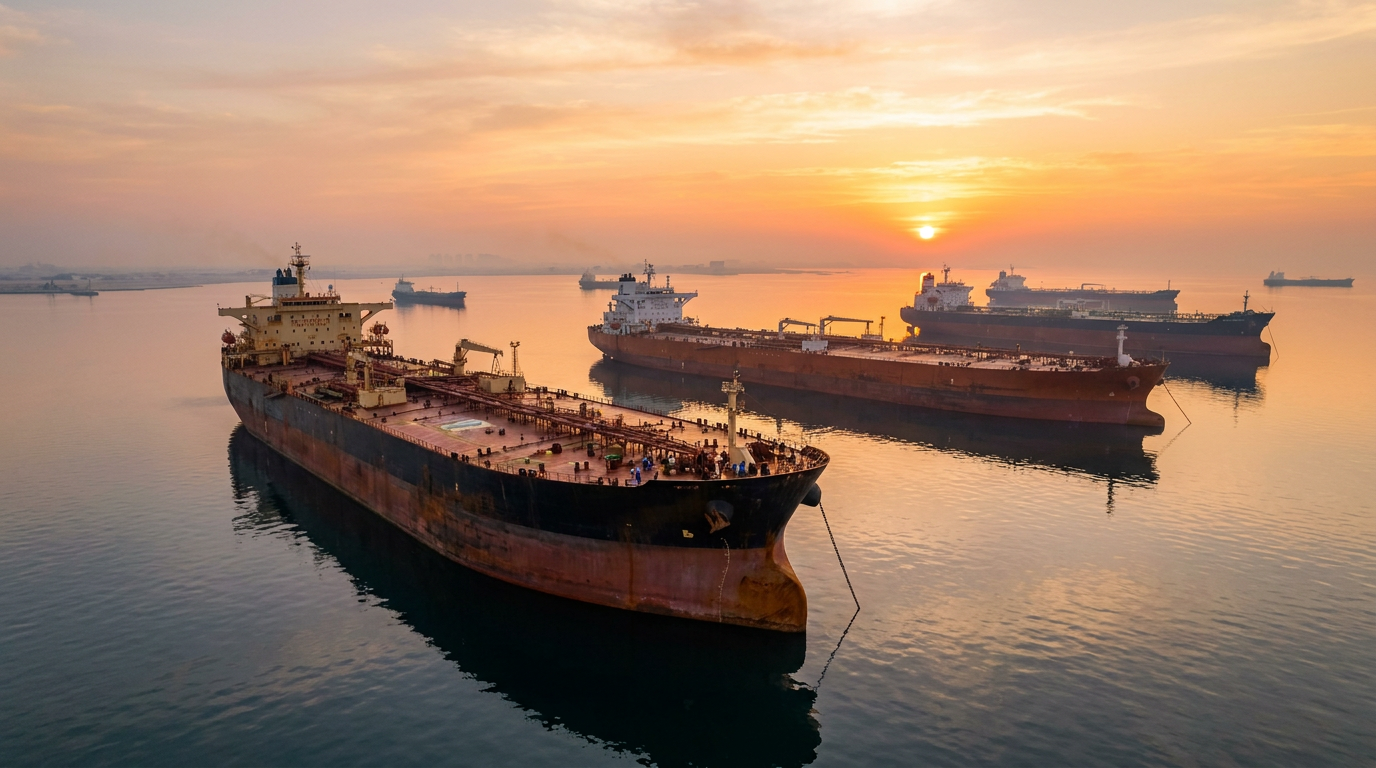
To understand the magnitude of the relief, one must understand the unique geography of the crisis. The Strait of Hormuz is a narrow maritime chokepoint between Oman and Iran that serves as the primary artery for Middle Eastern energy exports. In normal times, roughly 20 percent of the world's seaborne crude oil and 90 percent of Asia's liquefied natural gas transit through this corridor. There are virtually no alternative pipeline routes capable of handling this volume of energy.[7][8]

When the conflict erupted on February 28, 2026, Iran effectively closed the strait, triggering what the International Energy Agency characterized as the largest global oil-supply disruption in history. The sudden removal of millions of barrels of daily supply forced nations to draw down strategic petroleum reserves at a historic pace. The blockade not only stranded energy exports but also trapped hundreds of commercial vessels, severing a vital node in the global supply chain.[6][8]
Yet, while political leaders are declaring victory—with U.S. President Donald Trump urging the world to "let the oil flow"—logistics experts warn that the physical resumption of trade will be painstakingly slow. The reopening of a heavily militarized maritime corridor is a complex mechanical and legal process, not a switch that can be flipped overnight. The political agreement is merely the first step in a long operational recovery.[2][3]
The most immediate hurdle is physical safety and maritime security. The waters of the strait must undergo extensive mine clearance operations before internationally recognized transit lanes can be declared safe for commercial navigation. Until that sweeping process is complete and verified by independent maritime authorities, the risk of catastrophic damage to vessels remains unacceptably high for most commercial fleet operators.[3][9]
Furthermore, a massive logistical backlog must be cleared before normal traffic patterns can resume. Approximately 500 vessels are currently trapped in the Persian Gulf, waiting to exit through the narrow strait. Managing the orderly departure of these ships, while simultaneously processing the influx of empty tankers arriving to load new cargo, will severely test the region's maritime infrastructure and pilot services.[3][9]

Furthermore, a massive logistical backlog must be cleared before normal traffic patterns can resume.
Then there is the complex question of insurance and institutional trust. Ship captains, fleet owners, and maritime insurers will likely take their time assessing whether the passage is truly safe and whether the threat of Iranian attack has durably receded. A 60-day ceasefire provides a relatively narrow window for operations, and many insurers may demand exorbitant risk premiums until a permanent, binding treaty is ratified by all parties.[3]
The delayed timeline for physical shipping means that the economic scars of the conflict will persist, particularly in Asia. While Western nations primarily experienced the crisis through higher prices at the gas pump and elevated aviation costs, Asian economies faced acute physical shortages of fuel. The region relies heavily on the Middle East for its energy needs, with countries like the Philippines and Vietnam importing up to 90 percent of their crude from the Gulf.[4][8]
The prolonged closure forced governments across Southeast Asia into a state of severe energy triage. The Philippines was forced to declare a national emergency in March as reserves dwindled, while Vietnam, South Korea, and Bangladesh implemented strict energy rationing and work-from-home mandates to conserve fuel. The crisis exposed the deep vulnerabilities of economies built on imported fossil fuels.[8]
Even with the strait officially reopening, economists warn that Asia will not see immediate relief. Because trade flows have been disrupted for over three months, supply chain bottlenecks have choked industrial production and depleted commercial inventories. Furthermore, liquefied natural gas contracts in Asia are typically indexed to oil prices with a three- to six-month lag, meaning elevated natural gas costs will likely persist through the end of the year.[4]

Globally, the primary macroeconomic question is how quickly the drop in crude prices will translate into lower consumer inflation. The Federal Reserve Bank of Dallas previously estimated that a prolonged closure of the strait would severely amplify headline inflation throughout 2026. The recent price collapse removes the worst-case scenario from the board, giving central banks more flexibility to consider interest rate cuts in the coming quarters.[5][7][9]
However, lower wholesale oil prices do not immediately reverse the inflationary pressures already baked into the global economy. The higher costs of shipping, agriculture, and manufacturing incurred during the 100-day disruption are still working their way through the consumer supply chain. It will take months for cheaper energy to fully filter down to the retail level and reflect in official inflation data.[3][5]
Finally, the durability of the peace deal itself remains a significant source of uncertainty for global markets. The agreement, which is expected to be formally signed in Switzerland on Friday, faces multiple political flashpoints that could derail progress. Disputes over tanker transit fees and the ongoing Israeli military operations in Lebanon could easily fracture the fragile consensus before the ink is dry.[6]

For now, the global economy has stepped back from the brink of a catastrophic energy shock. But the 2026 Iran War has fundamentally altered the calculus of global trade, serving as a stark wake-up call about the fragility of maritime chokepoints and the deep vulnerabilities of an interconnected, just-in-time energy market.[8][9]
How we got here
Feb 28, 2026
Conflict erupts, and Iran effectively closes the Strait of Hormuz to commercial shipping.
March 2026
Oil prices surge past $120 a barrel; multiple Asian nations declare energy emergencies.
April 2026
An initial ceasefire halts active hostilities, but the naval blockade remains in place.
June 14, 2026
The U.S. and Iran announce a preliminary deal to lift the blockade and reopen the strait.
June 19, 2026
Formal signing of the peace accord is scheduled to take place in Switzerland.
Viewpoints in depth
Energy Markets
Traders are pricing in the return of millions of barrels of Gulf oil, evaporating the war premium.
For financial markets, the preliminary deal represents the removal of a catastrophic tail risk. Traders had spent the spring pricing in the possibility of $150 or even $200 oil, which would have triggered a severe global recession. The immediate drop below $80 reflects the evaporation of this 'war premium.' However, analysts warn that the market is currently trading on political sentiment rather than physical supply; if the Friday signing falls through or the ceasefire breaks down, prices could violently snap back to crisis levels.
Asian Importers
Nations heavily reliant on the Strait argue that the economic damage will take the rest of the year to repair.
For nations like Japan, South Korea, and the Philippines, the crisis exposed a fatal flaw in their economic models: an over-reliance on a single maritime chokepoint. Policymakers in the region argue that even with the strait open, the economic damage of the past 100 days—depleted strategic reserves, soaring inflation, and stalled factories—cannot be undone overnight. Because liquefied natural gas contracts are priced on a lag, these economies will continue paying elevated energy costs well into the winter.
Shipping & Logistics
Fleet operators emphasize that physical bottlenecks and security risks will delay the resumption of trade.
The maritime industry is pushing back against the political narrative of an immediate reopening. Fleet operators and maritime insurers emphasize that clearing naval mines, vetting insurance claims, and untangling a 500-ship traffic jam requires meticulous, slow-moving coordination. Until independent authorities can guarantee the safety of the transit lanes, many operators will refuse to send multi-million dollar vessels and their crews into the corridor, meaning physical oil flows will remain constrained for weeks.
What we don't know
- How long it will take to fully clear the Strait of Hormuz of naval mines.
- Whether maritime insurers will demand exorbitant risk premiums that keep shipping costs elevated.
- If ongoing disputes over tanker transit fees or regional conflicts will derail the formal signing of the treaty.
Key terms
- Strait of Hormuz
- A narrow maritime chokepoint between Oman and Iran that serves as the only sea passage from the Persian Gulf to the open ocean.
- Brent Crude
- The primary international benchmark price for purchases of oil worldwide.
- Liquefied Natural Gas (LNG)
- Natural gas that has been cooled to a liquid state for easier and safer non-pipeline transport, heavily relied upon by Asian economies.
- Naval Blockade
- A military effort to cut off food, supplies, war material, or communications from a particular area by force.
Frequently asked
Why did oil prices drop so quickly?
Markets price in future expectations. The announcement of the peace deal removed the fear of a permanent supply shock, causing traders to sell off the 'war premium' that had kept prices artificially high.
When will gas prices at the pump go down?
It will likely take several weeks to months. The physical oil still needs to be extracted, shipped, refined, and distributed, and the logistical backlog in the Gulf will slow this process.
Why was Asia hit harder than the West?
Western nations have diversified energy sources and larger strategic reserves. Asian economies rely on the Middle East for up to 90% of their crude oil and liquefied natural gas imports.
Sources
Source coverage
9 outlets
4 viewpoints surfaced









[1]BloombergEnergy Markets
Oil Falls Below $80 With US-Iran Deal Set to Add Wave of Supply
Read on Bloomberg →[2]The GuardianEnergy Markets
Oil prices hit three-month low and markets reach record high amid Iran deal breakthrough
Read on The Guardian →[3]Associated PressShipping & Logistics
Even With a Deal to Reopen the Strait of Hormuz, It Could Take Weeks or Months for Oil to Fully Flow
Read on Associated Press →[4]The Business TimesAsian Importers
Strait of Hormuz reopening would offer relief for Asia, but economic scars will remain
Read on The Business Times →[5]Deutsche WelleMacroeconomists
US-Iran deal: When will oil prices fall?
Read on Deutsche Welle →[6]Journal of Petroleum TechnologyEnergy Markets
Oil Prices Ease as US-Iran Deal Emerges To Reopen the Strait of Hormuz
Read on Journal of Petroleum Technology →[7]Federal Reserve Bank of DallasMacroeconomists
The Impact of the 2026 Iran War on U.S. Inflation: A Scenario Analysis
Read on Federal Reserve Bank of Dallas →[8]International Energy AgencyAsian Importers
Iran war exposes Southeast Asia's energy risks
Read on International Energy Agency →[9]BNP Paribas Economic ResearchMacroeconomists
Reopening of the Strait of Hormuz: the oil market between short-term relief and persisting uncertainties
Read on BNP Paribas Economic Research →

More in business
See all 5 stories →AI Industry
SpaceX Acquires AI Coding Startup Cursor for $60 Billion Following Blockbuster IPO
0 sources

Media Consolidation
Fox to Acquire Roku for $22 Billion, Creating U.S. Television Juggernaut
0 sources

Recommerce
The Recommerce Revolution: Why Brands Are Taking Over the Secondhand Market in 2026
0 sources

Every angle. Every day.
Get business stories with full source coverage and perspective breakdowns delivered to your inbox.