
The Solid-State Battery Revolution: How the 'Holy Grail' of EVs is Finally Hitting the Road
Solid-state batteries are moving from the laboratory to production lines in 2026, promising to double EV range, slash charging times, and eliminate battery fires.
By Factlen Editorial Team
- Aggressive Adopters
- Chinese automakers and battery startups pushing for immediate commercialization in 2026.
- Methodical Incumbents
- Legacy automakers and major battery suppliers targeting 2027-2028 to ensure scale and reliability.
- Market Realists
- Analysts cautioning that high costs will limit early solid-state batteries to premium vehicles.
What's not represented
- · Raw Material Suppliers
- · Independent Safety Regulators
Why this matters
Solid-state batteries represent the biggest leap in automotive technology since the lithium-ion boom, promising to eliminate range anxiety and make electric vehicles capable of cross-country travel with gas-station-speed charging.
Key points
- Solid-state batteries replace flammable liquid electrolytes with solid materials like ceramics or sulfides.
- The technology promises to double EV range to over 1,000 kilometers and cut charging times to 15 minutes.
- Major automakers and startups are launching pilot production lines in 2026, with mass market targets set for 2028.
- High manufacturing costs mean the technology will initially be restricted to premium and luxury vehicles.
For the better part of a decade, the electric vehicle industry has chased a singular, elusive holy grail: the solid-state battery. Promised as the technology that would finally cure range anxiety and eliminate battery fires, it has perpetually seemed five years away. But in 2026, the timeline has abruptly compressed. Across laboratories in California, Japan, and China, solid-state cells are finally moving off research benches and onto pilot production lines, signaling a fundamental shift in how the world will drive.[4][6]
The stakes for this transition are monumental. Current lithium-ion batteries have powered the first wave of the EV revolution, but they are approaching their physical and chemical limits. To push electric vehicles into the mainstream—matching the convenience of a gas station fill-up and the range of a diesel sedan—automakers need a breakthrough, not an incremental update. Solid-state technology represents that leap, promising to double energy density, slash charging times, and drastically improve vehicle safety.[3][7]
To understand why solid-state batteries are so revolutionary, one must first look at the anatomy of the batteries currently powering everything from smartphones to electric SUVs. Traditional lithium-ion cells rely on a liquid electrolyte—a chemical soup that allows lithium ions to swim back and forth between the battery's positive cathode and negative anode. While effective, this liquid is highly flammable and volatile. If the battery is punctured in a crash or overheats during rapid charging, the liquid can ignite, leading to intense, difficult-to-extinguish fires.[6]
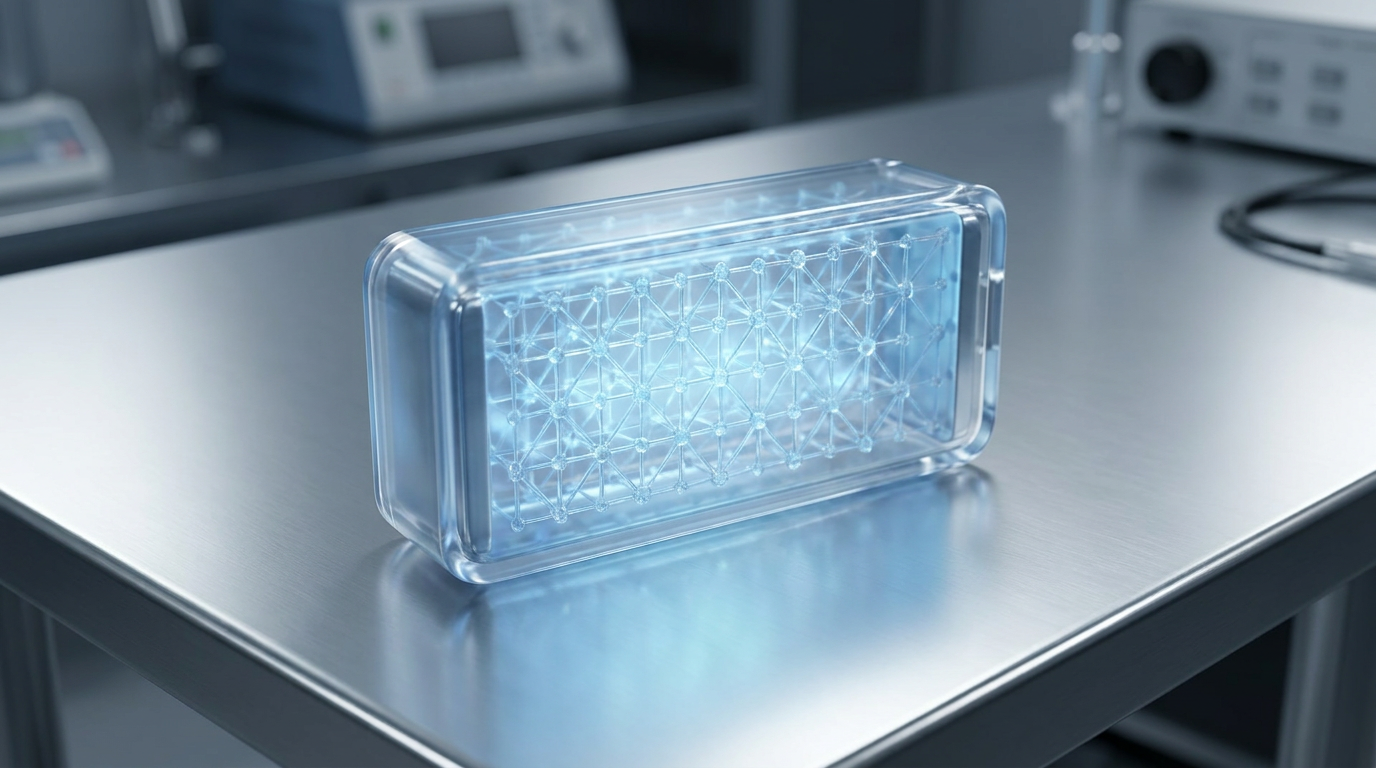
Solid-state batteries, as the name implies, replace this liquid bath with a solid material. Engineers use advanced ceramics, glass, polymers, or sulfides to act as both the separator and the electrolyte. This solid layer functions like a perfectly engineered crystal lattice, allowing lithium ions to pass through while remaining structurally rigid. By removing the flammable liquid entirely, the battery becomes inherently safer, acting as its own internal fireproof barrier.[5][6]

This structural stability unlocks a second, even more crucial advantage: the use of a pure lithium-metal anode. In standard batteries, the anode is typically made of graphite, which is heavy and bulky. Engineers have long wanted to use pure lithium metal instead, but doing so in a liquid battery causes "dendrites"—microscopic, needle-like metallic spikes that grow during charging and eventually pierce the battery's separator, causing a short circuit. The rigid barrier of a solid-state electrolyte physically blocks these dendrites from forming, allowing manufacturers to safely use lithium metal and dramatically shrink the battery's size.[5]
The performance gains from this architectural shift are staggering. Because the heavy graphite and liquid are removed, solid-state cells boast an energy density of 350 to 500 watt-hours per kilogram (Wh/kg), compared to the 250 Wh/kg ceiling of top-tier lithium-ion cells. For the driver, this translates directly to range. Vehicles equipped with these next-generation packs are targeting real-world ranges of 800 to over 1,000 kilometers (roughly 500 to 620 miles) on a single charge, effectively neutralizing range anxiety for good.[2][7]

Charging speeds are equally transformed. Because solid electrolytes are vastly more stable at high temperatures, they can accept massive amounts of electrical current without degrading or risking thermal runaway. Recent prototype demonstrations have shown solid-state cells charging from 10% to 80% capacity in under 15 minutes. This brings the EV charging experience remarkably close to the time it takes to refuel a traditional internal combustion engine.[6][7]
Recent prototype demonstrations have shown solid-state cells charging from 10% to 80% capacity in under 15 minutes.
Furthermore, solid-state batteries exhibit extraordinary resilience in extreme climates. Traditional EVs suffer significant range loss in freezing temperatures because the liquid electrolyte becomes sluggish. However, recent winter calibration testing in Mohe, China, demonstrated that a solid-state prototype retained over 74% of its charge in punishing -30°C (-22°F) conditions. Conversely, they can also operate safely at temperatures up to 80°C (176°F), where standard batteries would rapidly degrade.[2][6]
For years, these benefits were confined to laboratory prototypes, but 2026 has brought a flurry of commercialization milestones. Greater Bay Technology (GBT), a battery manufacturer backed by China's GAC Group, recently announced that its first "A-sample" all-solid-state cells had rolled off the production line. These cells successfully passed extreme safety tests—including needle penetration and thermal shock—without catching fire, prompting GBT to target mass production by the end of the year.[1][5]
Other major players are matching this aggressive pace. Chinese automaker Dongfeng has announced plans to begin mass-producing solid-state batteries in the second half of 2026, aiming to integrate them into vehicles capable of exceeding 1,000 kilometers of range. Meanwhile, Volkswagen-backed QuantumScape has inaugurated its "Eagle Line" pilot facility in California, and a joint venture between Toyota and QuantumScape recently demonstrated a breakthrough 800-mile real-world range.[2][4][7]

Toyota, which holds over 1,000 patents in solid-state technology, is taking a slightly more methodical approach. The Japanese automotive giant is targeting 2027 to 2028 for the mass integration of solid-state batteries into its electric lineup. Nissan is following a similar timeline, currently building a pilot production factory in Yokohama with the goal of mass-producing all-solid-state vehicles by 2028.[6]
Despite this rapid progress, the transition is not without significant hurdles. Scaling up from a controlled laboratory environment to a gigafactory floor is notoriously difficult. Every solid electrolyte material comes with inherent trade-offs. Sulfide-based electrolytes conduct ions beautifully but react poorly with air and moisture, requiring expensive, hyper-dry manufacturing environments. Oxide-based materials are incredibly stable but tend to be brittle, risking micro-cracks under the physical pressure of repeated charging cycles.[5]
Then there is the issue of cost. Currently, manufacturing a solid-state battery is estimated to be three to five times more expensive than producing a conventional lithium-ion pack. The complex manufacturing processes and the need for high-purity materials mean that economies of scale will take years to achieve. Analysts predict that until production volumes scale up in the early 2030s, the technology will carry a steep premium.[4]
Because of this cost disparity, solid-state batteries will not immediately replace standard batteries across the board. Instead, the EV market is likely to bifurcate. Solid-state technology will debut in premium, high-performance, and luxury vehicles where buyers are willing to pay for extreme range and ultra-fast charging. Meanwhile, cheaper and highly durable lithium-iron-phosphate (LFP) and emerging sodium-ion batteries will dominate the mass market and entry-level EV segments.[4]

Even with a staggered rollout, the arrival of solid-state batteries marks a point of no return for the automotive industry. By proving that an electric vehicle can travel 800 miles, charge in 12 minutes, and operate safely in sub-zero blizzards, automakers are systematically dismantling the final arguments against EV adoption.[7]
The internal combustion engine has enjoyed a century of dominance, continuously refined to offer unparalleled convenience. But as solid-state production lines spin up across the globe in 2026, the technological ceiling of the electric car has been shattered. The next era of mobility is no longer a distant promise; it is currently rolling off the assembly line.[1][7]
How we got here
1970s–1980s
Early research into solid electrolytes yields thin-film batteries for small medical devices like pacemakers.
2020
QuantumScape goes public, raising significant capital to scale its proprietary ceramic separator technology.
Early 2026
Dongfeng successfully tests a solid-state EV prototype in -30°C conditions, retaining 74% of its charge.
April 2026
Greater Bay Technology announces its first A-sample solid-state cells have rolled off the production line.
2027–2028
Targeted window for mass-market integration by legacy automakers like Toyota and Nissan.
Viewpoints in depth
Aggressive Adopters
Chinese automakers and battery startups pushing for immediate commercialization in 2026.
Companies like Greater Bay Technology and Dongfeng view solid-state batteries as the ultimate competitive wedge to dominate the global EV market. Rather than waiting for perfect manufacturing yields, these firms are aggressively pushing A-sample cells into pilot vehicles in 2026. They argue that rapid iteration in real-world conditions—such as Dongfeng's extreme cold-weather testing in Mohe—is the only way to solve the remaining engineering bottlenecks. For this camp, being first to market with a 1,000-kilometer range vehicle is worth the high initial capital expenditure.
Methodical Incumbents
Legacy automakers and major battery suppliers targeting 2027-2028 to ensure scale and reliability.
Automotive giants like Toyota and Nissan, alongside established battery makers like CATL, are deliberately pacing their solid-state rollouts for the 2027-2028 window. Holding the lion's share of patents, these incumbents argue that launching too early risks catastrophic brand damage if the brittle solid electrolytes fail under long-term consumer use. Their focus is on perfecting the manufacturing environment—particularly managing the moisture sensitivity of sulfide-based electrolytes—to ensure that when solid-state EVs do hit the market, they can be produced at a scale of millions, not thousands.
Market Realists
Analysts cautioning that high costs will limit early solid-state batteries to premium vehicles.
Industry analysts and financial observers emphasize that technological breakthroughs do not immediately rewrite market economics. Because solid-state cells currently cost three to five times more to produce than standard lithium-ion batteries, this camp argues they will remain a luxury feature for the rest of the decade. They predict a bifurcated market where solid-state tech powers high-end flagship sedans, while the vast majority of consumers continue to rely on increasingly cheap and efficient lithium-iron-phosphate (LFP) batteries for everyday commuting.
What we don't know
- Exactly how quickly manufacturing costs will fall to reach parity with traditional lithium-ion batteries.
- Which solid electrolyte material (sulfide, oxide, or polymer) will ultimately become the industry standard.
Key terms
- Electrolyte
- The medium inside a battery that allows ions to flow between the anode and cathode during charging and discharging.
- Dendrites
- Microscopic, needle-like metallic structures that can grow inside a liquid battery over time, potentially piercing internal layers and causing short circuits.
- Energy Density
- The amount of energy a battery can store relative to its weight or volume, typically measured in watt-hours per kilogram (Wh/kg).
- Anode
- The negative electrode of a battery, which releases electrons during discharge.
Frequently asked
Will solid-state batteries make EVs cheaper?
Not initially. They are currently estimated to be three to five times more expensive to produce than standard lithium-ion batteries and will likely debut exclusively in premium models.
Can my current EV be upgraded to a solid-state battery?
No. Solid-state batteries require entirely different pack architectures, thermal management systems, and vehicle integration, meaning they cannot be retrofitted into older cars.
Are solid-state batteries completely fireproof?
While they eliminate the highly flammable liquid electrolytes found in current batteries—drastically reducing fire risk—no high-density energy storage device is entirely without risk.
Sources
Source coverage
7 outlets
3 viewpoints surfaced







[1]ElectrekAggressive Adopters
China ramps up solid-state EV battery production
Read on Electrek →[2]CarNewsChinaAggressive Adopters
Dongfeng to mass-produce solid-state batteries in H2 2026, enabling 1,000 km+ range
Read on CarNewsChina →[3]CarsGuideMarket Realists
Groundbreaking EV battery tech coming soon: The latest on BYD, Chery, Mercedes-Benz and more car brands' solid-state battery plans
Read on CarsGuide →[4]CleanTechnicaMarket Realists
Solid-State Battery Milestones Appear Encouraging For Near Future
Read on CleanTechnica →[5]AutoblogAggressive Adopters
Greater Bay Technology has A-sample solid-state battery cells ready
Read on Autoblog →[6]EV Infrastructure NewsMethodical Incumbents
Solid-state batteries promise safer, faster-charging EVs with longer range
Read on EV Infrastructure News →[7]LaunchPad EVMethodical Incumbents
Toyota and QuantumScape demonstrate solid-state EV battery breakthrough
Read on LaunchPad EV →

Every angle. Every day.
Get transportation stories with full source coverage and perspective breakdowns delivered to your inbox.