
How Nutritional Psychiatry is Rewiring the Treatment of Depression and Anxiety
Emerging clinical evidence demonstrates that dietary interventions and gut microbiome modulation can actively treat clinical depression, shifting the focus of mental health care from the brain to the digestive tract.
By Factlen Editorial Team
- Nutritional Psychiatry Advocates
- Argue that diet is a foundational pillar of mental health treatment and should be prescribed alongside or before pharmaceuticals.
- Microbiome & Mechanism Researchers
- Focus on the mechanistic pathways and caution that the field requires more precision medicine approaches before broad claims are made.
- Clinical Skeptics & Traditionalists
- Emphasize that while diet is helpful, severe psychiatric conditions require targeted medication, and lifestyle interventions shouldn't replace proven clinical treatments.
What's not represented
- · Patients with severe eating disorders for whom diet-focused therapy may be triggering
- · Low-income communities lacking access to fresh, high-quality whole foods
Why this matters
For decades, mental health treatment has relied almost entirely on brain-targeted pharmaceuticals. The clinical validation that diet can actively treat depression by altering gut bacteria gives patients a powerful, daily tool to improve their own psychological well-being, fundamentally changing how psychiatry is practiced.
Key points
- The microbiota-gut-brain axis is a bidirectional communication network linking the digestive tract and the central nervous system.
- The landmark SMILES trial proved that a modified Mediterranean diet can effectively treat clinical depression, achieving a 32% remission rate.
- Beneficial gut bacteria ferment dietary fiber into short-chain fatty acids, which cross the blood-brain barrier to reduce neuroinflammation.
- Standard Western diets promote gut dysbiosis and systemic inflammation, which are consistently linked to psychiatric conditions.
- While promising, nutritional psychiatry is intended as an adjunct therapy, not a replacement for acute psychiatric care.
For decades, the standard medical approach to treating anxiety and depression has focused almost exclusively on the brain—specifically, on modulating neurotransmitters like serotonin and dopamine through pharmaceuticals. However, a quiet revolution in psychiatry is shifting the clinical gaze downward. Researchers are increasingly finding that psychological well-being may be fundamentally rooted in the gastrointestinal tract, offering patients a new, actionable pathway to mental health.[1][6]
This emerging paradigm is known as nutritional psychiatry, a field built on the study of the microbiota-gut-brain axis. This axis is a complex, bidirectional communication network that links the enteric nervous system of the gut with the central nervous system of the brain. It operates through a sophisticated web of neural, metabolic, immune, and endocrine signals, proving that the brain and the digestive system are in constant, dynamic conversation.[1][4]
The physical superhighway for this communication is the vagus nerve, which runs directly from the brainstem to the abdomen. But the chemical messengers are equally vital. An estimated 90% of the body's serotonin—the neurotransmitter heavily implicated in mood regulation—is produced not in the brain, but in the gut. When the gut microbiome is balanced, it continuously manufactures these essential neurochemicals, supporting emotional stability and cognitive function.[4][6]

The idea that food affects mood is ancient, but rigorous clinical proof was historically elusive. That changed with the publication of the SMILES (Supporting the Modification of lifestyle In Lowered Emotional States) trial, a landmark study that fundamentally altered the trajectory of mental health research. It was the first randomized controlled trial designed to test dietary improvement not just as a preventative measure, but as an active treatment for clinical depression.[2][7]
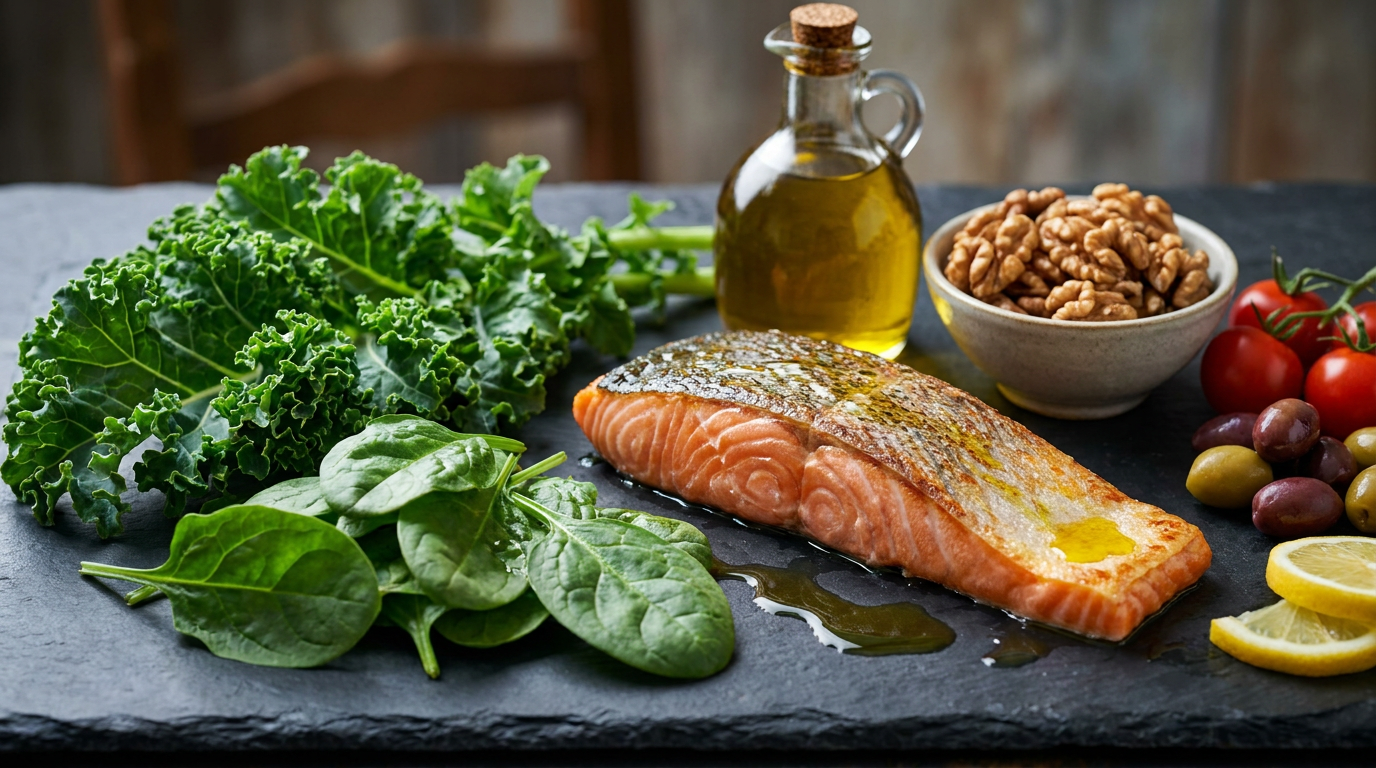
The SMILES trial recruited adults with moderate to severe major depressive disorder and randomly assigned them to either a dietary intervention group or a social support control group. The intervention group received personalized counseling from a clinical dietitian to adopt a modified Mediterranean diet—rich in vegetables, legumes, whole grains, nuts, and fish—while the control group received standard social support of the same duration.[2][7]
The results were striking. After 12 weeks, the dietary intervention group experienced a 7.1-point reduction on the Montgomery–Åsberg Depression Rating Scale (MADRS), a clinically significant improvement. More importantly, 32% of the participants in the diet group achieved full remission of their depression, compared to just 8% in the control group. The degree of dietary improvement directly correlated with the degree of symptom relief, providing powerful evidence of a causal relationship.[2][7]

How exactly does a bowl of lentils translate to a better mood? The answer lies largely in microbial metabolites, specifically short-chain fatty acids (SCFAs). When beneficial gut bacteria ferment dietary fiber—which is abundant in plant-based diets but severely lacking in standard Western diets—they produce SCFAs like butyrate, acetate, and propionate.[1][4]
How exactly does a bowl of lentils translate to a better mood?
Butyrate is particularly crucial for brain health. It crosses the blood-brain barrier, where it exerts potent anti-inflammatory effects and promotes neuroplasticity—the brain's ability to adapt and form new neural connections. A recent clinical trial involving nearly 600 adults demonstrated that direct supplementation with a butyrate generator resulted in a 12.9% reduction in fearfulness and a 17.15% increase in mental clarity within just a few weeks.[1][3][6]
Conversely, the standard Western diet—characterized by high intakes of ultra-processed foods, refined sugars, and saturated fats—starves these beneficial microbes. This dietary pattern is consistently linked to gut dysbiosis, a state of microbial imbalance. Dysbiosis compromises the intestinal barrier, leading to increased intestinal permeability, commonly known as "leaky gut."[4]
When the intestinal barrier is compromised, bacterial endotoxins escape into the bloodstream, triggering a systemic immune response. This chronic, low-grade inflammation is now recognized as a major driver of psychiatric conditions. Elevated inflammatory markers, such as C-reactive protein (CRP) and Interleukin-6 (IL-6), are consistently found in patients with depression and are associated with a reduced response to standard antidepressant medications.[4][8]

Beyond whole-food interventions, researchers are exploring the therapeutic potential of "psychobiotics"—live probiotic strains specifically formulated to confer mental health benefits. By introducing targeted beneficial bacteria, clinicians hope to artificially restore gut homeostasis, lower systemic inflammation, and improve stress resilience.[1][5]
However, the science of psychobiotics is highly nuanced. A systematic review highlighted that the psychological benefits of probiotics are deeply strain-specific and context-dependent. For instance, while certain multi-strain formulations have shown efficacy in reducing human anxiety, other strains that performed miraculously in animal models—such as Lactobacillus rhamnosus JB-1—failed to produce significant mood improvements in human clinical trials.[5]
The efficacy of gut-targeted interventions also appears to intersect with hormonal fluctuations. A comprehensive meta-analysis found that modulating the gut microbiome significantly reduced symptoms of depression and anxiety in women during key hormonal transitions, including the postpartum period and perimenopause. This suggests that the gut-brain axis may be particularly responsive during periods of endocrine vulnerability.[8]
Despite the robust emerging evidence, researchers caution against viewing nutritional psychiatry as a panacea. Dietary interventions are complex to study, as they are inherently vulnerable to expectation bias—participants know they are eating healthier, which can artificially inflate reported mood improvements. Furthermore, diet is not a replacement for acute psychiatric care or pharmacotherapy in cases of severe, life-threatening mental illness.[2][6][7]
Instead, the medical community is increasingly viewing nutrition as a foundational pillar of comprehensive psychiatric care. The success of trials like SMILES has sparked a growing movement to integrate clinical dietitians into mental health treatment teams, ensuring that patients receive evidence-based nutritional guidance alongside traditional therapies.[2][7]

Looking forward, the frontier of nutritional psychiatry lies in precision medicine. Because the human microbiome is as unique as a fingerprint, a diet that alleviates anxiety in one individual might be ineffective for another. Future clinical approaches will likely involve sequencing a patient's gut microbiome to prescribe highly personalized dietary interventions and targeted psychobiotics, fully unlocking the therapeutic potential of the gut-brain axis.[1][6]
How we got here
Early 2000s
Observational studies begin consistently linking Western dietary patterns with higher rates of depression and anxiety.
2013
The term 'psychobiotics' is coined to describe live organisms that confer mental health benefits through interactions with commensal gut bacteria.
January 2017
The landmark SMILES trial is published, providing the first randomized controlled evidence that dietary intervention can treat clinical depression.
2025-2026
New clinical trials and meta-analyses confirm the efficacy of direct butyrate supplementation and gut-targeted interventions for psychological well-being.
Viewpoints in depth
Nutritional Psychiatrists & Dietitians
Advocates argue that diet is a foundational pillar of mental health treatment.
This camp views the gut microbiome as the engine of emotional regulation. They point to robust clinical trial data, such as the SMILES trial, demonstrating that dietary interventions can achieve remission rates comparable to or better than some pharmaceuticals. They advocate for a systemic overhaul of psychiatric care, arguing that clinical dietitians should be standard members of any mental health treatment team, and that addressing a patient's diet should be a first-line intervention rather than an afterthought.
Traditional Psychopharmacologists
Skeptics emphasize that lifestyle interventions cannot replace proven clinical treatments for severe illness.
While acknowledging the benefits of a healthy diet, traditional psychiatrists caution against overstating the efficacy of nutritional psychiatry. They argue that severe, acute psychiatric conditions—such as severe major depressive disorder with suicidal ideation or bipolar disorder—require immediate, targeted pharmacological intervention. This camp frequently highlights the methodological flaws in lifestyle research, such as expectation bias and the difficulty of conducting truly blinded dietary trials, warning that positioning food as a 'cure' could lead vulnerable patients to abandon life-saving medications.
Microbiome Researchers
Scientists focus on the mechanistic pathways and the need for precision medicine.
Researchers studying the gut-brain axis are primarily concerned with the 'how' and 'why' of nutritional psychiatry. They emphasize the role of short-chain fatty acids, the vagus nerve, and systemic inflammation. However, they also stress that the field is still in its infancy. Because individual microbiomes are highly variable, they argue that broad dietary recommendations are insufficient. Instead, they advocate for the development of precision nutrition, where treatments and specific psychobiotic strains are tailored to a patient's unique microbial fingerprint.
What we don't know
- Whether specific probiotic strains can reliably treat severe psychiatric conditions across diverse populations.
- The exact duration of dietary adherence required to permanently alter a dysbiotic microbiome.
- How genetic differences in metabolism interact with gut bacteria to influence neurotransmitter production.
Key terms
- Microbiota-Gut-Brain Axis
- The bidirectional communication network linking the gastrointestinal tract and the central nervous system through neural, immune, and endocrine pathways.
- Short-Chain Fatty Acids (SCFAs)
- Metabolites, such as butyrate, produced when beneficial gut bacteria ferment dietary fiber, known to reduce inflammation and support brain health.
- Dysbiosis
- An imbalance in the gut microbial community, often characterized by a loss of beneficial bacteria and an overgrowth of harmful microbes, linked to various diseases.
- Vagus Nerve
- The longest cranial nerve in the body, serving as the primary neural superhighway transmitting signals directly between the gut and the brain.
- Psychobiotics
- Live microorganisms (probiotics) that, when administered in adequate amounts, produce a health benefit in patients suffering from psychiatric illness.
Frequently asked
Can changing my diet cure my depression?
Diet is not considered a standalone cure for severe depression, but clinical trials show it can significantly reduce symptoms and increase the likelihood of remission when used alongside standard treatments.
What is a psychobiotic?
A psychobiotic is a specific strain of probiotic bacteria that, when ingested in adequate amounts, confers a mental health benefit by interacting with the gut-brain axis.
How long does it take for diet to affect mood?
In clinical trials, participants often begin to report statistically significant improvements in psychological well-being and mental clarity within two to three weeks of sustained dietary changes or targeted supplementation.
What foods are best for the gut-brain axis?
Diets rich in dietary fiber, fermented foods, omega-3 fatty acids, and polyphenols—such as the Mediterranean diet—are most consistently linked to improved gut diversity and better mental health outcomes.
Sources
Source coverage
8 outlets
3 viewpoints surfaced








[1]Annual Review of Food Science and TechnologyMicrobiome & Mechanism Researchers
From Fork to Feelings: How Foods Shape Mental Health via the Microbiota–Gut–Brain Axis
Read on Annual Review of Food Science and Technology →[2]BMC MedicineNutritional Psychiatry Advocates
A randomised controlled trial of dietary improvement for adults with major depression (the 'SMILES' trial)
Read on BMC Medicine →[3]Nutritional OutlookNutritional Psychiatry Advocates
New Clinical Study Shows ButyraGen Improves Psychological Well-Being
Read on Nutritional Outlook →[4]NutrientsMicrobiome & Mechanism Researchers
Dietary Modulation of the Gut Microbiome and Its Implications for Mental Health
Read on Nutrients →[5]Frontiers in NutritionClinical Skeptics & Traditionalists
Psychobiotics and Mental Health: A Systematic Review
Read on Frontiers in Nutrition →[6]Factlen Editorial TeamMicrobiome & Mechanism Researchers
Synthesis by Factlen editorial team
Read on Factlen Editorial Team →[7]Mood Matters DieteticsNutritional Psychiatry Advocates
TL;DR: What the SMILES Trial Found
Read on Mood Matters Dietetics →[8]National Institutes of HealthMicrobiome & Mechanism Researchers
Efficacy of gut microbiome-targeted interventions in improving mental health symptoms
Read on National Institutes of Health →


Every angle. Every day.
Get health stories with full source coverage and perspective breakdowns delivered to your inbox.