
DOJ Charges 15 Minnesota Activists With Conspiring to Block ICE Operations
Federal prosecutors have indicted 15 people linked to left-wing activist groups in Minnesota, accusing them of coordinating blockades and stalking federal agents to disrupt immigration enforcement.
By Factlen Editorial Team
- Federal Law Enforcement
- Argues the activists engaged in a dangerous criminal conspiracy that threatened officer safety and government operations.
- Civil Liberties Advocates
- Views the conspiracy charges as a draconian attempt to criminalize protest, cop-watching, and community organizing.
- Local Elected Officials
- Defends the activists' actions as necessary community support for immigrant neighbors facing aggressive federal raids.
What's not represented
- · The indicted activists themselves
- · Immigrant families targeted by Operation Metro Surge
Why this matters
The indictments mark a significant escalation in the federal government's legal campaign against left-wing protest networks, testing the Justice Department's ability to prosecute coordinated anti-deportation activism as a criminal conspiracy.
Key points
- The Justice Department indicted 15 people in Minnesota for conspiring to impede federal immigration officers.
- Twelve of the activists were arrested Tuesday during morning raids across the Twin Cities.
- Prosecutors allege the groups set up physical blockades and used encrypted apps to stalk ICE agents.
- The clashes occurred during 'Operation Metro Surge,' a massive immigration crackdown earlier this year.
- Civil liberties advocates argue the charges are an attempt to criminalize lawful protest and community organizing.
The Justice Department announced sweeping criminal charges on Tuesday against 15 people in Minnesota, accusing them of orchestrating a coordinated campaign to physically block federal immigration agents during a massive deportation operation earlier this year. The unsealed indictment alleges that the defendants engaged in a monthslong conspiracy to disrupt U.S. Immigration and Customs Enforcement (ICE) operations across the Twin Cities. Federal prosecutors claim the individuals utilized encrypted messaging apps, physical barricades, and coordinated surveillance to impede officers executing federal law. The charges represent a significant escalation in the federal government's legal campaign against left-wing protest networks, testing the Justice Department's ability to prosecute anti-deportation activism as a criminal conspiracy. The announcement comes on the heels of similar federal crackdowns in Texas and Washington state, signaling a broader national strategy to dismantle groups the administration has categorized as domestic threats.[1][3]
Federal agents executed a series of morning raids on Tuesday, arresting 12 of the indicted individuals across the Minneapolis-St. Paul metropolitan area. According to officials, one defendant was already in custody on separate federal charges, while two remain at large as of Tuesday afternoon. The primary charge leveled against all 15 defendants is conspiracy to impede or injure federal officers, a serious felony that carries significant prison time. Beyond the core conspiracy charge, five of the defendants face additional, more severe counts. These include solicitation to commit a crime of violence, interstate threats, interstate stalking, assault on a federal officer, and the destruction of government property. The sweeping nature of the indictment indicates that prosecutors are relying heavily on digital evidence, including text messages and encrypted Signal chats, to establish a coordinated pattern of illegal behavior rather than isolated incidents of civil disobedience.[3][4]
During a press conference announcing the arrests, Minnesota U.S. Attorney Daniel N. Rosen stated that the monthslong investigation specifically targeted two left-wing activist coalitions: Direct Action Minnesota and a subgroup known as the Black Cat Worker's Collective. Rosen explicitly characterized the organizations as "antifa" groups, utilizing an umbrella term for a diffuse movement of militant anti-fascist activists. According to the Justice Department, these groups were highly organized and trained in "surveillance, operational planning and rapid mobilization against law enforcement." Prosecutors argue that the defendants infiltrated lawful protests in the Minneapolis area, using the crowds as cover to carry out direct, unlawful actions specifically targeting federal agents. By naming specific collectives and tying them to the broader antifa movement, the government is attempting to paint a picture of a structured, militant network rather than a loose affiliation of concerned community members reacting spontaneously to immigration raids.[5][6]

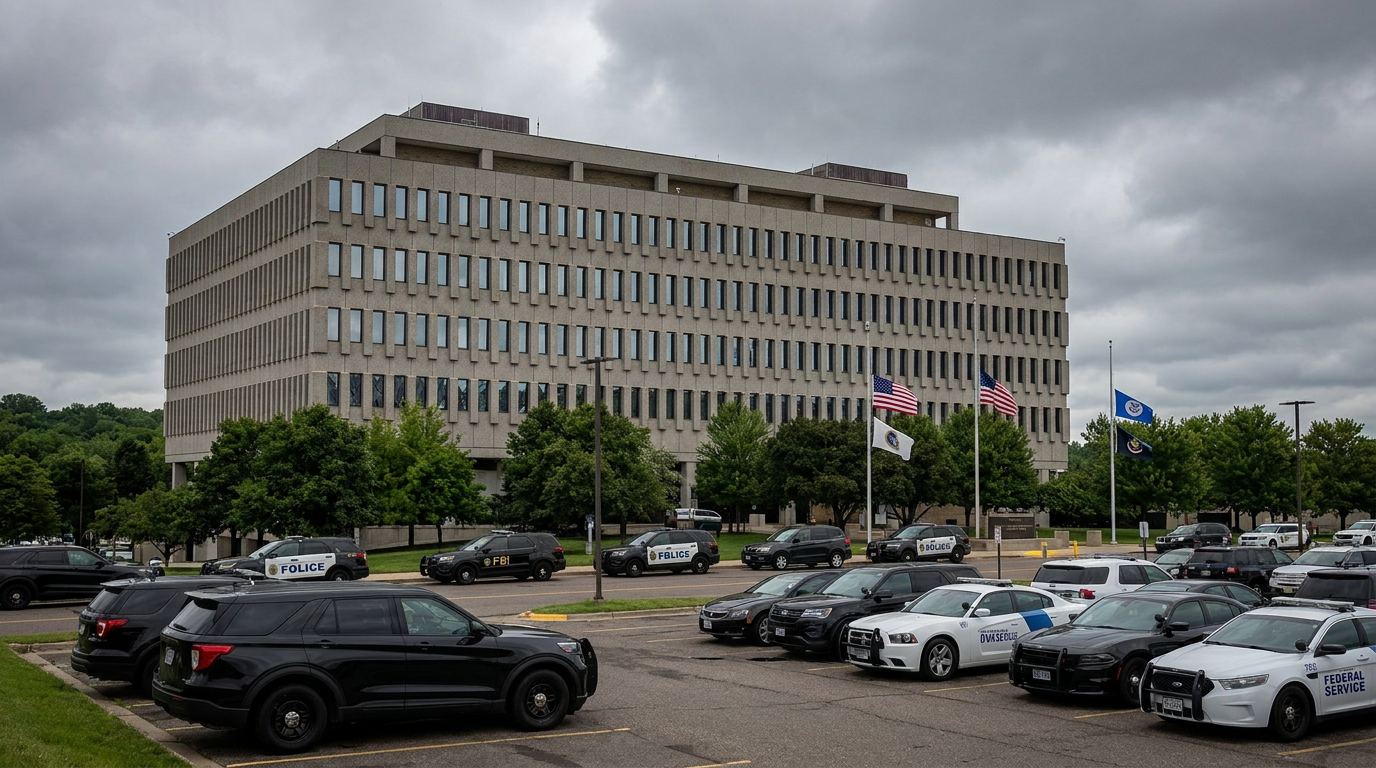
The unsealed indictment details a series of aggressive tactics allegedly deployed by the activists to disrupt ICE operations at the Bishop Henry Whipple Federal Building in St. Paul between January and March. Prosecutors claim the group established both "hard" and "soft" blockades to halt or delay law enforcement convoys entering and exiting the facility. The hard blockades reportedly consisted of severe physical obstructions, including overturned recreational vehicles, anti-tank obstacles, and large blocks of ice thrown at federal vehicles. Meanwhile, the soft blockades allegedly involved members forming human walls while holding homemade shields constructed from plastic, wood, and metal. Rosen declined to specify whether any federal agents were physically injured during these confrontations, but he emphasized to reporters that causing bodily harm is not a prerequisite for committing a serious federal crime. The government maintains that the sheer intent to physically obstruct federal operations is sufficient grounds for the conspiracy charges.[4][6]
Beyond the physical blockades, the Justice Department has heavily emphasized accusations of systematic stalking and harassment. The indictment alleges that the defendants actively tracked federal agents, monitoring their movements both on and off duty. Rosen detailed specific instances where activists allegedly followed ICE personnel from the federal building in St. Paul across state lines into western Wisconsin. To coordinate these efforts, the group reportedly relied on anonymous Signal chats, using the encrypted platform to broadcast the real-time locations of unmarked SUVs and ongoing immigration raids. Protesters would then use whistles and car horns to draw public attention to detentions as they were happening in residential neighborhoods. The government characterizes this behavior as a dangerous escalation that compromises officer safety and operational security, framing the community alert systems not as public awareness campaigns, but as calculated operational surveillance designed to endanger federal personnel.[4][6]
Beyond the physical blockades, the Justice Department has heavily emphasized accusations of systematic stalking and harassment.
The clashes detailed in the indictment stem directly from "Operation Metro Surge," a highly controversial Trump administration immigration crackdown launched in the Twin Cities earlier this year. Triggered by reports of fraud within Minnesota's Somali community, the operation brought thousands of federal agents into the region. The surge resulted in over 4,000 arrests, fundamentally altering the daily lives of immigrant communities in the area. Convoys of agents in unmarked vehicles frequently traveled through neighborhoods, conducting raids that drew intense local backlash. The aggressive nature of the operation—which included the fatal shooting of two individuals by immigration officers—transformed quiet Minnesota suburbs into flashpoints of conflict. The activists charged on Tuesday emerged in direct response to this surge, organizing rapidly to counter what they viewed as an occupying force terrorizing their neighbors. The federal government, however, views the operation as a necessary enforcement of the law that was unlawfully impeded.[3][5]

At Tuesday's press briefing, U.S. Attorney Rosen forcefully defended the indictments, arguing they were necessary to address "organized lawless behavior" that endangers both law enforcement and the broader public. He asserted that the defendants falsely claim to be protecting their communities while actually putting them at risk through reckless confrontations. The charges align seamlessly with the Trump administration's broader, aggressive push to classify "antifa" as a domestic terror organization and direct federal agencies to systematically dismantle its affiliates and funding networks. By elevating local protest clashes to the level of a federal conspiracy, the Justice Department is signaling a zero-tolerance policy for direct action tactics that interfere with border and immigration enforcement. Officials hope the high-profile arrests will serve as a deterrent to similar activist networks operating in other major cities across the country.[2][6]
The Minnesota case follows a legal blueprint recently established by federal prosecutors in other jurisdictions. Earlier this year, the Justice Department secured its first successful conviction based on "antifa" terrorism in the Prairieland case in North Texas, which involved an armed cell conspiring to attack an ICE detention center. Similarly, three activists in Spokane, Washington, were recently convicted of conspiracy charges over an anti-ICE demonstration. While the Minnesota defendants do not currently face explicit terrorism enhancements, the reliance on conspiracy statutes and encrypted messaging evidence mirrors the successful tactics used in those prior cases. However, the government's track record is not flawless; federal prosecutors recently had to drop conspiracy charges against six people in Illinois over an anti-ICE protest amid claims of prosecutorial misconduct. Legal experts are closely watching the Minnesota docket to see if the digital evidence holds up to judicial scrutiny.[4][5]
The arrests immediately drew fierce condemnation from local politicians, civil rights advocates, and community organizers who view the indictments as a draconian overreach. Minneapolis City Council member Jason Chavez publicly defended the activists, taking to social media to assert that "alerting our neighbors about ICE activity is not a crime." Chavez argued that community members were lawfully observing federal overreach and supporting their immigrant neighbors during a period of intense fear. Civil liberties groups warn that charging protesters with "conspiracy" for coordinating via encrypted apps sets a chilling precedent, effectively punishing the logistical process of organizing a protest. Advocates argue that the government is intentionally blurring the lines between constitutionally protected cop-watching—the practice of filming and monitoring law enforcement—and criminal stalking, weaponizing the justice system to silence political opposition.[3][4]

As the defendants prepared for their initial court appearances on Tuesday afternoon, dozens of demonstrators gathered outside the federal courthouse in Minneapolis to protest the indictments. The crowd, bundled against the weather, carried handmade signs bearing slogans such as "protesting is not a crime" and "stop FBI entrapment." Speakers at the rally, including prominent local civil rights attorneys, accused the federal government of using the conspiracy charges to intimidate activists and crush dissent. Bruce Nestor, a former president of the National Lawyers Guild, addressed the crowd, questioning the government's narrative and defending the right to be "ungovernable" in the face of perceived state violence. The courthouse demonstration underscores the deep, ongoing fractures in the Twin Cities, where the legacy of Operation Metro Surge continues to pit federal law enforcement against a highly mobilized and deeply entrenched local activist community.[4][5]
How we got here
Jan-March 2026
The Trump administration launches 'Operation Metro Surge,' bringing thousands of ICE agents to the Twin Cities.
Jan 23 & March 1, 2026
Activists allegedly set up physical blockades at the Bishop Henry Whipple Federal Building to halt ICE convoys.
June 16, 2026
The Justice Department unseals indictments against 15 individuals, arresting 12 in morning raids.
Viewpoints in depth
Justice Department & Federal Law Enforcement
Federal prosecutors view the activists as an organized threat to government operations and officer safety.
U.S. Attorney Daniel N. Rosen and Homeland Security Investigations emphasize that the activists crossed the line from protected speech into organized criminality. By utilizing encrypted communications to track agents, deploying physical barricades like overturned vehicles, and allegedly stalking personnel across state lines, prosecutors argue the groups engaged in a dangerous conspiracy. The Justice Department maintains that these actions inherently endanger both the targeted officers and the broader public, necessitating a severe federal response to dismantle what they categorize as militant 'antifa' networks.
Civil Liberties Advocates & Local Officials
Defenders argue the federal government is criminalizing legal observation and community defense.
Local leaders, including Minneapolis City Council members, and civil rights attorneys view the indictments as a draconian escalation meant to chill dissent. They argue that the activists were primarily engaged in 'cop-watching'—lawfully observing and alerting the community to ICE raids during a highly controversial federal surge. Advocates warn that charging protesters with 'conspiracy' for coordinating via encrypted apps like Signal sets a dangerous precedent, effectively punishing the process of organizing and equating civil disobedience with domestic terrorism.
What we don't know
- Whether the digital evidence gathered from encrypted apps like Signal will hold up to judicial scrutiny in court.
- The identities and specific charges of the two activists who currently remain at large.
Key terms
- Antifa
- A decentralized, loosely organized left-wing movement that opposes fascism and far-right ideologies, often through direct action.
- Operation Metro Surge
- A large-scale federal immigration enforcement operation conducted in the Minneapolis-St. Paul area in early 2026.
- Signal
- An encrypted messaging application frequently used by activists and journalists to communicate securely.
- Cop-watching
- The practice of observing and recording law enforcement activity to ensure accountability and deter misconduct.
Frequently asked
What are the activists charged with?
The primary charge is conspiracy to impede or injure federal officers. Some face additional charges like interstate stalking and destruction of government property.
Are they facing terrorism charges?
No. While the Justice Department has labeled the groups as 'antifa' and compared them to a domestic terror organization, the current indictment does not include explicit terrorism charges.
What was Operation Metro Surge?
It was a massive immigration crackdown in the Twin Cities earlier this year that resulted in over 4,000 arrests and sparked intense local protests.
How did the activists allegedly track ICE agents?
Prosecutors claim the activists used encrypted messaging apps like Signal to coordinate surveillance and broadcast the real-time locations of unmarked federal vehicles.
Sources
Source coverage
6 outlets
3 viewpoints surfaced






[1]Fox NewsFederal Law Enforcement
15 Antifa radicals indicted, 12 arrested in sweeping federal probe into Minneapolis anti-ICE operations
Read on Fox News →[2]Al JazeeraCivil Liberties Advocates
US Justice Department accuses 15 Minnesota activists of ‘antifa’ activities
Read on Al Jazeera →[3]The Washington PostLocal Elected Officials
DOJ charges 15 in Minnesota with conspiracy to block ICE, claims antifa ties
Read on The Washington Post →[4]The GuardianCivil Liberties Advocates
Fifteen people in Minnesota charged with conspiracy over anti-ICE protests
Read on The Guardian →[5]PBSCivil Liberties Advocates
Federal prosecutors charge 15 in Minnesota with impeding immigration crackdown
Read on PBS →[6]Courthouse NewsFederal Law Enforcement
Justice Department announces charges against 15 tied to Minnesota 'antifa' groups
Read on Courthouse News →
Every angle. Every day.
Get news politics stories with full source coverage and perspective breakdowns delivered to your inbox.