
U.S. and Iran Reach Cease-Fire Framework at G7 Summit, Halting Regional Hostilities
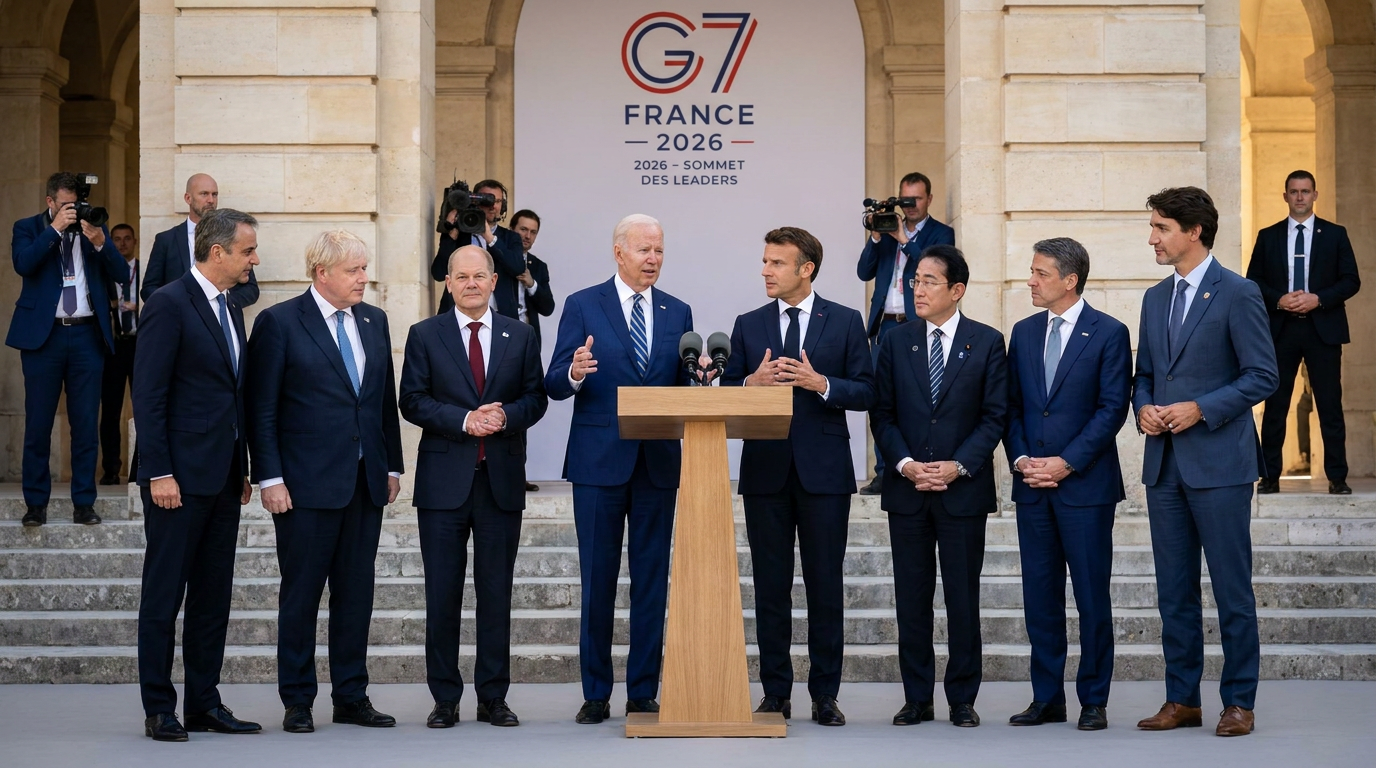
European leaders and the Trump administration announced a preliminary peace framework with Iran at the G7 summit in France, establishing an immediate cease-fire and stabilizing global energy markets.
By Factlen Editorial Team
- U.S. Administration & Allies
- Argues that maximum pressure and decisive military posturing forced Iran to the negotiating table, restoring American deterrence.
- Iranian Establishment
- Emphasizes resilience against Western pressure, claiming victory by securing necessary economic relief without conceding core ideological positions.
- European Mediators
- Prioritizes diplomatic stability, economic continuity, and the avoidance of an all-out regional war that would disrupt global markets.
- Global Markets & Energy Sector
- Primarily concerned with the free flow of commerce through the Gulf and the stabilization of volatile oil prices.
What's not represented
- · Iranian civilians affected by the conflict and sanctions
- · Independent maritime security contractors in the Gulf
Why this matters
The newly announced framework halts a destabilizing military conflict that threatened global energy markets and Middle Eastern security, establishing a fragile but critical cease-fire between Washington and Tehran.
Key points
- The U.S. and Iran have agreed to a preliminary peace framework, pausing direct military hostilities.
- The deal includes a temporary pause on specific U.S. economic sanctions against Iran.
- Iran has guaranteed the safe transit of commercial shipping through the Strait of Hormuz.
- Global oil prices stabilized immediately following the announcement at the G7 summit.
- European diplomats played a crucial role in brokering the back-channel negotiations.
- The framework initiates a 30-day window for both nations to implement the initial de-escalation phases.
A sudden diplomatic breakthrough emerged from the Group of 7 gathering in France on Tuesday, as the United States and European allies announced a preliminary peace framework with Iran. The agreement establishes an immediate cease-fire, pausing a period of direct military hostilities that had severely destabilized the Middle East and rattled global markets. The announcement marks a significant pivot from armed conflict to negotiated de-escalation, fundamentally altering the geopolitical landscape of the region.[1][4]
The core mechanism of the agreement relies on a phased, reciprocal de-escalation. Under the terms of the "peace framework"—a preliminary diplomatic roadmap rather than a finalized, binding treaty—the United States has agreed to a temporary pause on specific economic sanctions. In exchange, Tehran has committed to an immediate halt of all military maneuvers and proxy engagements targeting American assets and allied infrastructure in the region. This synchronized stand-down is designed to create breathing room for more comprehensive negotiations.[4][8]
A critical component of the framework is the "Strait of Hormuz transit guarantee." This clause explicitly requires Iran to cease any harassment, seizure, or targeting of commercial shipping vessels navigating the vital maritime chokepoint between the Persian Gulf and the Gulf of Oman. Because a significant portion of the world's daily oil supply passes through this narrow corridor, securing safe transit was a non-negotiable demand for Western negotiators and a primary driver for European involvement in the talks.[4][6]

The economic impact of the announcement was immediate. Global energy markets, which had been highly volatile during the weeks of active conflict, responded positively to the transit guarantee. Brent crude oil prices, which had spiked significantly amid fears of prolonged supply disruptions, quickly stabilized around $82 per barrel. Financial analysts noted that the cease-fire removes a massive risk premium that had been priced into energy futures, providing relief to inflation-wary economies worldwide.[6]
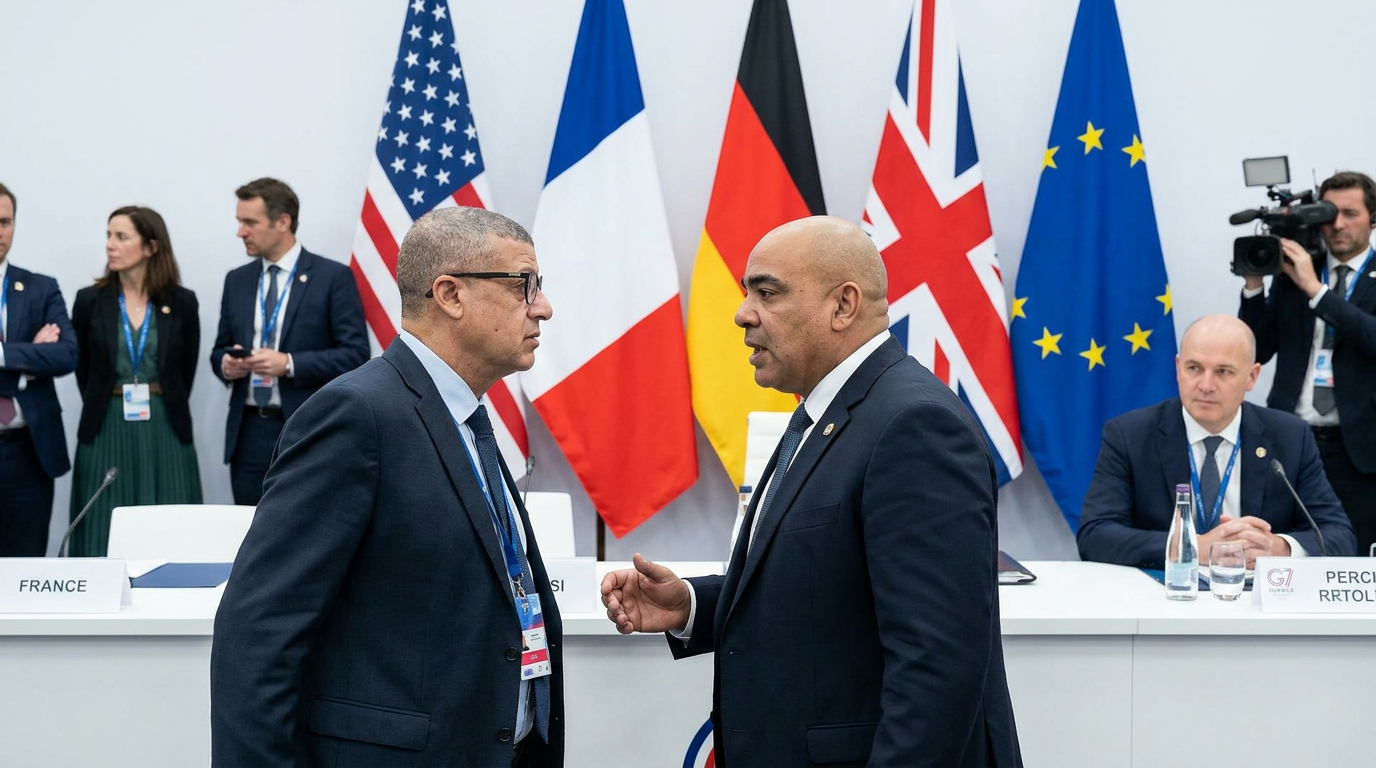
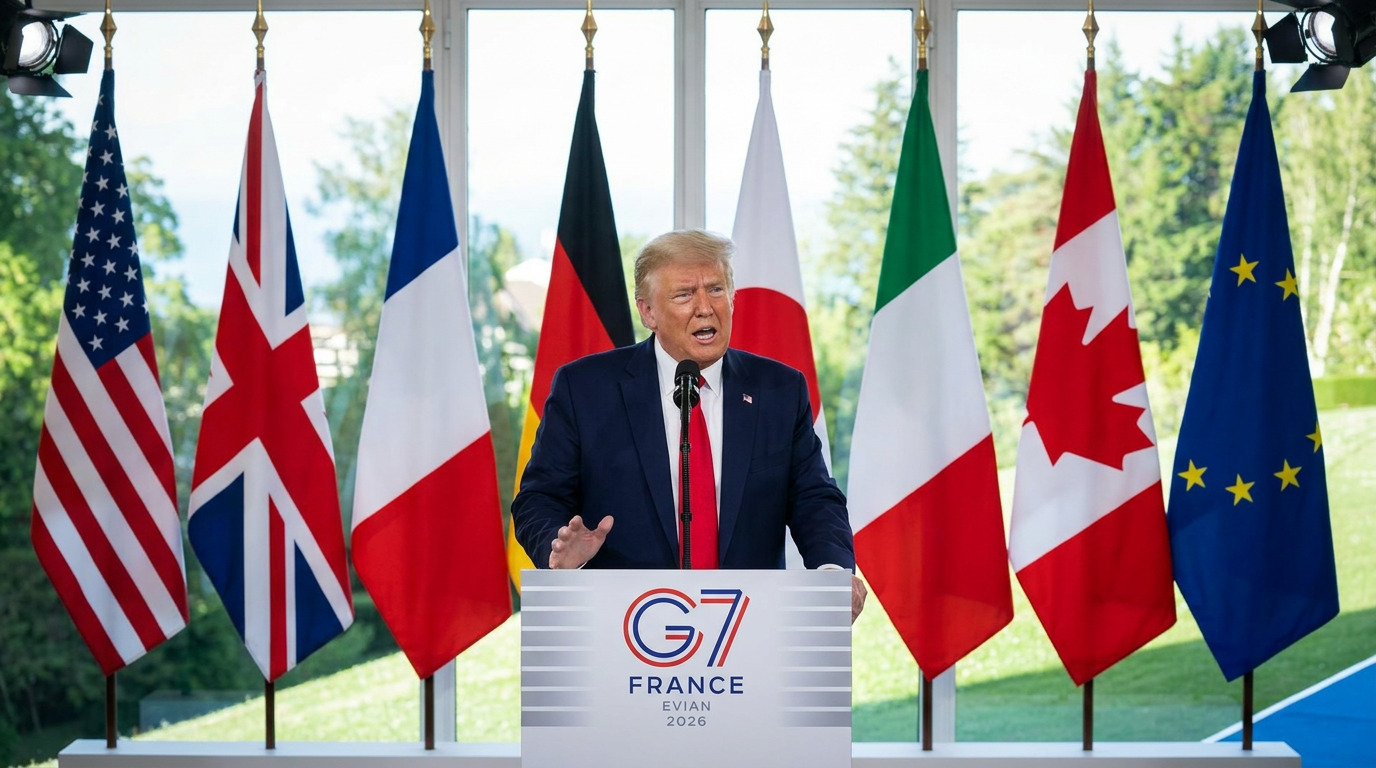
The diplomatic atmosphere at the G7 summit in France reflected the magnitude of the breakthrough. After a period of bitter division over foreign policy and burden-sharing, European heads of state publicly praised the Trump administration's willingness to engage in the peace framework. The shared relief over avoiding a broader regional war visibly softened the tone among the allied leaders, fostering renewed hopes for transatlantic cooperation on other pressing issues, including ongoing support for Ukraine.[1][7]
The diplomatic atmosphere at the G7 summit in France reflected the magnitude of the breakthrough.
Despite the optimism in France, the conflict has left deep scars on Iran's regional standing. The period of active hostilities severely damaged Tehran's relationships with its Gulf neighbors, who found themselves caught in the crossfire of the U.S.-Iran escalation. Regional analysts point out that while Iran demonstrated its military reach, the aggressive tactics alienated nearby states that had previously been open to cautious economic engagement.[2]

Consequently, Gulf nations are evaluating the new framework with deep caution. While regional capitals have officially welcomed the pause in violence, diplomats express concern over whether the agreement addresses the root causes of Iranian regional influence or merely delays the next confrontation. For these nations, the ultimate success of the framework will be measured by long-term security guarantees rather than short-term sanctions relief.[5]
Domestically, the framing of the cease-fire is already sharply divided. The Trump administration and its allies are touting the framework as a historic victory, arguing that a strategy of "maximum pressure" and decisive military posturing successfully forced Tehran to the negotiating table. Proponents of this view assert that the U.S. restored its deterrence capabilities and secured vital concessions without committing to a prolonged ground war.[8]
Conversely, critics and foreign policy analysts offer a more skeptical interpretation of the diplomatic outcome. Some commentators argue that the administration ultimately had to concede on key economic demands to secure the cease-fire, suggesting that Tehran's leadership successfully tested Washington's resolve. In this view, the "hard men of Tehran" managed to extract necessary sanctions relief by leveraging the U.S. administration's reluctance to engage in a full-scale, politically costly conflict.[3]
European mediators, particularly French diplomats, played an instrumental role in bridging this gap. By facilitating back-channel communications during the height of the hostilities, the European Union provided a face-saving mechanism for both Washington and Tehran to exchange terms without appearing to capitulate publicly. This shuttle diplomacy was crucial in drafting the technical parameters of the Strait of Hormuz transit guarantee.[1][7]

The immediate challenge now shifts to verification and enforcement. The framework calls for international observers to monitor naval activities in the Gulf and ensure compliance with the military stand-down. However, the exact composition of this monitoring force and its rules of engagement remain ambiguous, leaving a potential flashpoint if either side accuses the other of violating the preliminary terms.[4][5]
Ultimately, the framework initiates a fragile 30-day window for both nations to implement the initial phases of the agreement. This period will serve as the first major test of the cease-fire's durability. While the immediate threat of an all-out regional war has been averted, the underlying ideological, nuclear, and geopolitical disputes between the United States and Iran remain entirely unresolved, setting the stage for arduous negotiations in the months ahead.[2][4]
How we got here
Early 2026
Direct military hostilities escalate between U.S. and Iranian forces in the region.
Spring 2026
Commercial shipping in the Gulf is disrupted, causing severe volatility in global energy markets.
Early June 2026
Back-channel negotiations accelerate via European diplomats seeking to avert a broader war.
June 16, 2026
The preliminary peace framework is officially announced at the G7 summit in France.
Viewpoints in depth
U.S. Administration's View
The administration frames the cease-fire as a decisive victory achieved through strength.
Proponents of the administration's strategy argue that the willingness to engage in direct military action restored American deterrence in the Middle East. By applying 'maximum pressure' and demonstrating overwhelming force, they assert that Washington forced Tehran to accept a cease-fire on favorable terms, securing vital maritime guarantees without committing the United States to a prolonged, open-ended ground war.
Iranian Leadership's View
Tehran portrays the framework as a successful defense of its sovereignty and regional influence.
From the perspective of Iran's establishment, the conflict demonstrated the nation's capacity to disrupt Western interests and impose costs on U.S. allies. Iranian officials argue that by standing firm, they successfully extracted necessary economic sanctions relief from Washington. They view the framework not as a capitulation, but as a tactical pause that preserves their core ideological positions while alleviating domestic economic pressure.
European Allies' View
European leaders view the agreement as a vital, pragmatic step to prevent regional catastrophe.
For European mediators, the primary objective was always de-escalation. They view the framework as a triumph of back-channel diplomacy over military brinkmanship. European capitals are less concerned with which side 'won' the military exchange and more focused on the fact that the agreement stabilizes global energy markets, secures vital shipping lanes, and prevents a massive regional conflict that could have triggered new refugee crises and economic shocks across the continent.
Gulf Neighbors' View
Regional states are cautiously optimistic but deeply concerned about long-term stability.
Nations bordering the Persian Gulf bore the brunt of the regional instability and economic anxiety during the conflict. While they officially welcome the U.S.-Iran cease-fire, their outlook is highly cautious. Gulf diplomats worry that the framework merely pauses the violence without addressing Iran's broader network of regional influence or providing permanent security guarantees for neighboring states caught in the crossfire.
What we don't know
- The exact composition and rules of engagement for the international forces tasked with monitoring the cease-fire.
- Whether the temporary sanctions relief will be made permanent if Iran fully complies with the 30-day implementation window.
- How hardline factions within both the U.S. and Iranian governments might attempt to disrupt or spoiler the preliminary agreement.
Key terms
- Peace Framework
- A preliminary diplomatic agreement outlining the core terms of a cease-fire and future negotiations, rather than a finalized, binding treaty.
- Strait of Hormuz
- A vital shipping chokepoint between the Persian Gulf and the Gulf of Oman, through which a significant portion of the world's daily oil supply passes.
- Sanctions Relief
- The temporary or permanent lifting of economic penalties imposed by one country on another to encourage diplomatic cooperation.
Frequently asked
Does this mean the war is completely over?
Not entirely. The framework establishes an immediate cease-fire and pauses direct hostilities, but a finalized, binding peace treaty has not yet been signed.
How will this affect global gas prices?
Global oil prices have already begun to stabilize around $82 per barrel following the announcement, which typically prevents sharp spikes in consumer gas prices.
Who brokered the agreement?
European leaders, particularly French diplomats, played a significant role in facilitating the back-channel communications that led to the breakthrough at the G7 summit.
Sources
Source coverage
8 outlets
4 viewpoints surfaced







[1]NYTU.S. Administration & Allies
After a Bitter Split, European Leaders Play Nice With Trump
Read on NYT →[2]Al JazeeraIranian Establishment
What has Iran won and lost from this war?
Read on Al Jazeera →Iran Found Trump’s Bone Spur
Read on NYT →[4]ReutersGlobal Markets & Energy Sector
US and Iran agree to cease-fire framework at G7 summit
Read on Reuters →[5]BBC NewsEuropean Mediators
Gulf states cautiously welcome US-Iran peace framework
Read on BBC News →[6]Associated PressGlobal Markets & Energy Sector
Oil prices stabilize as US-Iran hostilities pause
Read on Associated Press →[7]The GuardianEuropean Mediators
European leaders praise diplomatic breakthrough with Iran
Read on The Guardian →[8]Fox NewsU.S. Administration & Allies
Trump secures historic cease-fire with Iran, easing global tensions
Read on Fox News →
More in news politics
See all 8 stories →Middle East Security
U.S. and Iran Reach Preliminary Peace Framework to End Conflict and Reopen Strait of Hormuz
0 sources
Climate Litigation
Trump Administration's Supreme Court Brief Clashes With EPA Climate Rollback
0 sources
Iran Peace Deal
U.S. and Iran Reach Peace Framework to End War and Reopen Strait of Hormuz
0 sources
Global Health
Ebola Outbreak in DR Congo Could Become Worst on Record, Health Officials Warn
0 sources
Every angle. Every day.
Get news politics stories with full source coverage and perspective breakdowns delivered to your inbox.