
How Fungi and Algae Are Replacing Leather and Plastic in Fashion
Next-generation biomaterials grown from mycelium and seaweed are moving from the lab to the runway, offering a biodegradable, low-carbon alternative to animal hides and petroleum-based synthetics.
By Factlen Editorial Team
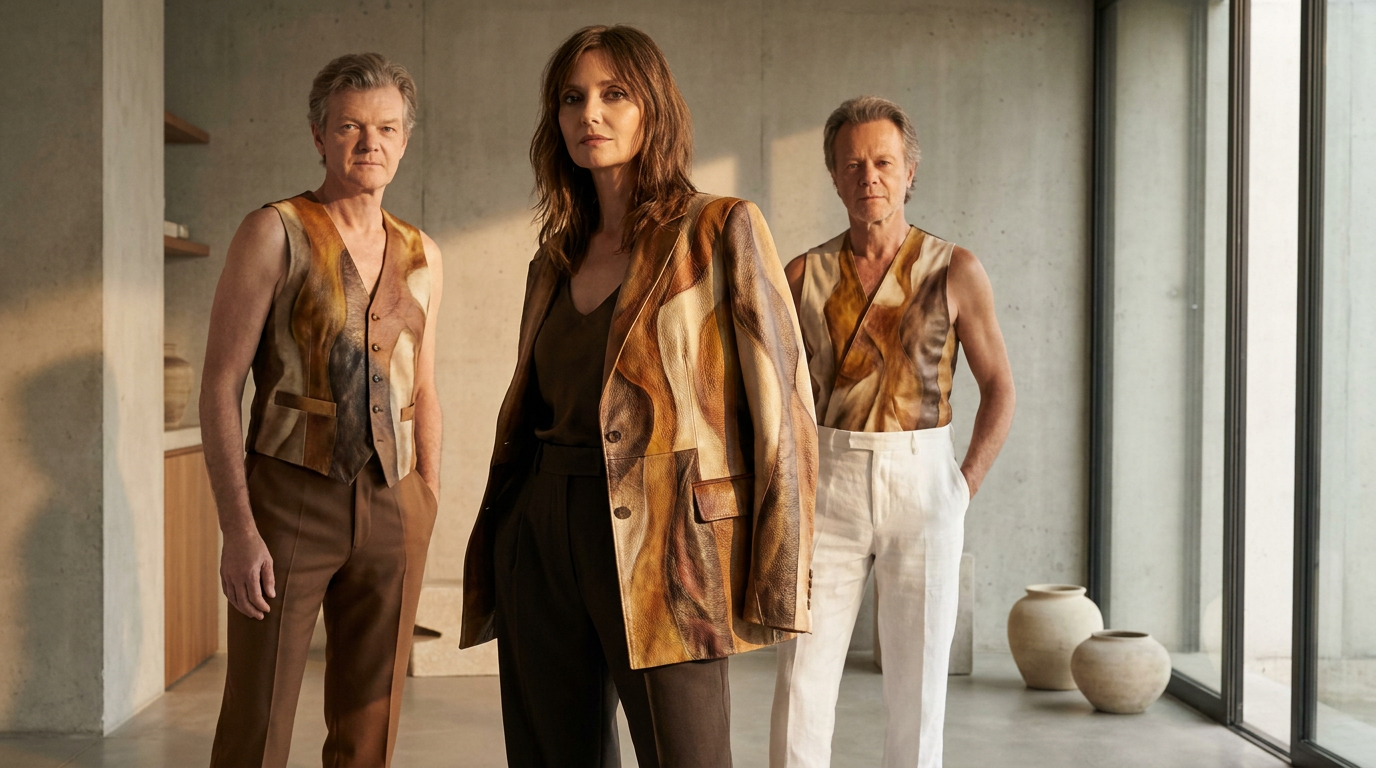
- Biomaterial Innovators
- Focus on scaling lab-grown materials to replace petroleum plastics and animal agriculture entirely.
- Sustainable Luxury Brands
- Focus on maintaining the premium feel, durability, and aesthetic of traditional leather while meeting ethical goals.
- Material Scientists
- Focus on rigorous testing, structural integrity, true biodegradability, and warning against greenwashed synthetics.
What's not represented
- · Traditional leather tanneries
- · Livestock farmers
Why this matters
The clothing industry is one of the world's heaviest polluters, relying heavily on resource-intensive animal agriculture or fossil-fuel plastics. Lab-grown biomaterials offer a viable path to decarbonize our wardrobes without sacrificing quality or durability.
Key points
- Mycelium leather is grown from the root structure of fungi using agricultural waste.
- The material requires up to 99% less water than traditional bovine leather.
- Unlike petroleum-based synthetic leathers, pure mycelium is fully biodegradable.
- Algae and seaweed are also being developed into sustainable textile fibers.
- Major luxury brands are scaling these materials to meet upcoming environmental regulations.
The fashion industry has long been trapped in a binary choice when it comes to leather: raise livestock, which carries a heavy environmental footprint, or rely on petroleum-based synthetic plastics that take centuries to decompose. But a third category has quietly moved from science-fair curiosity to commercial reality. Next-generation biomaterials, grown from fungi, algae, and agricultural waste, are fundamentally rewriting how clothing and accessories are manufactured.[8]
At the forefront of this material revolution is mycelium, the infinitely renewable, root-like structure of fungi. Often described as the "internet of the forest," mycelium is a complex network of lattices that holds together the earth's surface. In a laboratory or vertical farming facility, scientists can coax these fungal threads to grow into a dense, foam-like mat that mimics the microstructure of animal collagen.[1][2]
The cultivation process is a masterclass in circular engineering. Innovators feed the fungi organic agricultural waste—such as sawdust, hemp hurds, or corn stalks. In a controlled environment with specific humidity and darkness, the mycelium knits itself together in a matter of days, bypassing the years required to raise cattle.[5][7]
"By carefully formulating a new paste substrate for the mushrooms to grow in, researchers have enhanced nutrient availability and streamlined the cultivation process," notes a recent study published by Cambridge University Press. The resulting mats are strong enough to be peeled, tanned, and dyed using plant-based or green-chemistry processes, entirely avoiding the toxic chromium commonly used in traditional leather tanning.[6]

The environmental mathematics of mycelium leather are staggering. Traditional bovine leather requires vast amounts of water and land while generating significant greenhouse gas emissions. Synthetic leather, while avoiding animal agriculture, relies heavily on fossil fuels and sheds microplastics into the ecosystem.[4]
Mycelium flips this equation. Cultivating mushroom leather requires up to 99% less water than bovine leather and generates a fraction of the carbon emissions. Furthermore, because it is not petroleum-based, pure mycelium leather is fully biodegradable and compostable at the end of its lifecycle, returning nutrients to the soil rather than languishing in a landfill.[5][7]
The cost curve is also bending rapidly. While luxury prototypes previously cost thousands of dollars to produce, manufacturing raw sheets of unprocessed mycelium is becoming highly competitive. Research indicates that a square meter of raw mycelium can now be produced for as little as 18 to 28 cents, compared to $5.81 to $6.24 for raw animal hides.[4]

While luxury prototypes previously cost thousands of dollars to produce, manufacturing raw sheets of unprocessed mycelium is becoming highly competitive.
This economic viability has attracted the attention of major fashion houses. Stella McCartney, a pioneer in cruelty-free fashion, launched the world's first luxury bag crafted from Mylo—a mycelium material developed by Bolt Threads—in 2022. The brand has since expanded its use of the material, proving that lab-grown biomaterials can meet the exacting standards of high-end luxury.[1]
Beyond mushrooms, the biomaterial revolution is expanding into the oceans. Algae-derived materials are emerging as a frontier in sustainable textiles, with innovators transforming seaweed and microalgae into fibers and alternative leathers.[3]
Companies like Keel Labs have developed next-generation cellulosic fibers made from sustainably farmed seaweed. Designed to plug directly into existing textile supply chains, these algae-based yarns offer lower resource use compared to conventional cotton or polyester and completely avoid reliance on fossil fuels.[3]

The terminology surrounding these innovations can be complex, prompting industry groups to establish clearer definitions. "Biomaterials" is a broad umbrella, but experts differentiate between "biobased" materials (derived from biomass), "biofabricated" materials (produced by living cells like bacteria), and "bioassembled" materials (grown into macroscale structures, like mycelium).[2]
Despite the rapid progress, the transition is not without hurdles. Scaling production from a laboratory environment to global supply chains requires massive capital investment and infrastructure development. Some early iterations of mycelium leather struggled with uniform thickness and tensile strength, requiring the addition of regenerated cellulose fibers or water-based polyurethane coatings to enhance durability.[1][7]
There is also the persistent challenge of "greenwashing." As consumer demand for sustainable options surges, some chemical companies have begun labeling new cellulose-based plastics as "biomaterials," even though the final products remain non-biodegradable. Transparency and rigorous lifecycle assessments are critical to ensuring that new materials genuinely reduce environmental harm.[2][8]

Looking ahead, regulatory pressures are poised to accelerate the adoption of genuine biomaterials. The European Union's upcoming Digital Product Passport initiatives will soon require fashion brands to disclose the exact environmental footprint of their materials, making the low-impact profile of mycelium and algae highly attractive to corporate compliance teams.[5]
As these technologies mature, they represent a profound shift in the relationship between fashion and the natural world. Rather than extracting finite resources or relying on toxic synthetics, the industry is learning to collaborate with living organisms, growing the future of apparel one microscopic thread at a time.[3][8]
How we got here
2017
Stella McCartney partners with Bolt Threads to begin developing Mylo mycelium leather.
2021
Hermès unveils a prototype Victoria bag made partially from mycelium.
2022
The world's first commercially available luxury bags made from mushroom leather hit the market.
2024
Academic studies demonstrate new paste substrates that drastically speed up the cultivation of fungal mats.
2025
Algae-derived fibers and scaled mycelium production facilities begin supplying the broader commercial fashion market.
Viewpoints in depth
Biomaterial Innovators
Focuses on scaling the technology, reducing costs, and replacing petroleum plastics entirely.
Startups and biotech firms view mycelium and algae as the ultimate disruptors to a deeply flawed supply chain. By utilizing vertical farming and agricultural waste, they argue that bioassembled materials can eventually outcompete traditional textiles on both price and performance. Their primary goal is achieving commercial scale to make these materials accessible beyond high-end luxury, ultimately phasing out fossil-fuel reliance in the fashion industry.
Sustainable Luxury Brands
Focuses on maintaining the premium feel, durability, and aesthetic of traditional leather while meeting ethical and environmental goals.
For high-end fashion houses, the appeal of biomaterials lies in their ability to offer a cruelty-free, low-carbon product without sacrificing the luxurious hand-feel that consumers expect. These brands emphasize the craftsmanship involved in tanning and finishing mycelium, viewing it not just as a substitute, but as a premium material in its own right that aligns with the values of a younger, eco-conscious demographic.
Material Scientists
Focuses on the structural integrity, thermal stability, and true biodegradability of the materials, warning against greenwashed synthetics.
Academics and researchers approach biomaterials with rigorous scrutiny, focusing on lifecycle assessments and mechanical properties. While they champion the environmental benefits of mycelium, they caution that the industry must solve issues with tensile strength without resorting to non-biodegradable polyurethane coatings. They advocate for strict definitions and transparency to prevent chemical companies from passing off modified plastics as genuine bio-innovations.
What we don't know
- How quickly production costs will drop enough to make mycelium leather accessible for fast-fashion and everyday brands.
- Whether the industry can completely phase out the use of synthetic polyurethane coatings used to increase the durability of some early biomaterials.
Key terms
- Mycelium
- The infinitely renewable, root-like vegetative network of fungi that can be grown into dense, leather-like mats.
- Bioassembled materials
- Materials grown into macroscale structures directly by living organisms, such as mushroom leather.
- Biofabricated materials
- Materials produced by living cells, such as bacteria or yeast, often using fermentation processes.
- Lyocell
- A regenerated cellulose fiber made from dissolving wood pulp, sometimes blended with mycelium to add structural strength.
- Greenwashing
- The practice of making misleading or unsubstantiated claims about the environmental benefits of a product.
Frequently asked
What exactly is mycelium?
Mycelium is the infinitely renewable, root-like vegetative network of fungi. It naturally grows underground, but can be cultivated in labs to form dense, usable mats.
Is mushroom leather completely plastic-free?
Pure mycelium is plastic-free and biodegradable, but some commercial versions currently use a thin water-based polyurethane coating or lyocell blend to improve durability, though companies are working to phase these out.
How long does it take to grow?
Unlike raising cattle which takes years, mycelium mats can be grown in vertical farming facilities in just 7 to 14 days.
Is it biodegradable?
Yes, pure mycelium leather is fully compostable and will naturally break down at the end of its lifecycle, unlike synthetic petroleum-based leathers.
Sources
Source coverage
8 outlets
3 viewpoints surfaced







[1]Stella McCartney OfficialSustainable Luxury Brands
Mylo™: The world's first garments made from vegan mushroom leather
Read on Stella McCartney Official →[2]Fashion for GoodMaterial Scientists
Understanding 'Bio' Material Innovations: A primer for the fashion industry
Read on Fashion for Good →[3]Smart Fashion NewsBiomaterial Innovators
A Global Update (2025): Biomaterials Take Center Stage
Read on Smart Fashion News →[4]FaunalyticsMaterial Scientists
The Environmental and Economic Impact of Mycelium Leather
Read on Faunalytics →[5]Cali Fashion WeekBiomaterial Innovators
Mushroom Leather Is Having a Moment – And It Might Just Save Fashion
Read on Cali Fashion Week →[6]Cambridge University PressMaterial Scientists
Searching for sustainable alternatives through bio-design: growing mycelium leather
Read on Cambridge University Press →[7]MDPIMaterial Scientists
Exploring the Potential of Mushroom Mycelium for Leather-like Materials
Read on MDPI →[8]Factlen Editorial Team
Synthesis by Factlen editorial team
Read on Factlen Editorial Team →
Every angle. Every day.
Get lifestyle stories with full source coverage and perspective breakdowns delivered to your inbox.