
Ebola Outbreak in DR Congo Could Become Worst on Record, Health Officials Warn
A rapidly expanding outbreak of the Bundibugyo ebolavirus in the Democratic Republic of the Congo has surpassed 800 cases, prompting warnings that it could rival the historic 2014 West Africa epidemic.
By Hailey Scott

Share this story
A rapidly expanding Ebola outbreak in the Democratic Republic of the Congo is threatening to become the deadliest in recorded history, prompting urgent warnings from global health officials. As of mid-June, the number of confirmed cases in the DRC has surged past 830, with nearly 200 deaths reported primarily in the conflict-ridden eastern provinces.
The Africa Centers for Disease Control and Prevention and the World Health Organization have sounded the alarm, cautioning that without an immediate and massive intervention, the virus will continue to outpace containment efforts. The sheer velocity of the spread has caught health ministries off guard, transforming what began as a localized cluster in the Ituri province into a sprawling regional crisis that has already spilled across the border into neighboring Uganda.[1][2]
Complicating the international response is the specific pathogen driving the epidemic: the Bundibugyo ebolavirus. Unlike the Zaire strain, which caused the catastrophic 2014–2016 West Africa outbreak and for which highly effective vaccines and targeted antiviral therapies have since been developed, the Bundibugyo strain currently has no approved vaccine or specific medical countermeasure.
Medical teams are forced to rely entirely on optimized supportive care—administering intravenous fluids, balancing electrolytes, and treating secondary infections—to keep patients alive while their immune systems attempt to clear the virus. This biological reality has stripped responders of their most potent epidemiological tools, meaning the outbreak can only be halted through traditional, labor-intensive public health measures like strict isolation and rigorous contact tracing.[5]
The mathematical modeling of the outbreak's trajectory paints a grim picture of the months ahead. Recent analyses published by the U.S. Centers for Disease Control and Prevention project that if the current transmission dynamics hold, the region could see upwards of 20,000 cases and 4,000 deaths within the next three months alone.
If the crisis extends beyond that window without a dramatic scale-up in interventions, it would surpass the 28,000 cases recorded during the historic West Africa epidemic, making it the worst Ebola outbreak on record. CDC forecasters explicitly warned that avoiding this worst-case scenario requires isolating at least 20 percent of infected individuals within two days of symptom onset—a benchmark that responders are currently struggling to meet.[3]
The human toll of the virus is becoming increasingly visible, particularly among the region's most vulnerable populations. In Bunia, a city at the epicenter of the outbreak in the Ituri province, the virus has infiltrated church-run orphanages, claiming the lives of infants who lost their mothers to the disease.
Pediatric cases present a unique nightmare for healthcare workers; infants require intense, hands-on care that is extraordinarily difficult to provide safely while wearing heavy, impermeable personal protective equipment in sweltering heat. Medical centers have been forced to set up specialized isolation tents for suspected pediatric cases, but the emotional and logistical strain on the limited medical staff is immense.[4]
Efforts to implement the CDC's recommended isolation protocols are colliding with the volatile realities of eastern Congo. The outbreak is raging in a region plagued by decades of armed conflict, with various militia groups, including the M23 rebels, controlling key transit routes and rural territories. This insecurity makes it incredibly dangerous for epidemiological teams to access remote villages.
Furthermore, deep-seated community distrust of government authorities and foreign medical workers has led to active resistance. In South Kivu, angry residents recently attacked an Ebola burial team to take possession of a victim's body for traditional funeral rites, which often involve washing the highly contagious corpse. In other instances, patients have fled isolation facilities, and the International Rescue Committee estimates that only 20 percent of known contacts are successfully being tracked.[5]
The porous borders of the Great Lakes region have already facilitated the international spread of the virus. Uganda has reported at least 19 confirmed cases, including two deaths, primarily concentrated in the capital city of Kampala and the neighboring Wakiso district.
Ugandan health authorities note that all cases so far are either imported from the DRC or represent secondary transmission directly linked to those travelers, such as healthcare workers who treated them. While there is currently no documented sustained community transmission within Uganda, the presence of the virus in a densely populated metropolitan hub of over three million people has put the entire East African bloc on high alert.
In response to the escalating threat, the World Health Organization has declared the outbreak a Public Health Emergency of International Concern, unlocking emergency funding and mandating a coordinated global response. Western nations are rapidly adjusting their defensive postures. The U.S. CDC and the Department of Homeland Security have implemented enhanced travel screening, routing all air passengers arriving from the DRC, Uganda, and South Sudan through designated airports for health evaluations.
The European Centre for Disease Prevention and Control has issued similar advisories. However, both agencies emphasize that the immediate risk to the general public in the United States and Europe remains very low, as the virus requires direct contact with bodily fluids to spread.
The next few weeks are viewed as a critical window to prevent the outbreak from spiraling entirely out of control. The Africa CDC and the WHO have launched a joint continental response plan aimed at flooding the affected health zones with rapid diagnostic testing kits and mobile laboratories to clear the backlog of suspected cases.
Yet, the ultimate success of these efforts hinges on building trust within the fractured communities of eastern Congo. Until local populations feel safe enough to voluntarily seek treatment and cooperate with contact tracers, the Bundibugyo virus will continue to exploit the region's instability, threatening to rewrite the history of global health crises.[1][2]
Key points
- An Ebola outbreak in the Democratic Republic of the Congo has surpassed 800 cases and nearly 200 deaths.
- The CDC projects up to 20,000 cases within three months if isolation efforts are not drastically improved.
- The outbreak is driven by the Bundibugyo strain, which currently lacks an approved vaccine or specific antiviral treatment.
- Armed conflict and community distrust in eastern Congo are severely hampering contact tracing and safe burial efforts.
Open questions
- Whether the virus has already spread undetected to other neighboring countries with porous borders, such as Rwanda or South Sudan.
- How long it will take to develop and deploy an effective vaccine specifically targeted at the Bundibugyo strain.
- The true scale of the outbreak in rebel-controlled territories where health workers cannot safely conduct surveillance.
Timeline
May 16, 2026
The World Health Organization declares the DRC outbreak a Public Health Emergency of International Concern.
Early June 2026
The U.S. CDC releases modeling projecting up to 20,000 cases within three months if interventions are not scaled up.
June 8, 2026
Uganda confirms its first imported cases of the virus in the capital city of Kampala.
June 16, 2026
The Africa CDC warns the outbreak is on track to become the worst in recorded history as cases surpass 800.
- Global Health Authorities
- Focuses on epidemiological modeling, international resource mobilization, and preventing cross-border spread.
- Frontline Medical Workers
- Prioritizes immediate patient care, securing protective equipment, and managing the trauma of pediatric cases.
- Affected Communities
- Navigates the dual threats of armed conflict and the virus, often harboring deep distrust toward government and foreign interventions.
Perspectives this story doesn't cover
- M23 rebels and armed groups controlling access
- Economic stakeholders facing trade disruptions
Sources
Source coverage
5 outlets
3 viewpoints surfaced





- [1]NYTGlobal Health Authorities
Ebola Outbreak Could Become Worst on Record, Africa C.D.C. Chief Warns
Read on NYT → - [2]Al JazeeraGlobal Health Authorities
Ebola outbreak in DR Congo could become worst in history, Africa CDC warns
Read on Al Jazeera → - [3]NPRGlobal Health Authorities
Reporter's Notebook: What its like to report from an Ebola outbreak
Read on NPR → - [4]ReutersFrontline Medical Workers
Ebola Claims Two Orphaned Babies In Congo: How The Deadly Virus Spreads In Children
Read on Reuters → - [5]WikipediaAffected Communities
2026 Ebola epidemic
Read on Wikipedia →

More in News & Politics
See all →US-Israel Relations
US Defense Secretary Hegseth Makes Unannounced Visit to Israel Ahead of Election
6 sources

Humanitarian Aid
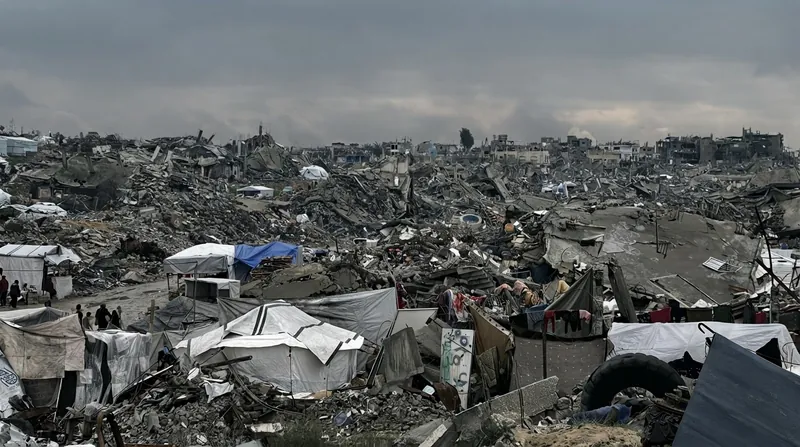
WFP Halts Gaza Food Aid for 500,000 People Citing Severe Funding Shortage
4 sources
Presidential Runoff
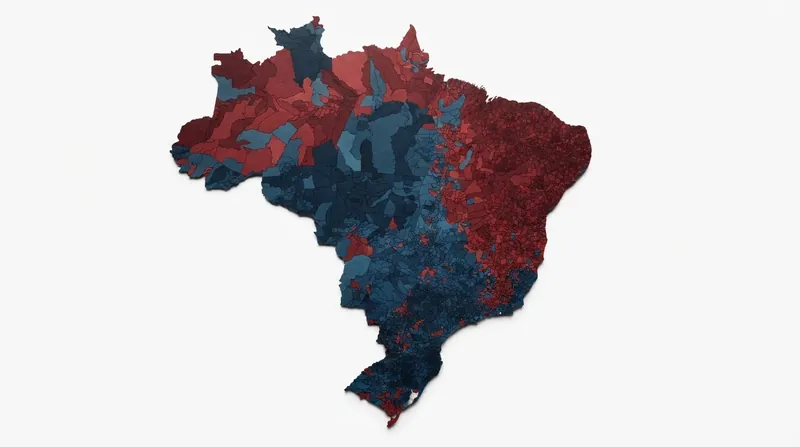
Lula and Flávio Bolsonaro Clash in First Presidential Runoff Debate
5 sources
Political Unrest
Fire Engulfs Albanian Supreme Court as Anti-Government Protests Enter Fifth Day
6 sources

Comments
Every angle. Every day.
Get News & Politics stories with full source coverage and perspective breakdowns, free every day.