
How Next-Generation Heat Pumps Conquered the Cold
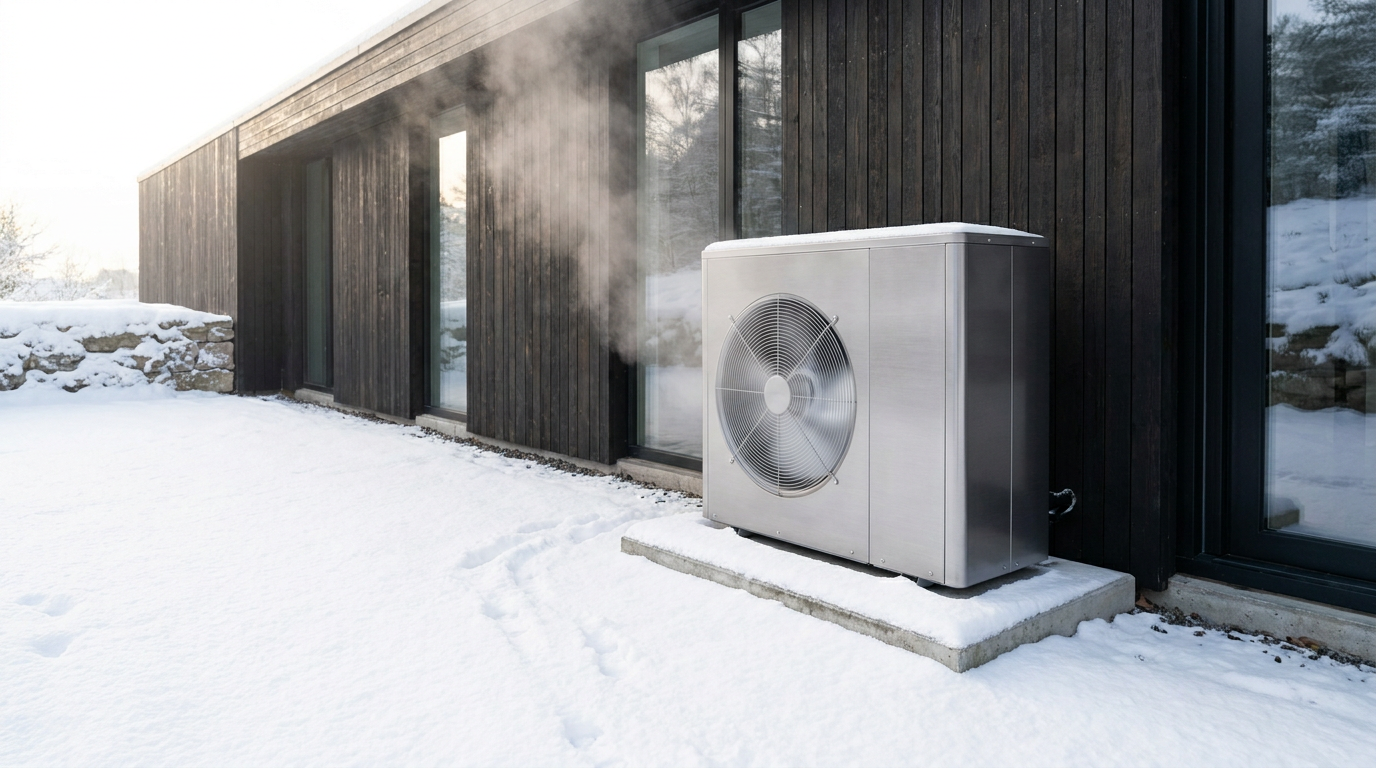
Advanced variable-speed compressors and new refrigerants have transformed electric heat pumps, allowing them to operate at 200% efficiency even in sub-zero temperatures.
By Factlen Editorial Team
- HVAC Engineers & Researchers
- Focused on the thermodynamic breakthroughs that make sub-zero extraction possible.
- Homeowners & Consumer Advocates
- Focused on the balance between high upfront installation costs and long-term utility savings.
- Environmental Policymakers
- Focused on building electrification as the primary lever for reducing residential carbon emissions.
- Hybrid System Proponents
- Advocating for dual-fuel setups in the most extreme northern climate zones.
What's not represented
- · Natural gas utility operators
- · Renters unable to upgrade building infrastructure
Why this matters
Space heating accounts for over 40% of residential energy use. The ability to efficiently electrify heating in cold climates is the single biggest lever homeowners have to lower their utility bills and reduce carbon emissions.
Key points
- Modern cold-climate heat pumps can operate at 200% efficiency even when outdoor temperatures drop to 5°F.
- Variable-speed inverter compressors allow systems to modulate their output, eliminating the need for energy-guzzling emergency heat strips.
- Field testing by the Department of Energy confirms these systems maintain at least 70% of their heating capacity at -15°F.
- The industry is rapidly transitioning to eco-friendly refrigerants like R290, which have a near-zero impact on global warming.
- Homeowners switching from electric resistance heating or oil typically see their winter utility bills drop by 30% to 60%.
For decades, the conventional wisdom in the HVAC industry was absolute: heat pumps are great for the Sun Belt, but they cannot survive a real winter. Homeowners in the Midwest and Northeast were told to stick to natural gas, heating oil, or electric baseboards. That advice, while once accurate, is now obsolete.[8]
The technology driving residential climate control has fundamentally transformed. Propelled by the U.S. Department of Energy’s (DOE) Cold Climate Heat Pump Challenge, a new generation of heating systems has reached the mass market in 2026, officially dismantling the myth that electric heat pumps fail in freezing temperatures.[1][8]
To understand the breakthrough, it helps to understand what a heat pump actually does. Unlike a gas furnace or an electric baseboard, a heat pump does not generate heat by burning fuel or running current through a resistor. Instead, it moves heat from one place to another using a refrigeration cycle.[3]
The thermodynamic reality is that heat energy exists in the air at any temperature above absolute zero. Even when it is 0°F outside, the air contains thermal energy. The engineering challenge has always been extracting that diffuse heat efficiently and compressing it to a temperature high enough to warm a living room.[3][8]

Older, single-stage heat pumps struggled with this because their compressors only had two settings: 100% on or 100% off. When temperatures plummeted, they simply could not extract enough heat and would shut down, forcing the home to rely on expensive, energy-guzzling emergency electric resistance strips.[5][6]
The 2026 landscape is dominated by variable-speed inverter compressors. Think of an inverter like the accelerator pedal in a car. Instead of slamming on and off, the compressor modulates its speed seamlessly—running anywhere from 20% to 100% capacity—to match the exact heating demand of the home.[5][6]
This modulation is paired with vapor injection technology, which acts like a turbocharger for the refrigerant cycle. By injecting a portion of the refrigerant back into the compressor at a mid-pressure state, the system can absorb more heat from frigid outdoor air without overheating the mechanical components.[8]
This modulation is paired with vapor injection technology, which acts like a turbocharger for the refrigerant cycle.
The efficiency of these systems is measured by the Coefficient of Performance (COP). An electric space heater operates at a COP of 1.0, meaning it is 100% efficient: one unit of electricity yields one unit of heat. The most advanced high-efficiency gas furnaces peak around 98% efficiency, or a COP of 0.98.[3]
Modern cold-climate heat pumps shatter this ceiling. According to field data validated by the DOE and the Environmental Protection Agency, today's certified units maintain a COP of 1.75 to 2.0 even when the outside temperature drops to 5°F. This means they deliver 175% to 200% more heat energy than the electrical energy they consume.[1][2]

The performance holds up in extreme conditions. During the DOE’s extensive field testing across 23 sites in the U.S. and Canada, next-generation units successfully operated at temperatures as low as -15°F (-26°C). At these extremes, the systems maintained at least 70% of their rated heating capacity, keeping homes warm without relying on backup heat.[1][2]
Real-world consumer data backs up the laboratory tests. Recent analysis from HeatPumpMonitor and surveys conducted during European 'Arctic blasts' revealed that 85% of heat pump owners were satisfied with their system's winter performance. Remarkably, this satisfaction rate actually surpassed the 80% satisfaction rate reported by households using traditional gas boilers.[4][7]
Beyond mechanical upgrades, 2026 marks a turning point in the chemistry of climate control. The industry is rapidly phasing out R-410A, a synthetic refrigerant with a massive Global Warming Potential (GWP). In its place, manufacturers are deploying low-GWP alternatives like R-454B and R290 (propane).[4][8]

R290 is particularly revolutionary. It boasts a GWP of just 3—compared to over 2,000 for older chemicals—and possesses excellent thermodynamic properties that allow heat pumps to produce hotter water and air, making them highly compatible with older homes that rely on traditional radiators.[4]
The financial equation for homeowners is shifting alongside the technology. While the upfront installation cost of a cold-climate heat pump remains significant—typically ranging from $6,000 to $18,000 before government incentives—the operational savings are immediate. Households switching from electric resistance or heating oil routinely see their winter utility bills drop by 30% to 60%.[2]

For homes in the most extreme climate zones (DOE Zones 6 and 7), many HVAC engineers still recommend a 'dual-fuel' or hybrid approach. In these setups, a cold-climate heat pump handles 95% of the winter heating, but a backup gas furnace automatically takes over during the handful of nights when temperatures plunge to -20°F, optimizing both comfort and utility rates.[6][8]
Ultimately, the electrification of home heating is no longer a compromise between environmental ideals and physical comfort. With the ability to deliver reliable, hyper-efficient warmth in the dead of winter, the cold-climate heat pump has matured into the foundational technology of the modern, decarbonized home.[1][8]
How we got here
2021
The U.S. Department of Energy launches the Cold Climate Heat Pump Challenge to spur manufacturer innovation.
2023
Field testing across the U.S. and Canada validates that prototype units can maintain high efficiency at -15°F.
2025
The EPA begins the mandatory phase-down of R-410A, a common refrigerant with a high Global Warming Potential.
2026
Next-generation heat pumps utilizing low-GWP refrigerants like R290 and R-454B become the standard in the residential market.
Viewpoints in depth
HVAC Engineers & Researchers
Focused on the thermodynamic breakthroughs that make sub-zero extraction possible.
For the engineering community, the triumph of the cold-climate heat pump is a story of incremental mechanical improvements culminating in a massive leap in performance. Researchers point to the integration of variable-speed inverter compressors and vapor-injection cycles as the definitive game-changers. By allowing systems to modulate their workload rather than simply turning on and off, engineers have solved the dual problem of extreme-cold capacity loss and mechanical wear, proving that thermodynamic efficiency does not have to plummet when the temperature drops.
Homeowners & Consumer Advocates
Focused on the balance between high upfront installation costs and long-term utility savings.
Consumer advocates acknowledge that the initial price tag of a cold-climate heat pump—often exceeding $10,000—remains a barrier to entry for many households. However, they emphasize the rapid return on investment for homes transitioning away from electric resistance heating, heating oil, or propane. Their primary focus is ensuring that contractors properly size the units and insulate the homes, as poorly installed systems can lead to skyrocketing electric bills if the emergency backup strips are forced to run continuously.
Environmental Policymakers
Focused on building electrification as the primary lever for reducing residential carbon emissions.
For policymakers driving the transition to a decarbonized grid, the cold-climate heat pump is the linchpin of residential climate strategy. Because space heating accounts for over 40% of home energy use, transitioning away from fossil-fuel combustion is non-negotiable for meeting 2030 and 2050 emissions targets. Policymakers are particularly focused on the 2026 rollout of low-GWP refrigerants like R290, which ensures that the chemicals inside the heat pumps are as environmentally friendly as the electricity powering them.
Hybrid System Proponents
Advocating for dual-fuel setups in the most extreme northern climate zones.
While acknowledging the massive strides in heat pump technology, a subset of contractors and grid operators argue for a pragmatic approach in DOE Climate Zones 6 and 7. They advocate for 'dual-fuel' systems that pair a high-efficiency heat pump with a backup natural gas furnace. This approach, they argue, provides the environmental benefits of electrification for 95% of the winter while protecting homeowners from utility price spikes and protecting the electrical grid from catastrophic demand surges during rare, -20°F polar vortex events.
What we don't know
- How the widespread adoption of electric heating will impact local power grids during extreme, multi-day polar vortex events.
- The long-term real-world lifespan of the new R290 and R-454B compressors, as they have only recently entered mass residential deployment.
Key terms
- Coefficient of Performance (COP)
- A metric of heating efficiency that measures how many units of heat are produced for every one unit of electricity consumed.
- Variable-Speed Inverter
- A compressor technology that allows a heat pump to smoothly adjust its output from 20% to 100% capacity, rather than just turning on and off.
- Global Warming Potential (GWP)
- A measurement of how much heat a greenhouse gas traps in the atmosphere compared to carbon dioxide.
- Vapor Injection
- An advanced refrigeration cycle that injects mid-pressure refrigerant back into the compressor, boosting heating capacity in extreme cold.
- Dual-Fuel System
- A hybrid HVAC setup that uses an electric heat pump for the vast majority of heating but switches to a gas furnace during extreme cold snaps.
Frequently asked
Do I need a backup gas furnace with a cold-climate heat pump?
In most moderate and cold climates, no. Modern units can handle 100% of a home's heating needs down to -15°F. However, in extreme northern regions, a hybrid system with a gas backup is sometimes recommended for peak efficiency.
Are heat pumps noisier than traditional air conditioners?
No. In fact, modern variable-speed heat pumps are typically much quieter. Because they run continuously at lower speeds rather than slamming on at full blast, the outdoor units often operate at a hum as low as 50 decibels.
Will a heat pump work with my existing radiators?
It depends on the system. Traditional heat pumps produce lower water temperatures than gas boilers, requiring larger radiators. However, new 2026 models using R290 refrigerant can achieve the high temperatures needed for older radiator systems.
How much money will I actually save?
Savings depend heavily on your previous heating source. Homeowners switching from electric baseboards, oil, or propane typically see their heating bills drop by 30% to 60%. Savings against natural gas depend on local electricity rates.
Sources
Source coverage
8 outlets
4 viewpoints surfaced





[1]U.S. Department of EnergyEnvironmental Policymakers
Residential Cold Climate Heat Pump Challenge
Read on U.S. Department of Energy →[2]EnergySageHomeowners & Consumer Advocates
Do heat pumps work in cold weather?
Read on EnergySage →[3]University of IllinoisHVAC Engineers & Researchers
Understanding Cold Climate Heat Pumps
Read on University of Illinois →[4]ACR JournalHybrid System Proponents
Heat pumps in 2026: Overturning outdated assumptions
Read on ACR Journal →[5]CarrierHVAC Engineers & Researchers
Heat Pump Efficiency Ratings Explained
Read on Carrier →[6]Trane TechnologiesHVAC Engineers & Researchers
Do Heat Pumps Work in Cold Weather?
Read on Trane Technologies →[7]HeatPumpMonitorHomeowners & Consumer Advocates
Real-world Air Source Heat Pump Performance Data
Read on HeatPumpMonitor →[8]Factlen Editorial TeamEnvironmental Policymakers
Synthesis by Factlen editorial team
Read on Factlen Editorial Team →
Every angle. Every day.
Get home stories with full source coverage and perspective breakdowns delivered to your inbox.