
U.S. and Iran Announce Diplomatic Memorandum, but Core Nuclear and Sanctions Issues Remain Unresolved
The U.S. and Iran have signed a memorandum of understanding aimed at de-escalating tensions and establishing a framework for normalized relations. However, the agreement defers critical negotiations over sanctions relief and nuclear enrichment, leaving analysts divided on its long-term viability.
By Factlen Editorial Team
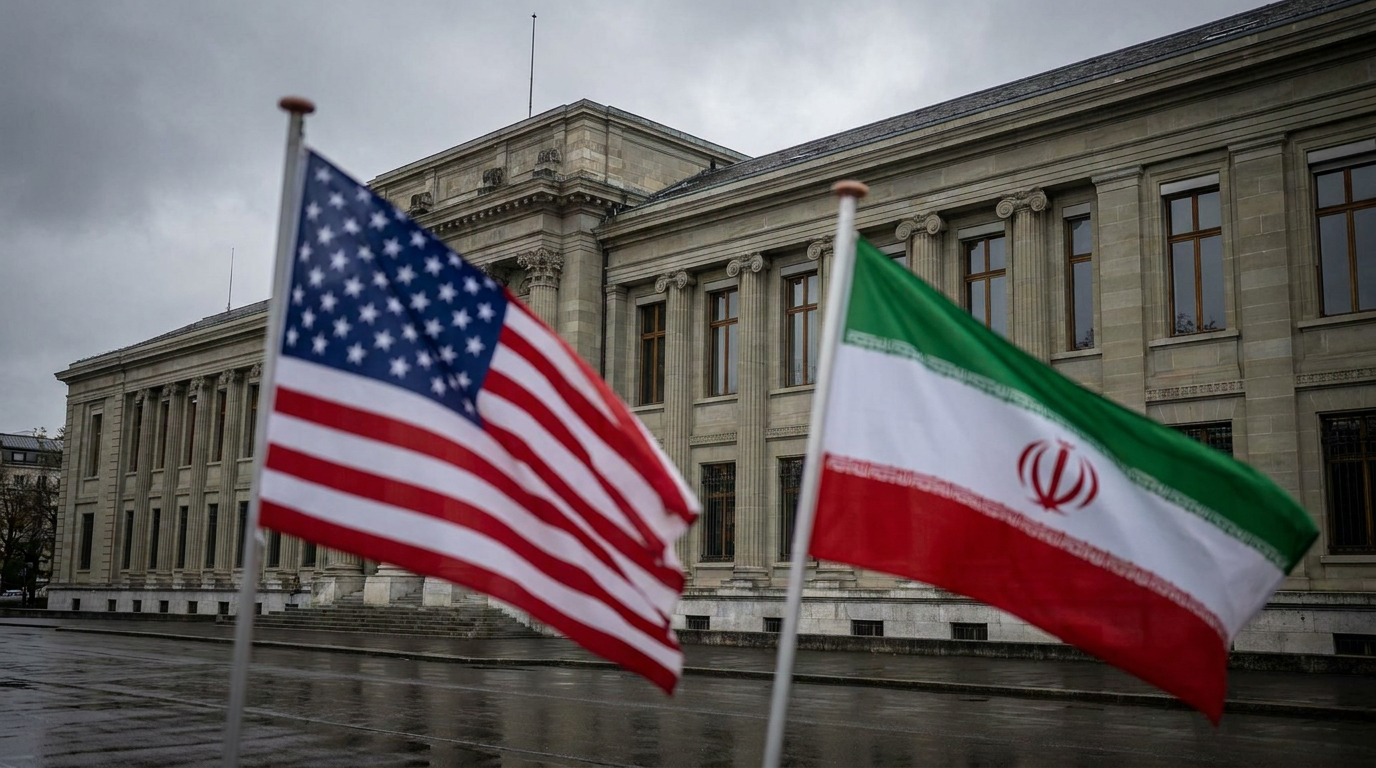
- Skeptical Analysts
- Contend that deferring the nuclear issue allows Iran to continue advancing its enrichment program while enjoying the benefits of reduced military pressure.
- Diplomatic Optimists
- Argue that establishing a baseline cease-fire is a necessary first step to create the trust required for complex nuclear and economic negotiations.
- Regional Security Hawks
- Warn that any agreement that does not immediately dismantle Iran's proxy networks and nuclear infrastructure leaves U.S. allies in the Middle East vulnerable.
What's not represented
- · Iranian civilian population facing economic hardship
- · European Union trade negotiators
Why this matters
A durable U.S.-Iran agreement could fundamentally stabilize the Middle East and lower global energy prices by eventually bringing millions of barrels of Iranian oil back to the market. Conversely, a hollow deal that fails to curb Tehran's nuclear program risks accelerating a regional arms race.
Key points
- The U.S. and Iran have signed a memorandum of understanding to halt immediate hostilities and establish a military hotline.
- The agreement functions as an executive action, bypassing the need for U.S. Senate ratification.
- Core disputes, including U.S. economic sanctions and limits on Iran's nuclear enrichment, are deferred to future talks.
- Regional allies, including Israel, have expressed skepticism about the deal's failure to address proxy militia funding.
- Global oil markets reacted with a slight dip, though structural sanctions preventing Iranian exports remain in place.
In a sudden diplomatic shift, the United States and Iran have agreed to a memorandum of understanding designed to halt immediate hostilities and lay the groundwork for normalized relations. The announcement, championed by the Trump administration as a historic breakthrough, establishes a formal cease-fire framework after months of escalating proxy conflicts across the Middle East. However, the text of the memorandum reveals that the most intractable disputes between Washington and Tehran have been explicitly deferred to future negotiations.[1][4]
To understand the weight of this development, it is crucial to distinguish between a binding treaty and a diplomatic memorandum. A treaty requires a two-thirds supermajority in the U.S. Senate for ratification, a nearly impossible hurdle in the current polarized political climate. A memorandum of understanding, conversely, functions as an executive agreement. It signals political intent and allows the executive branch to alter certain enforcement postures, but it lacks the permanence of codified international law and can be reversed by future administrations.[6]
The immediate provisions of the agreement focus heavily on de-escalation. Both nations have committed to a cessation of direct cyber-attacks and have agreed to establish a direct military-to-military hotline to prevent accidental clashes in the heavily trafficked Strait of Hormuz. Additionally, the memorandum outlines preliminary steps for reopening consular access, a significant symbolic move given that formal diplomatic ties were severed in 1979.[3][4]

Yet, the memorandum's omissions are as notable as its inclusions. The agreement does not provide immediate relief from the sweeping economic sanctions that have crippled the Iranian economy for years. U.S. officials have clarified that the "maximum pressure" architecture remains largely intact, with sanctions relief contingent upon future, more comprehensive negotiations. This has led some analysts to question the immediate practical value of the deal for Tehran.[1][7]
Equally absent from the current framework is any binding restriction on Iran's nuclear enrichment program. Following the collapse of the 2015 Joint Comprehensive Plan of Action (JCPOA), Iran has steadily increased its uranium enrichment, with international watchdogs reporting stockpiles enriched to 60 percent purity—a short technical step away from weapons-grade material. The new memorandum acknowledges the nuclear issue but schedules formal talks on the matter for a later, unspecified date.[4][5]
Deferring the nuclear question represents a significant geopolitical gamble. Proponents of the administration's approach argue that securing a baseline cease-fire was a necessary prerequisite to complex nuclear diplomacy. By lowering the immediate temperature in the region, negotiators hope to create an environment where technical discussions can proceed without the constant threat of military strikes.[1][2]
Critics, however, warn that time is on Tehran's side. Nonproliferation experts caution that allowing Iran to maintain its current enrichment levels while negotiations drag on effectively normalizes its status as a threshold nuclear state. If the follow-on talks stall, the U.S. may find itself having legitimized a diplomatic process that failed to dismantle the very program it was designed to stop.[2][5]
may find itself having legitimized a diplomatic process that failed to dismantle the very program it was designed to stop.
For the Iranian government, the calculus is heavily driven by domestic economic survival. Years of isolation have resulted in hyperinflation, currency devaluation, and widespread domestic unrest. While the memorandum does not lift the primary oil and banking sanctions, it reportedly includes unwritten understandings regarding the loosening of enforcement on third-party oil sales, particularly to Asian markets, providing Tehran with a vital, albeit limited, economic lifeline.[3][7]
From the perspective of the U.S. administration, the memorandum serves a dual purpose. Internationally, it pivots Washington away from the brink of a costly Middle Eastern conflict, allowing the Pentagon to maintain its strategic focus on the Indo-Pacific. Domestically, it allows the administration to claim a major foreign policy victory, framing the de-escalation as a triumph of unconventional deal-making.[1][2]
Global energy markets reacted swiftly, if cautiously, to the news. Brent crude prices dipped by nearly 2 percent in early trading as speculators priced in the distant prospect of Iranian oil returning to the legitimate global market. However, energy analysts were quick to temper expectations, noting that the legal framework preventing major Western energy firms from doing business with Iran remains firmly in place.[7]

The logistical hurdles of reintegrating Iran into the global economy are immense. Even if sanctions were lifted tomorrow, years of underinvestment in Iran's energy infrastructure mean it would take significant time and foreign capital to return production to pre-sanction levels. The memorandum offers no timeline for when, or if, these structural barriers will be dismantled.[7]
Regionally, the agreement has been met with profound skepticism by traditional U.S. allies. In Jerusalem, officials have expressed deep concern that the memorandum provides Tehran with diplomatic cover while it continues to fund proxy networks across Lebanon, Syria, and Yemen. Israeli leadership has reiterated that it is not bound by the U.S.-Iran agreement and reserves the right to act unilaterally against perceived existential threats.[3][5]

Gulf Arab states, particularly Saudi Arabia and the United Arab Emirates, have offered a more muted response. Having recently engaged in their own bilateral de-escalation efforts with Tehran, Riyadh and Abu Dhabi are generally supportive of lowering regional tensions. However, they remain wary of any U.S. pivot that might leave them vulnerable to Iranian regional hegemony without a comprehensive security guarantee.[3]
In Washington, the agreement faces immediate domestic hurdles. Under the Iran Nuclear Agreement Review Act (INARA), Congress has the right to review any agreement related to Iran's nuclear program. While the administration argues that a simple memorandum of understanding falls outside INARA's strict purview, bipartisan groups of lawmakers are already preparing legislative challenges to demand oversight.[1][6]
Ultimately, the success or failure of this diplomatic gambit will not be judged by the signing of the memorandum itself, but by what follows. If the framework leads to a comprehensive treaty that verifiably curbs Iran's nuclear ambitions and reintegrates its economy, it will be viewed as a masterstroke. If the follow-on talks collapse, it may be remembered merely as a brief pause in a decades-long conflict.[2][4]

How we got here
2015
The U.S., Iran, and world powers sign the JCPOA, limiting Iran's nuclear program in exchange for sanctions relief.
2018
The U.S. unilaterally withdraws from the JCPOA and institutes a 'maximum pressure' sanctions campaign.
2021-2025
Iran steadily increases its uranium enrichment levels, reaching 60 percent purity, while regional proxy conflicts escalate.
June 2026
The U.S. and Iran announce a new memorandum of understanding, establishing a cease-fire framework but deferring nuclear talks.
Viewpoints in depth
The U.S. Administration's View
Frames the memorandum as a pragmatic victory that pulls the region back from the brink of war.
U.S. officials argue that the 'maximum pressure' campaign, while economically devastating to Iran, failed to halt its nuclear advancements or regional aggression. By securing a baseline cease-fire and establishing direct communication lines, the administration believes it has created the necessary breathing room to pursue a more comprehensive, long-term diplomatic solution without the immediate threat of military entanglement.
The Iranian Government's View
Views the agreement as a necessary tactical pause to relieve domestic economic pressure.
For Tehran, the primary objective is regime survival amidst crippling inflation and public unrest. While the memorandum does not formally lift sanctions, Iranian leadership is banking on unwritten understandings that the U.S. will quietly relax enforcement on third-party oil sales. This allows the government to claim a diplomatic victory at home while retaining its nuclear leverage for future negotiations.
Regional Allies' View
Expresses deep concern that the U.S. is prioritizing a quick diplomatic win over comprehensive regional security.
Nations like Israel and the Gulf Arab states view Iran's nuclear program and its funding of proxy militias as inseparable threats. They fear that the memorandum provides Tehran with diplomatic legitimacy and financial breathing room without requiring any tangible concessions on its regional behavior. Consequently, these nations are increasingly signaling a willingness to act independently of Washington to secure their own defense interests.
What we don't know
- When formal negotiations regarding sanctions relief and nuclear enrichment limits will actually begin.
- Whether the U.S. Congress will successfully pass legislation to block or alter the implementation of the memorandum.
- How strictly the U.S. will enforce existing oil sanctions on third-party buyers while the new diplomatic framework is in place.
Key terms
- Memorandum of Understanding (MOU)
- A formal agreement between two or more parties that outlines political intent and mutual goals, but lacks the binding legal permanence of a ratified treaty.
- Uranium Enrichment
- The process of increasing the concentration of the U-235 isotope in uranium; 3-5% is used for civilian power, while 90% is required for a nuclear weapon.
- Maximum Pressure
- The U.S. foreign policy strategy of applying severe economic sanctions and diplomatic isolation to force a country to change its behavior.
- Executive Agreement
- An international agreement made by the executive branch of the U.S. government without ratification by the Senate.
Frequently asked
Does this agreement lift U.S. sanctions on Iran?
No. The memorandum defers the issue of economic sanctions to future negotiations. The U.S. 'maximum pressure' architecture remains legally in place.
Does the memorandum stop Iran's nuclear program?
No. The agreement acknowledges the nuclear dispute but schedules formal talks on enrichment limits for a later date, leaving Iran's current operations unchanged for now.
Is this a formal treaty?
No. It is a memorandum of understanding, which functions as an executive agreement. It does not require Senate ratification and can be altered by future administrations.
How will this affect global oil prices?
Prices dipped slightly on the news, but significant drops are unlikely until sanctions are formally lifted and Iranian oil can legally re-enter Western markets.
Sources
Source coverage
7 outlets
3 viewpoints surfaced







[1]Fox NewsSkeptical Analysts
Trump's Iran agreement raises a basic question: Is it actually a deal?
Read on Fox News →[2]The New York TimesSkeptical Analysts
Iran Found Trump’s Bone Spur
Read on The New York Times →[3]Al JazeeraDiplomatic Optimists
Middle East reacts cautiously to surprise US-Iran diplomatic memorandum
Read on Al Jazeera →[4]ReutersDiplomatic Optimists
U.S., Iran sign framework agreement, deferring nuclear talks
Read on Reuters →[5]BBC NewsRegional Security Hawks
What the new US-Iran memorandum means for the nuclear crisis
Read on BBC News →[6]Council on Foreign RelationsRegional Security Hawks
Understanding Executive Agreements in U.S.-Iran Relations
Read on Council on Foreign Relations →[7]Bloomberg
Oil Dips as U.S.-Iran Memorandum Raises Distant Prospect of Supply Return
Read on Bloomberg →
More in news politics
See all 7 stories →Global Health
Ebola Outbreak in DR Congo Could Become Worst on Record, Health Officials Warn
0 sources

Iran Peace Deal
Senate Blocks Bid to Limit Trump's War Powers as US-Iran Peace Deal Nears
0 sources
US-Iran Relations
US and Iran Reach Tentative Peace Agreement as G7 Leaders Work to Finalize Details
0 sources
Climate Thresholds
Global Agencies Declare 'Supercharged' El Niño as UN Concedes 1.5°C Overshoot
0 sources
Every angle. Every day.
Get news politics stories with full source coverage and perspective breakdowns delivered to your inbox.