
Dolly Parton’s Imagination Library Surpasses 300 Million Books Gifted as Program Expands Bilingual and Braille Access
The country music icon's early childhood literacy initiative has reached a historic milestone, now mailing free books to one in six American children under five while expanding its global footprint and accessibility formats.
By Factlen Editorial Team
- Early Childhood Educators
- Emphasize the critical importance of having physical books in the home before kindergarten to close the literacy gap.
- Accessibility Advocates
- Praise the program's expansion into Braille, audio, and bilingual formats, ensuring marginalized children aren't left behind.
- Philanthropy Analysts
- View the initiative as the gold standard for celebrity charity, focusing on systemic, long-term impact rather than one-off PR stunts.
What's not represented
- · Publishing industry executives managing the massive print volume
- · Local postal workers delivering the monthly packages
Why this matters
Early childhood literacy is one of the strongest predictors of lifelong academic and economic success. By removing cost barriers and delivering books directly to homes, this initiative is actively closing the educational gap for millions of children before they even begin kindergarten.
Key points
- Dolly Parton's Imagination Library has surpassed 300 million free books gifted to children globally.
- The program now reaches one in six American children under the age of five.
- Recent expansions include opt-in bilingual English/Spanish collections for participating families.
- A partnership with the American Printing House for the Blind provides free print/braille and audio books.
- The initiative operates in five countries, utilizing a public-private franchise model to scale efficiently.
Dolly Parton’s Imagination Library has quietly achieved a staggering milestone in the first half of 2026, officially surpassing 300 million free books gifted to children worldwide. What began in 1995 as a highly localized, personal effort in Sevier County, Tennessee, has steadily evolved into one of the most effective and expansive early childhood literacy programs on the planet. While the entertainment industry is frequently characterized by fleeting philanthropic gestures, Parton’s initiative has spent three decades building a robust, international logistics network dedicated solely to early education. The achievement of 300 million books distributed represents not just a numerical triumph, but a generational shift in how communities approach reading readiness before children ever set foot in a formal classroom.[1][2]
The sheer scale of the operation is difficult to comprehend when viewed alongside traditional nonprofit efforts. Today, an astonishing one in six American children under the age of five receives a brand-new book in the mail every single month from the country music icon's foundation. The program currently operates across five countries—the United States, the United Kingdom, Canada, Australia, and the Republic of Ireland—mailing millions of physical books monthly to families regardless of their socioeconomic status or income level. This universal approach removes the stigma often associated with means-tested charity programs, ensuring that every child in a participating community experiences the exact same joy of receiving a package addressed personally to them.[1][2][4]
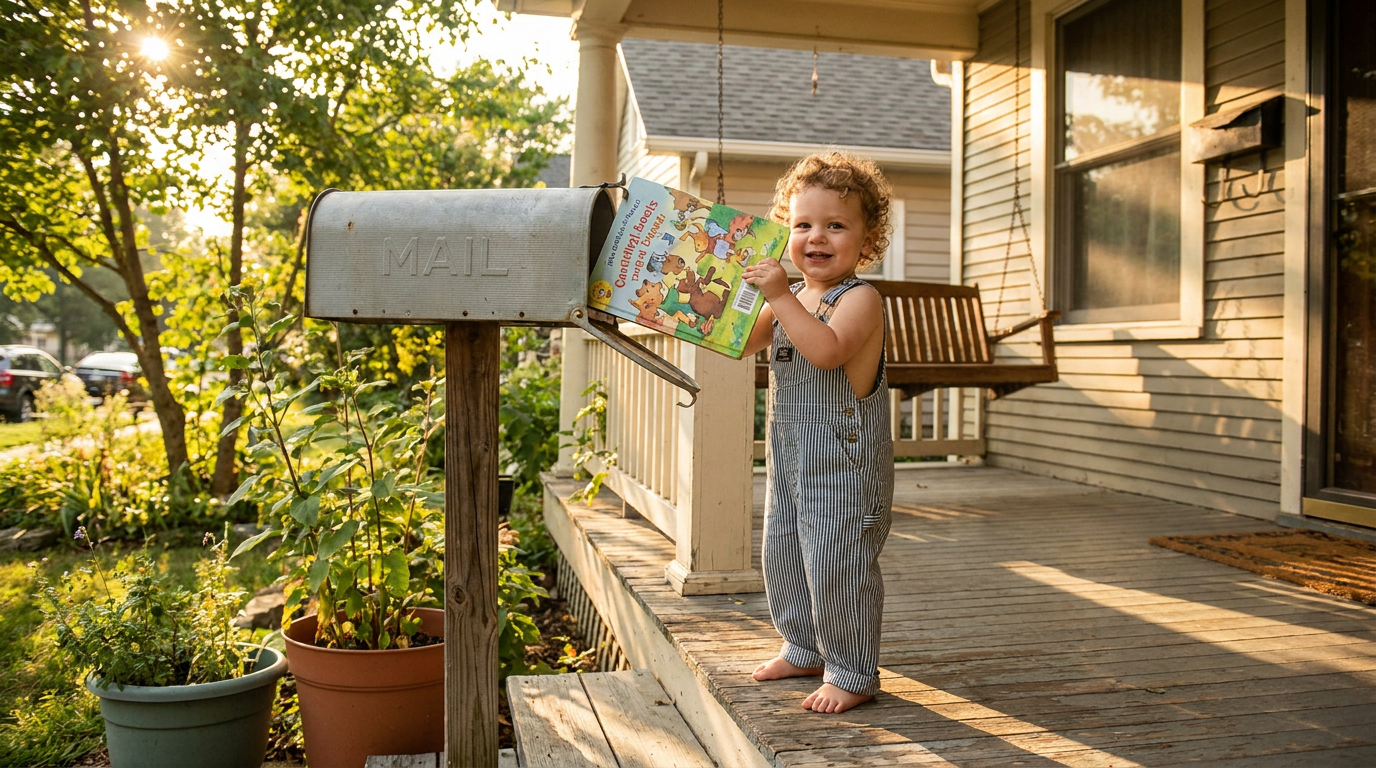
The mechanism driving this massive logistical feat is elegantly simple, yet profoundly impactful. Parents or guardians register their children at birth, and every month until their fifth birthday, a high-quality, age-appropriate book arrives in their mailbox. The curriculum is carefully structured: the very first book delivered to every enrolled infant is always 'The Little Engine That Could', chosen for its enduring message of perseverance and determination. The final delivery, timed to arrive just as the child ages out of the program, is 'Look Out Kindergarten, Here I Come!'. Over the course of those five years, a child enrolled at birth will effortlessly accumulate a personal, curated library of 60 books.[1][3]

Parton launched the initiative in honor of her father, Robert Parton, a brilliant and hardworking man who never had the opportunity to learn to read or write. She has frequently stated in interviews that his inability to read severely limited his life's opportunities, and she designed the Imagination Library to ensure that financial constraints would never be a barrier to a child's access to literature and learning. By framing the charity not as a handout, but as a tribute to her father's legacy, Parton managed to build immense goodwill and trust among rural and working-class families who might otherwise be hesitant to accept charitable assistance.[2][7]
Recently, the program has aggressively expanded its accessibility features to reach historically underserved and marginalized populations. Throughout late 2025 and into the 2026 calendar year, state partners have rolled out comprehensive bilingual options for participating families. Parents can now opt in to receive English/Spanish bilingual books every month, exposing children to dual-language reading environments during their most critical cognitive development window. This expansion acknowledges the shifting demographics of the United States and ensures that non-native English speakers can actively participate in shared family reading time without language barriers hindering the experience. Educational researchers note that dual-language exposure in the first five years of life significantly enhances executive function and cognitive flexibility, making this bilingual rollout a major upgrade to the program's overall educational efficacy.[3][7]
Recently, the program has aggressively expanded its accessibility features to reach historically underserved and marginalized populations.
Furthermore, the Imagination Library has deepened its vital collaboration with the American Printing House for the Blind (APH). Through the specialized 'Braille Tales' initiative, children with visual impairments receive print/braille books every other month at absolutely no cost to their families. Audio versions are also distributed for playback on specialized devices, ensuring that blind and low-vision children can participate fully in the shared reading experience. This commitment to accessibility means that the program isn't just scaling in raw numbers, but is actively engineering solutions for edge cases that traditional mass-market literacy campaigns frequently overlook. By integrating braille directly onto the pages of standard children's books, sighted parents can read alongside their visually impaired children, and visually impaired parents can read to their sighted children, fostering a deeply inclusive family dynamic.[3][5]

Philanthropy analysts consistently point to the Imagination Library as the gold standard for celebrity giving. Unlike one-off donations or PR-driven charity galas that dominate entertainment news cycles, Parton's model is built on sustainable, systemic change. By partnering with local community organizations, school districts, and state governments—who help fund the wholesale cost of the books and the localized mailing fees while the Dollywood Foundation manages the centralized database and publisher negotiations—the program scales efficiently. This public-private franchise model allows the charity to grow exponentially while remaining deeply rooted in local community investment. It requires local stakeholders to have 'skin in the game,' ensuring that the program is actively promoted and maintained by the people who live in the very communities it serves, rather than being dictated entirely from a distant corporate headquarters.[6][7]
Early childhood educators stress that the mere presence of physical books in the home is one of the strongest predictors of future academic success. The 'word gap'—the disparity in the number of words children from different socioeconomic backgrounds hear during their early developmental years—can reach into the millions by age five. By the time a child enrolled in the Imagination Library reaches kindergarten, they have accumulated a personal library of 60 books. This early, consistent exposure builds foundational vocabulary, fosters a genuine love of reading, and actively encourages parents to step into the role of their child's first and most important teachers. Teachers frequently report that children who graduate from the program enter the classroom with noticeably higher reading readiness, better attention spans for storytime, and a greater familiarity with the physical mechanics of holding a book and turning pages.[1][2][7]

The program also meticulously adapts its curriculum to its international audiences, refusing to take a one-size-fits-all approach to global literacy. In Australia, for instance, the book selection committee actively includes Indigenous advisors to ensure the titles reflect the diversity, history, and cultural heritage of the wider community. Every participating region relies on a dedicated Blue Ribbon Book Selection Committee comprised of academics, authors, and librarians to rigorously curate the annual lists. These committees ensure that the books are not only age-appropriate but also culturally relevant, featuring characters and stories that resonate with the specific lived experiences of the children receiving them. This localized curation prevents the program from feeling like an American cultural export, allowing it to seamlessly integrate into the educational frameworks of the United Kingdom, Canada, and Ireland.[4][7]
In an era where celebrity news is overwhelmingly dominated by fleeting controversies, superficial brand deals, or manufactured engagement bait, Parton's literacy empire stands as a profound testament to focused, long-term advocacy. She has leveraged her immense cultural capital not to sell products, but to build an enduring educational infrastructure. By simply putting books into the hands of toddlers month after month, year after year, the Imagination Library is quietly reshaping the educational trajectory of millions of children worldwide. It is a masterclass in how public figures can utilize their platforms to enact quiet, structural, and universally beloved societal change. As the program looks past the 300 million mark, its continued expansion into new languages and accessibility formats guarantees that Dolly Parton's most lasting legacy will not just be her music, but the generations of children who learned to read because she decided to mail them a book.[6][7]
How we got here
1995
Dolly Parton launches the Imagination Library in Sevier County, Tennessee, in honor of her father.
2000
The program becomes available for replication across the United States.
2006
The initiative expands internationally, launching in Canada.
2018
The Imagination Library gifts its 100 millionth book.
2025
The program rolls out expanded bilingual English/Spanish options and deepens its braille partnerships.
2026
The organization surpasses 300 million total books gifted globally.
Viewpoints in depth
Early Childhood Educators
Emphasize the critical importance of having physical books in the home before kindergarten to close the literacy gap.
Educators note that the 'word gap' between children in book-rich homes versus book-poor homes can reach millions of words by age five. The Imagination Library directly attacks this disparity by ensuring 60 high-quality books arrive before a child ever sets foot in a classroom. This consistent delivery builds foundational vocabulary, normalizes reading as a daily family activity, and significantly improves reading readiness metrics when children finally enter the formal school system.
Accessibility Advocates
Praise the program's expansion into Braille, audio, and bilingual formats, ensuring marginalized children aren't left behind.
Advocates for disabled and non-English-speaking communities highlight that mass-market literacy programs often overlook edge cases. By integrating opt-in bilingual English/Spanish collections and partnering with the American Printing House for the Blind, the initiative ensures that visually impaired children and ESL families receive the exact same cognitive benefits. This inclusive approach allows sighted parents to read braille books with their blind children, fostering shared family experiences regardless of physical or linguistic barriers.
Philanthropy Analysts
View the initiative as the gold standard for celebrity charity, focusing on systemic, long-term impact rather than one-off PR stunts.
While many public figures opt for highly publicized, one-time donations, analysts praise Parton's infrastructure-first approach. The Dollywood Foundation handles the complex logistics, database management, and publisher negotiations, while local community affiliates fund the localized postage. This public-private franchise model allows the charity to scale globally while remaining deeply rooted in local communities, requiring local stakeholders to actively invest in their own children's educational futures.
What we don't know
- Whether the program plans to expand into non-English speaking countries beyond its current bilingual offerings.
- The exact long-term economic impact of the program on the communities with the highest enrollment rates.
Key terms
- Blue Ribbon Book Selection Committee
- A panel of early literacy experts, educators, and librarians who curate the age-appropriate book lists each year.
- Braille Tales
- A collaborative program with the American Printing House for the Blind that provides print/braille books to visually impaired children.
- Dual-Language Reading
- The practice of reading books that feature both English and a second language to foster early bilingual cognitive development.
- Word Gap
- The disparity in the number of words children from different socioeconomic backgrounds hear and learn during their early developmental years.
Frequently asked
Who is eligible for the Imagination Library?
Any child under age five living in a participating community is eligible, regardless of their family's income level.
How much does the program cost families?
It is 100% free for registered families. The costs are shared between the Dollywood Foundation and local community partners.
What is the first book every child receives?
The first book mailed to every registered child is 'The Little Engine That Could', chosen for its enduring message of perseverance.
Are there books available for visually impaired children?
Yes. Through a partnership with the American Printing House for the Blind, children can receive print/braille books and audio formats.
Sources
Source coverage
7 outlets
3 viewpoints surfaced




[1]Imagination Library OfficialEarly Childhood Educators
Dolly Parton's Imagination Library: Inspiring a Love of Reading
Read on Imagination Library Official →[2]City of Palo Alto LibraryEarly Childhood Educators
Dolly Parton's Imagination Library Reaches 300 Million Books
Read on City of Palo Alto Library →[3]Imagination Library ColoradoAccessibility Advocates
2026 Book List and Bilingual Expansion
Read on Imagination Library Colorado →[4]Imagination Library AustraliaAccessibility Advocates
The 2026 Book List - Dolly Parton's Imagination Library Australia
Read on Imagination Library Australia →[5]American Printing House for the BlindAccessibility Advocates
Braille Tales: Imagination Library Collaboration
Read on American Printing House for the Blind →[6]OcevalonPhilanthropy Analysts
Celebrity Philanthropy: Stars Who Are Actually Making a Difference
Read on Ocevalon →[7]Factlen Editorial TeamPhilanthropy Analysts
Synthesis by Factlen editorial team
Read on Factlen Editorial Team →
Every angle. Every day.
Get entertainment stories with full source coverage and perspective breakdowns delivered to your inbox.