
Google Begins Rolling Out Android 17 to Pixel Devices with Enhanced Multitasking
Google has officially launched Android 17 for compatible Pixel phones and watches, introducing new floating app windows, foldable gaming optimizations, and screen recording tools. While core productivity features are available immediately, the company's highly anticipated AI additions are slated to arrive later this summer.
By Factlen Editorial Team
- Mobile Productivity Advocates
- Focuses on the immediate workflow benefits of floating windows and enhanced multitasking capabilities.
- Ecosystem Realists
- Appreciates the solid OS foundation but notes the strategic delay of Google's major AI features.
- Creator & Wearable Enthusiasts
- Highlights the specialized tools for content creators and the crucial battery improvements in Wear OS 7.
What's not represented
- · Third-party app developers adapting to the new UI
- · Non-Pixel Android users waiting for OEM updates
Why this matters
The Android 17 update fundamentally changes how users multitask on mobile devices, bringing desktop-like floating windows to smartphones and extending battery life for smartwatches. For the billions of people relying on the Android ecosystem, these tools promise to make daily digital tasks significantly more efficient.
Key points
- Android 17 is officially rolling out to compatible Google Pixel phones and watches.
- The update introduces 'Bubble' app windows for desktop-style floating multitasking.
- Foldable devices gain a new 50/50 split mode for simultaneous gaming and app usage.
- A native 'Screen Reaction' mode allows creators to record their screen and front camera at once.
- Wear OS 7 brings Live Updates to watch faces and promises improved battery life.
- Google's highly anticipated on-device AI features have been delayed until later this summer.
Google has officially initiated the rollout of Android 17, bringing a wave of new productivity and interface enhancements to its Pixel smartphone lineup. Following its debut at the pre-I/O Android Show last month, the operating system update is now hitting compatible devices as part of the June Pixel Drop. The release marks a significant shift in Google's mobile design philosophy, prioritizing desktop-style multitasking and creator-focused tools over purely aesthetic changes.[1][3]
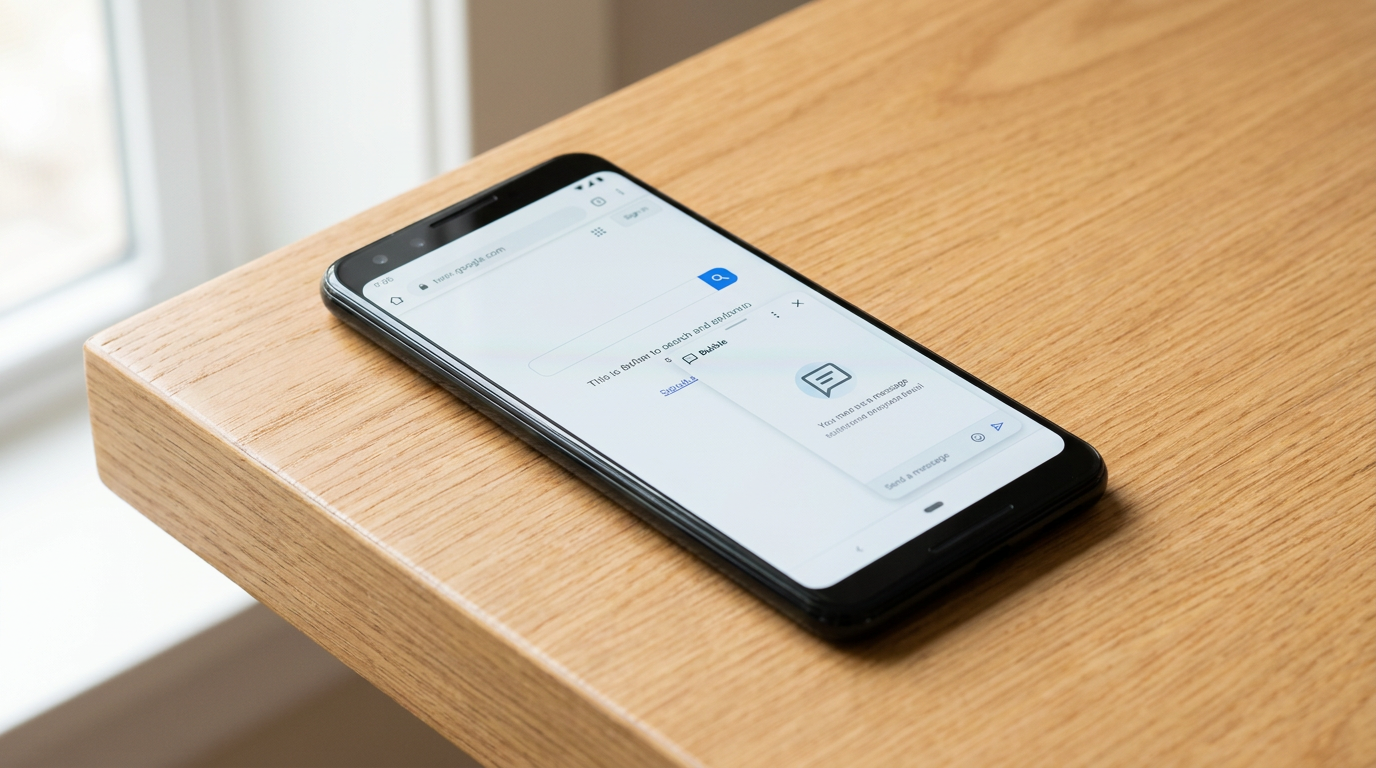
The marquee feature of Android 17 is the introduction of "Bubble" app windows, a system-level overhaul that allows users to float active applications over their main screen. Unlike previous split-screen iterations, Bubbles function much like windows on a traditional desktop computer, allowing users to resize, drag, and pin apps while keeping their primary workspace fully visible. Early testers note that this dramatically reduces the friction of copying text between apps or referencing a document while drafting an email.[2][8]
This floating window architecture is particularly transformative for power users who have long felt constrained by the rigid full-screen paradigm of mobile operating systems. By allowing a messaging app to hover unobtrusively over a web browser, or a calculator to float above a spreadsheet, Google is effectively bridging the gap between mobile and desktop productivity. The interface is designed to be intuitive, with simple swipe gestures controlling the opacity and placement of the Bubbles.[6][8]

Foldable devices are receiving their own tailored upgrades, most notably a new 50/50 split gaming mode. As the foldable market matures, Google is leveraging the expansive interior screens of devices like the Pixel Fold to allow users to run a game on one half of the display while keeping a chat application, walkthrough video, or social media feed active on the other. This hardware-specific optimization highlights Google's ongoing commitment to making the foldable form factor more than just a novelty.[2][5]
For the creator economy, Android 17 introduces a native "Screen Reaction" recording mode. This feature simultaneously captures the device's screen content and the user's front-facing camera, seamlessly compositing them into a single video file. Previously, mobile creators had to rely on third-party applications or complex post-production editing to achieve this effect. By baking it directly into the OS, Google is significantly lowering the barrier to entry for mobile game streamers, tutorial makers, and social media commentators.[1][7]

For the creator economy, Android 17 introduces a native "Screen Reaction" recording mode.
The software refresh extends beyond smartphones, with Google simultaneously launching Wear OS 7 for its smartwatch ecosystem. The wearable update introduces "Live Updates," a feature that pushes real-time information—such as sports scores, ride-share ETAs, or flight boarding times—directly to the watch face without requiring the user to open a dedicated app. Crucially, Wear OS 7 also brings under-the-hood optimizations that promise noticeable improvements to battery life, addressing one of the most persistent complaints among smartwatch owners.[2][3]
Wear OS 7 is also laying the groundwork for Google's next major hardware frontier: Android XR. The updated wearable operating system includes foundational connectivity protocols designed to interface seamlessly with upcoming smart glasses and extended reality headsets. While Google has remained tight-lipped on exact hardware release dates, the software architecture clearly indicates that the company envisions the smartwatch as a central hub for its future augmented reality ecosystem.[2][5]

Despite the robust feature set available today, the rollout comes with a notable caveat. Alphabet Inc. has confirmed that several of Android 17's highly anticipated artificial intelligence features will not be included in this initial wave. According to industry reports, the company has opted to delay its marquee on-device AI additions until later this summer to ensure stability and refine the user experience before pushing them to millions of devices.[4]
This staggered release strategy reflects a growing industry trend of prioritizing stable core functionality over rushing complex generative AI tools to market. By separating the foundational OS update from the heavier AI features, Google mitigates the risk of system-wide bugs that could frustrate early adopters. Analysts suggest this cautious approach is prudent, given the immense computing resources required to run advanced language models locally on mobile hardware.[4][6]
The mechanics of the rollout follow Google's traditional phased approach. Pixel owners will receive the update via an over-the-air (OTA) download in the coming weeks, bundled with exclusive Pixel Drop features. As is customary, the timing for non-Pixel devices will depend entirely on third-party manufacturers like Samsung, Motorola, and OnePlus, who must adapt the open-source Android 17 code to their own custom interfaces.[1][3]
For developers, the immediate availability of Android 17 means they can begin integrating the new APIs into their applications. The success of features like Bubble windows and the 50/50 foldable split will ultimately depend on third-party app developers optimizing their software to take advantage of the new screen real estate and multitasking capabilities. Google has provided extensive documentation to encourage rapid adoption across the ecosystem.[5][8]
Overall, Android 17 represents a mature, highly functional evolution of the world's most popular mobile operating system. By focusing on tangible productivity improvements and seamless ecosystem integration rather than flashy but unproven gimmicks, Google has delivered an update that immediately enhances the daily utility of its devices. As the delayed AI features arrive later in the year, the platform is well-positioned to remain at the forefront of mobile computing.[3][6]
How we got here
May 2026
Google previews Android 17 and its upcoming AI features at the annual I/O developer conference.
June 16, 2026
Android 17 officially begins rolling out to compatible Pixel devices via an over-the-air update.
Late Summer 2026
Anticipated release window for Google's delayed on-device AI features.
Viewpoints in depth
Mobile Productivity Advocates
Power users and tech reviewers who view the multitasking upgrades as a fundamental shift in mobile computing.
For years, mobile operating systems have forced users into a rigid, full-screen paradigm that makes referencing multiple documents or apps cumbersome. Productivity advocates argue that Android 17's 'Bubble' windows finally bridge the gap between mobile and desktop workflows. By allowing users to resize and pin floating apps, Google is acknowledging that modern smartphones possess the processing power to handle true, desktop-grade multitasking without compromising the touch-first interface.
Ecosystem Realists
Industry analysts who appreciate the OS stability but note the strategic delay of Google's AI ambitions.
While praising the immediate utility of Android 17's interface upgrades, ecosystem realists point out that the software's launch is defined as much by what is missing as by what is included. The decision to delay major on-device AI features until later in the summer suggests that Google is prioritizing system stability over marketing hype. Analysts view this staggered approach as a necessary precaution, given the immense computational demands and potential bugginess of integrating generative AI deeply into a mobile operating system.
Creator & Wearable Enthusiasts
Users focused on the specialized tools for content creation and the crucial quality-of-life updates for smartwatches.
Beyond the smartphone interface, this camp highlights how Android 17 caters to specific, high-engagement niches. For the creator economy, baking the 'Screen Reaction' mode directly into the OS eliminates the need for clunky third-party editing software, democratizing mobile game streaming. Simultaneously, wearable enthusiasts are celebrating Wear OS 7 not just for its new 'Live Updates,' but for the under-the-hood battery optimizations that address the single biggest pain point of the smartwatch experience.
What we don't know
- The exact release date for Google's delayed on-device AI features later this summer.
- How quickly third-party developers will update their apps to support the new Bubble window resizing.
- The specific timeline for when manufacturers like Samsung and Motorola will push Android 17 to their devices.
Key terms
- Bubble app windows
- A new Android 17 feature that allows applications to float in resizable windows over the main screen for seamless multitasking.
- Screen Reaction
- A native recording mode that captures both the device's screen content and the user's front-facing camera simultaneously.
- Wear OS 7
- The latest version of Google's operating system for smartwatches, featuring Live Updates and battery optimizations.
- Android XR
- Google's upcoming software platform designed specifically for extended reality headsets and smart glasses.
Frequently asked
When will my non-Pixel phone get Android 17?
Rollout depends entirely on the manufacturer. Companies like Samsung, Motorola, and OnePlus typically begin updating their flagship devices in the fall after adapting the software to their custom interfaces.
What are Bubble app windows?
They are floating, resizable app windows that let you use multiple applications at once without switching back and forth, similar to how windows function on a desktop computer.
Why are the new AI features delayed?
Google has opted to stagger the release, pushing the core OS update now and saving the heavier on-device AI features for later this summer to ensure system stability and refine the user experience.
Does Wear OS 7 improve smartwatch battery life?
Yes, Google has implemented under-the-hood optimizations in Wear OS 7 specifically designed to extend battery life on compatible smartwatches.
Sources
Source coverage
8 outlets
3 viewpoints surfaced







[1]The VergeMobile Productivity Advocates
Android 17 arrives on Pixel phones today
Read on The Verge →All the latest news on Android 17, Wear OS 7, and Android XR
Read on The Verge →[3]Ars TechnicaEcosystem Realists
Android 17 starts hitting Pixel phones and watches today
Read on Ars Technica →[4]BloombergEcosystem Realists
Google Rolls Out Android 17; Major AI Features to Follow This Summer
Read on Bloomberg →[5]9to5GoogleCreator & Wearable Enthusiasts
Android 17 rollout begins: What Pixel owners need to know
Read on 9to5Google →[6]CNETMobile Productivity Advocates
Google's Android 17 is here: Multitasking upgrades take center stage
Read on CNET →[7]TechRadarCreator & Wearable Enthusiasts
Android 17's new Screen Reaction feature is a game-changer for creators
Read on TechRadar →[8]EngadgetMobile Productivity Advocates
Android 17 brings desktop-like 'Bubbles' to your phone
Read on Engadget →

Every angle. Every day.
Get technology stories with full source coverage and perspective breakdowns delivered to your inbox.