
US and Iran Reach Peace Framework to End War and Reopen Strait of Hormuz
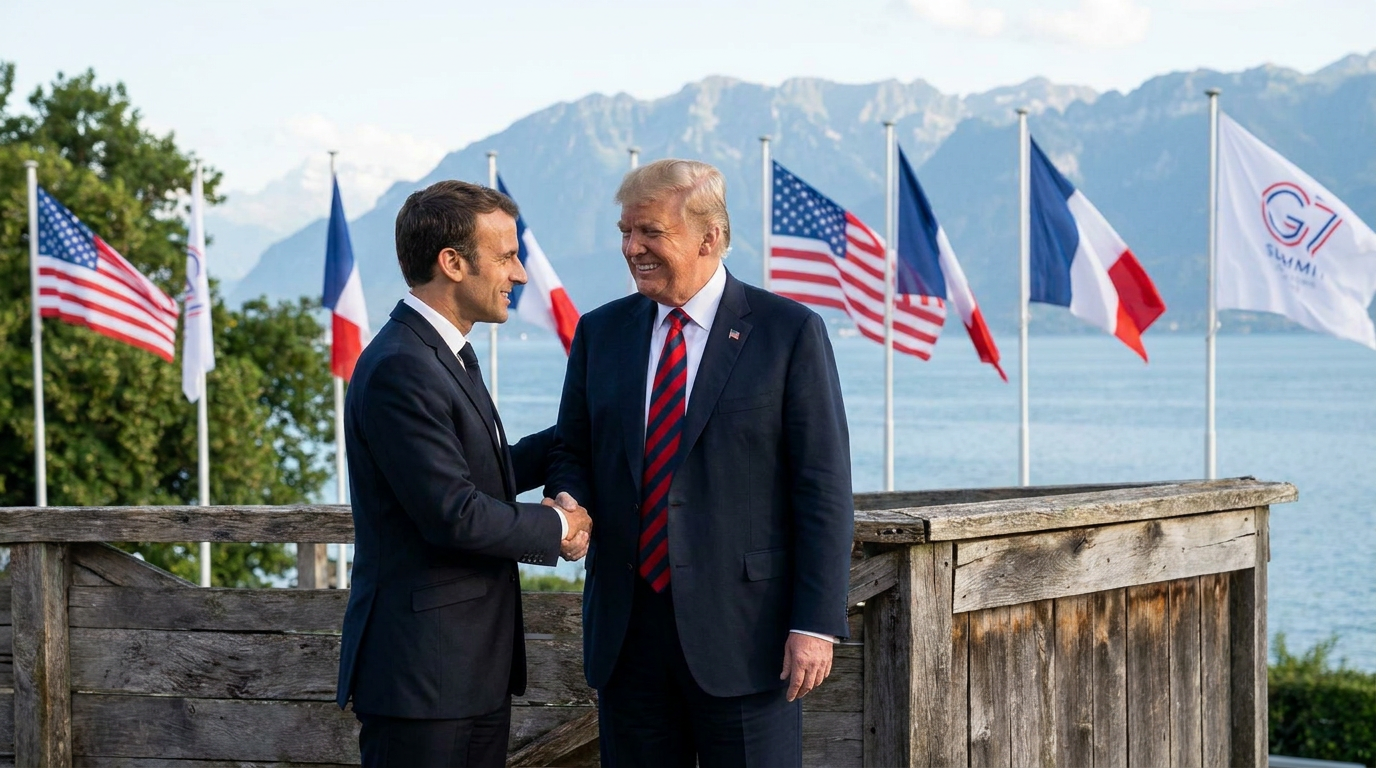
The United States and Iran have agreed to a tentative peace framework to end their 15-week conflict, reopening the critical Strait of Hormuz and lifting the U.S. naval blockade. The deal, announced by President Trump ahead of the G7 summit in France, sets the stage for a formal signing in Geneva and a 60-day window for nuclear negotiations.
By Factlen Editorial Team
- US Administration
- Focuses on reopening global trade routes and curbing Iran's nuclear ambitions through renewed leverage.
- Iranian Leadership
- Prioritizes the lifting of the naval blockade, regime survival, and securing economic relief from sanctions.
- European Allies
- Welcomes the end of hostilities but demands strict, long-term verification of Iran's nuclear program to ensure regional stability.
- Global Markets & Energy Sector
- Views the conflict primarily through the lens of energy security and supply chain stability.
What's not represented
- · Lebanese civilians caught in the crossfire between Israel and Hezbollah
- · Commercial shipping crews navigating the heavily mined Strait of Hormuz
Why this matters
The reopening of the Strait of Hormuz immediately relieves a massive bottleneck in global energy supplies, sending oil prices tumbling and averting a deeper economic crisis. However, the fragile 60-day window to negotiate Iran's nuclear capabilities means the threat of renewed conflict remains high if technical talks fail.
Key points
- The U.S. and Iran have digitally signed a memorandum of understanding to end their 15-week war.
- The agreement reopens the Strait of Hormuz and lifts the U.S. naval blockade on Iranian ports.
- A formal signing ceremony is scheduled for June 19 in Geneva, Switzerland.
- The deal establishes a 60-day window for technical negotiations regarding Iran's nuclear program.
The United States and Iran have reached a preliminary peace framework to end a devastating 15-week war that has roiled the Middle East and choked global energy supplies. The memorandum of understanding, which was reportedly signed digitally over the weekend, establishes a 60-day ceasefire across all fronts. Crucially, the agreement mandates the immediate reopening of the Strait of Hormuz—a vital maritime chokepoint closed by Iran during the conflict—in exchange for the lifting of a U.S. naval blockade on Iranian ports. The breakthrough marks a sudden de-escalation in a war that began in late February and has since drawn in regional proxies and disrupted international trade.[1][2]
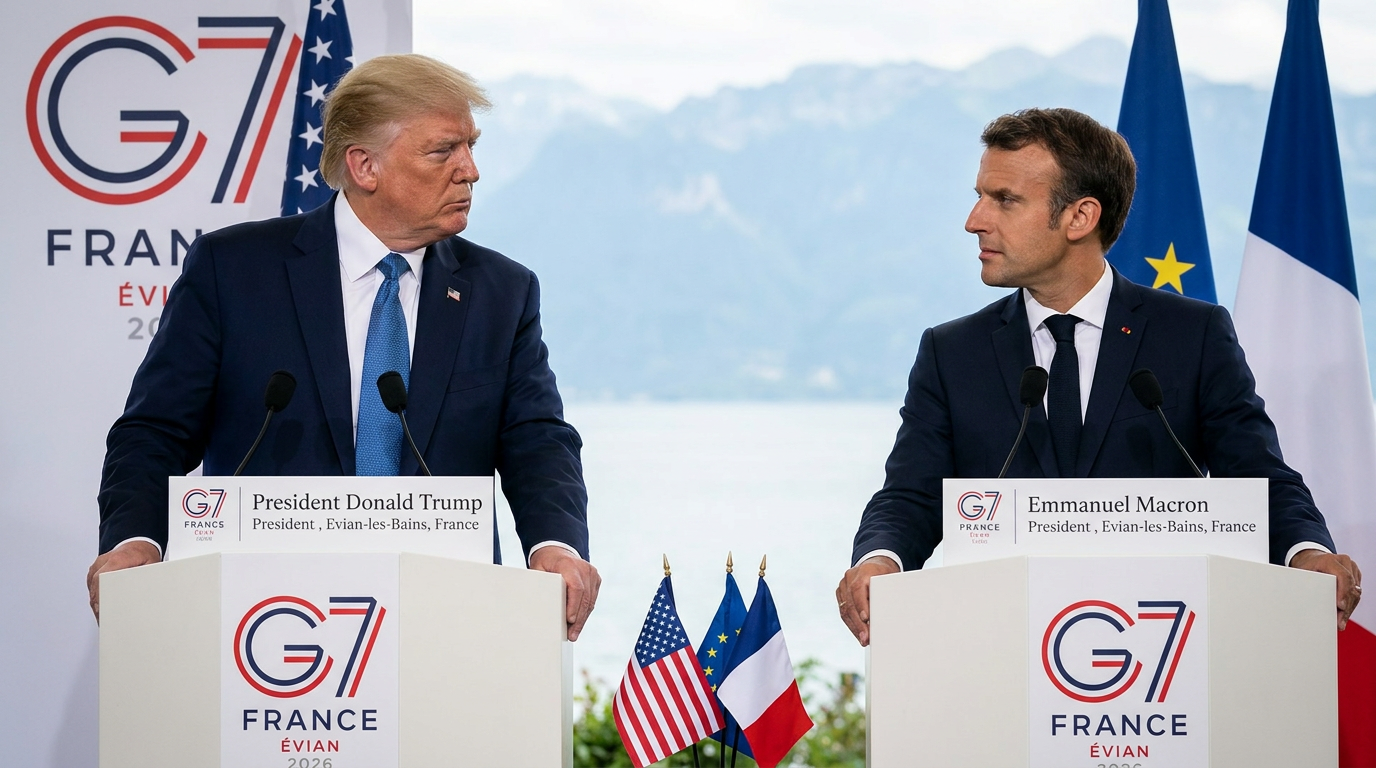
President Donald Trump announced the agreement shortly before arriving at the Group of Seven (G7) summit in Evian-les-Bains, France, declaring on social media, "Let the oil flow!" Trump framed the deal as a major victory for global commerce and U.S. leverage, noting that ships would soon be able to transit the Strait of Hormuz toll-free. Vice President JD Vance confirmed that the interim deal is performance-based, emphasizing that Iran will not receive any financial relief until it meets strict obligations. A formal signing ceremony is scheduled to take place in Geneva, Switzerland, on Friday, June 19.[1][4][5]

The immediate consequence of the announcement was a wave of relief across global financial markets. Brent crude, the international oil benchmark, tumbled 3.8 percent to $79.99 a barrel, dipping below the $80 mark for the first time since early March. West Texas Intermediate also saw significant declines. For months, the closure of the Strait of Hormuz—through which roughly 20 percent of the world's oil and gas trade passes—had sent energy prices soaring and threatened to trigger a broader economic crisis. The prospect of restored maritime traffic sent U.S. stock markets to record highs as investors priced in the end of the energy shock.[4][8]
While the reopening of shipping lanes addresses the immediate economic crisis, the core of the geopolitical dispute remains unresolved. The 60-day ceasefire window is designed to facilitate intense technical negotiations regarding Iran's nuclear program. U.S. officials have stated that the talks, which will be led by Vice President Vance, will focus on neutralizing Iran's stockpile of highly enriched uranium and dismantling infrastructure that could be used for weapons development. In return, Iran is seeking access to billions of dollars in frozen assets and comprehensive sanctions relief, though the U.S. insists that any economic incentives will be strictly conditional on verifiable nuclear concessions.[6][7]

While the reopening of shipping lanes addresses the immediate economic crisis, the core of the geopolitical dispute remains unresolved.
At the G7 summit in France, European leaders greeted the announcement with a mix of profound relief and cautious skepticism. French President Emmanuel Macron, British Prime Minister Keir Starmer, and other allied leaders issued a joint statement calling the deal a "diplomatic breakthrough." However, these same leaders had previously clashed with the Trump administration over its unilateral management of the war and the lack of allied consultation. Behind closed doors in Evian-les-Bains, European diplomats are reportedly pressing the U.S. to ensure that the interim agreement does not inadvertently entrench Tehran's ballistic missile programs or allow its nuclear infrastructure to survive intact.[4][8]
In Tehran, Iranian officials confirmed the memorandum of understanding, framing the U.S. agreement to lift the naval blockade as a strategic concession forced by Iranian resilience. Deputy Foreign Minister Kazem Gharibabadi stated that a broader deal covering sanctions relief would be hammered out during the 60-day window. Despite the official optimism, the Iranian government faces internal pressure from hardline factions who remain deeply distrustful of U.S. commitments, especially given the history of the collapsed 2015 nuclear accord. Iranian state media has emphasized that the regime survived the U.S. and Israeli military campaigns, portraying the ceasefire as a necessary step to stabilize the nation's battered economy.[2][3]
The diplomatic breakthrough was the result of extensive back-channel mediation that spanned several continents. Pakistan, led by Prime Minister Shehbaz Sharif, played a crucial role in bridging the gap between Washington and Tehran after earlier direct talks in Islamabad faltered. Qatar and Oman also facilitated high-level communications, helping to draft the 14-point memorandum of understanding that ultimately broke the deadlock over maritime security. These regional mediators are expected to remain heavily involved in the upcoming Geneva summit to ensure both sides follow through on the initial framework and maintain the fragile peace.[2][3]

A major wildcard in the implementation of the peace framework is the ongoing conflict in Lebanon. Iranian negotiators have insisted that the ceasefire must encompass all regional fronts, including Israeli military operations against Hezbollah in southern Lebanon. However, U.S. and Israeli officials have offered conflicting signals on whether Israel is bound by the agreement to halt its advances. If Israel continues its campaign to degrade Hezbollah, Tehran could use the continued fighting as justification to delay its own compliance, potentially derailing the fragile truce before the ink is dry in Geneva.[3][7]
As diplomats race toward the Friday signing ceremony in Switzerland, the international community remains on high alert. The transition from a digital memorandum to a binding, verifiable treaty will require navigating decades of deep-seated animosity and complex regional alliances. While the immediate threat of a global energy meltdown has been averted, the underlying drivers of the 2026 Iran War—nuclear proliferation, proxy warfare, and regional hegemony—will dominate the grueling 60-day negotiation period that lies ahead.[2][6]
How we got here
Late Feb 2026
The U.S. and Israel launch military operations against Iran, sparking a regional war.
April 2026
A fragile two-week ceasefire is brokered by Pakistan, but fighting eventually resumes.
Mid-April 2026
The U.S. imposes a naval blockade on Iranian ports; Iran effectively closes the Strait of Hormuz.
June 14, 2026
The U.S. and Iran digitally sign a memorandum of understanding to end the war.
June 15, 2026
President Trump announces the peace framework ahead of the G7 summit in France.
June 19, 2026
Formal signing of the peace agreement scheduled to take place in Geneva, Switzerland.
Viewpoints in depth
US Administration
Focuses on reopening global trade routes and curbing Iran's nuclear ambitions through renewed leverage.
The Trump administration is framing the peace framework as a decisive victory that successfully reopened the Strait of Hormuz without conceding upfront financial relief. By utilizing a naval blockade to force Tehran to the table, U.S. officials argue they have degraded Iran's military capabilities and created a strict 60-day window to dismantle its nuclear infrastructure. Vice President JD Vance has emphasized that any future sanctions relief will be entirely performance-based.
Iranian Leadership
Prioritizes the lifting of the naval blockade, regime survival, and securing economic relief from sanctions.
For Tehran, the agreement is being sold domestically as a testament to Iranian endurance against a superpower. Iranian officials highlight the lifting of the U.S. naval blockade as a major concession and view the 60-day negotiation window as a pathway to unfreezing billions of dollars in assets. However, hardline factions remain deeply skeptical of Washington's promises, warning that the regime must maintain its leverage in the Strait of Hormuz until tangible economic relief is delivered.
European Allies
Welcomes the end of hostilities but demands strict, long-term verification of Iran's nuclear program.
European leaders at the G7 summit expressed profound relief that the immediate threat of a wider regional war and an energy crisis has subsided. However, their optimism is tempered by frustration over the Trump administration's unilateral approach to the conflict. France, Germany, and the UK are now intensely focused on ensuring that the upcoming technical negotiations result in binding, verifiable constraints on Iran's nuclear and ballistic missile programs, fearing that a superficial deal could leave the region more unstable in the long run.
Global Markets
Views the conflict primarily through the lens of energy security and supply chain stability.
The financial and energy sectors have reacted to the peace framework with outright euphoria. For months, the closure of the Strait of Hormuz threatened to trigger a global recession by choking off 20 percent of the world's oil supply. Market analysts view the resumption of toll-free maritime traffic as the paramount achievement of the deal, evidenced by Brent crude prices immediately dropping below $80 a barrel and U.S. equities surging to record highs.
What we don't know
- Whether Israel will agree to halt its military operations against Hezbollah in Lebanon as part of the broader ceasefire.
- The exact technical concessions Iran is willing to make regarding its highly enriched uranium stockpile.
- How quickly commercial shipping companies will feel safe enough to resume normal operations through the Strait of Hormuz.
Key terms
- Strait of Hormuz
- A critical maritime chokepoint between the Persian Gulf and the Gulf of Oman, through which roughly 20 percent of the world's oil supply passes.
- Highly Enriched Uranium
- Uranium that has been processed to increase the concentration of the U-235 isotope, bringing it closer to the purity required for nuclear weapons.
- Group of Seven (G7)
- An intergovernmental political and economic forum consisting of Canada, France, Germany, Italy, Japan, the United Kingdom, and the United States.
- Naval Blockade
- A military operation designed to prevent vessels from entering or leaving a country's ports, used by the U.S. to pressure Iran's economy.
Frequently asked
What does the peace framework actually do?
It establishes a 60-day ceasefire, reopens the Strait of Hormuz to global shipping, lifts the U.S. naval blockade on Iran, and sets a window for negotiations on Iran's nuclear program.
Has the war completely ended?
While a memorandum of understanding has been signed, the situation remains fragile. The formal signing is set for June 19, and conflicts involving regional proxies like Hezbollah in Lebanon could still complicate the truce.
How did global markets react to the news?
Markets reacted with immense relief. Brent crude oil prices dropped below $80 a barrel for the first time since March, and U.S. stock markets surged on the prospect of restored energy flows.
What happens during the 60-day ceasefire window?
U.S. and Iranian officials will engage in technical negotiations regarding Iran's nuclear infrastructure and stockpile of enriched uranium, with Iran seeking sanctions relief in return for concessions.
Sources
Source coverage
8 outlets
4 viewpoints surfaced








[1]Al JazeeraIranian Leadership
US-Iran 'peace deal' announced; Trump says Strait of Hormuz reopening
Read on Al Jazeera →[2]PBSUS Administration
US and Iran reach agreement to end war, Trump says
Read on PBS →[3]TIMEIranian Leadership
Ceasefire Deal Within Reach, U.S. and Tehran Say
Read on TIME →[4]Gulf NewsEuropean Allies
US and Iran reach peace framework to end Middle East war
Read on Gulf News →[5]LA TimesUS Administration
Trump signals optimism, but still hasn't signed off on an Iran peace framework
Read on LA Times →[6]CTV NewsEuropean Allies
U.S.-Iran peace framework tested as regional tensions persist
Read on CTV News →[7]Center for Strategic and International StudiesGlobal Markets & Energy Sector
What the US-Iran Ceasefire Means
Read on Center for Strategic and International Studies →[8]Atlantic CouncilGlobal Markets & Energy Sector
Experts react: The US and Iran have a deal to end the war. What's next?
Read on Atlantic Council →
More in news politics
See all 7 stories →Global Health
Ebola Outbreak in DR Congo Could Become Worst on Record, Health Officials Warn
0 sources
Iran Peace Deal
Senate Blocks Bid to Limit Trump's War Powers as US-Iran Peace Deal Nears
0 sources
US-Iran Relations
US and Iran Reach Tentative Peace Agreement as G7 Leaders Work to Finalize Details
0 sources
Climate Thresholds
Global Agencies Declare 'Supercharged' El Niño as UN Concedes 1.5°C Overshoot
0 sources
Every angle. Every day.
Get news politics stories with full source coverage and perspective breakdowns delivered to your inbox.