
U.S. and Iran Reach Ceasefire MOU: Analyzing the Claims, Concessions, and Missing Details
The U.S. and Iran have signed a preliminary agreement to end a three-month war and reopen the Strait of Hormuz, but core disputes over nuclear concessions and sanctions relief remain unresolved.
By Factlen Editorial Team
- U.S. Administration
- Argues the deal secures a toll-free Strait of Hormuz, halts Iran's nuclear ambitions, and ends the war from a position of strength.
- Iranian Leadership
- Frames the agreement as a victory that lifts the U.S. naval blockade, secures economic relief, and preserves regional sovereignty.
- Regional Security Analysts
- Warn that the core drivers of the conflict—Iran's proxy network and ballistic missile program—remain unaddressed, making lasting peace precarious.
- U.S. Congressional Skeptics
- Demand transparency on the financial incentives and insist that any sanctions relief must be strictly conditioned on verifiable nuclear disarmament.
What's not represented
- · Lebanese Government
- · Global Shipping Companies
Why this matters
This preliminary agreement halts a conflict that choked off 20% of the world's oil supply, immediately lowering global energy prices. However, if the upcoming 60-day negotiations fail to resolve the nuclear and financial disputes, the war and its devastating economic impacts could rapidly resume.
Key points
- The U.S. and Iran signed an MOU to end a 3.5-month war and reopen the Strait of Hormuz.
- The agreement establishes a 60-day window to negotiate Iran's nuclear program and potential sanctions relief.
- U.S. and Iranian officials offer conflicting accounts on whether the Strait will be toll-free and if financial relief is immediate.
- The deal reportedly calls for a regional ceasefire, though Israel has signaled it is not bound by the terms in Lebanon.
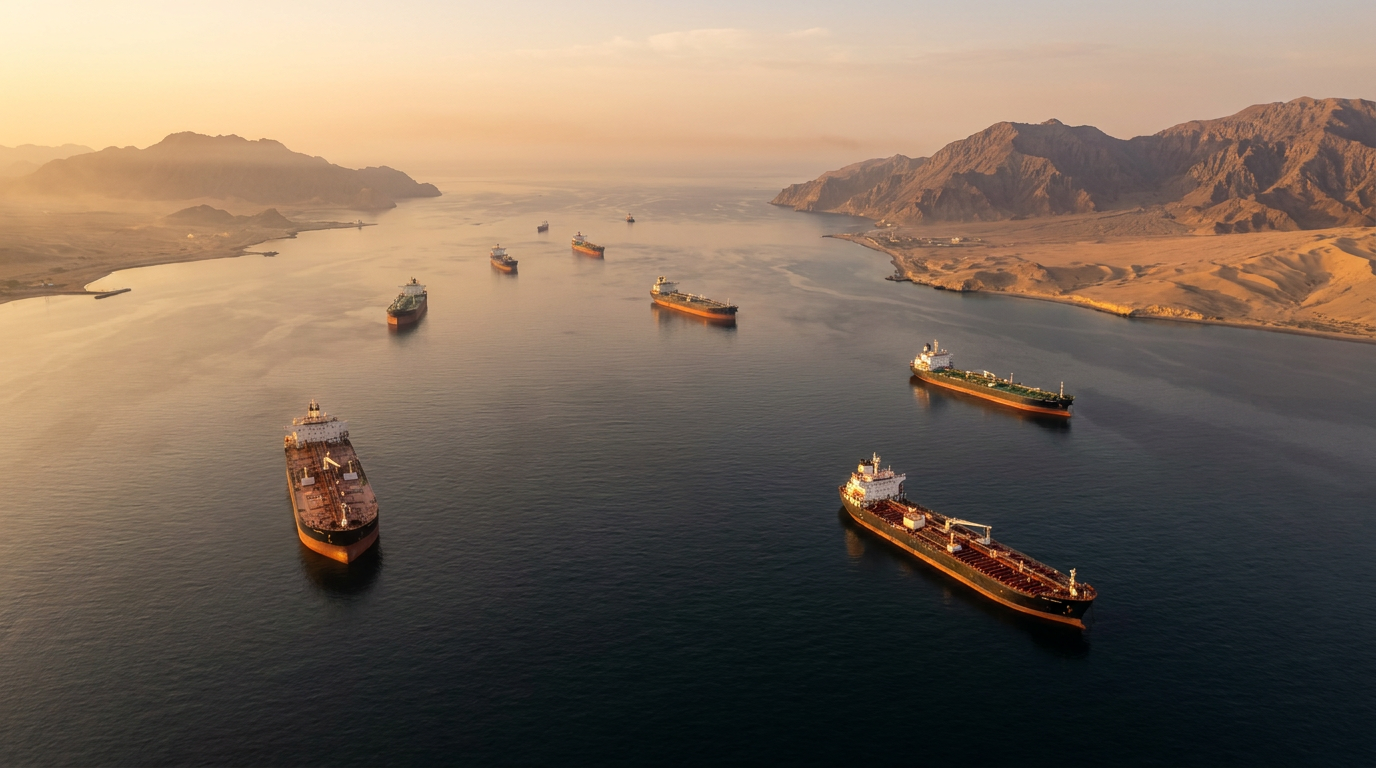
The United States and Iran have reached a preliminary agreement to end a devastating three-and-a-half-month war that severed global energy supply lines. Mediated by Pakistan, the Memorandum of Understanding (MOU) was signed electronically over the weekend and establishes an immediate ceasefire. The primary achievement of the pact is the reopening of the Strait of Hormuz, a critical maritime choke point that handles roughly one-fifth of the world's oil and natural gas. Global markets reacted instantly to the breakthrough, with crude oil prices dropping by $4 per barrel before the waterway was even physically cleared.[1][3]
However, the actual text of the agreement remains classified ahead of a formal signing ceremony scheduled for Friday in Geneva, Switzerland. Vice President JD Vance described the MOU as a very general document spanning roughly a page and a half. Because the exact phrasing is not yet public, U.S. and Iranian officials have spent the last 48 hours offering sharply conflicting narratives about what the deal actually mandates. An analysis of the available evidence reveals a fragile framework where the immediate cessation of hostilities is clear, but the long-term concessions remain highly uncertain.[2][8]
The most concrete claim within the agreement is the immediate reopening of the Strait of Hormuz. The evidence for this core provision is strong, as both Washington and Tehran have publicly committed to restoring commercial shipping. The agreement requires the United States to lift its naval blockade of the region within 30 days, allowing international vessels to resume transit. President Donald Trump celebrated the provision on social media, declaring that the ships of the world should start their engines.[3][4][5]
While the reopening is confirmed, the operational control of the waterway remains fiercely contested. The U.S. administration asserts that the Strait will be permanently toll-free. Conversely, Iranian state media and officials claim that the waterway will reopen strictly under Iranian arrangements, suggesting Tehran intends to regulate and potentially toll the maritime traffic. Independent analysts warn that how this reopening is managed will be the first major test of the ceasefire's durability.[1][5][9]

The claim that Iran has definitively agreed to abandon its nuclear program rests on much weaker evidence. President Trump stated that Iran no longer wants a nuclear weapon and will not acquire one, framing the MOU as an impenetrable wall against nuclear proliferation.[3]
However, multiple primary sources, including U.S. officials and Iranian diplomats, confirm that the MOU does not actually resolve the nuclear issue. Instead, it establishes a 60-day window for technical negotiations. Iranian Foreign Minister Abbas Araghchi explicitly stated that the current document focuses solely on ending the war, leaving the fate of enriched uranium and International Atomic Energy Agency restrictions for the next phase of talks.[5][8]
officials and Iranian diplomats, confirm that the MOU does not actually resolve the nuclear issue.
During this 60-day period, the U.S. and the IAEA will attempt to negotiate the destruction of Iran's highly enriched uranium stockpile. Vice President Vance confirmed that international inspectors would be allowed back into Iran, but acknowledged that the specifics of dismantling the nuclear sites must still be worked out during the technical negotiation phase.[2][4]
The evidence regarding massive financial relief for Iran is highly contested. Iranian state-affiliated media published a purported 14-point draft of the MOU, claiming it guarantees the upfront release of $24 billion in frozen Iranian assets, with half becoming available before the 60-day negotiations even begin. The draft also allegedly suspends sanctions on Iranian oil and petrochemical exports.[5]

U.S. officials have forcefully denied that any immediate cash transfers will occur, though the administration acknowledges that sweeping financial incentives are on the table. Vice President Vance confirmed that Iran could gain access to a $300 billion reconstruction fund and broad sanctions relief, but stressed that these benefits are strictly conditional on Tehran meeting future nuclear compliance benchmarks.[2][6][9]
The assertion that the agreement secures a regional ceasefire, including in Lebanon, is supported by moderate evidence. Pakistani Prime Minister Shehbaz Sharif, who mediated the talks, announced that the deal terminates military operations on all fronts. The draft text reportedly requires all sides to stand down, theoretically halting the ongoing exchange of fire between Israel and Hezbollah.[3][5]
The primary weakness of this regional ceasefire claim is that Israel is not a signatory to the U.S.-Iran MOU. Israeli Prime Minister Benjamin Netanyahu reportedly informed the U.S. that Israel does not consider itself obligated to withdraw from Lebanon. Furthermore, military strikes in Beirut and southern Lebanon continued on Monday, casting doubt on whether an agreement between Washington and Tehran can effectively bind their respective regional allies.[3][7]
Beyond what is contested, security analysts highlight what is entirely missing from the framework. Think tanks reviewing the diplomatic fallout note that the MOU explicitly excludes Iran's ballistic missile program and its funding of proxy networks from the upcoming 60-day agenda. By sidelining these issues, the agreement may pause the immediate war without addressing the underlying drivers of regional instability.[6][7]

The ambiguity of the text has already triggered domestic political hurdles in the United States. Senate Republicans are demanding full transparency regarding the financial incentives, warning that any permanent deal must definitively dismantle Iran's nuclear capabilities rather than merely pausing them. The political weight of sanctions relief—the very issue that led the U.S. to abandon the 2015 nuclear accord—remains a massive obstacle.[2][9]
The immediate success of the MOU will be tested on Friday when delegations meet in Geneva for the formal signing ceremony. If the document is ratified and published, the 60-day clock will begin. Negotiators will then face the daunting task of converting a fragile, one-and-a-half-page ceasefire into a comprehensive treaty that can survive both Iranian hardliners and a skeptical U.S. Congress.[1][3][8]
How we got here
February 2026
The United States initiates military action against Iran, citing the expansion of its nuclear program.
Feb - May 2026
The Strait of Hormuz is closed due to the conflict, severely disrupting global oil markets.
June 14, 2026
The U.S. and Iran reach a preliminary agreement mediated by Pakistan, signing an electronic MOU.
June 19, 2026
A formal signing ceremony is scheduled to take place in Geneva, Switzerland.
July - August 2026
A 60-day technical negotiation period will commence to finalize nuclear and sanctions terms.
Viewpoints in depth
The U.S. Administration's View
The White House frames the MOU as a decisive victory that reopens global shipping lanes and corners Iran on its nuclear program.
U.S. officials emphasize that the immediate lifting of the naval blockade and the reopening of the Strait of Hormuz will stabilize global energy markets. By securing an upfront ceasefire, the administration argues it has created the leverage necessary to force Iran into verifiable nuclear disarmament during the upcoming 60-day negotiation window, without conceding immediate cash transfers.
The Iranian Leadership's View
Tehran presents the agreement as a successful defense of its sovereignty that forces the U.S. to retreat from its blockade.
Iranian state media and officials highlight the U.S. commitment to lift the naval blockade within 30 days as a major concession. They maintain that Iran will retain regulatory control over the Strait of Hormuz and insist that the MOU guarantees the release of billions in frozen assets. Crucially, Tehran views the nuclear issue as entirely separate from the ceasefire, to be negotiated only after economic relief is secured.
Regional Security Analysts' View
Defense experts caution that the MOU is merely a pause in hostilities that ignores the root causes of the conflict.
Think tanks and regional observers point out that the agreement explicitly excludes Iran's ballistic missile program and its funding of proxy militias like Hezbollah. Analysts warn that by leaving these critical security threats off the table, the deal may temporarily lower oil prices but fails to establish a framework for durable peace in the Middle East.
U.S. Congressional Skeptics' View
Lawmakers fear the administration is repeating past mistakes by offering sanctions relief without ironclad nuclear guarantees.
Senate Republicans and other critics are demanding the immediate release of the classified text, expressing deep skepticism over the proposed $300 billion reconstruction fund. They argue that offering massive financial incentives before Iran has verifiably dismantled its highly enriched uranium stockpile surrenders U.S. leverage and risks funding future regional aggression.
What we don't know
- The exact text of the Memorandum of Understanding remains classified until the formal signing.
- It is unclear how the Strait of Hormuz will be regulated and whether Iran will attempt to toll international shipping.
- The specific benchmarks Iran must meet to access the proposed $300 billion reconstruction fund have not been detailed.
Key terms
- Memorandum of Understanding (MOU)
- A preliminary agreement outlining the broad terms of a deal before a final, detailed treaty is negotiated.
- Strait of Hormuz
- A narrow waterway between the Persian Gulf and the Gulf of Oman through which roughly 20% of the world's oil supply passes.
- Naval Blockade
- A military operation in which ships are used to prevent vessels from entering or leaving a nation's ports.
- Highly Enriched Uranium
- Uranium that has been processed to increase the concentration of the U-235 isotope, a necessary step for developing nuclear weapons.
Frequently asked
Is the war between the U.S. and Iran officially over?
The two nations have signed a Memorandum of Understanding declaring an immediate end to military operations, but a formal, comprehensive peace treaty has not yet been finalized.
Will gas prices go down?
Global oil markets reacted positively to the announcement, with crude prices dropping $4 per barrel, which typically translates to lower prices at the pump over time.
Did Iran agree to give up its nuclear program?
President Trump stated Iran will not acquire a nuclear weapon, but Iranian officials say the actual terms regarding their nuclear program will be negotiated over the next 60 days.
Is the U.S. giving Iran $300 billion?
Vice President JD Vance acknowledged that a $300 billion reconstruction fund is possible, but stressed it is strictly conditional on Iran meeting future nuclear and security benchmarks.
Sources
Source coverage
9 outlets
4 viewpoints surfaced









[1]Council on Foreign RelationsRegional Security Analysts
Trump's Iran Deal: What We Know, What's Contested, and What Remains Unresolved
Read on Council on Foreign Relations →[2]The GuardianU.S. Congressional Skeptics
JD Vance says specifics to be worked out as Senate Republicans say there are many unanswered questions
Read on The Guardian →[3]CBS NewsU.S. Administration
Deal reached between U.S. and Iran, Trump and Pakistani prime minister say
Read on CBS News →[4]AxiosU.S. Administration
What's in the Iran deal Trump says he's ready to sign
Read on Axios →[5]Iran InternationalIranian Leadership
US President Donald Trump and Pakistani officials said an Iran-US memorandum of understanding is set for electronic signing Sunday
Read on Iran International →[6]Center for Strategic and International StudiesRegional Security Analysts
The United States and Iran Announce a Deal to End the War | State of Play
Read on Center for Strategic and International Studies →[7]Stimson CenterRegional Security Analysts
The MOU announcement did not halt the ongoing exchange of fire between Hezbollah and Israeli forces
Read on Stimson Center →[8]ForbesU.S. Administration
President Donald Trump, senior U.S. officials and Iranian officials gave conflicting statements Monday about key aspects of the deal
Read on Forbes →[9]Los Angeles TimesU.S. Congressional Skeptics
Trump started the war in February citing Iran's nuclear program
Read on Los Angeles Times →

More in news politics
See all 9 stories →Strait of Hormuz
US and Iran Reach Agreement to End War and Reopen Strait of Hormuz
0 sources
US-Iran Deal
U.S. and Iran Reach Cease-Fire Framework at G7 Summit, Halting Regional Hostilities
0 sources
US-Iran Peace Deal
US and Iran Reach Peace Framework to End War and Reopen Strait of Hormuz
0 sources
Workplace Trends
Fact-Checking the 4-Day Workweek: What the Global Trials Actually Prove
0 sources

Every angle. Every day.
Get news politics stories with full source coverage and perspective breakdowns delivered to your inbox.