
Arctic Ocean Reaches Nutrient Tipping Point as Sea Ice Retreats
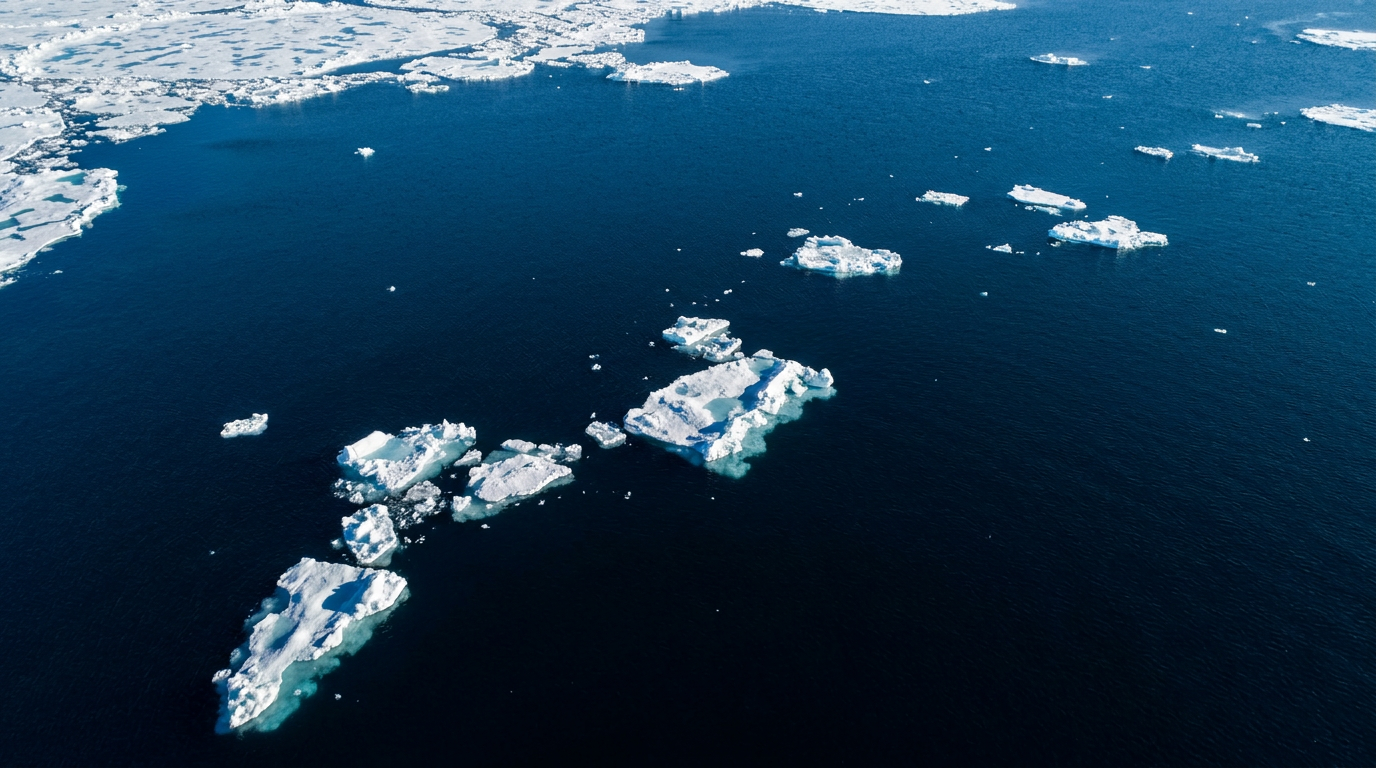
Disappearing sea ice is allowing unprecedented sunlight into the Arctic Ocean, triggering massive phytoplankton blooms that are rapidly depleting essential nutrients and threatening the broader marine food web.
By Factlen Editorial Team
- Marine Ecologists
- Focus on the immediate threat to biodiversity and the cascading collapse of the polar food web.
- Climate Physicists
- Emphasize the physical mechanisms of ocean stratification and the weakening of the biological carbon pump.
- Indigenous Communities
- Highlight the existential threat to food security, cultural heritage, and traditional subsistence hunting.
What's not represented
- · Commercial Fishing Industry
- · Global Policymakers
Why this matters
The collapse of the Arctic nutrient cycle threatens commercial fisheries, indigenous subsistence hunting, and global marine biodiversity. It also fundamentally alters one of the Earth's most critical carbon sinks, potentially accelerating the pace of global warming.
Key points
- Melting sea ice is exposing the Arctic Ocean to unprecedented levels of sunlight.
- This sunlight triggers massive phytoplankton blooms that rapidly consume available nutrients.
- A layer of fresh meltwater prevents deep-ocean nutrients from rising to replenish the surface.
- The resulting nutrient starvation is disrupting the food web, threatening zooplankton, fish, and apex predators.
The Arctic Ocean is undergoing a fundamental and potentially irreversible regime shift, driven by the rapid disappearance of its protective sea ice cover. For millennia, thick, multi-year ice has acted as a reflective shield, bouncing solar radiation back into space and keeping the waters below dark and cold. However, as global temperatures rise, the Arctic is warming at more than two and a half times the global average rate, leading to a precipitous decline in summer sea ice extent. This physical transformation is now triggering a profound biological crisis. Recent evidence indicates that the region has crossed a critical ecological threshold, transitioning from a light-limited system to a nutrient-limited one. This shift threatens to unravel the delicate marine food web that supports everything from microscopic organisms to apex predators, fundamentally altering the biological engine of the polar north.[5]
At the heart of this ecological transformation is the behavior of phytoplankton, the microscopic algae that form the foundational base of the Arctic marine food web. Historically, the thick ice cover severely restricted the amount of sunlight penetrating the water column, limiting the growing season for these photosynthetic organisms to a brief window in late summer. As the ice has thinned and fractured, vast expanses of dark, open water are now exposed to the continuous summer sun much earlier in the year. This sudden influx of solar energy has acted as a massive catalyst, triggering explosive phytoplankton blooms of unprecedented scale and duration. Satellite observations and oceanographic surveys have documented a staggering forty-seven percent increase in Arctic primary production since the late nineteen-nineties, a surge that initially seemed like a potential boon for marine life.[1][4]
However, this biological boom carries a hidden and devastating cost. While phytoplankton require abundant sunlight to photosynthesize, they also depend on a steady supply of essential macronutrients, primarily nitrogen and phosphorus, to build cellular structures and reproduce. In most of the world's oceans, these nutrients are continuously replenished by the upwelling of cold, nutrient-rich waters from the deep ocean to the sunlit surface layer. The Arctic Ocean, however, possesses a unique and highly stratified hydrological structure that severely restricts this vertical mixing. The rapid melting of sea ice, combined with increased freshwater discharge from major Arctic rivers, has created a buoyant layer of relatively fresh, low-density water that sits atop the denser, saltier ocean below.[3][6]

This intense stratification acts as an impenetrable physical barrier, effectively sealing off the surface waters from the nutrient reservoirs hidden in the deep ocean. As the early and massive phytoplankton blooms consume the available nitrogen and phosphorus in the sunlit upper layer, they rapidly exhaust the local supply. Because the stratification prevents new nutrients from welling up to replace what has been lost, the surface ocean is essentially starved. Researchers have observed that this nutrient depletion is occurring earlier and more severely each year, creating a hard biological ceiling on how much life the Arctic can actually support, regardless of how much sunlight is available.[1][3]
The consequences of this nutrient crash are rippling through the entire marine ecosystem, creating a dangerous temporal mismatch between the primary producers and the organisms that rely on them. Zooplankton, the tiny marine animals that graze on phytoplankton, have evolved their life cycles to coincide with the historical timing of the late-summer algal blooms. However, because the blooms are now occurring earlier in the spring and rapidly burning out due to nutrient starvation, the zooplankton are arriving at the feeding grounds too late. By the time their populations peak, the phytoplankton have already exhausted the nutrient supply, died, and sunk to the bottom, leaving the zooplankton with a severely diminished food source.[2][6]
This decoupling of the food web has immediate and dire implications for higher trophic levels. Arctic cod, a keystone species in the polar ecosystem, rely heavily on abundant zooplankton populations to survive their crucial early life stages. As zooplankton numbers decline due to starvation, the cascading effect hits the cod populations, leading to lower survival rates and reduced biomass. The Arctic cod, in turn, is the primary prey for a wide array of iconic Arctic predators, including ringed seals, beluga whales, and seabirds. A collapse in the cod population directly translates to a food security crisis for these larger animals, forcing them to expend more energy foraging for less nutritious alternatives.[1][2][5]

This decoupling of the food web has immediate and dire implications for higher trophic levels.
The apex predators of the Arctic, most notably the polar bear, are positioned at the very top of this vulnerable food chain. Polar bears rely almost exclusively on ice-dependent seals for their caloric intake. As the seals struggle to find sufficient fish, their body condition deteriorates, leading to lower reproductive success and higher mortality rates. This means that the nutrient tipping point occurring at the microscopic level is ultimately manifesting as starvation and population decline among the Arctic's most visible and culturally significant megafauna. The entire ecosystem is tightly coupled, and the failure at the base is transmitting shockwaves all the way to the top.[2][5]
Beyond the immediate threat to biodiversity, the nutrient limitation in the Arctic Ocean has profound implications for the global carbon cycle. Phytoplankton play a crucial role in sequestering carbon dioxide from the atmosphere. When they die, a portion of their biomass sinks to the deep ocean floor, effectively locking away the carbon for centuries—a process known as the biological carbon pump. However, nutrient-starved phytoplankton are often smaller and less dense than healthy cells. Consequently, they sink much more slowly, increasing the likelihood that they will be decomposed by bacteria in the surface waters, which releases the carbon dioxide back into the atmosphere rather than sequestering it in the deep ocean.[3][7]
Some climate models have suggested potential counter-balancing mechanisms that might mitigate this nutrient crisis. For instance, as the Arctic warms, the permafrost surrounding the ocean is thawing, and river runoff is increasing. This runoff carries terrestrial nutrients into the coastal seas, leading some researchers to hypothesize that land-based nutrient inputs could offset the lack of oceanic upwelling. Additionally, the loss of sea ice exposes the ocean surface to stronger winds and more frequent storms, which could theoretically generate enough turbulence to break down the stratification and force deep-water nutrients to the surface.[6]

However, the latest empirical evidence strongly contradicts these optimistic models. Extensive satellite data and in-situ oceanographic measurements indicate that the strengthening of the freshwater stratification is vastly overpowering any localized benefits from river runoff or wind-driven mixing. The freshwater lens created by the melting ice is simply too thick and too buoyant to be easily disrupted by surface storms. Furthermore, the nutrients delivered by river runoff are often processed and consumed in the immediate coastal zones, failing to reach the open ocean where the massive phytoplankton blooms are occurring.[4][6]
The consensus emerging from the scientific community is that the Arctic Ocean has fundamentally altered its operational state. The historical paradigm of an ecosystem limited primarily by light availability has been permanently replaced by a system strictly limited by nutrient availability. This represents a classic ecological tipping point—a threshold beyond which the system reorganizes into a new, stable state that is vastly different from its historical condition. Reversing this shift would require not only halting global temperature rise but actively cooling the planet to restore the multi-year sea ice, a scenario that is currently beyond the scope of near-term climate mitigation efforts.[1][5][7]
The implications of this regime shift extend far beyond the Arctic Circle. The polar regions act as the Earth's air conditioning system, regulating global weather patterns and ocean circulation currents. The biological changes occurring in the Arctic Ocean are inextricably linked to these physical processes. As the biological carbon pump weakens due to nutrient starvation, the ocean's capacity to buffer anthropogenic carbon emissions is compromised, potentially accelerating the pace of global warming. The Arctic is not merely an isolated ecosystem; it is a critical component of the planetary life support system.[3][5]

For the Indigenous communities that have inhabited the Arctic coastlines for millennia, this ecological collapse represents an existential threat to their food security and cultural heritage. Subsistence hunting and fishing are not merely economic activities; they are deeply woven into the social fabric and spiritual traditions of these communities. The decline of key species like seals, walruses, and Arctic cod directly undermines their ability to sustain themselves using traditional knowledge and practices. The rapid pace of the ecological shift is outpacing the ability of these communities to adapt, forcing them to rely increasingly on expensive and less nutritious imported foods.[7]
Ultimately, the nutrient tipping point in the Arctic Ocean serves as a stark warning about the complex and often unpredictable consequences of anthropogenic climate change. It demonstrates how altering a single physical parameter—in this case, the extent of sea ice—can trigger a cascade of biological failures that fundamentally rewire an entire ecosystem. As researchers continue to monitor the changing polar north, the focus is shifting from predicting future impacts to managing the reality of an ecosystem that has already been irrevocably transformed. The blue, nutrient-starved Arctic of the future is no longer a distant projection; it is the reality unfolding today.[1][7]
How we got here
Late 1990s
Satellite monitoring begins to detect significant, sustained increases in Arctic primary production.
2010s
Researchers identify a growing temporal mismatch between phytoplankton blooms and zooplankton grazing cycles.
2020s
Oceanographic data confirms that freshwater stratification is strengthening, permanently blocking nutrient upwelling.
2026
Scientific consensus declares the Arctic Ocean has crossed a tipping point into a nutrient-limited regime.
Viewpoints in depth
Marine Ecologists
Focus on the immediate threat to biodiversity and the cascading collapse of the polar food web.
Marine ecologists warn that the Arctic is experiencing a bottom-up trophic collapse. They point to data showing that the early, massive phytoplankton blooms are effectively 'burning out' the ecosystem's nutrient budget before the rest of the food web can capitalize on it. Their primary concern is the temporal mismatch: zooplankton arrive too late to feed, leading to starvation that cascades upward to Arctic cod, seals, and polar bears. For ecologists, the loss of sea ice is not just a physical change, but the dismantling of the biological engine that sustains polar biodiversity.
Climate Physicists
Emphasize the physical mechanisms of ocean stratification and the weakening of the biological carbon pump.
Climate physicists and oceanographers focus on the structural changes in the water column. They highlight how the influx of fresh meltwater creates an impenetrable density barrier, permanently severing the surface ocean from deep-water nutrient reserves. Furthermore, they are deeply concerned about the global climate implications. As nutrient-starved phytoplankton become smaller and less dense, they fail to sink efficiently, severely weakening the Arctic's biological carbon pump and reducing the ocean's capacity to sequester atmospheric carbon dioxide.
Indigenous Communities
Highlight the existential threat to food security, cultural heritage, and traditional subsistence hunting.
For Indigenous populations living along the Arctic coastlines, this ecological shift is an immediate crisis of survival and identity. The decline in keystone species like seals and walruses directly threatens their food security and traditional subsistence practices. Indigenous leaders and knowledge keepers emphasize that the rapid pace of these changes is outpacing their communities' ability to adapt, forcing a reliance on expensive, imported foods and eroding cultural traditions that have been tied to the ice-dependent ecosystem for thousands of years.
What we don't know
- Whether localized wind storms could eventually become strong enough to break the freshwater stratification.
- Exactly how much the weakened biological carbon pump will accelerate global warming models.
- If any Arctic marine species can adapt their life cycles quickly enough to survive the new nutrient-limited regime.
Key terms
- Phytoplankton
- Microscopic, photosynthetic algae that form the foundational base of the marine food web.
- Stratification
- The separation of ocean water into distinct layers based on density, preventing vertical mixing.
- Biological Carbon Pump
- The process by which marine organisms, primarily phytoplankton, capture carbon dioxide and transport it to the deep ocean when they die.
- Trophic Cascade
- An ecological phenomenon triggered by the addition or removal of top predators or primary producers, resulting in dramatic changes throughout the entire food web.
Frequently asked
Why are phytoplankton blooming more now?
The rapid melting of Arctic sea ice allows much more sunlight to penetrate the water, which acts as a catalyst for massive, early-season phytoplankton growth.
If there are more phytoplankton, isn't that good for fish?
No. The blooms happen too early and exhaust the ocean's nutrients before zooplankton can feed on them, creating a starvation cascade that ultimately harms fish populations.
Can river runoff replace the missing nutrients?
Current data shows that while rivers do bring nutrients, the ocean's freshwater stratification is too strong, preventing those nutrients from reaching the open ocean where the blooms occur.
Sources
Source coverage
7 outlets
3 viewpoints surfaced







[1]New ScientistMarine Ecologists
Arctic Ocean reaches tipping point that could be dire for marine life
Read on New Scientist →[2]The GuardianMarine Ecologists
Arctic sea ice loss triggers nutrient collapse, threatening marine food web
Read on The Guardian →[3]Nature Climate ChangeClimate Physicists
Nutrient limitation in a warming Arctic Ocean
Read on Nature Climate Change →[4]NOAA Arctic ProgramClimate Physicists
Primary Productivity and Nutrient Dynamics in the Changing Arctic
Read on NOAA Arctic Program →[5]IPCCClimate Physicists
Special Report on the Ocean and Cryosphere in a Changing Climate: Polar Regions
Read on IPCC →[6]Science AdvancesMarine Ecologists
Phytoplankton phenology and nutrient availability in the changing Arctic
Read on Science Advances →[7]Factlen Editorial TeamIndigenous Communities
Synthesis by Factlen editorial team
Read on Factlen Editorial Team →

More in science
See all 6 stories →Exoplanet Weather
JWST Maps Extreme Weather on an Exoplanet Where It Rains Liquid Gems
0 sources
Exoplanet Weather
JWST Maps Dawn and Dusk on Ultra-Hot Exoplanet WASP-121 b
0 sources
Coral Resilience
Scientists Map 166,000 Square Kilometers of Coral Reefs Capable of Surviving Climate Change
0 sources
Brain-Computer Interfaces
At-Home Brain Implant Restores Independent Communication for Paralyzed ALS Patient
0 sources

Every angle. Every day.
Get science stories with full source coverage and perspective breakdowns delivered to your inbox.