
How Empty Office Buildings Are Solving the Urban Housing Crisis
A record 90,300 office-to-apartment conversion units are currently in the U.S. pipeline, offering a dual solution to hollowed-out downtowns and severe housing shortages.
By Factlen Editorial Team
- Commercial Developers
- Focus on the financial viability of conversions, driven by plummeting office valuations and billions in maturing commercial loans.
- Urban Planners & Policymakers
- View conversions as a critical tool to revitalize downtown economies, increase the municipal tax base, and solve the housing crisis.
- Architects & Sustainability Advocates
- Champion adaptive reuse for its ability to drastically reduce embodied carbon emissions and construction waste compared to new builds.
What's not represented
- · Local residents concerned about potential gentrification
- · Small business owners relying on daytime office worker foot traffic
Why this matters
By transforming obsolete commercial real estate into residential housing, cities are simultaneously revitalizing their local economies and creating thousands of new homes without the environmental toll of ground-up construction.
Key points
- Over 90,000 office-to-apartment units are currently in the U.S. pipeline, a record high.
- The trend is driven by 20% national office vacancy rates and a severe housing shortage.
- Architects must overcome deep floor plates and centralized HVAC systems to meet residential codes.
- Cities like New York and Chicago are offering massive tax incentives to subsidize the expensive retrofits.
- Adaptive reuse saves significant embodied carbon by preserving existing concrete and steel structures.
The American downtown is facing a profound identity shift. Following the widespread adoption of hybrid work, national office vacancy rates have stubbornly hovered near 20 percent, leaving millions of square feet of commercial real estate sitting empty. At the exact same time, the United States is grappling with a severe housing shortage, with estimates suggesting the country is millions of homes short of demand.[2][8]
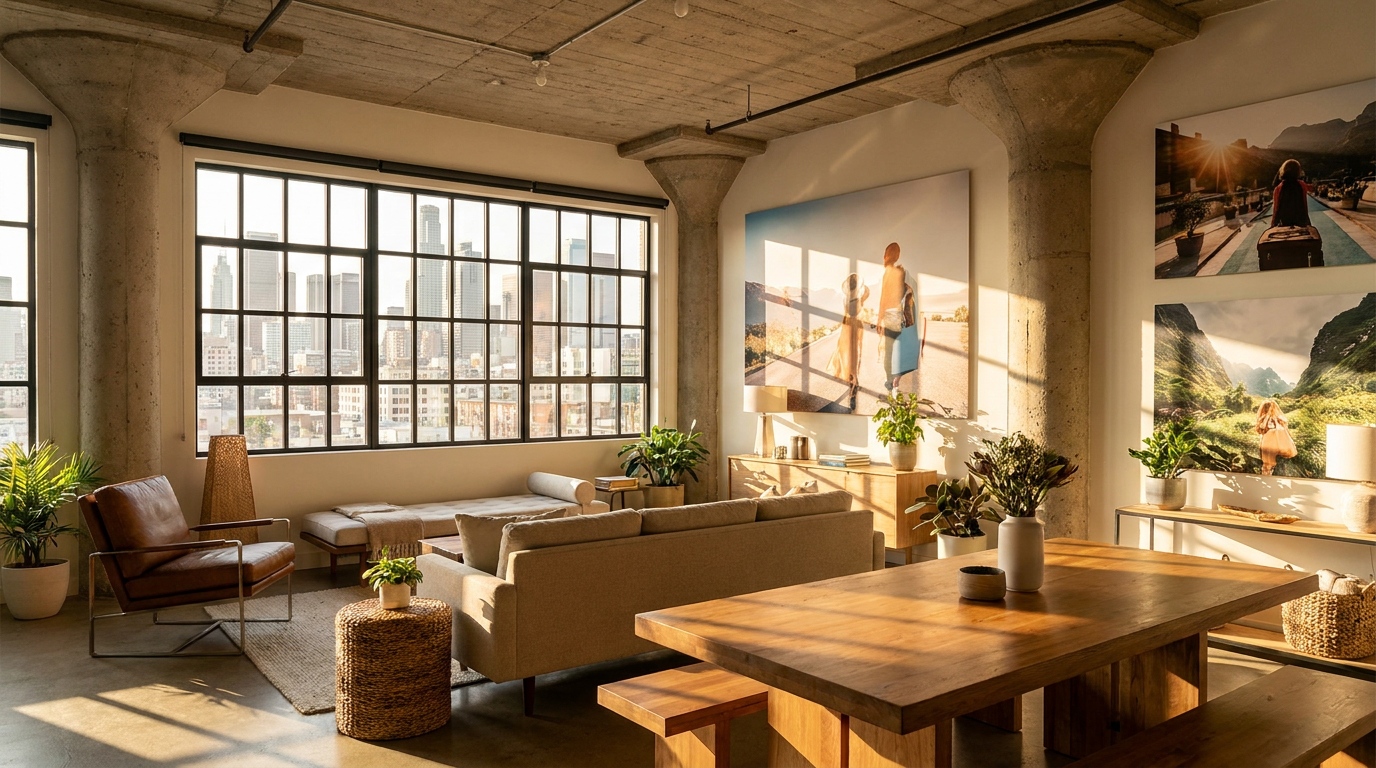
For urban planners and developers, these two massive problems have birthed an elegant, accelerating solution: adaptive reuse. By converting obsolete office towers into residential apartments, cities are finding a way to simultaneously chip away at the housing deficit and breathe new life into hollowed-out business districts.[6][8]
What began as a niche architectural experiment has exploded into a mainstream real estate boom. At the start of 2026, there were 90,300 office-to-apartment units in the U.S. construction pipeline. That figure represents a 28 percent jump from the previous year and a staggering 291 percent increase since 2022.[1][3]

Today, office conversions account for 47 percent of all adaptive reuse projects nationwide, easily surpassing the conversions of hotels, factories, and warehouses. New York City leads the pack by a wide margin with over 16,000 units underway, followed closely by Washington, D.C., and Chicago. In New York alone, the square footage of conversion projects commenced in 2025 surpassed the entirety of the previous year in just eight months.[1][3][4]
The catalyst for this surge is not just empty desks, but hard financial deadlines. Roughly $213 billion in U.S. office loans are scheduled to mature by 2027. With older "Class B" and "Class C" buildings struggling to attract commercial tenants who now favor modern, amenity-rich spaces, property owners are left with a stark choice: default, sell at a steep loss, or adapt the building for a new purpose.[7]
However, converting a high-rise office into a residential community is an immense architectural challenge. The most notorious hurdle is the "floor plate" problem. Commercial buildings constructed in the 1980s and 1990s were designed with massive, deep floor plans to accommodate sprawling cubicle farms.[6]
However, converting a high-rise office into a residential community is an immense architectural challenge.
Residential building codes strictly require bedrooms to have natural light and operable windows. Because deep office floor plates have vast amounts of windowless interior space, architects must get creative. They often carve out central atriums to bring light into the core, or repurpose the dark interior square footage for resident amenities like gyms, theaters, and storage.[6][8]

The mechanical systems present another costly hurdle. Offices rely on massive, centralized rooftop HVAC units and clustered communal bathrooms. Apartments require individualized climate control and distributed plumbing, meaning construction crews must core through decades-old concrete floors to run hundreds of new water and sewer lines.[6]
Because of these structural complexities, retrofitting an office can cost anywhere from $100 to $500 per square foot. For the math to work, developers must acquire the empty office buildings at a significant discount—a market reset that is finally occurring as commercial property valuations adjust to the post-pandemic reality.[4][8]
Recognizing that developers cannot shoulder these costs alone, local governments are aggressively stepping in with financial incentives to save their downtown tax bases. New York City recently enacted a 90 percent property tax exemption for conversion projects that set aside at least 25 percent of their units for affordable housing.[5]
Other major metros are following suit. Boston is offering up to a 75 percent tax abatement for qualifying projects, while Chicago has approved $260 million in tax increment financing to subsidize five major downtown office-to-residential conversions.[5]

Beyond the economic and social benefits, adaptive reuse offers a massive win for the environment. By preserving a building's existing concrete and steel superstructure, developers avoid the immense "embodied carbon" emissions associated with demolishing a high-rise and manufacturing new materials from scratch.[6]
Conversions also keep thousands of tons of construction debris out of landfills and can often be completed on faster timelines than ground-up construction, delivering much-needed housing to the market more rapidly.[6]
Ultimately, the office-to-residential boom is doing more than just providing apartments; it is fundamentally rewriting the DNA of the American city. By moving away from 9-to-5 monocultures, urban centers are evolving into vibrant, 24/7 neighborhoods. The empty office building is no longer viewed as a symbol of urban decay, but rather as the raw material for the next era of downtown renewal.[8]
How we got here
Pre-2020
Office-to-residential conversions remain a niche architectural practice, primarily focused on historic buildings.
2020-2022
The pandemic normalizes remote work, causing commercial office vacancies to spike and valuations to drop.
2023-2024
Major cities begin introducing tax abatements and zoning reforms to encourage developers to repurpose empty buildings.
Early 2026
The U.S. conversion pipeline hits a record 90,300 units, making offices the most converted building type in the country.
Viewpoints in depth
Urban Planners & Policymakers
City officials view conversions as a necessary lifeline to save downtown economies.
For municipal governments, empty office buildings represent a looming fiscal crisis. Commercial real estate taxes fund a massive portion of city budgets, and plummeting office valuations threaten to create severe revenue shortfalls. Planners argue that subsidizing conversions through tax abatements is a necessary investment to transition downtowns from 9-to-5 monocultures into vibrant, 24/7 neighborhoods that generate diverse economic activity.
Commercial Developers
Investors are driven by the financial necessity of adapting obsolete assets.
The real estate industry is facing a ticking clock, with over $213 billion in commercial office loans maturing by 2027. Developers point out that older Class B and C buildings can no longer compete for commercial tenants. While the $100 to $500 per square foot cost of retrofitting plumbing and HVAC is steep, acquiring these distressed assets at a steep discount makes residential conversion the most financially viable path forward.
Architects & Designers
Design professionals focus on the creative problem-solving and environmental benefits of reuse.
Architects emphasize that the greenest building is the one that is already built. By preserving the concrete and steel superstructure of an office tower, adaptive reuse avoids the massive embodied carbon emissions of new construction. Designers are increasingly viewing the challenges of deep commercial floor plates not as a barrier, but as an opportunity to create unique residential layouts featuring central light-wells and expansive interior amenities.
What we don't know
- Whether the pace of conversions will slow down once the current wave of distressed office loans is resolved.
- How the influx of new residential units will impact long-term rent prices in historically commercial downtown districts.
Key terms
- Adaptive Reuse
- The process of repurposing an existing building for a use other than what it was originally designed for, such as turning an office into apartments.
- Floor Plate
- The total leasable square footage of a single floor in a commercial building, which dictates how easily the space can be divided into apartments.
- Embodied Carbon
- The greenhouse gas emissions associated with the manufacturing, transportation, and installation of building materials.
- Class B and C Offices
- Older or less desirable commercial properties that lack the modern amenities and prime locations of top-tier Class A buildings.
Frequently asked
Can any office building be converted into apartments?
No. Buildings with very deep floor plates struggle to meet residential codes requiring natural light for bedrooms. Older buildings from the 1970s and 1980s are often the best candidates.
Is it cheaper to convert an office or build from scratch?
Conversion can be cost-effective if the building is acquired at a steep discount, but retrofitting plumbing and HVAC is expensive, often costing $100 to $500 per square foot.
How many apartments are actually being built this way?
As of early 2026, there are over 90,000 office-to-apartment units in the U.S. pipeline, representing a nearly 300% increase since 2022.
Sources
Source coverage
8 outlets
3 viewpoints surfaced








[1]RentCafeCommercial Developers
Adaptive Reuse Report: Office-to-Apartment Conversions Hit 90,300 Units
Read on RentCafe →[2]The Real DealCommercial Developers
U.S. office-to-apartment conversions hits new high
Read on The Real Deal →[3]Construction DiveArchitects & Sustainability Advocates
Office-to-housing conversions grew 28% last year
Read on Construction Dive →[4]Cushman & WakefieldUrban Planners & Policymakers
Office to Residential Conversions Surge to Record Levels in New York City
Read on Cushman & Wakefield →[5]J.P. MorganUrban Planners & Policymakers
What to know about office-to-residential conversion
Read on J.P. Morgan →[6]DLR GroupArchitects & Sustainability Advocates
Adaptive Reuse: Converting Vacant Buildings into Thriving Spaces
Read on DLR Group →[7]GlobeStCommercial Developers
Office-to-Apartment Conversions Hit Record Levels
Read on GlobeSt →[8]Factlen Editorial Team
Synthesis by Factlen editorial team
Read on Factlen Editorial Team →
Every angle. Every day.
Get real estate stories with full source coverage and perspective breakdowns delivered to your inbox.