
The Evidence is In: How 'Missing Middle' Housing and Zoning Reforms Are Cooling Rents
Years of data from pioneer cities like Austin and Minneapolis reveal that legalizing duplexes, triplexes, and ADUs successfully lowers housing costs and cools rent growth.
By Factlen Editorial Team
- Supply-Side Reformers
- Argue that restrictive zoning is the primary driver of the housing shortage, and that legalizing diverse, dense housing types is the most effective way to lower costs.
- Empirical Market Trackers
- Focus strictly on the data—tracking permit volumes, lot subdivisions, and transaction prices to measure the real-world impact of policy changes.
- Local Control Defenders
- Argue that top-down upzoning strips neighborhoods of their character and that price drops may be driven by macro-demand rather than new supply.
What's not represented
- · Affordable Housing Developers
- · Incumbent Single-Family Homeowners
Why this matters
Housing is the largest monthly expense for most Americans. Understanding which policies actually lower costs empowers voters and homeowners to advocate for proven solutions in their own communities.
Key points
- A 2025 Pew report found that every 10% increase in a metro area's housing stock reduces rent growth by 5%.
- Five years after eliminating single-family zoning, Minneapolis saw rents drop 17.5% to 34% compared to a counterfactual model.
- Austin's HOME-1 initiative spurred an 86% increase in missing-middle housing permits in a single year.
- Accessory Dwelling Units (ADUs) now account for roughly 20% of all new housing stock in California.
- While physical supply increases lower costs, zoning reform also cools prices by shifting market expectations and reducing speculative demand.
The United States is currently short between 4 million and 7 million homes, a deficit that has driven rents and purchase prices to historic highs over the past decade. For years, the debate over how to solve this affordability crisis was largely theoretical, pitting supply-side economists against neighborhood preservationists.[1]
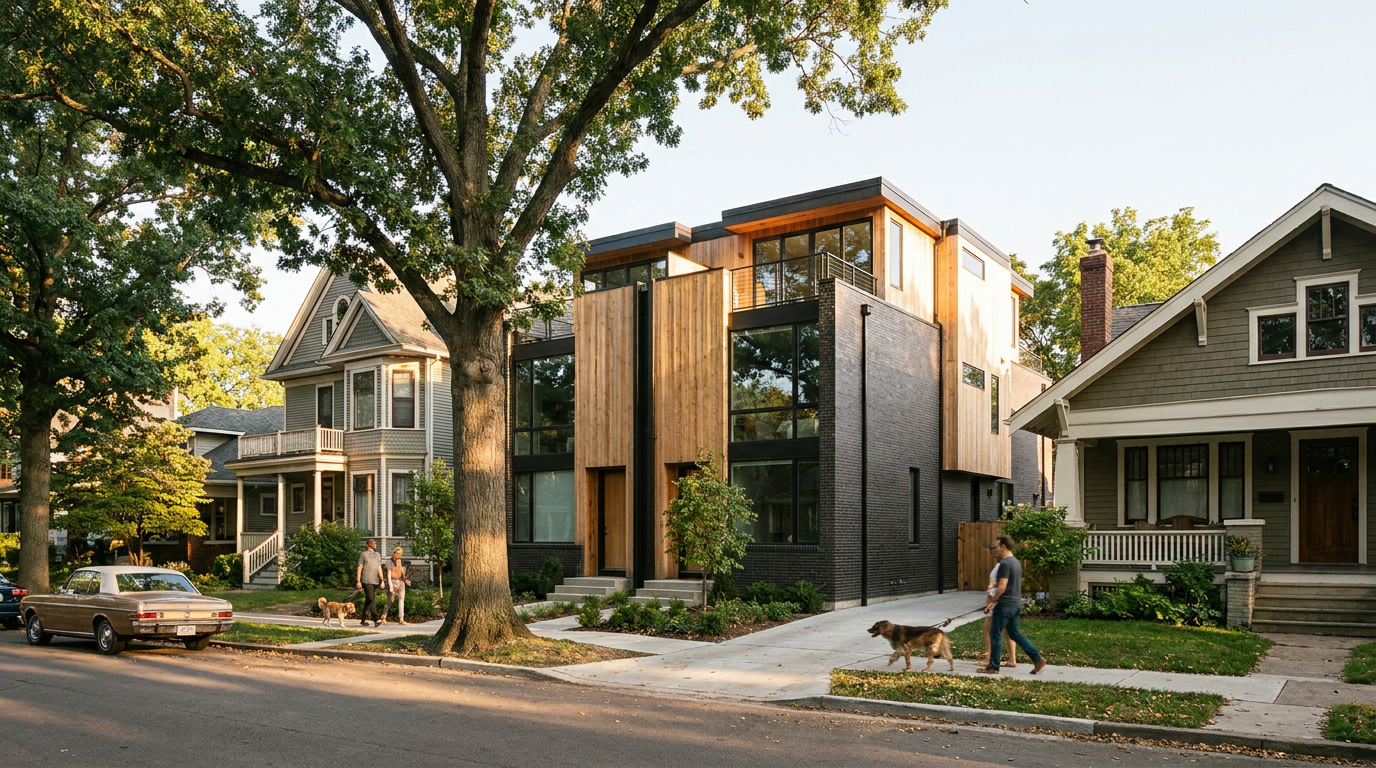
But by mid-2026, the theoretical debate has given way to hard data. A wave of pioneering cities and states that aggressively rewrote their zoning codes to legalize "missing middle" housing—duplexes, triplexes, and backyard cottages—now have several years of empirical results to analyze.[8]
The emerging consensus from this data forms the core of this evidence pack: upzoning and light-touch density reforms are successfully cooling rent growth and lowering home prices, though the mechanisms of that success are sometimes surprising.[8]
**Claim 1: Broad increases in housing supply directly lower rent growth, disproportionately benefiting low-income earners.** The strongest evidence for this macro-trend comes from a comprehensive August 2025 report by the Pew Charitable Trusts.[1]
Analyzing Zillow rent data and Census demographics across 1,654 ZIP codes, Pew researchers established a clear correlation: every 10% increase in a metropolitan area's housing stock between 2017 and 2023 was associated with a 5% reduction in rent growth.[1]

Crucially, the Pew data dismantled the argument that building market-rate housing only helps the wealthy. The lowest-income ZIP codes experienced the steepest rent hikes when supply was constrained, but saw the most significant relief when regional housing stock expanded, as middle-income renters stopped bidding up lower-tier inventory.[1]
**Claim 2: Eliminating single-family zoning drastically reduces housing costs over the medium term.** The primary test case for this claim is Minneapolis, which in 2018 became the first major U.S. city to abolish single-family zoning citywide via its 2040 Plan.[2]
A 2025 peer-reviewed study by Middlebury College economists Helena Gu and David Munro utilized a "synthetic control" approach to isolate the policy's impact. They constructed a counterfactual version of Minneapolis based on 83 similar donor cities that did not reform their zoning.[2]
The results were stark. Five years after implementation, actual Minneapolis home prices were 16% to 34% lower than the synthetic counterfactual, and rents were 17.5% to 34% lower.[2]

Five years after implementation, actual Minneapolis home prices were 16% to 34% lower than the synthetic counterfactual, and rents were 17.5% to 34% lower.
**Uncertainty regarding Claim 2:** However, the evidence is weak that this price drop was caused by a massive flood of new physical supply. The Center of the American Experiment highlights that the Minneapolis reform did not trigger an immediate construction boom.[6]
Instead, Gu and Munro theorize that the policy shifted market expectations. Anticipating future supply, buyers reduced their bidding aggressiveness, cooling speculative demand before the homes were even built.[2]
**Claim 3: "Light-touch" density reforms can rapidly accelerate the construction of smaller, more affordable homes.** While Minneapolis saw a delayed physical supply response, Austin, Texas, provides strong evidence of immediate construction impact.[3]
In December 2023, Austin passed the "HOME-1" initiative, allowing up to three units on lots previously restricted to a single family. According to the Texas Public Policy Foundation, builders filed 906 permits in these zones in the year following the reform—an 86% increase over the prior year.[3]
The mechanism is simple arithmetic. Before the reform, builders were replacing modest bungalows with $1 million single-family homes on 7,800-square-foot lots. After HOME-1, developers began splitting those lots to build two or three smaller homes of roughly 1,900 to 2,300 square feet.[3]

By dividing the land cost, builders are now delivering new homes in central Austin for under $500,000. This influx of missing-middle inventory has contributed to a broader market cooling; CultureMap Austin reports that city-level home prices dropped nearly 6% year-over-year in early 2026, sitting roughly 24.5% below their 2022 peak.[3][7]
**Claim 4: Accessory Dwelling Units (ADUs) offer the fastest, most scalable method to add infill housing.** The primary evidence for this claim comes from California, which passed sweeping state-level preemption laws beginning in 2017 to legalize backyard cottages and garage conversions.[4][5]
The policy has fundamentally altered the state's construction landscape. Data from permitting analytics firm Shovels.ai shows that California ADU permitting grew 54.3% from 2021 to 2025, reaching over 24,000 units annually even as broader residential construction contracted.[5]

According to the California Department of Finance, ADUs now account for approximately 20% of the state's total new housing stock, representing a vital lifeline in the nation's most expensive real estate market.[4]
**Uncertainty regarding Claim 4:** The evidence regarding how many ADUs actually enter the open rental market remains mixed. While the San Diego Association of Governments found that 85% of permitted ADUs in their jurisdiction were renter-occupied, the Los Angeles Times notes that statewide data is patchy.[4]
Some homeowners use ADUs exclusively for multigenerational family living or leave them vacant, meaning the direct translation of ADU permits to available market rentals is not guaranteed.[4]
Ultimately, the 2026 data landscape provides a robust evidence pack for policymakers. While zoning reform is not a standalone cure for the housing crisis, the empirical results from Minneapolis, Austin, and California demonstrate that legalizing diverse housing types is a prerequisite for stabilizing costs.[8]
How we got here
2017
California passes its first major state-level preemption law to legalize Accessory Dwelling Units (ADUs).
December 2018
Minneapolis passes the 2040 Plan, becoming the first major U.S. city to eliminate single-family zoning.
December 2023
Austin passes the HOME-1 initiative, allowing up to three homes on single-family lots.
August 2025
Pew Charitable Trusts releases a landmark report linking increased housing supply to lower rent growth for low-income earners.
Viewpoints in depth
Supply-Side Reformers
Argue that the U.S. housing crisis is an artificial, legally mandated shortage that can be solved through deregulation.
This camp views the 2025 and 2026 data as total vindication. They argue that for decades, exclusionary zoning laws artificially constrained the housing supply, driving up costs and displacing low-income residents. The successes in Austin and Minneapolis prove that when developers are legally permitted to build smaller, denser units, the market will naturally provide more affordable options. They point to the Pew Research data as proof that market-rate construction does not just benefit the wealthy, but creates a chain reaction of affordability that ultimately eases the burden on the lowest-income renters.
Empirical Market Trackers
Emphasize the nuances of the data, noting that the mechanisms of price reduction vary significantly by region.
Data analysts caution against treating all zoning reforms as identical. They note that in Austin, the price drops were driven by a genuine physical increase in missing-middle housing stock. In Minneapolis, however, the price drops were largely driven by a shift in market expectations that cooled speculative demand, rather than a massive flood of new buildings. Furthermore, they emphasize the need for better tracking of ADU occupancy, pointing out that a permit for a backyard cottage does not guarantee that the unit will ever enter the open rental market.
Local Control Defenders
Argue that state-level preemptions and citywide upzonings bypass neighborhood input and often fail to deliver true affordability.
Skeptics of broad upzoning argue that these policies strip communities of their ability to manage local infrastructure, traffic, and neighborhood character. They point out that in some highly desirable areas, upzoning simply increases the speculative land value of single-family lots, incentivizing developers to tear down modest homes and replace them with expensive multi-unit condos. They also argue that recent price drops in cities like Austin may be driven more by macroeconomic factors, such as high interest rates dampening buyer demand, rather than the zoning reforms themselves.
What we don't know
- Whether the price drops seen in pioneer cities will hold long-term if broader macroeconomic conditions, such as interest rates, shift dramatically.
- The exact percentage of newly constructed ADUs nationwide that are actually placed on the open rental market versus used for family members.
- How effectively 'missing middle' housing can scale in suburban municipalities that lack the transit infrastructure of cities like Austin and Minneapolis.
Key terms
- Missing Middle Housing
- Residential buildings with multiple units—such as duplexes, triplexes, and courtyard apartments—that are compatible in scale with single-family neighborhoods.
- Accessory Dwelling Unit (ADU)
- A smaller, independent residential dwelling unit located on the same lot as a stand-alone single-family home, often called a granny flat or backyard cottage.
- Upzoning
- Changing local zoning codes to allow for higher-density development, such as permitting multi-family units in areas previously restricted to single-family homes.
- Synthetic Control Method
- A statistical technique used to evaluate the effect of a policy intervention by comparing the actual outcome to an artificially constructed 'counterfactual' scenario.
- By-Right Development
- A development process where projects that comply with existing zoning rules are approved administratively, without requiring discretionary public hearings or city council votes.
Frequently asked
What is 'missing middle' housing?
It refers to multi-unit housing types like duplexes, triplexes, and townhomes that sit between single-family homes and large apartment complexes in scale.
Did eliminating single-family zoning in Minneapolis cause a construction boom?
Not immediately. Research indicates the policy cooled prices largely by moderating speculative demand and shifting market expectations, rather than flooding the market with new buildings.
Are Accessory Dwelling Units (ADUs) actually rented out?
Data is mixed. While a San Diego study found 85% of ADUs were renter-occupied, researchers note some are used for family members or left vacant, making their exact impact on the rental market difficult to track statewide.
Sources
Source coverage
8 outlets
3 viewpoints surfaced








[1]Pew Charitable TrustsSupply-Side Reformers
Increasing Housing Supply Could Reduce Rent Burden for Low-Income Renters
Read on Pew Charitable Trusts →[2]EconStorEmpirical Market Trackers
Zoning Reforms and Housing Affordability: Evidence from the Minneapolis 2040 Plan
Read on EconStor →[3]Texas Public Policy FoundationSupply-Side Reformers
Austin's Simple Fix for Soaring Housing Costs
Read on Texas Public Policy Foundation →[4]Los Angeles TimesEmpirical Market Trackers
California's ADU boom accounts for a fifth of new housing stock
Read on Los Angeles Times →[5]Shovels.aiEmpirical Market Trackers
News From California's ADU Boom: 2026 Permit Data
Read on Shovels.ai →[6]Center of the American ExperimentLocal Control Defenders
Research finds that falling demand, not rising supply, lowered housing costs after Minneapolis 2040 Plan
Read on Center of the American Experiment →[7]CultureMap AustinEmpirical Market Trackers
Austin home prices drop nearly 6% in one year, new study says
Read on CultureMap Austin →[8]Factlen Editorial TeamEmpirical Market Trackers
Synthesis by Factlen editorial team
Read on Factlen Editorial Team →
Every angle. Every day.
Get real estate stories with full source coverage and perspective breakdowns delivered to your inbox.