
U.S. Charges 15 in Minneapolis With Conspiracy Over Anti-ICE Protests
Federal prosecutors have unsealed a 94-page indictment charging 15 people with conspiring to impede federal agents during a controversial immigration crackdown in the Twin Cities.
Federal prosecutors in Minnesota have unsealed a sweeping 94-page indictment charging 15 individuals with conspiracy to impede and injure federal officers during a highly controversial immigration crackdown earlier this year. The expansive legal filing marks a significant escalation in the Justice Department's approach to handling civil unrest and organized resistance to federal operations.
By pursuing a broad conspiracy framework rather than individual misdemeanor or assault charges, the government is attempting to dismantle what it describes as a coordinated, militant network dedicated to sabotaging law enforcement. The announcement has immediately reignited fierce debates over the boundaries of First Amendment protections and the aggressive tactics utilized by federal authorities in residential neighborhoods.[1]
The charges stem directly from the fallout of "Operation Metro Surge," a massive and unprecedented deployment of federal immigration agents to the Twin Cities that fundamentally disrupted daily life in the region. The operation brought thousands of heavily armed personnel into Minneapolis and St. Paul, sparking widespread neighborhood protests, intense clashes between residents and law enforcement, and a pervasive climate of fear among immigrant communities.
During the height of the surge, convoys of agents in unmarked SUVs were frequently seen traveling through residential areas, banging on doors, waiting outside local schools, and demanding that residents produce proof of citizenship on the spot.
U.S. Attorney Daniel N. Rosen formally announced the arrests during a Tuesday press conference, detailing the culmination of a multi-month investigation into the protest networks. Rosen stated that 12 suspects were successfully taken into custody during coordinated early-morning raids, while one individual was already detained on separate, unrelated charges.
Two suspects currently remain at large, prompting an ongoing manhunt by federal marshals. While the specific names and granular charges of those arrested were not immediately made available to the public, the sheer scale of the 94-page indictment suggests a deeply resourced federal effort to map out the communications and movements of the accused.[4]
According to the detailed allegations contained within the indictment, the defendants utilized a variety of highly coordinated and unconventional tactics to physically disrupt Immigration and Customs Enforcement (ICE) operations. Prosecutors claim the group engaged in systematic "stalking" of federal agents, tracking the movements of unmarked government vehicles across the metropolitan area.
In one of the more specific allegations, the defendants are accused of deliberately placing large blocks of ice in roadways to slow down and trap federal convoys, creating hazardous conditions for the officers and allowing crowds to swarm the vehicles.[1]
In a move that carries significant political weight, prosecutors explicitly linked the defendants to two specific Minneapolis-based groups that they described as being part of the broader "antifa" movement. The indictment alleges that this network was not merely a loose collection of angry citizens, but rather a sophisticated organization trained in counter-surveillance, operational planning, and rapid mobilization against law enforcement targets.
This framing aligns closely with the Trump administration's repeated pledges to designate and prosecute "antifa" as a domestic terror threat, elevating the local protest arrests into a national security narrative.[2][3]
The strategic legal maneuver to file a sweeping conspiracy indictment comes after federal prosecutors in Minnesota reportedly struggled to sustain individual criminal cases against protesters arrested during the chaotic height of the surge. Many of the initial arrests resulted in dropped charges or minor infractions that failed to stick in court, frustrating federal officials who sought harsher penalties for the disruptions.
By weaving the disparate acts of resistance into a single, overarching conspiracy narrative, the Justice Department bypasses the need to prove isolated assaults and instead focuses on the collective intent to impede federal operations.[1]
By pursuing this aggressive legal strategy, the Justice Department aims to hold the entire network accountable for what Border Czar Tom Homan previously described as highly organized and well-funded attacks on federal personnel.
During the peak of the protests, Homan publicly indicated that federal authorities were actively probing the financial and organizational roots of the anti-ICE demonstrations, promising that "justice is coming" for those who interfered with the agency's mandate. The unsealing of this indictment appears to be the direct fulfillment of that promise, signaling a zero-tolerance policy for organized interference.[2]
Civil rights advocates, community organizers, and defense attorneys have sharply criticized the indictment, characterizing it as a heavy-handed and dangerous attempt to criminalize political dissent and basic neighborhood watch efforts. Critics argue that the government is weaponizing the justice system to punish political opponents and chill free speech, transforming community solidarity into a federal crime.
They point out that the "antifa" label is often used as a catch-all boogeyman to justify draconian legal measures against ordinary citizens who were simply trying to protect their neighbors from what they viewed as an occupying force.[1]
The context of the protests is crucial to understanding the community's response. During Operation Metro Surge, anonymous neighborhood messaging threads proliferated rapidly across encrypted apps as ordinary citizens and local activists sought to keep each other safe. These grassroots networks used low-tech warning systems—such as blowing whistles, banging pots, and honking car horns—to call attention to the masked, heavily armed agents operating in their streets. To the community, these actions were a necessary defense mechanism; to federal prosecutors, they constituted an illegal conspiracy to endanger law enforcement.[4]
The underlying operation itself remains a deeply painful flashpoint in Minnesota politics, having previously led to the fatal shooting of two U.S. citizens during botched raids, an event that drew fierce condemnation from local mayors and state representatives. The aggressive tactics deployed in residential areas—including the use of tear gas and flashbangs near family homes—shattered the relationship between federal authorities and local municipalities. The new conspiracy charges threaten to reopen these wounds, forcing the community to relive the trauma of the surge while fighting complex legal battles in federal court.
During the press conference, U.S. Attorney Rosen repeatedly declined to specify whether any federal agents were actually physically injured as a direct result of the defendants' alleged actions. However, he emphasized that the conspiracy itself—the organized intent to trap, slow, and harass federal officers—crossed a definitive line from protected First Amendment speech into organized criminal interference. Prosecutors maintain that the sophisticated nature of the surveillance and the physical blockades created an inherently dangerous environment that could have easily resulted in severe casualties.[4]
As the 12 arrested individuals await their initial court appearances, the case is widely expected to become a major, precedent-setting legal test of the administration's ability to prosecute decentralized activist movements. Legal scholars anticipate a high-profile courtroom battle over the definition of conspiracy, the boundaries of lawful protest, and the limits of federal authority in local jurisdictions. The outcome of this trial will likely have profound implications for how protest movements organize and communicate across the United States in the face of federal crackdowns.[1][2][3]
Key points
- Federal prosecutors unsealed a 94-page indictment charging 15 people with conspiracy to impede federal officers.
- The charges stem from protests against 'Operation Metro Surge,' a massive immigration crackdown in the Twin Cities.
- Prosecutors allege the defendants stalked agents and blocked convoys, linking them to 'antifa' groups.
- Civil rights advocates argue the charges are a politically motivated attempt to criminalize community defense and dissent.
Unanswered questions
- The specific identities and granular charges of the 15 individuals indicted, as the full details remain under seal.
- Whether any federal agents were actually physically injured as a direct result of the alleged conspiracy.
- How the courts will interpret the use of neighborhood messaging apps and car horns as evidence of a criminal conspiracy.
How we got here
Early 2026
The Trump administration launches 'Operation Metro Surge,' deploying thousands of federal agents to the Twin Cities.
Spring 2026
Mass protests erupt across Minneapolis; residents form neighborhood watch networks to track unmarked federal convoys.
Mid-2026
Federal prosecutors struggle to sustain individual criminal cases against arrested protesters.
June 16, 2026
A grand jury indicts 15 individuals on conspiracy charges, and 12 are arrested in a coordinated sweep.
- Federal Prosecutors
- Views the actions as a coordinated, militant conspiracy to endanger federal agents and disrupt lawful immigration enforcement.
- Civil Rights Advocates
- Argues the charges are a politically motivated escalation to criminalize dissent after failing to sustain individual protest cases.
- Neutral Observers
- Focuses on the legal mechanics of the 94-page indictment and the timeline of the arrests.
Perspectives this story doesn't cover
- The indicted individuals and their defense attorneys
- Families of the citizens fatally shot during Operation Metro Surge
Sources
Source coverage
4 outlets
3 viewpoints surfaced




- [1]The New York TimesCivil Rights Advocates
Claiming an Antifa Plot, U.S. Charges 15 in Minneapolis With Conspiracy
Read on The New York Times → - [2]The Washington TimesFederal Prosecutors
Feds charge 15 'antifa' activists with ginning up anti-ICE violence in Minneapolis
Read on The Washington Times → - [3]NewsmaxFederal Prosecutors
15 Antifa members in Minneapolis facing charges for anti-ICE protests
Read on Newsmax → - [4]WBALNeutral Observers
Federal prosecutors charge 15 people it says impeded agents during Minnesota immigration crackdown
Read on WBAL →
More in News & Politics
See all →Gaza Detentions
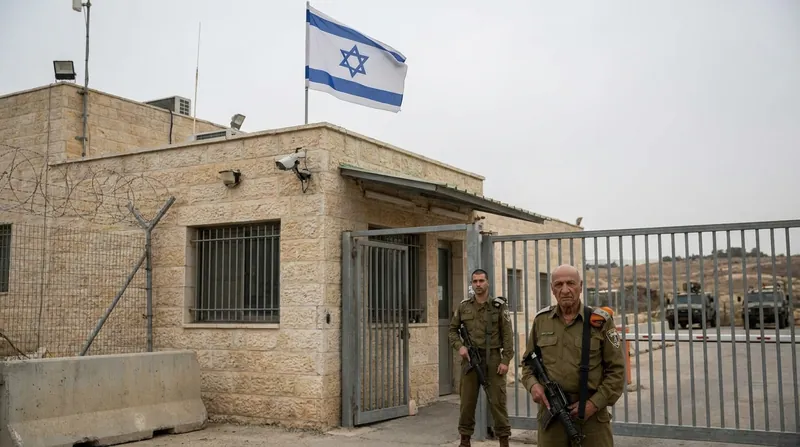
Israeli Military Confirms Authenticity of Soldier's Photo Depicting Abuse of Palestinian Detainee
7 sources
Maine Senate Race
Top Democrats Call on Maine Senate Candidate Graham Platner to Withdraw Following Assault Allegations
5 sources
Immigration Law
Appeals Court Allows Trump Administration to Resume Expedited Deportations Nationwide
5 sources
Disability Rights
DOJ Reverses Decades of Policy, Undermining Right of Disabled Americans to Community-Based Care
5 sources
Comments
Every angle. Every day.
Get News & Politics stories with full source coverage and perspective breakdowns, free every day.