
US and Iran Reach Preliminary Peace Agreement to End War and Reopen Strait of Hormuz
The United States and Iran have electronically signed a memorandum of understanding to halt hostilities, lift naval blockades, and reopen the Strait of Hormuz. The preliminary framework establishes a 60-day window to negotiate a final deal on Iran's nuclear program and sanctions relief, though the two sides already offer conflicting interpretations of the terms.
By Factlen Editorial Team

- U.S. Administration
- Frames the memorandum as a definitive victory that neutralizes Iran's nuclear threat and restores global commerce.
- Iranian Government
- Views the ceasefire as a successful effort to break the U.S. naval blockade without surrendering its core nuclear rights.
- Global Markets & Mediators
- Focuses on the immediate relief to global energy markets and the fragility of the 60-day negotiation window.
- Israeli Leadership
- Views the bilateral pact with deep skepticism, particularly regarding its implications for Hezbollah in Lebanon.
What's not represented
- · Lebanese civilians caught in the crossfire
- · European energy importers reliant on the Strait of Hormuz
- · Commercial shipping and maritime insurance companies
Why this matters
The months-long conflict effectively closed the Strait of Hormuz, choking off 20 percent of the world's oil supply and sending global energy prices soaring. This preliminary ceasefire promises immediate relief to global markets, though the hardest issues—Iran's nuclear capabilities and U.S. sanctions—remain unresolved.
Key points
- The US and Iran electronically signed a preliminary peace agreement to end their 109-day war.
- The deal lifts the US naval blockade and reopens the Strait of Hormuz to commercial shipping.
- A 60-day negotiation window will follow to address Iran's nuclear program and US sanctions relief.
- The two nations strongly disagree on whether the preliminary deal includes permanent nuclear concessions.
- Israel stated it is not bound by the agreement's provisions regarding a ceasefire in Lebanon.
After 109 days of a devastating conflict that rattled the Middle East and choked global energy markets, the United States and Iran have reached a preliminary peace agreement. The memorandum of understanding, signed electronically over the weekend by U.S. President Donald Trump and Iranian Parliament Speaker Mohammad Bagher Ghalibaf, establishes an immediate ceasefire across all fronts. A formal, in-person signing ceremony is scheduled for Friday, June 19, at the mountainside Bürgenstock resort in Switzerland. The breakthrough follows intensive mediation by Pakistan, Qatar, and Oman, offering the first concrete off-ramp from a war that began in late February with U.S. and Israeli strikes on Iranian territory.[3][5][7]
The immediate focus of the pact is the restoration of global maritime trade. The agreement mandates the lifting of the U.S. naval blockade on Iranian ports and the reopening of the Strait of Hormuz, a critical maritime chokepoint through which roughly 20 percent of the world's oil and liquefied natural gas flows. The militarization and effective closure of the strait had sent shockwaves through the global economy, prompting the International Energy Agency to declare its unconditional reopening as the single most important step to resolving the ongoing energy crisis. Following the announcement of the memorandum, global oil prices tumbled nearly five percent to their lowest close since early March.[2][4][7]
While the memorandum halts the immediate violence, it leaves the most intractable disputes for a 60-day negotiation window that will commence after Friday's signing. During this period, American and Iranian diplomats are tasked with forging a comprehensive treaty addressing Iran's nuclear program, the disposition of its highly enriched uranium stockpiles, and the potential lifting of crippling U.S. sanctions. The deliberate sequencing—securing a ceasefire and maritime access first, while deferring the core geopolitical grievances—highlights the fragility of the truce. Both Washington and Tehran are already presenting starkly different interpretations of what the preliminary text actually concedes.[2][6][8]

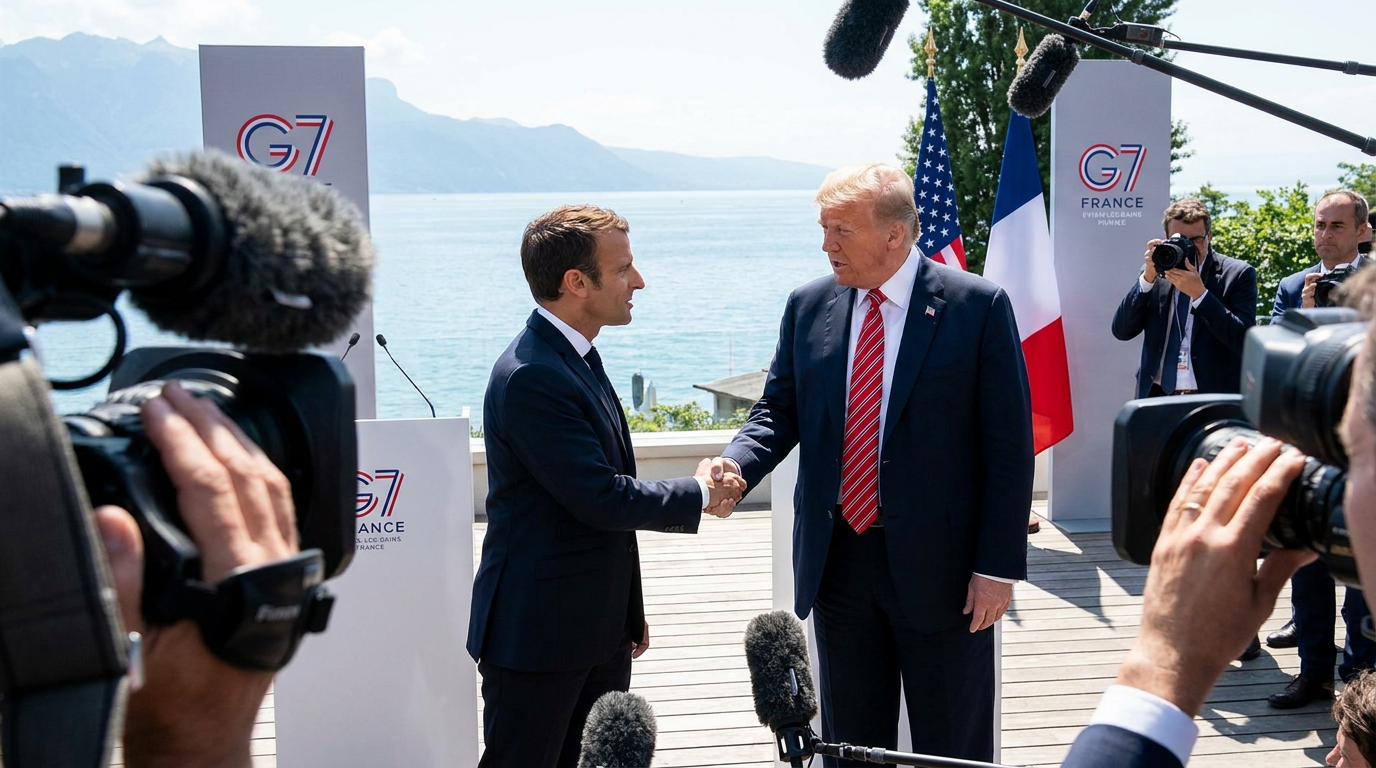
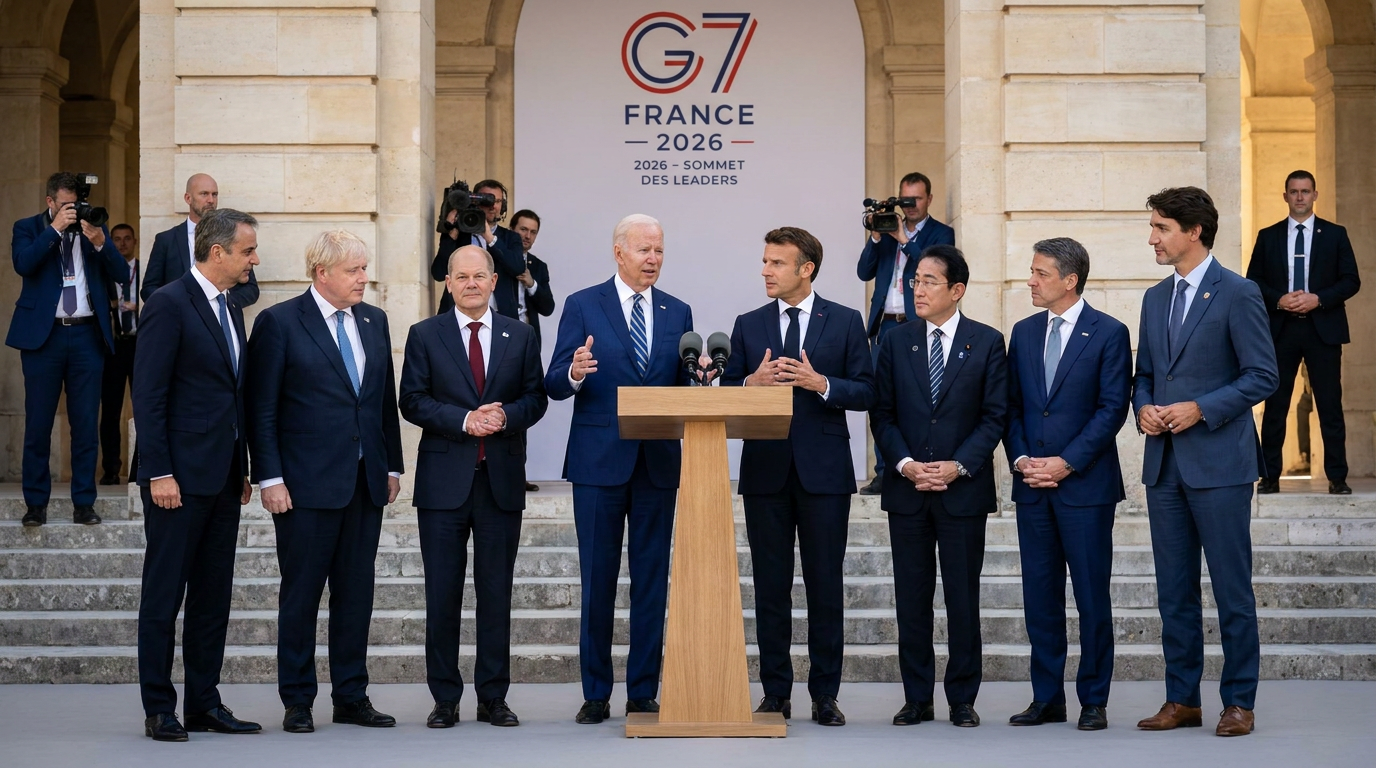
President Trump has aggressively framed the memorandum as a definitive victory that achieves his administration's primary war aims. Speaking to reporters on the sidelines of the G7 summit in France, Trump asserted that the agreement explicitly guarantees Iran will never acquire a nuclear weapon. He also declared that the Strait of Hormuz would be permanently reopened on a "toll-free" basis, authorizing the immediate removal of the U.S. naval blockade so that international shipping could resume. Furthermore, Trump suggested that the U.S. military would eventually enter Iran to extract and destroy "nuclear dust" and highly enriched uranium buried in subterranean facilities.[1][3][9]
Iranian officials have swiftly countered the American narrative, emphasizing that the Islamic Republic has made no permanent concessions regarding its nuclear infrastructure. Iranian Foreign Minister Abbas Araghchi and Foreign Ministry spokesman Esmail Baghaei both clarified that the current focus is strictly on ending the military conflict. They maintained that Iran's right to enrich uranium, the fate of its existing stockpiles, and the mechanics of sanctions relief will only be addressed during the upcoming technical talks. Iranian state media has also projected confidence, with Araghchi stating on state television that Iran emerged from the conflict as the "winner" by forcing the removal of the U.S. blockade.[4][6][9]
Iranian Foreign Minister Abbas Araghchi and Foreign Ministry spokesman Esmail Baghaei both clarified that the current focus is strictly on ending the military conflict.
The financial dimensions of the truce are equally contested. Iranian state-linked outlets reported that the draft agreement includes the immediate suspension of U.S. sanctions on Iranian oil exports and the phased release of up to $25 billion in frozen Iranian assets during the 60-day negotiation period. However, U.S. Vice President JD Vance categorically denied these claims, stating that not a single dollar of sanctions relief or unfrozen assets has been authorized. American officials insist that any economic benefits, including a rumored international reconstruction fund, will be strictly tied to Iran's verifiable compliance with future nuclear limitations.[5][6][8]

Control over the Strait of Hormuz remains a volatile flashpoint despite the ceasefire. While the Trump administration insists the waterway will remain permanently toll-free, media affiliated with Iran's Islamic Revolutionary Guard Corps reported that Tehran is only pausing its transit fees for the 60-day negotiation window. According to these outlets, Iran fully intends to resume charging service fees to commercial vessels once the period expires, asserting its sovereign right to jointly manage the strait with Oman. Shipping industry executives have warned that commercial lines will remain hesitant to transit the corridor until the security situation on the water matches the diplomatic rhetoric.[2][6]
The physical implementation of the ceasefire presents immediate logistical challenges. The U.S. Navy, which has maintained a strict blockade on Iranian ports since the war's onset, must now coordinate a complex de-escalation with Iranian maritime forces that have heavily mined the regional waters. President Trump noted that Iranian forces are already hunting for a couple of mines to clear shipping lanes, but defense analysts warn that fully securing the Persian Gulf for commercial mega-tankers will take weeks. The memorandum reportedly contemplates a gradual reduction of U.S. military forces in the region, contingent upon the successful completion of the final treaty.[3][9]
The agreement's attempt to impose a regional ceasefire has also collided with the ongoing conflict between Israel and the Iran-backed militant group Hezbollah. The U.S.-Iran memorandum reportedly includes provisions for the termination of military operations in Lebanon, where Israeli forces launched a ground invasion in March following Hezbollah rocket attacks. However, Israeli Prime Minister Benjamin Netanyahu has publicly distanced his government from the pact. Netanyahu stated that Israel is not bound by the Lebanon-related clauses negotiated by Washington and Tehran, vowing that the Israel Defense Forces will remain in their Lebanese security buffer zone for as long as necessary to degrade Hezbollah's capabilities.[1][6][9]
The exclusion of Israel from the core U.S.-Iran negotiations has reportedly generated significant friction between Washington and Jerusalem. Trump has publicly urged all sides to stand down, criticizing recent Israeli airstrikes on Beirut suburbs as actions that should not have happened while the peace deal was being finalized. Iran, meanwhile, has warned that continued Israeli military operations in Lebanon could threaten the entire agreement. Hezbollah has signaled a willingness to adhere to the ceasefire outlined in the memorandum, but only if it serves as a precursor to a full Israeli withdrawal from Lebanese territory.[1][3]

International reaction to the memorandum has been overwhelmingly characterized by cautious relief. United Nations Secretary-General António Guterres welcomed the pact as a critical step toward ending a conflict that has had a devastating impact on the global economy. Guterres praised the diplomatic heavy lifting by regional mediators, particularly Pakistan and Qatar, whose envoys shuttled between Washington and Tehran to finalize the text. Yet, the UN chief also urged maximum restraint, noting that intermittent fire had continued even as the electronic signatures were being applied to the document.[7]
As the Friday signing ceremony in Switzerland approaches, domestic political pressure is mounting in the United States. Lawmakers from both parties are demanding to see the full text of the memorandum, which the administration has kept tightly guarded. Democrats have expressed skepticism about the enforceability of the deal, while some Republicans are demanding that the agreement be formally submitted to Congress for review. Trump has indicated he is open to congressional scrutiny, though the administration's immediate priority is ensuring the 60-day negotiation window opens without a resumption of hostilities in the Persian Gulf.[3][8][9]
How we got here
Feb 2026
U.S. and Israeli strikes on Iranian territory ignite a major regional war.
Mar 2026
Israel launches a ground invasion into southern Lebanon to counter Hezbollah rocket attacks.
Apr 2026
A temporary ceasefire is briefly implemented but collapses amid tit-for-tat strikes.
June 14, 2026
U.S. and Iranian leaders electronically sign a preliminary memorandum of understanding.
June 19, 2026
Formal signing ceremony scheduled to take place at the Bürgenstock resort in Switzerland.
Viewpoints in depth
The U.S. Administration's View
The White House frames the memorandum as a definitive victory that neutralizes Iran's nuclear threat and restores global commerce.
President Trump and his surrogates project the preliminary agreement as a total vindication of their military and diplomatic strategy. By securing an immediate reopening of the Strait of Hormuz, the administration claims to have rescued the global economy from a crippling energy crisis. Crucially, the U.S. asserts that Iran has fundamentally capitulated on its nuclear ambitions, agreeing to never possess a weapon and allowing the future destruction of its highly enriched uranium. From Washington's perspective, the 60-day window is merely a mechanism to formalize Iran's concessions, with economic relief strictly withheld until Tehran proves its compliance.
The Iranian Government's View
Tehran views the ceasefire as a successful effort to break the U.S. naval blockade without surrendering its core nuclear rights.
Iranian leadership, including Foreign Minister Abbas Araghchi, portrays the memorandum as a tactical triumph that forced the United States to abandon its crippling naval blockade. Tehran insists that it has made zero permanent concessions regarding its nuclear infrastructure or its right to enrich uranium, arguing that these issues are entirely separate from the military ceasefire and will be fiercely debated in the coming months. Furthermore, Iranian state media emphasizes that the country retains sovereign control over the Strait of Hormuz, suggesting that the current toll-free transit is merely a temporary 60-day pause rather than a permanent surrender of its territorial waters.
Israel's Security View
The Israeli government views the bilateral U.S.-Iran pact with deep skepticism, particularly regarding its implications for Hezbollah in Lebanon.
For Prime Minister Benjamin Netanyahu and the Israeli defense establishment, the U.S.-Iran memorandum is dangerously incomplete. Israel's primary concern is the ongoing conflict with Hezbollah on its northern border. Because Israel was not a direct party to the negotiations, its leadership feels no obligation to honor the ceasefire provisions extending to Lebanon. The Israeli government fears that a premature end to hostilities will allow Iranian proxies to regroup and rearm, prompting Netanyahu to publicly declare that the IDF will maintain its security buffer zone in southern Lebanon regardless of what Washington and Tehran sign in Switzerland.
What we don't know
- Whether Iran will actually agree to dismantle its highly enriched uranium stockpiles.
- If commercial shipping companies will feel safe enough to resume full operations in the Strait of Hormuz.
- How Israel's continued military operations in Lebanon might impact the broader US-Iran truce.
Key terms
- Memorandum of Understanding (MoU)
- A preliminary diplomatic agreement that outlines a framework for peace but lacks the binding, detailed commitments of a final treaty.
- Strait of Hormuz
- A narrow, strategically vital waterway between the Persian Gulf and the Gulf of Oman through which a fifth of the world's oil passes.
- Highly Enriched Uranium (HEU)
- Uranium that has been processed to a purity level capable of being used in nuclear weapons, a central focus of U.S.-Iran negotiations.
- Naval Blockade
- A military operation in which ships are used to cut off a country's ports from international maritime trade.
Frequently asked
Is the war between the U.S. and Iran completely over?
Not entirely. While the two nations have agreed to an immediate ceasefire, the current pact is only a preliminary framework. A final peace treaty depends on successful negotiations over the next 60 days.
Will gas prices go down now?
Likely yes. Global oil prices immediately dropped by nearly 5% following the announcement, as the agreement reopens the Strait of Hormuz to commercial oil tankers.
Did Iran agree to give up its nuclear program?
This is highly disputed. President Trump claims Iran agreed to never acquire a nuclear weapon, while Iranian officials state that nuclear concessions have not yet been negotiated.
How does this affect the conflict in Lebanon?
The U.S.-Iran agreement calls for an end to hostilities in Lebanon, but Israel has stated it is not bound by the deal and will keep its forces in the Lebanese security buffer zone.
Sources
Source coverage
9 outlets
4 viewpoints surfaced









[1]CBS NewsIsraeli Leadership
Iran and U.S. reach deal, Trump and Pakistani prime minister say, as Israeli strikes in Lebanon threaten agreement
Read on CBS News →[2]AxiosGlobal Markets & Mediators
US, Iran reach deal to extend ceasefire, open strait
Read on Axios →[3]TIMEGlobal Markets & Mediators
U.S. and Iran Sign Agreement to Stop Fighting, Reopen Strait
Read on TIME →[4]The HinduIranian Government
West Asia LIVE: Iran says talks on final U.S. deal to begin this week
Read on The Hindu →[5]Al JazeeraIranian Government
Iran war day 109: Tehran, Washington, sign MoU electronically
Read on Al Jazeera →[6]ForbesU.S. Administration
Crucial Aspects Of Trump's Iran Deal Remain Secret: Nuclear Program, Strait Of Hormuz Tolls And Sanctions Relief
Read on Forbes →[7]UN NewsGlobal Markets & Mediators
Guterres welcomes US-Iran peace deal as 'critical step' toward ending conflict
Read on UN News →[8]Fox NewsU.S. Administration
Trump's Iran agreement raises a basic question: Is it actually a deal?
Read on Fox News →[9]The Washington PostU.S. Administration
Trump claims victory over Iran, but deal is silent on nuclear weapons
Read on The Washington Post →
More in news politics
See all 10 stories →US Manufacturing
Fact Check: Is the US Manufacturing Boom Actually Happening?
0 sources

Strait of Hormuz
US and Iran Reach Agreement to End War and Reopen Strait of Hormuz
0 sources
US-Iran Deal
U.S. and Iran Reach Cease-Fire Framework at G7 Summit, Halting Regional Hostilities
0 sources
US-Iran Peace Deal
US and Iran Reach Peace Framework to End War and Reopen Strait of Hormuz
0 sources
Every angle. Every day.
Get news politics stories with full source coverage and perspective breakdowns delivered to your inbox.