
The 2026 E-Bike Buying Guide: Navigating Motors, Batteries, and New Safety Mandates
As e-bikes become mainstream transportation, new 2026 safety mandates and motor technologies have fundamentally changed how consumers should shop. This definitive guide breaks down how to match motor types, battery certifications, and torque specs to your daily commute.
By Factlen Editorial Team
- Urban Commuters
- Prioritize low maintenance, cost-efficiency, and throttle-enabled convenience for flat city riding.
- Performance & Trail Riders
- Value natural ride feel, high torque, and gear leverage for tackling steep inclines and off-road terrain.
- Safety Regulators
- Focused on eliminating lithium-ion fire risks through strict certification mandates and standardized testing.
What's not represented
- · Traditional acoustic bicycle purists who oppose motorized access on shared trails
- · Delivery gig workers who rely on high-capacity, low-cost batteries for their livelihood
Why this matters
Buying the wrong e-bike in 2026 doesn't just mean a frustrating ride—it could mean purchasing an illegal, unserviceable, or dangerous vehicle as strict new battery fire laws take effect nationwide. Understanding the underlying engineering ensures you invest in a safe, reliable machine that actually fits your terrain.
Key points
- Strict new laws in 2026 make UL 2849 safety certification mandatory for e-bike batteries in major markets.
- Mid-drive motors offer superior hill-climbing ability by leveraging the bike's gears, while hub motors provide affordable, low-maintenance cruising.
- Torque (measured in Nm) is a much better indicator of an e-bike's real-world power and climbing ability than wattage.
- Premium 48V and 52V battery systems utilizing 21700 cells have become the industry standard for long-range reliability.
- Buyers are increasingly prioritizing local shop serviceability over online budget models to avoid unrepairable proprietary parts.
The electric bicycle has officially graduated from a niche novelty to a primary mode of transportation. In 2026, the micro-mobility market has matured, offering highly specialized machines designed to replace car trips, haul cargo, and conquer mountain trails. But as the options have multiplied, so has the complexity of buying one. Consumers are no longer just picking a color and a frame size; they are navigating complex electrical engineering standards and competing motor architectures.[8]
The most critical shift for buyers this year isn't about speed or suspension—it is about legal compliance and fire safety. Following a surge in lithium-ion battery fires in recent years, states like California and New York have implemented strict new laws effective January 1, 2026, banning the sale of uncertified e-bikes. This landmark regulatory shift affects manufacturers, retailers, and consumers nationwide, making safety certification the absolute baseline for any purchase.[5][7]
At the center of this regulatory crackdown is UL 2849, the gold standard certification for complete e-bike electrical systems. Unlike older standards that only tested isolated battery cells, UL 2849 evaluates the entire drivetrain—battery, motor, controller, and charger—to ensure they communicate safely and prevent thermal runaway. Buyers must now actively look for holographic UL stickers on the frame or battery; purchasing a generic, uncertified battery online is no longer just a gamble, it is often illegal and highly dangerous.[5][6][7]

Beyond the certification sticker, the internal chemistry of the battery dictates both range and lifespan. Industry experts note that premium packs utilizing Samsung, LG, or Panasonic 21700 cells are significantly less likely to fail and provide far better longevity. Furthermore, the market has largely shifted away from older 36-volt systems; 48V and 52V batteries are now the standard, delivering the necessary power efficiency for heavier bikes and longer commutes without suffering from voltage sag.[6]
Once safety and battery quality are secured, the next major decision is the motor type. This choice fundamentally dictates how the bike feels, how it climbs, and how much maintenance it will require over its lifespan. The debate primarily centers on two distinct architectures: the hub motor and the mid-drive motor.[3][9]
Hub motors are housed directly in the center of the front or rear wheel. Because they operate independently of the bicycle's chain and gears, they are mechanically simple, highly reliable, and virtually silent. They also frequently feature a throttle, allowing riders to cruise without pedaling at all—a major selling point for commuters who want to arrive at the office without breaking a sweat.[3][4]
Hub motors are housed directly in the center of the front or rear wheel.
However, hub motors have a distinct disadvantage on steep terrain. Because they do not leverage the bike's mechanical gears, they must brute-force their way up hills, which drains the battery rapidly and can lead to overheating under heavy loads. For riders in flat urban environments, a hub motor is often the most cost-effective and low-maintenance choice, but it struggles in mountainous regions or when hauling heavy cargo up an incline.[2][4]
Mid-drive motors, conversely, are mounted at the bike's bottom bracket, directly between the pedals. This placement allows the motor to drive the chain, meaning it takes full advantage of the bicycle's rear cassette. When a rider shifts into a low gear for a steep climb, the motor also drops into that low gear, multiplying its climbing power efficiently without overheating.[2][3]

The defining characteristic of a premium mid-drive system is its torque sensor. Instead of simply turning on when the pedals move, a torque sensor measures exactly how hard the rider is pushing and delivers proportional assistance. This creates a seamless, "bionic" ride feel where the motor feels like a natural extension of the rider's legs. The trade-off is cost and maintenance: mid-drives are significantly more expensive and accelerate wear on the chain and gears.[1][3]
When comparing these motors, buyers often make the mistake of focusing entirely on wattage. While a "750W" sticker looks impressive on a spec sheet, wattage merely measures raw electrical consumption, not actual pushing power. In the e-bike world, wattage is what you pay for, but torque is what you actually feel when you start pedaling.[8][9]
Torque, measured in Newton-meters (Nm), is the rotational force that gets a heavy bike moving from a dead stop and keeps it climbing when the road tilts upward. A motor with 30 to 40 Nm of torque is perfectly adequate for flat boardwalk cruising. However, for hauling groceries, pulling a child trailer, or tackling steep inclines, buyers should demand a motor producing at least 60 to 85 Nm of torque to prevent the bike from stalling.[2][8]

Beyond the spec sheet, the 2026 market is increasingly defined by serviceability. Independent bike shops report a sharp rise in "unserviceable" e-bikes—budget models bought online with proprietary electronic parts that cannot be replaced when they fail, turning a premium ride into a heavy paperweight. A quality e-bike is a long-term investment, and ensuring that local mechanics have access to diagnostic software and replacement parts for the specific motor brand is crucial.[2][9]
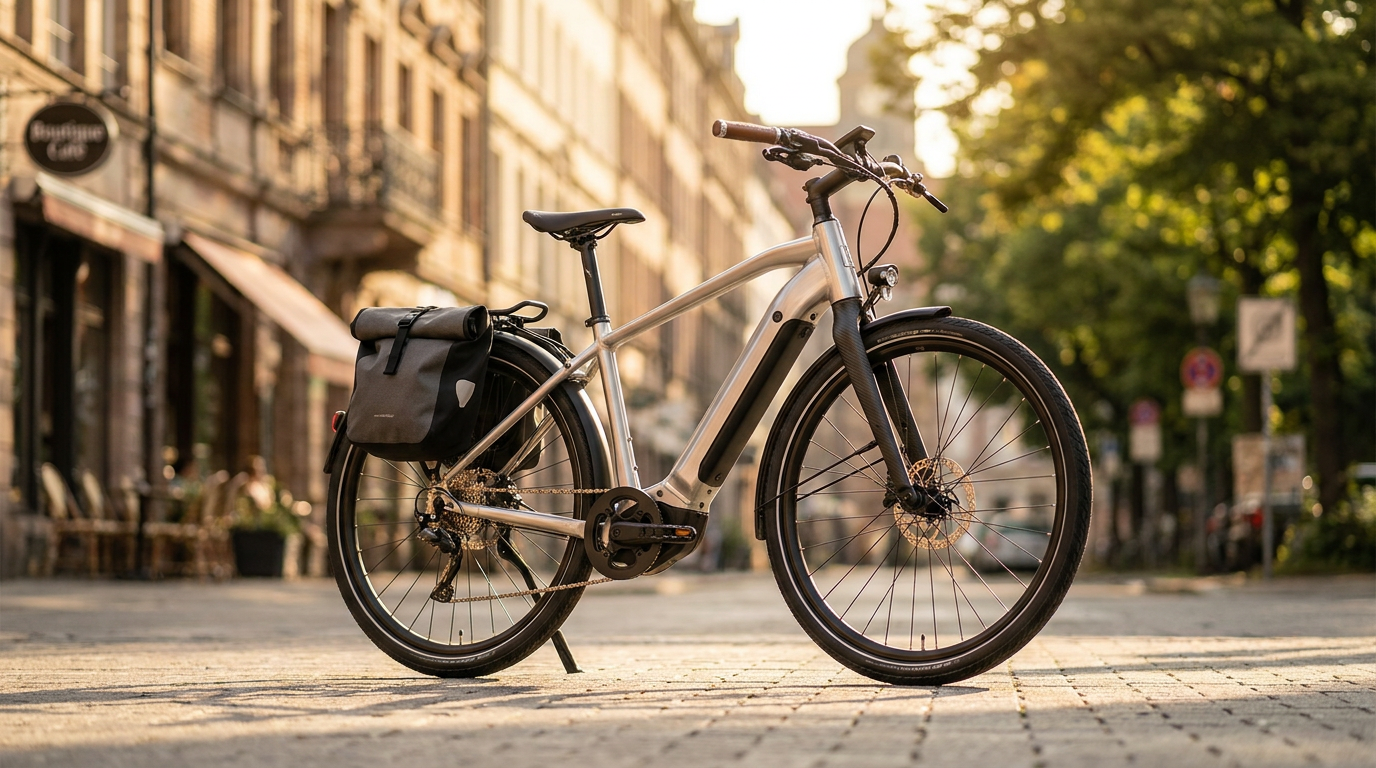
Finally, buyers must match the frame geometry to their actual duty cycle. While heavy, fat-tire mopeds dominate social media, they are often inefficient for daily pedaling. For high-mileage urban transit, commuter e-bikes with narrower tires, integrated lighting, and hydraulic disc brakes offer superior range and safety. Conversely, the rising "SUV" trekking category blends commuter utility with front suspension, offering a versatile middle ground for riders who split their time between potholed streets and gravel trails.[1][2][8]
How we got here
2020–2023
E-bike sales surge globally, accompanied by a rise in low-cost, uncertified lithium-ion battery imports.
2024
New York City implements strict bans on the sale of uncertified e-bikes following a series of high-profile battery fires.
2025
Major manufacturers transition their supply chains to ensure all new models meet UL 2849 system-level safety standards.
January 2026
Sweeping new state laws, including California's AB 544, take effect, making UL certification mandatory for all new e-bikes sold.
Viewpoints in depth
Urban Commuters
Prioritize low maintenance, cost-efficiency, and throttle-enabled convenience for flat city riding.
For daily city riders, the bicycle is a utilitarian tool meant to replace a car. This camp heavily favors hub motors because they are mechanically simple, require less drivetrain maintenance, and often include a throttle. A throttle allows riders to navigate stop-and-go traffic or arrive at the office without sweating. They are less concerned with high-end torque sensors or gear leverage, preferring step-through frames and puncture-resistant tires that make daily errands frictionless.
Performance & Trail Riders
Value natural ride feel, high torque, and gear leverage for tackling steep inclines and off-road terrain.
Enthusiasts and mountain bikers view the e-bike as an extension of traditional cycling. This camp insists on mid-drive motors equipped with sensitive torque sensors. Because mid-drives leverage the bike's mechanical gearing, they provide the massive torque needed to conquer 15% gradients without overheating. These riders are willing to accept higher upfront costs and more frequent chain replacements in exchange for a 'bionic' ride feel that amplifies their natural pedaling effort rather than replacing it.
Safety Regulators
Focused on eliminating lithium-ion fire risks through strict certification mandates and standardized testing.
Following a sharp increase in battery-related fires, lawmakers and fire marshals have fundamentally altered the 2026 market. This camp views uncertified lithium-ion packs as unacceptable public hazards. Their primary mechanism for enforcement is the UL 2849 standard, which mandates that the entire electrical system—not just the battery cells—be independently tested for thermal stability and short-circuit protection. For regulators, an e-bike's top speed or torque is irrelevant if its Battery Management System cannot safely regulate heat during a charge cycle.
What we don't know
- How strictly local municipalities will enforce the new 2026 battery certification laws on secondary markets like Craigslist or Facebook Marketplace.
- Whether the rising cost of UL-certified components will permanently price out budget-conscious consumers from the entry-level e-bike market.
- How long the current generation of proprietary motor systems will be supported by manufacturers before replacement parts become obsolete.
Key terms
- UL 2849
- A comprehensive safety certification that tests an e-bike's entire electrical system—including the battery, motor, and charger—to prevent electrical shocks and battery fires.
- Torque (Nm)
- The rotational force produced by the motor, measured in Newton-meters, which determines the bike's ability to accelerate from a stop and climb steep hills.
- Watt-hours (Wh)
- A measurement of a battery's total energy capacity, calculated by multiplying voltage by amp-hours, which directly determines the bike's maximum riding range.
- Mid-Drive Motor
- An electric motor positioned at the bike's pedal crank that drives the chain, allowing it to utilize the bicycle's mechanical gears for efficient hill climbing.
- Hub Motor
- An electric motor housed directly inside the center of the front or rear wheel, offering simple, independent propulsion without relying on the bike's chain.
- Battery Management System (BMS)
- The electronic circuit board inside the battery pack that monitors cell temperature, balances voltage, and prevents dangerous overcharging or short circuits.
Frequently asked
Do I need a license to ride an e-bike?
In most regions, Class 1, 2, and 3 e-bikes (which assist up to 20 or 28 mph) are treated legally as bicycles and do not require a license. However, high-speed S-Pedelecs that exceed these limits are often classified as motor vehicles, requiring registration and insurance.
Can I ride an electric bike in the rain?
Yes, provided the bike has a sufficient water resistance rating. Look for an IP65 rating or higher on the battery and motor, which ensures the electrical components are protected against low-pressure water jets and heavy rain.
How long will an e-bike battery last?
A high-quality lithium-ion battery typically lasts for 500 to 1,000 full charge cycles before its capacity drops below 80%. For the average rider, this translates to roughly three to five years of regular use before needing a replacement.
Can I take my e-bike battery on an airplane?
No. Aviation regulations strictly prohibit lithium-ion batteries larger than 160 watt-hours on passenger flights due to fire risks. Since most e-bike batteries range from 400 to 750 watt-hours, they must be shipped separately via specialized ground freight.
Sources
Source coverage
9 outlets
3 viewpoints surfaced








[1]Electric Bike ReportPerformance & Trail Riders
The Best Mid-Drive Electric Bikes for 2026
Read on Electric Bike Report →[2]Bike LineUrban Commuters
The 2026 E-Bike Landscape: Why Your Motor Matters
Read on Bike Line →[3]Hi Power CyclesPerformance & Trail Riders
Mid-Drive vs. Hub Motor: The Ultimate 2026 Guide
Read on Hi Power Cycles →[4]Zeus eBikesUrban Commuters
Mid-Drive vs Hub Motor: Canadian E-Bike Guide
Read on Zeus eBikes →[5]TST EBikeSafety Regulators
What does UL 2849 mean for e-bike safety in 2026?
Read on TST EBike →[6]Ebike RevoltPerformance & Trail Riders
Best E-Bike Batteries for Long Range Riding in 2026
Read on Ebike Revolt →[7]MovcanSafety Regulators
The 2026 Battery Safety Deadline: What's Changing
Read on Movcan →[8]See Moon EbikeUrban Commuters
2026 E-Bike Buying Guide: Motors, Torque, and Safety
Read on See Moon Ebike →[9]Factlen Editorial Team
Synthesis by Factlen editorial team
Read on Factlen Editorial Team →


Every angle. Every day.
Get shopping stories with full source coverage and perspective breakdowns delivered to your inbox.