
How Japan's 'Empty-Handed Travel' System is Solving the Kyoto Luggage Crisis
As record tourism strains local transit, Japan is aggressively expanding its 'Tebura Kanko' luggage-forwarding network. Here is how the system works, what it costs, and why carrying a large suitcase on a Kyoto bus is now a thing of the past.
By Factlen Editorial Team
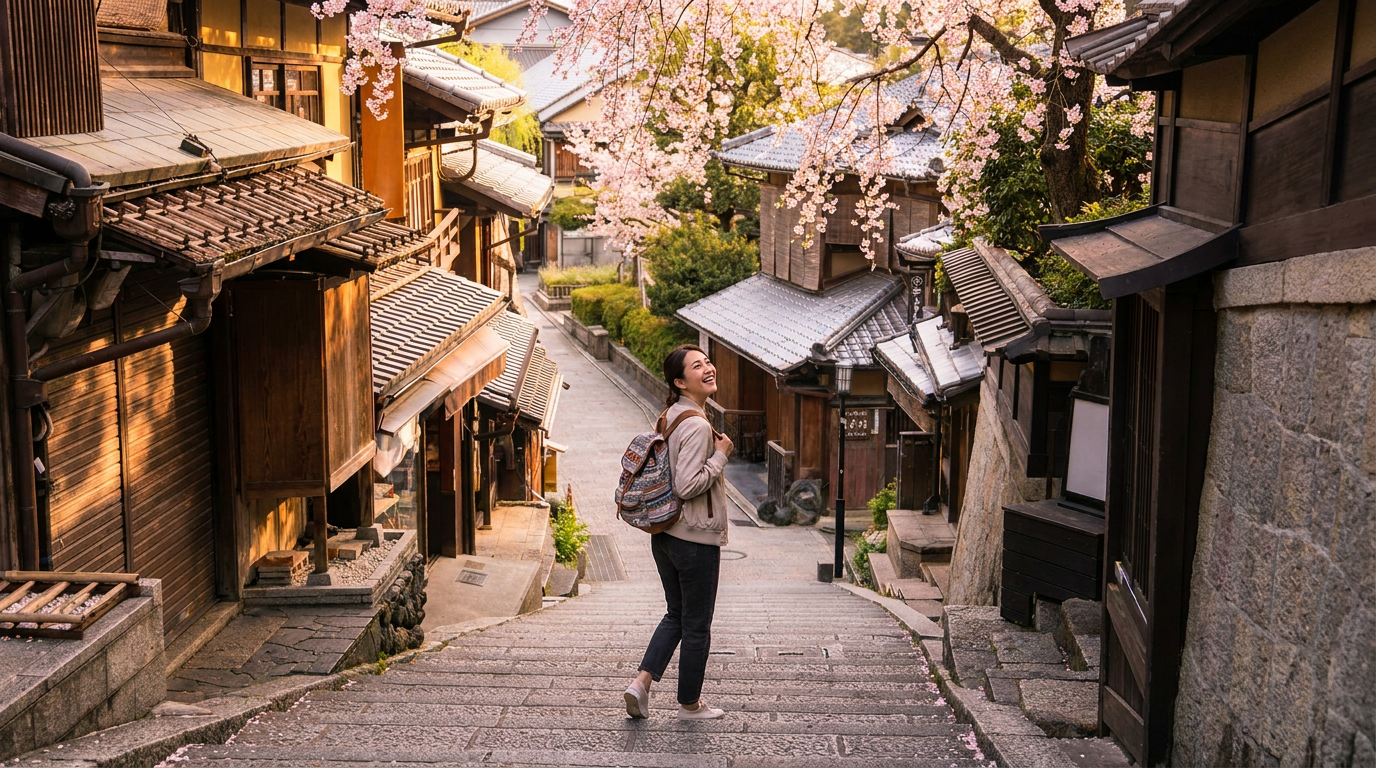
- Local Residents & Municipalities
- Prioritize reclaiming public transit space, reducing congestion, and maintaining the quality of daily life.
- Logistics & Transit Operators
- View the surge in tourism as a massive business opportunity to expand delivery networks and smart infrastructure.
- Tourism Policymakers
- Focus on improving the visitor experience while mitigating the friction of overtourism through logistical solutions.
What's not represented
- · Budget backpackers who cannot afford daily forwarding fees
- · Rural hoteliers who may lack the staff to manage high volumes of forwarded luggage
Why this matters
Navigating Japan's dense transit networks with heavy luggage has become a major friction point, leading to local bans on suitcases in cities like Kyoto. Understanding the 'Tebura Kanko' system allows travelers to move faster, avoid fines, and respect local communities.
Key points
- Japan is rapidly expanding its 'Tebura Kanko' (empty-handed travel) infrastructure to combat transit congestion.
- Kyoto has effectively banned large suitcases on municipal buses to protect the daily commutes of local residents.
- Services like Yamato Transport's Ta-Q-Bin allow tourists to forward luggage between hotels for roughly $8 to $13 per bag.
- JR East has deployed cloud-connected 'Multi-Ecube' lockers that travelers can reserve in advance via smartphone.
- The initiative aims to improve the visitor experience while mitigating the friction of record-breaking tourism numbers.
Japan welcomed a record 42.7 million foreign visitors in 2025, cementing its status as one of the world's most desired travel destinations. But that success has brought acute friction to the country's ancient capitals. In Kyoto, the defining image of 'overtourism' hasn't just been crowds at temples—it has been the sight of bewildered tourists dragging massive, 80-liter suitcases onto narrow local buses, physically blocking residents from commuting to work or school.[1][2][6]
The local backlash reached a tipping point over the last year. Kyoto city officials effectively banned large luggage on municipal buses, posting multi-lingual signs urging visitors to find alternative transport. The city is even considering a tiered fare system that would charge tourists up to double the local rate to subsidize the strain on transit. But rather than simply punishing visitors, Japan has scaled up an elegant, nationwide solution: Tebura Kanko, or 'Empty-Handed Travel.'[1][2][5]
Backed heavily by the Japan Tourism Agency, the Tebura Kanko initiative aims to separate tourists from their heavy bags the moment they arrive in the country. The concept leverages Japan's already world-class domestic logistics network, repurposing it to serve international travelers. By encouraging visitors to forward their luggage between airports, hotels, and train stations, the government hopes to simultaneously improve the tourist experience and reclaim public transit for local taxpayers.[5][6]

The backbone of this system is the Ta-Q-Bin (Takkyubin) door-to-door delivery network, dominated by logistics giant Yamato Transport. Identifiable by its iconic black cat logo, Yamato has long been used by Japanese residents to send golf clubs to courses or local produce to relatives. Now, the company has aggressively pivoted to the inbound tourism market, offering dedicated 'Hands-Free Travel' services with multi-lingual waybills and digital discounts.[3]
The mechanism is remarkably seamless for the end user. A traveler arriving at Narita, Haneda, or Kansai International Airport can drop their large suitcase at a Yamato or Sagawa Express counter in the arrivals hall. For a fee typically ranging between ¥1,200 and ¥2,000 (roughly $8 to $13), the logistics company will deliver the bag directly to the traveler's hotel in Tokyo, Kyoto, or Osaka by the next day.[3][6]
This hotel-to-hotel relay continues throughout the trip. When checking out of a Tokyo hotel to board the Shinkansen (bullet train) to Kyoto, travelers simply leave their large bags at the front desk, fill out a brief form, and pay the forwarding fee. The luggage travels overnight via the logistics network, while the tourist boards the train carrying only a small daypack with a change of clothes and essential toiletries.[3][6]
The system solves multiple logistical headaches at once. Japan's bullet trains recently introduced strict reservation requirements for oversized baggage; travelers who fail to book a dedicated luggage seat in advance face steep fines onboard. By forwarding bags ahead of time, tourists bypass the Shinkansen luggage restrictions entirely, freeing them to stop at intermediate destinations like Hakone or Nagoya without dragging suitcases through crowded stations.[6]

To support the surge in demand, Japan's major transit operators are rolling out next-generation infrastructure. East Japan Railway Company (JR East) has introduced 'Multi-Ecube' smart lockers across its network. Unlike traditional coin lockers—which are notoriously difficult to secure during peak cherry blossom or autumn foliage seasons—these new units are fully digitized and connected to the cloud.[4]
To support the surge in demand, Japan's major transit operators are rolling out next-generation infrastructure.
Travelers can now check the real-time availability of Multi-Ecube lockers via their smartphones while still riding the train. More importantly, they can reserve a locker in advance, ensuring they have a guaranteed place to stash a day bag or shopping parcels upon arrival. JR East reports that the reserved deposit service has seen rapid adoption, surpassing 60,000 registered users by mid-2025.[4]
Other corporate giants are forming unprecedented partnerships to expand the empty-handed ecosystem. Sagawa Express recently teamed up with MUFG Bank to launch a 'KYOTO Travel Satellite' service directly inside a bank branch in Kyoto City. This allows tourists to drop their bags in a secure, central location before heading out to explore nearby shrines, with Sagawa handling the final delivery to their accommodations.[1]
Sagawa has also digitized the booking process, launching a multi-lingual online platform that allows travelers to arrange baggage storage and forwarding from their phones before they even leave their home countries. This digital-first approach removes the language barrier that previously deterred some international visitors from utilizing domestic Japanese shipping services.[1][6]

For tourists who absolutely must travel with their bags on the same day, Kyoto City has introduced dedicated 'Hands-Free Buses.' These specialized routes run directly from Kyoto Station to major hotel districts, bypassing residential stops entirely. The buses are designed specifically to accommodate large suitcases, keeping tourists off the commuter lines while still providing affordable transit to their lodgings.[1]
The shift toward Tebura Kanko requires a slight adjustment in travel habits. Western tourists, accustomed to keeping their belongings within arm's reach at all times, must learn to trust the reliability of Japanese logistics. The system necessitates packing a 'go-bag' with 24 hours' worth of essentials, as hotel-to-hotel forwarding almost always requires an overnight transit period.[3][6]
However, the payoff is immense. Without the physical burden of heavy luggage, travelers report adding up to 1.5 hours of active leisure time to their daily itineraries. They can navigate subway turnstiles effortlessly, dine in tiny, eight-seat ramen shops that have no floor space for suitcases, and walk through historic districts without the deafening clatter of plastic wheels on cobblestone.[6]
As global tourism continues to rebound, destinations worldwide are struggling to balance economic benefits with local livability. Japan's approach—engineering a logistical bypass rather than simply capping visitor numbers—offers a compelling blueprint. By making empty-handed travel the path of least resistance, Japan is proving that the friction of overtourism can be managed, one forwarded suitcase at a time.[5][6]
How we got here
October 2022
Japan reopens its borders to international tourism after extended pandemic closures, sparking a rapid influx of visitors.
2024
Kyoto begins heavily discouraging large luggage on municipal buses to alleviate local commuter congestion.
2025
Japan welcomes a record 42.7 million foreign visitors, accelerating the need for nationwide luggage solutions.
April 2026
Sagawa Express and MUFG Bank launch dedicated empty-handed travel hubs and multi-lingual online booking platforms.
Viewpoints in depth
Local Residents & Municipalities
Prioritize reclaiming public transit space, reducing congestion, and maintaining the quality of daily life.
For residents of cities like Kyoto, the tourism boom has come at a steep cost to daily livability. Locals have frequently found themselves unable to board municipal buses to get to work or school because the aisles are choked with 80-liter suitcases. Municipalities view the 'Tebura Kanko' initiative not as a luxury service, but as a necessary civic defense mechanism. By pushing tourists toward luggage forwarding and dedicated 'Hands-Free Buses,' city officials hope to restore the functionality of public transit without having to implement draconian caps on visitor numbers.
Logistics & Transit Operators
View the surge in tourism as a massive business opportunity to expand delivery networks and smart infrastructure.
Corporate giants like Yamato Transport, Sagawa Express, and JR East see the inbound tourism wave as a highly lucrative new revenue stream. Facing a shrinking domestic population, these logistics companies are eager to pivot their world-class delivery networks to serve international travelers. By digitizing waybills, introducing multi-lingual booking platforms, and deploying cloud-connected smart lockers, they are monetizing convenience while simultaneously solving a national infrastructure crisis.
International Tourists
Face a learning curve with the system but ultimately benefit from hands-free sightseeing and reduced travel anxiety.
Many Western tourists arrive in Japan accustomed to a 'DIY' travel mindset, where keeping luggage close is a point of security. The Tebura Kanko system requires a leap of faith—trusting that a bag dropped at a Tokyo hotel will magically appear in an Osaka lobby two days later. However, once travelers adapt to packing a small overnight 'go-bag,' they widely report that the service drastically reduces travel anxiety. Freed from dragging heavy bags up subway stairs or worrying about Shinkansen luggage fines, tourists find they can navigate Japan's dense urban spaces with significantly more freedom.
What we don't know
- Whether rural and off-the-beaten-path destinations have the logistical capacity to handle a surge in forwarded luggage.
- If Kyoto will ultimately implement its proposed tiered bus fare system, charging tourists double the local rate.
Key terms
- Tebura Kanko
- The Japanese tourism initiative encouraging 'empty-handed travel' by forwarding luggage instead of carrying it on transit.
- Ta-Q-Bin
- A ubiquitous Japanese door-to-door delivery service, famously operated by Yamato Transport, widely used for luggage forwarding.
- Multi-Ecube
- Smart, cloud-connected lockers introduced by JR East that allow travelers to check availability and reserve storage space via smartphone.
- Overtourism (Kanko Kogai)
- The negative impact of excessive visitors on local infrastructure, such as crowded buses and strained public services.
Frequently asked
Can I send my luggage directly from the airport to my hotel?
Yes, major logistics companies operate counters at Narita, Haneda, and Kansai airports, allowing you to forward bags directly to your accommodation upon arrival.
How long does hotel-to-hotel forwarding take?
Typically one to two days. Sending a bag from Tokyo to Kyoto usually arrives the next day, requiring you to pack a small day-bag for the overnight gap.
Are large suitcases allowed on Kyoto city buses?
Kyoto has effectively banned large luggage on municipal buses to reduce crowding, urging tourists to use forwarding services or dedicated 'Hands-Free Buses'.
Do I need to speak Japanese to use the service?
No, major providers like Yamato Transport and Sagawa Express now offer multi-lingual waybills, and some even provide online booking platforms in English.
Sources
Source coverage
6 outlets
3 viewpoints surfaced





[1]Travel Voice JapanLocal Residents & Municipalities
MUFG Bank and Sagawa Express launch a new empty-handed travel service in Kyoto
Read on Travel Voice Japan →[2]Japan TodayLocal Residents & Municipalities
Kyoto considers higher bus fares for visitors, up to double those for locals
Read on Japan Today →[3]Yamato TransportLogistics & Transit Operators
Make your holiday to Japan even more enjoyable with 'Hands-Free Travel'
Read on Yamato Transport →[4]East Japan Railway Company (JR East)Logistics & Transit Operators
Promoting empty-handed travel with Multi-Ecube Lockers
Read on East Japan Railway Company (JR East) →[5]Japan Tourism AgencyTourism Policymakers
Basic Plan for the Promotion of Tourism Nation
Read on Japan Tourism Agency →[6]Factlen Editorial TeamTourism Policymakers
Synthesis by Factlen editorial team
Read on Factlen Editorial Team →
Every angle. Every day.
Get travel stories with full source coverage and perspective breakdowns delivered to your inbox.