
U.S. and Iran Reach Preliminary Agreement to End War and Reopen Strait of Hormuz
President Trump and Iranian officials have signed a memorandum of understanding to halt a three-month conflict, reopen the critical Strait of Hormuz to global shipping, and begin 60 days of negotiations on nuclear constraints and sanctions.
By Factlen Editorial Team
- U.S. Administration
- Argues the deal reopens global trade while maintaining economic leverage over Iran's nuclear program.
- Iranian State Media
- Claims the agreement secures massive sanctions relief and billions in frozen assets for Tehran.
- Geopolitical Analysts
- Views the MOU as a temporary de-escalation that leaves the hardest nuclear and financial issues unresolved.
- Lebanese & Regional Actors
- Focused on whether the ceasefire will actually result in the withdrawal of Israeli troops from southern Lebanon.
What's not represented
- · Israeli government officials
- · European allies
Why this matters
The reopening of the Strait of Hormuz will unblock 20% of the world's oil and natural gas supply, immediately easing the global energy shock that has driven up prices since the conflict began in February. However, the sharply conflicting claims over sanctions relief and nuclear concessions mean the hardest diplomatic hurdles still lie ahead.
Key points
- The U.S. and Iran signed a memorandum of understanding to end a 109-day conflict.
- The agreement immediately reopens the Strait of Hormuz to global shipping.
- A 60-day ceasefire will allow for negotiations on Iran's nuclear program and sanctions.
- The U.S. and Iran have issued sharply conflicting claims regarding financial relief and frozen assets.
- The deal also mandates a cessation of hostilities in Lebanon between Israel and Hezbollah.
After 109 days of intense conflict that rattled the global economy and destabilized the Middle East, the United States and Iran have signed a preliminary memorandum of understanding to end military operations and reopen the critical Strait of Hormuz. The breakthrough agreement, mediated by the governments of Pakistan and Qatar, establishes a 60-day extended ceasefire designed to halt hostilities across multiple regional fronts. By pausing the direct military confrontation that erupted in late February, the interim deal provides a crucial, albeit fragile, window for diplomats to negotiate a permanent resolution to the crisis. The immediate cessation of violence brings a sudden halt to a war that had threatened to draw in neighboring Gulf states and permanently alter the region's security architecture.[1][5]
The preliminary framework was signed electronically on Sunday by U.S. President Donald Trump and Iranian Parliament Speaker Mohammad Bagher Ghalibaf, bypassing the need for an immediate face-to-face summit. According to Pakistani Prime Minister Shehbaz Sharif, whose government played a central role in brokering the talks, a formal signing ceremony is scheduled to take place on Friday in Geneva, Switzerland. The diplomatic push concluded after 17 hours of intensive weekend negotiations in Tehran, where Qatari diplomats shuttled between the conflicting parties to finalize the text. This sets the stage for what both Washington and Tehran hope will be a transition from armed, kinetic conflict to complex technical diplomacy over the coming months.[3][5]
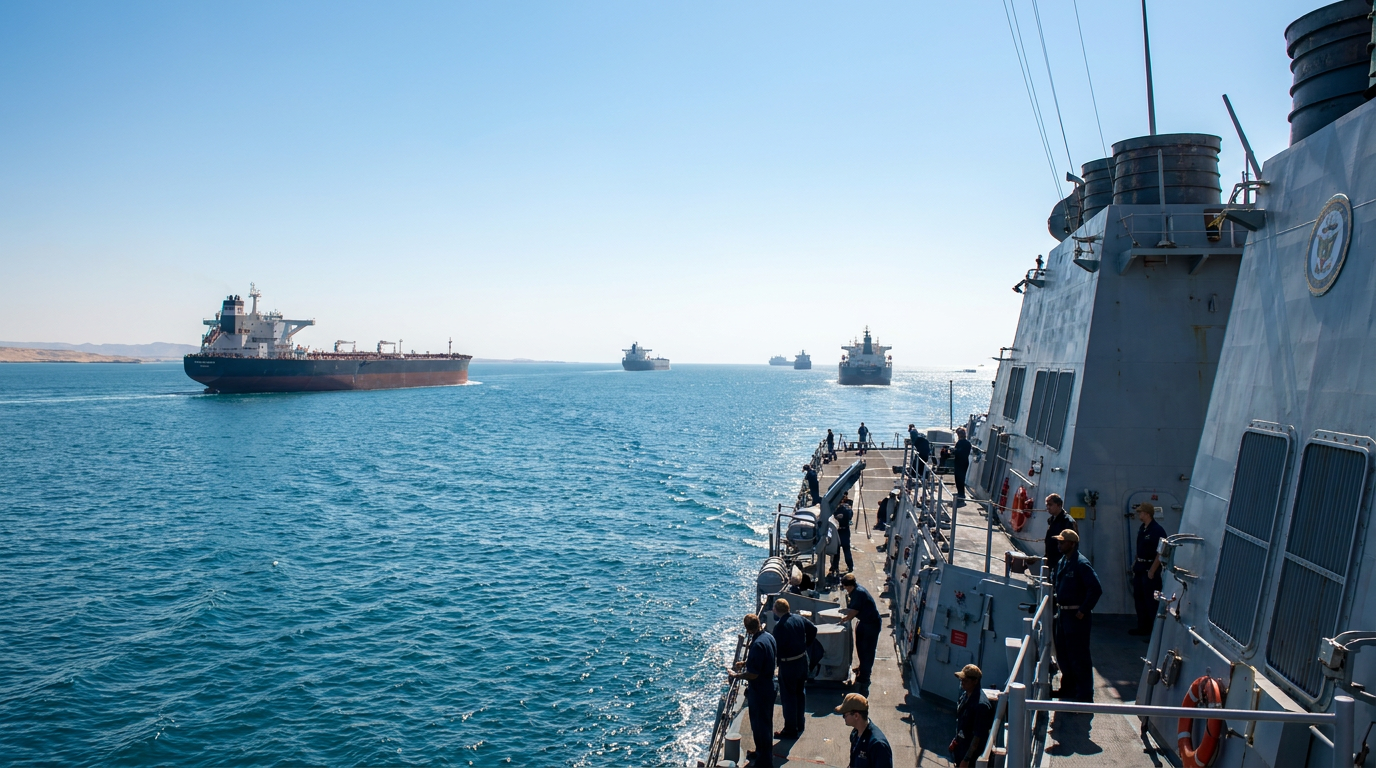
The most immediate and globally significant consequence of the agreement is the reopening of the Strait of Hormuz, a narrow maritime chokepoint that facilitates the transit of roughly 20 percent of the world's oil and natural gas supply. Iran had effectively militarized and blocked the waterway since the outbreak of the war, sending global energy prices soaring, disrupting international supply chains, and threatening a global recession. In tandem with Iran's commitment to reopen the strait to commercial shipping, the United States has agreed to lift its retaliatory naval blockade on Iranian ports, allowing the physical flow of goods to resume for the first time in over three months.[2][6]

President Trump celebrated the impending economic relief on his Truth Social platform, declaring that the strait would be "completely open" and toll-free by Friday. "I hereby fully authorize the toll free opening of the Strait of Hormuz, and, simultaneously herewith, authorize the immediate removal of the United States Naval blockade," Trump wrote to his followers. "Ships of the World, start your engines. Let the oil flow!" U.S. officials confirmed that preliminary mine-clearing operations in the waterway have already begun to ensure safe passage for commercial tankers, and energy markets have already begun to price in the return of Middle Eastern crude to the global supply chain.[4][5]
Beyond the waters of the Persian Gulf, the memorandum mandates the "immediate and permanent termination of military operations on all fronts," which explicitly includes the volatile conflict in Lebanon. The Israel-Hezbollah front had escalated sharply in tandem with the broader U.S.-Iran war, resulting in heavy casualties and widespread displacement. However, the exact mechanics of the Lebanese ceasefire remain highly contested; the current text reportedly does not require Israeli troops to withdraw from the southern Lebanese territory they currently occupy. This omission has prompted Lebanese Prime Minister Nawaf Salam to launch urgent diplomatic efforts aimed at securing a full Israeli withdrawal before the ceasefire framework collapses.[4][5]
The Israel-Hezbollah front had escalated sharply in tandem with the broader U.S.-Iran war, resulting in heavy casualties and widespread displacement.
While the memorandum successfully halts the immediate violence, foreign policy experts emphasize that it serves primarily as an interim framework rather than a comprehensive peace treaty. The agreement triggers a strict 60-day negotiation window during which U.S. and Iranian diplomats must resolve the core, systemic drivers of the conflict: the future of Iran's nuclear program and the architecture of U.S. economic sanctions. Analysts warn that this secondary phase of talks will be exceptionally difficult, as both sides have already begun broadcasting vastly different interpretations of what the preliminary deal actually entails, setting up a high-stakes diplomatic showdown.[2][7]
On the critical nuclear front, Trump claimed that Iran has agreed to permanently abandon its pursuit of a nuclear weapon, suggesting that the U.S. would soon retrieve and destroy Tehran's highly enriched uranium stockpile. However, Iranian officials and regional diplomats have cautioned that the specific constraints on Iran's nuclear infrastructure were deliberately deferred to secure the immediate ceasefire. Iranian Foreign Ministry spokespeople stated that the current focus is strictly on ending the war, with the intricate, highly technical details of uranium enrichment and international inspections left entirely for the upcoming 60-day negotiation period.[5][8]
The most glaring discrepancy between Washington and Tehran centers on the massive economic concessions allegedly embedded in the deal. Iranian state-linked media, including the Mehr news agency, reported that the U.S. had agreed to unfreeze $24 billion to $25 billion in Iranian assets, immediately suspend primary and secondary sanctions on Iranian oil exports, and help establish a $300 billion international reconstruction fund for the country. Tehran is aggressively presenting these terms to its domestic audience as a historic economic victory and a total vindication of its military resistance strategy against the West.[3][9]

The Trump administration forcefully rejected the Iranian financial narrative, insisting that no economic relief has been granted and no cash has moved. Vice President JD Vance told reporters that "there hasn't been a single dollar of sanctions relief or unfrozen assets" provided by Washington or its regional allies. U.S. officials clarified that while the administration is prepared to ease certain sanctions eventually, any financial unfreezing will be strictly conditional. Iran will be required to first demonstrate verifiable, on-the-ground compliance with the nuclear and security commitments that have yet to be finalized in the upcoming talks.[1][3]
The signing of the memorandum marks a critical pivot for the Middle East, pulling the region back from the brink of a prolonged, devastating war that threatened to engulf multiple nations. By prioritizing the resumption of global energy flows, the agreement immediately alleviates the economic shock that has battered international markets since February. Yet, foreign policy experts caution that by deferring the thorniest nuclear and financial disputes to a tight 60-day window, the agreement currently represents a fragile management of the conflict rather than a permanent peace, leaving the ultimate success of the deal entirely dependent on the grueling negotiations to come.[7][9]
How we got here
Late February 2026
Direct military conflict erupts between the U.S. and Iran, leading to the closure of the Strait of Hormuz.
April 8, 2026
U.S. and Iranian forces begin observing a tenuous initial ceasefire.
June 14, 2026
President Trump and Iranian officials electronically sign a preliminary memorandum of understanding.
June 19, 2026
A formal signing ceremony is scheduled to take place in Geneva, Switzerland.
Viewpoints in depth
The U.S. Administration's View
Focuses on the immediate economic victory of reopening the Strait of Hormuz while claiming strict nuclear concessions.
President Trump and his administration are framing the memorandum of understanding as a decisive win that restores global energy flows without prematurely surrendering leverage. By emphasizing that no money has changed hands and that the U.S. naval blockade is only lifting in tandem with the strait's reopening, the administration argues it has forced Tehran to the table from a position of strength. U.S. officials maintain that any future sanctions relief will be strictly conditional on Iran dismantling its highly enriched uranium stockpile, presenting the deal as a wall against Iranian nuclear ambitions.
The Iranian Leadership's View
Frames the agreement as a victory for Iranian sovereignty that secures massive financial relief and reconstruction.
Tehran is presenting the preliminary deal to its domestic audience as a triumph of resistance that will rescue its battered economy. State-linked media emphasize the immediate suspension of oil sanctions, the unfreezing of tens of billions in assets, and a U.S. commitment to non-interference. From this perspective, the 60-day negotiation window is viewed not as a period to make unilateral nuclear concessions, but as a time to finalize these economic victories and solidify Iran's regional standing after withstanding months of military pressure.
Global Energy Markets' View
Views the deal with cautious optimism, prioritizing the physical flow of oil over political posturing.
For energy analysts and global markets, the political disputes over uranium and frozen assets are secondary to the physical reopening of the Strait of Hormuz. The 109-day closure spiked global inflation and disrupted supply chains, making the resumption of maritime traffic the paramount concern. While the MOU promises immediate relief and has already begun to lower crude prices, market watchers warn that the underlying fragility of the 60-day negotiation window means the threat of a renewed blockade remains priced into global energy futures.
What we don't know
- Whether Iran will actually agree to surrender or destroy its highly enriched uranium stockpile.
- How the conflicting claims over $24 billion in frozen assets will be resolved during the 60-day talks.
- Whether Israeli forces will withdraw from southern Lebanon as part of the broader ceasefire.
Key terms
- Strait of Hormuz
- A narrow waterway between the Persian Gulf and the Gulf of Oman through which roughly 20% of the world's oil and natural gas supply passes.
- Memorandum of Understanding (MOU)
- A preliminary, non-binding agreement outlining the broad terms of a deal before a final, detailed treaty is negotiated.
- Highly Enriched Uranium (HEU)
- Uranium that has been processed to a high concentration of the U-235 isotope, bringing it closer to the grade required for a nuclear weapon.
Frequently asked
Is the war between the U.S. and Iran officially over?
Not permanently. The two nations have signed a preliminary memorandum of understanding to end military operations and extend a ceasefire for 60 days, but a final peace treaty has not yet been negotiated.
Will global gas prices go down?
The reopening of the Strait of Hormuz is expected to ease global energy prices by allowing 20% of the world's oil and natural gas supply to resume normal transit after a 109-day blockade.
Did the U.S. pay Iran to sign the deal?
The U.S. maintains that no money has changed hands and no assets have been unfrozen. However, Iranian state media claims the U.S. has agreed to release up to $25 billion in frozen assets, a claim the U.S. strongly denies.
Sources
Source coverage
9 outlets
4 viewpoints surfaced









[1]TimeU.S. Administration
Trump and Iranian Official Sign Agreement to Stop Fighting, Reopen Strait of Hormuz
Read on Time →[2]AxiosU.S. Administration
What's in the Iran deal Trump says he's ready to sign
Read on Axios →[3]Al JazeeraIranian State Media
Iran's National Security Council says deal ends fighting on all fronts
Read on Al Jazeera →[4]The GuardianLebanese & Regional Actors
US-Iran agreement: Strait of Hormuz to be 'completely open' by Friday
Read on The Guardian →[5]CBS NewsU.S. Administration
Deal reached between U.S. and Iran, Trump and Pakistani prime minister say
Read on CBS News →[6]Council on Foreign RelationsGeopolitical Analysts
Trump's Iran Deal: What We Know, What's Contested, and What Remains Unresolved
Read on Council on Foreign Relations →[7]Atlantic CouncilGeopolitical Analysts
Experts react: What the US-Iran memorandum of understanding means
Read on Atlantic Council →[8]PBSU.S. Administration
As officials again say Iran war could soon end, some Trump objectives are unfulfilled
Read on PBS →[9]Iran InternationalIranian State Media
Iran, US Set To Sign Deal Sunday Amid Hardline Backlash
Read on Iran International →
More in news politics
See all 10 stories →US Manufacturing
Fact Check: Is the US Manufacturing Boom Actually Happening?
0 sources
Strait of Hormuz
US and Iran Reach Agreement to End War and Reopen Strait of Hormuz
0 sources
US-Iran Deal
U.S. and Iran Reach Cease-Fire Framework at G7 Summit, Halting Regional Hostilities
0 sources
US-Iran Peace Deal
US and Iran Reach Peace Framework to End War and Reopen Strait of Hormuz
0 sources
Every angle. Every day.
Get news politics stories with full source coverage and perspective breakdowns delivered to your inbox.