
Arctic Ocean Crosses Irreversible Chemical Tipping Point, Starving Marine Food Web
Two decades of data reveal that melting sea ice has triggered a hidden chemical shift, permanently stripping the Arctic Ocean of the essential nutrients needed to support marine life.
By Factlen Editorial Team
- Marine Biogeochemists
- Focus on the irreversible chemical mechanisms removing nutrients from the ocean.
- Climate Modelers
- Concerned with the invalidation of older models and the weakening of the Arctic carbon sink.
- Conservationists & Fisheries
- Focused on the cascading starvation effects threatening the broader marine food web.
What's not represented
- · Indigenous Arctic communities whose traditional hunting and fishing practices rely on the marine food web
- · Commercial fishing industry representatives operating in the North Atlantic
Why this matters
The collapse of the Arctic's foundational food source threatens multi-billion-dollar commercial fisheries in the North Atlantic and weakens the ocean's ability to absorb carbon dioxide, potentially accelerating global warming.
Key points
- The Arctic Ocean crossed an irreversible chemical tipping point around 2009, shifting from a light-limited to a nitrate-limited ecosystem.
- Melting sea ice initially boosts algae blooms, which sink and supercharge seafloor bacteria that consume essential nitrates.
- This process, called benthic denitrification, permanently removes fertilizer from the water, starving the marine food chain.
- The ecosystem is now dominated by smaller, less nutritious plankton, creating an energy bottleneck for fish, seabirds, and whales.
- The decline in phytoplankton productivity also weakens the Arctic Ocean's ability to absorb carbon dioxide from the atmosphere.
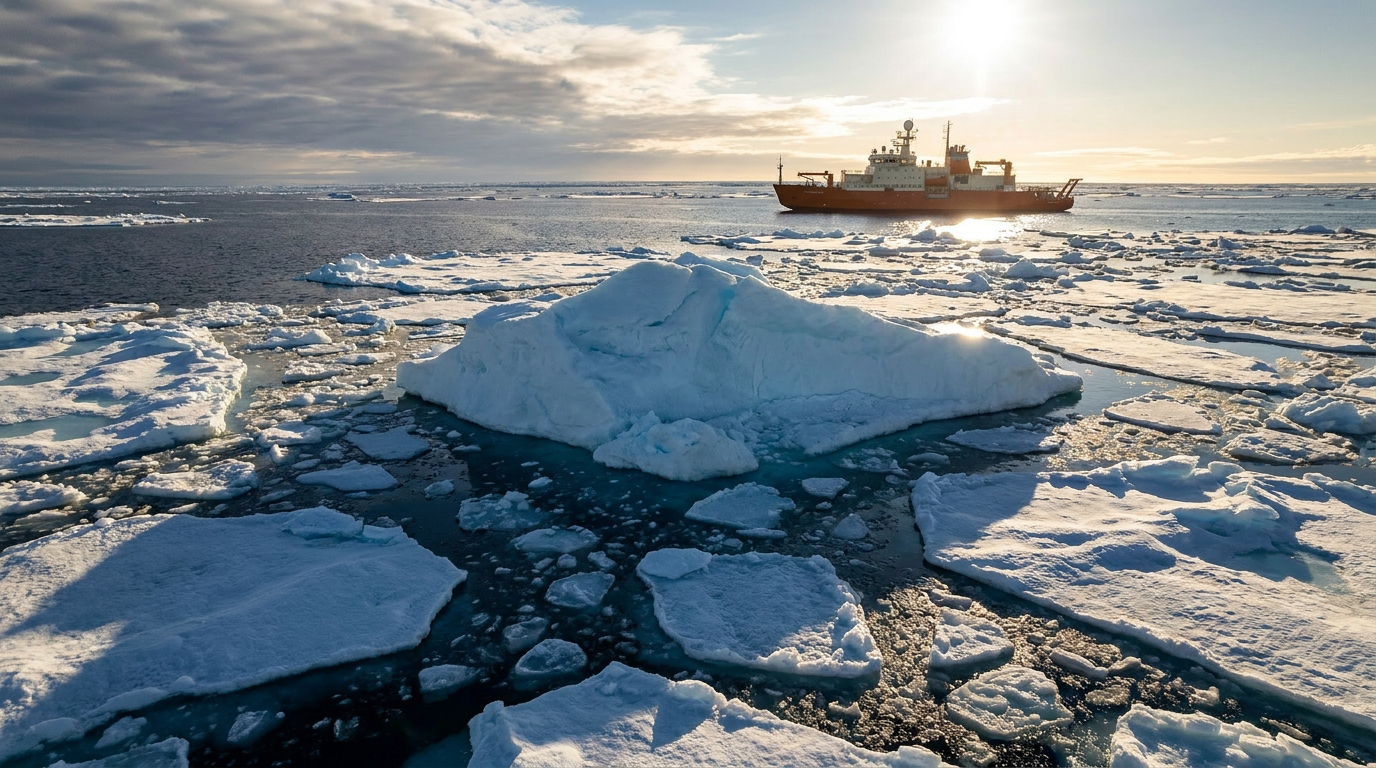
For decades, climate models offered a rare silver lining to the rapid melting of Arctic sea ice: an anticipated boom in marine life. The logic was straightforward and widely accepted across the scientific community. Phytoplankton, the microscopic algae that form the base of the ocean food web, require sunlight to photosynthesize. As the thick blanket of sea ice retreated due to global warming, more sunlight penetrated the frigid waters, theoretically allowing these foundational organisms to multiply. Early models predicted that this would support a thriving, expanded ecosystem of fish, seals, and whales. However, a comprehensive new evidence pack assembled from two decades of oceanographic data reveals a starkly different reality. The Arctic Ocean has not become a thriving greenhouse; instead, it has crossed a hidden, irreversible chemical tipping point that is actively starving the marine food chain from the bottom up.[4][6]
According to landmark research published in Communications Earth & Environment by scientists at the University of Edinburgh, the rapid disappearance of sea ice has triggered a catastrophic decline in nitrate. Nitrate is the fundamental fertilizer of the ocean, essential for the growth of plant-like organisms. Without a sufficient supply of this nutrient, the increased sunlight penetrating the Arctic waters is effectively useless to the broader ecosystem. The data indicates that the Arctic Ocean passed this critical ecological threshold around 2009. At that point, the ecosystem fundamentally shifted from being "light-limited" to "nitrate-limited," a transition that researchers warn is likely permanent under current climate conditions.[1][2][3]

The mechanism driving this nutrient famine, known as benthic denitrification, is a direct, paradoxical consequence of the initial sunlight-driven algae blooms. When the sea ice first retreats, the sudden influx of sunlight does indeed trigger a massive, temporary proliferation of phytoplankton in the shallow coastal waters that make up nearly half of the Arctic Ocean. However, these massive blooms are short-lived. As the billions of microscopic algae die, their cells sink to the shallow seafloor, creating a massive influx of decaying organic matter that blankets the sediment.[2][5]
This decaying matter supercharges populations of benthic bacteria living on the seafloor. To decompose the sinking algae, these bacteria rapidly consume the available oxygen in the sediment. Once the oxygen is depleted, the bacteria switch their biological processes to consume nitrate instead, converting it into inert nitrogen gas through denitrification. This process permanently removes the essential nutrient from the marine ecosystem, venting it uselessly into the atmosphere. Because this shift is tied to systemic, ongoing ice loss, the chemical alteration of the water column is compounding year after year.[3][5]
This decaying matter supercharges populations of benthic bacteria living on the seafloor.
The evidence for this permanent shift is robust and heavily grounded in long-term observational data. Researchers analyzed over 20 years of water sampling data from the Fram Strait, the primary ocean gateway between Greenland and Svalbard where Arctic waters drain into the North Atlantic. The Fram Strait data shows a sharp, steady decline in nitrate levels in the waters leaving the Arctic, perfectly mirroring the accelerated loss of sea ice over the same period. This continuous monitoring confirms that the nutrient depletion is not a localized anomaly, but a basin-wide phenomenon altering the chemistry of the entire region.[2][3][5]

The biological consequences of this chemical shift are already materializing across the polar region. With nitrate levels plunging, the Arctic can no longer support large, energy-dense species of phytoplankton. Instead, the ecosystem is shifting toward smaller, less nutritious species of plankton that can survive in nutrient-poor conditions. These smaller species are highly inefficient at transferring energy up the food web. Rather than being consumed by larger zooplankton, their energy is mostly recycled within microscopic bacterial loops, preventing it from reaching the animals that need it most.[1][3][5]
This dynamic creates a severe bottleneck in the food supply with devastating implications for higher-order species. If the foundational layer of the food web shrinks and becomes less nutritious, the starvation cascades upward. Conservationists and marine biologists warn that this threatens commercial fish stocks, seabirds, walruses, and apex predators like polar bears and whales. Species that evolved over millions of years to depend on specific ice and nutrient conditions are now facing changes at a pace that may exceed their evolutionary capacity to adapt.[1][5][6]

Beyond the immediate threat to wildlife and commercial fisheries, this tipping point also compromises the Arctic Ocean's critical role in regulating the global climate. Phytoplankton are a vital carbon sink, absorbing vast amounts of carbon dioxide from the atmosphere through photosynthesis and dragging it to the ocean floor when they die. A less productive, smaller phytoplankton community means a weaker oceanic carbon sink, which leaves more CO2 in the atmosphere and potentially accelerates global warming. While the exact timeline of the cascade into the North Atlantic remains uncertain, the primary conclusion is clear: the Arctic nutrient system responds on a scale of decades, and the damage already done to the ocean's chemistry will outlast any temporary recovery of the ice.[2][3][6]
How we got here
1998–2008
Initial sea ice declines lead to temporary boosts in phytoplankton blooms due to increased sunlight.
2009
The Arctic Ocean crosses a chemical tipping point, shifting from a light-limited to a nitrate-limited ecosystem.
2011
Early climate models, unaware of the nutrient depletion, predict a 20% long-term increase in Arctic marine productivity.
May 2026
Researchers publish a 20-year data analysis proving that sea ice loss has permanently stripped the Arctic of essential nitrates.
Viewpoints in depth
Marine Biogeochemists
Focus on the irreversible chemical mechanisms removing nutrients from the ocean.
Researchers in this camp emphasize that the physical melting of ice is only half the story. The true threat lies in the chemical alteration of the water column. By tracking the process of benthic denitrification, they argue that the Arctic has fundamentally transitioned from a light-limited system to a nitrate-limited one. Because this process vents inert nitrogen gas into the atmosphere, the nutrient loss is virtually impossible to reverse on human timescales, even if sea ice were to temporarily recover.
Climate Modelers
Concerned with the invalidation of older models and the weakening of the Arctic carbon sink.
For over a decade, climate models operated on the assumption that less ice meant more photosynthesis, predicting up to a 20% increase in phytoplankton productivity. Modelers are now forced to rapidly revise these projections. Their primary concern is the carbon cycle: if smaller, less efficient phytoplankton dominate the Arctic, the ocean's capacity to absorb atmospheric CO2 will drop significantly, creating a dangerous feedback loop that accelerates global warming.
Conservationists & Fisheries
Focused on the cascading starvation effects threatening the broader marine food web.
This camp looks at the macroscopic consequences of microscopic changes. Because smaller phytoplankton are less efficient at transferring energy upward, conservationists warn of a severe bottleneck in the food supply. They are closely monitoring how this nutrient famine will cascade out of the Arctic and into the North Atlantic, where it threatens not only apex predators like polar bears and whales, but also multi-billion-dollar commercial fish stocks that rely on nutrient-rich polar waters.
What we don't know
- How far south the nutrient depletion will cascade into the North Atlantic ecosystem.
- Whether any larger zooplankton or fish species can adapt to feeding on smaller phytoplankton.
- The exact quantitative impact this shift will have on the Arctic Ocean's total carbon absorption capacity.
Key terms
- Phytoplankton
- Microscopic, single-celled algae that use photosynthesis to grow and form the foundational base of the marine food web.
- Nitrate
- A crucial chemical nutrient that acts as a natural fertilizer, essential for the growth of marine plant life.
- Benthic Denitrification
- A biological process where seafloor bacteria consume nitrate and convert it into nitrogen gas, removing it from the ocean.
- Fram Strait
- The primary ocean gateway between Greenland and Svalbard where water flows between the Arctic and Atlantic oceans.
- Carbon Sink
- A natural environment, like the ocean or a forest, that absorbs more carbon dioxide from the atmosphere than it releases.
Frequently asked
Why did scientists think melting ice would help marine life?
Because phytoplankton need sunlight to grow. Older models assumed that less ice cover would allow more light into the water, continuously boosting algae growth.
What is benthic denitrification?
It is a process where seafloor bacteria, supercharged by sinking dead algae, consume nitrate and convert it into inert nitrogen gas, permanently removing it from the ecosystem.
Can this tipping point be reversed?
Researchers say it is highly unlikely under current climate conditions. The nutrient system responds over decades, meaning the chemical damage will outlast any short-term recovery of sea ice.
How does this affect larger animals?
The depletion of nitrate favors smaller, less nutritious plankton. This creates an energy bottleneck that starves the food chain from the bottom up, threatening fish, seabirds, and whales.
Sources
Source coverage
6 outlets
3 viewpoints surfaced






[1]New ScientistConservationists & Fisheries
Arctic Ocean reaches tipping point that could be dire for marine life
Read on New Scientist →[2]Communications Earth & EnvironmentMarine Biogeochemists
Arctic Ocean ecosystem shifted to nitrate limitation due to sea ice loss
Read on Communications Earth & Environment →[3]Live ScienceMarine Biogeochemists
Sea ice loss in the Arctic has triggered a critical tipping point that's destroying the food chain
Read on Live Science →[4]NOAA Climate.govClimate Modelers
Sea Ice Declines Boost Arctic Phytoplankton Productivity
Read on NOAA Climate.gov →[5]International Environment ForumConservationists & Fisheries
Arctic Ocean Tipping Point
Read on International Environment Forum →[6]Factlen Editorial TeamClimate Modelers
Synthesis by Factlen editorial team
Read on Factlen Editorial Team →
More in science
See all 5 stories →Exoplanet Weather
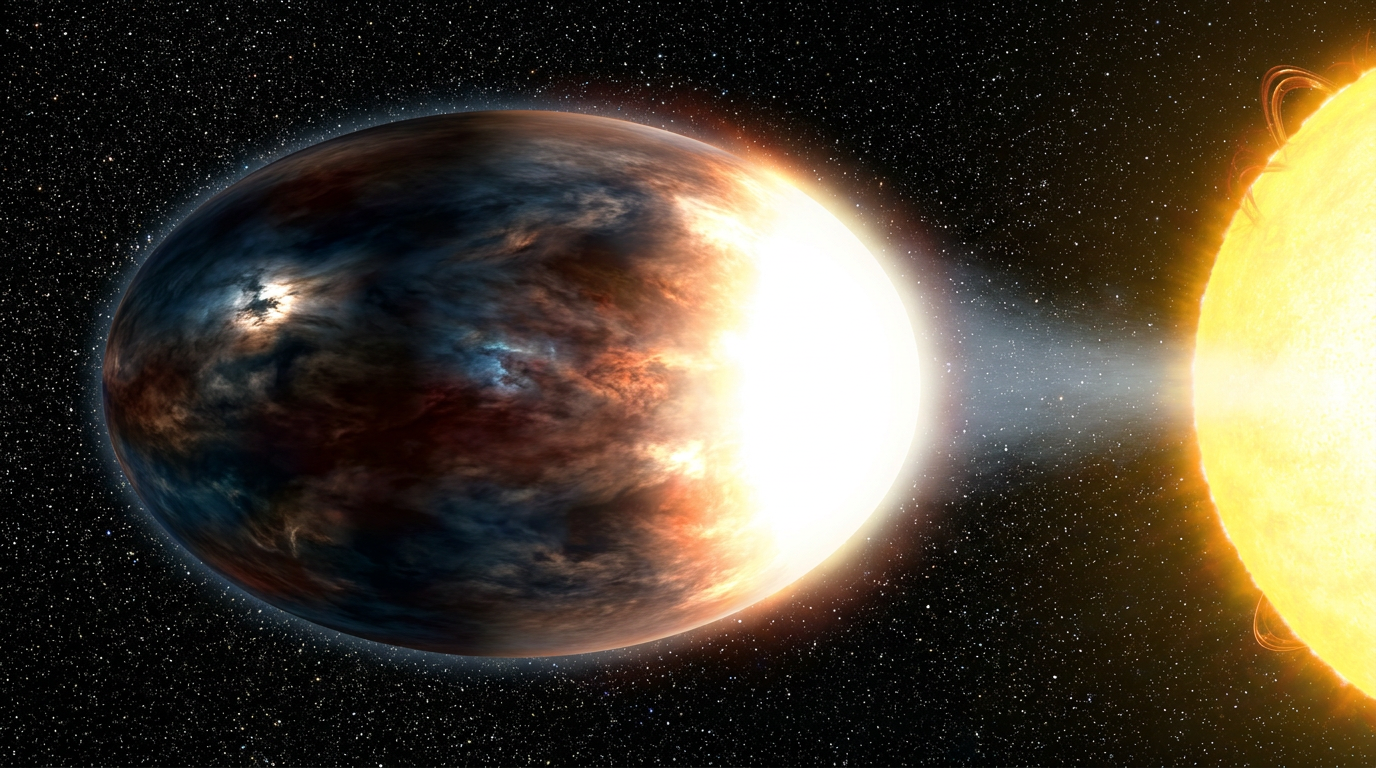
JWST Maps Dawn and Dusk on Ultra-Hot Exoplanet WASP-121 b
0 sources
Coral Resilience
Scientists Map 166,000 Square Kilometers of Coral Reefs Capable of Surviving Climate Change
0 sources
Brain-Computer Interfaces
At-Home Brain Implant Restores Independent Communication for Paralyzed ALS Patient
0 sources

Every angle. Every day.
Get science stories with full source coverage and perspective breakdowns delivered to your inbox.