
The US-Iran Truce: What the 60-Day Ceasefire Means for the Middle East and Global Markets
The United States and Iran have signed an interim agreement to halt a 100-day conflict and reopen the Strait of Hormuz, but Israel's refusal to withdraw from Lebanon threatens the fragile peace.
By Factlen Editorial Team
- US Administration
- Frames the deal as a decisive victory that secures global energy markets and halts Iran's nuclear ambitions.
- Iranian Leadership
- Views the agreement as a strategic triumph that humiliated the US and preserved Iran's regional influence.
- Israeli Government
- Rejects the bilateral agreement as a dangerous capitulation that leaves Israel vulnerable.
- Global Markets & Allies
- Relieved by the drop in energy prices but highly skeptical of the deal's long-term enforceability.
What's not represented
- · Lebanese Civilians
- · Gulf Arab States (GCC)
Why this matters
This interim agreement pauses a conflict that choked 20% of the world's oil supply and drove up global energy costs. However, because the deal leaves Iran's nuclear infrastructure intact and excludes Israel, the structural drivers of a wider Middle East war remain unresolved.
Key points
- The US and Iran have signed a Memorandum of Understanding to halt a 100-day conflict.
- The agreement reopens the Strait of Hormuz to commercial shipping, causing global oil prices to plummet.
- The truce establishes a 60-day window to negotiate sanctions relief and limits on Iran's nuclear program.
- Israel is not a signatory and has explicitly refused to withdraw its forces from southern Lebanon.
- A formal signing ceremony is scheduled for Friday in Geneva, Switzerland.
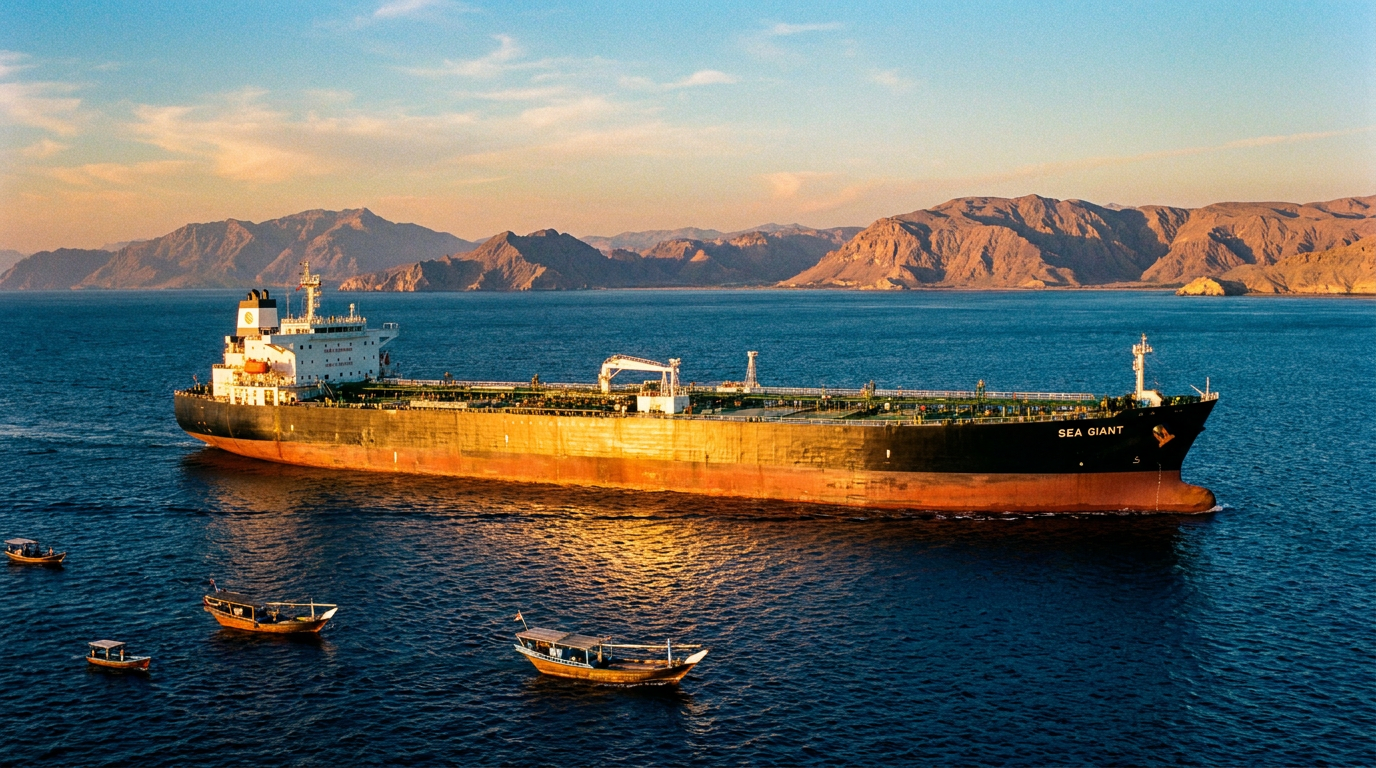
The 100-day war that choked the global economy and pushed the Middle East to the brink of regional collapse is officially on pause. The United States and Iran have electronically signed a Memorandum of Understanding (MOU) to halt hostilities, lifting a US naval blockade and reopening the Strait of Hormuz to commercial shipping.[2][3]
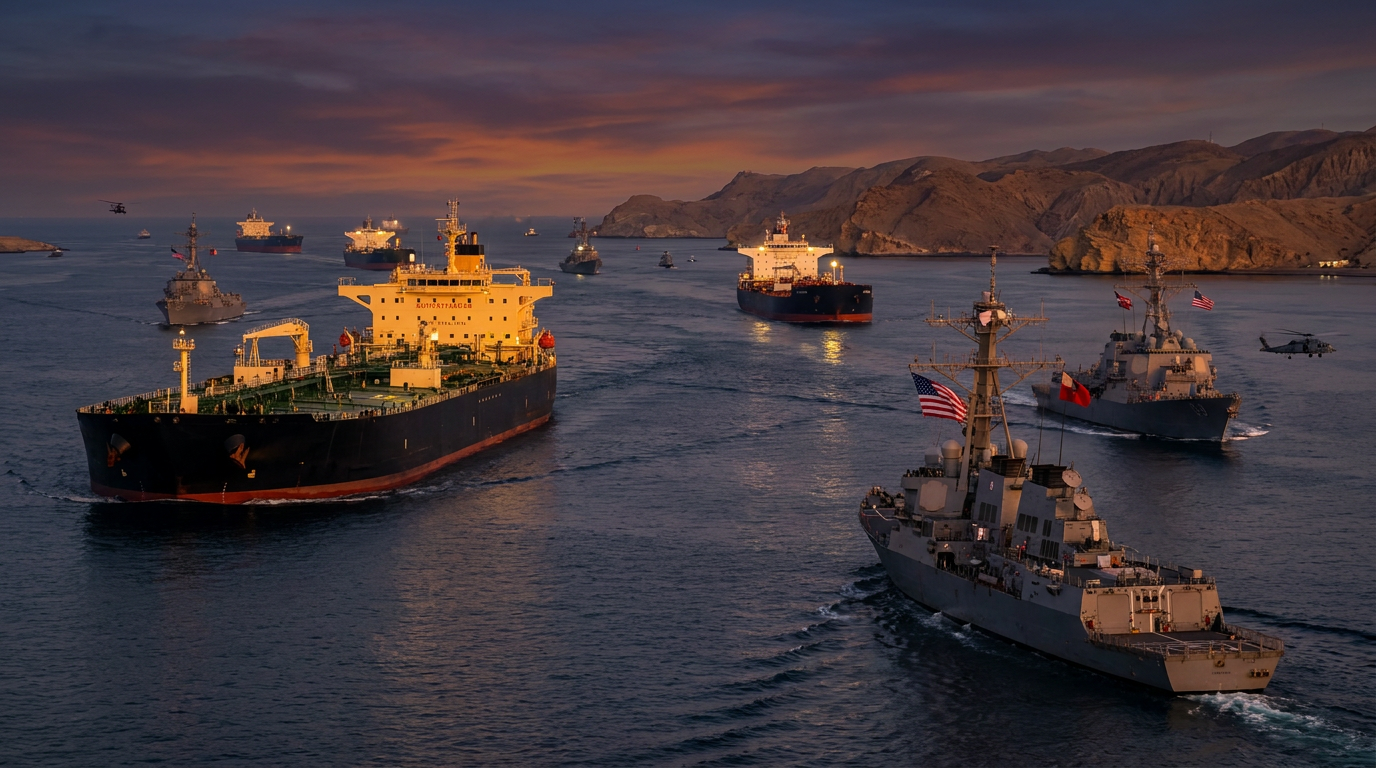
The immediate impact of the truce was felt on trading floors worldwide. Global crude prices, which had skyrocketed during the three-and-a-half-month conflict, plummeted nearly five percent on Monday, while US equities rallied to record highs. Ships loaded with oil have already begun moving through the vital maritime corridor.[2][5][8]
Mediated by Pakistan, the MOU is not a permanent peace treaty but an interim framework. It establishes a 60-day ceasefire extension during which Washington and Tehran will conduct high-stakes negotiations over sanctions relief and Iran's nuclear program. A formal signing ceremony is scheduled for Friday in Geneva, Switzerland, attended by US Vice President JD Vance and Iranian Parliament Speaker Mohammad-Bagher Ghalibaf.[3][4]
The economic linchpin of the agreement is the Strait of Hormuz—a narrow waterway between the Persian Gulf and the Gulf of Oman that serves as a transit route for roughly one-fifth of the world's oil supply. Iran had effectively closed the strait since late February in response to US and Israeli military strikes, triggering a global energy crisis.[4][6]

In exchange for reopening the waterway, Iran is slated to receive substantial sanctions relief. Iranian officials claim the agreement unfreezes billions of dollars in assets—with estimates ranging from $12 billion to $24 billion—though US officials insist that no funds will be released until Tehran demonstrates verifiable compliance with the MOU's terms.[5][8]
The most ambitious, and ambiguous, element of the truce involves Iran's nuclear infrastructure. US President Donald Trump has publicly declared that Iran agreed to "never have a nuclear weapon." However, the actual text of the MOU merely commits both sides to a 60-day negotiation window to address Iran's stockpile of highly enriched uranium.[2][4]
Diplomatic experts warn that the mechanism for verifying these nuclear commitments remains entirely unresolved. The minimum expectation is that Iran will dilute its enriched uranium on-site under the supervision of the International Atomic Energy Agency, but Tehran has a long history of dragging out such negotiations to maximize leverage.[6]
Diplomatic experts warn that the mechanism for verifying these nuclear commitments remains entirely unresolved.
The most volatile threat to the agreement lies outside of the US-Iran bilateral relationship. According to Washington and Tehran, the ceasefire applies to all fronts, explicitly including the ongoing conflict between Israel and the Iranian-backed militant group Hezbollah in southern Lebanon.[4][5]

Israel, however, is not a signatory to the MOU. Prime Minister Benjamin Netanyahu's government has firmly rejected the premise that it is bound by the US-Iran truce. Israeli officials have stated they will not withdraw forces from captured territory in southern Lebanon, Syria, or the Gaza Strip, and the Israeli military has continued to intercept Hezbollah fire.[2][5][7]
The bilateral deal has triggered a political earthquake in Jerusalem. Critics and domestic media outlets have framed the outcome as a massive strategic failure for Netanyahu. After years of pushing for a decisive confrontation with Tehran, Netanyahu now faces a scenario where the US brokered an agreement without Israeli input, leaving Iran's regime intact and arguably empowered.[1]
Conversely, leadership in Tehran is selling the MOU as a historic triumph. By surviving the military exchange, maintaining its proxy network, and forcing the US to offer sanctions relief in exchange for maritime access, the Iranian military claims to have humiliated Washington and demonstrated the limits of American power in the region.[8]

A major factual dispute also threatens the maritime reopening. While the US administration insists the Strait of Hormuz will be permanently "toll-free," Iranian officials have indicated that last-minute negotiated changes grant them the right to charge fees for maritime services—a formulation that European leaders fiercely oppose.[2][4]
European allies, gathered at the G7 summit in France, expressed relief at the drop in energy prices but remain deeply skeptical of the deal's durability. French President Emmanuel Macron noted that Western partners are ready to deploy a Franco-British maritime task force to clear mines and escort ships if the agreement unravels.[2][3]
The diplomatic theater now moves to the Palais des Nations in Geneva. The Friday signing ceremony is meant to project international consensus, but the absence of Israel and the conflicting interpretations of the text highlight the fragility of the arrangement.[3][6]

The next 60 days will determine whether this MOU serves as a genuine off-ramp from regional war or merely a tactical pause. With the structural drivers of the conflict—Iran's regional proxy network and its nuclear ambitions—remaining entirely unresolved, the Middle East remains one miscalculation away from returning to open conflict.[1][7]
How we got here
Late Feb 2026
US-Israeli strikes on Iran trigger a 100-day regional conflict and the closure of the Strait of Hormuz.
Mid-June 2026
Pakistani mediators broker a 14-point Memorandum of Understanding between Washington and Tehran.
June 14, 2026
The MOU is signed electronically by US and Iranian leadership.
June 15, 2026
Commercial oil tankers begin moving through the Strait of Hormuz, sending global crude prices plummeting.
June 19, 2026
A formal signing ceremony is scheduled in Geneva, Switzerland, initiating a 60-day negotiation window.
Viewpoints in depth
US Administration
Frames the deal as a decisive victory that secures global energy markets and halts Iran's nuclear ambitions.
US officials argue that the combination of military pressure and crippling sanctions forced Tehran to the negotiating table. By securing the reopening of the Strait of Hormuz without committing to a permanent treaty upfront, the administration believes it has stabilized the global economy while retaining the leverage to demand verifiable concessions on Iran's nuclear program during the 60-day window.
Iranian Leadership
Views the agreement as a strategic triumph that humiliated the US and preserved Iran's regional influence.
Tehran is broadcasting the MOU as proof of its resilience. Iranian officials emphasize that they survived a direct military confrontation with the US and Israel without sacrificing their proxy network or their core nuclear infrastructure. By leveraging their control over the Strait of Hormuz, they successfully extracted promises of massive sanctions relief and the unfreezing of billions in assets.
Israeli Government
Rejects the bilateral agreement as a dangerous capitulation that leaves Israel vulnerable.
Prime Minister Benjamin Netanyahu and his hardline coalition view the US-Iran truce as a profound betrayal. They argue that the agreement fails to dismantle Hezbollah or neutralize Iran's nuclear threat, effectively rewarding Tehran for its aggression. Consequently, Israel has explicitly stated it is not bound by the ceasefire and will maintain its military operations in Lebanon and Syria to secure its northern border.
What we don't know
- How the International Atomic Energy Agency will verify the dilution of Iran's enriched uranium stockpile.
- Whether Iran will actually attempt to charge maritime transit fees in the Strait of Hormuz.
- How the US will respond if Israel escalates its military campaign against Hezbollah in Lebanon during the 60-day ceasefire.
Key terms
- Memorandum of Understanding (MOU)
- A formal, non-binding agreement outlining the terms of a truce before a final, permanent treaty is negotiated.
- Strait of Hormuz
- A narrow, highly strategic waterway between the Persian Gulf and the Gulf of Oman that facilitates roughly 20% of global oil transit.
- Enriched Uranium
- Uranium that has been processed to increase the concentration of the U-235 isotope, which can be used for civilian nuclear energy or, at higher purities, nuclear weapons.
- Sanctions Relief
- The lifting or suspension of economic penalties, allowing a country to access frozen financial assets and resume international trade.
Frequently asked
Does this agreement mean the war in the Middle East is over?
Not entirely. While the US and Iran have halted direct hostilities, Israel is not a party to the agreement and has refused to withdraw its forces from Lebanon.
Why did oil prices drop after the announcement?
The agreement reopens the Strait of Hormuz, a critical maritime chokepoint that Iran had blockaded, allowing millions of barrels of oil to resume flowing to global markets.
Has Iran agreed to give up its nuclear program?
The US administration claims Iran has agreed to never build a nuclear weapon, but the actual text only commits the two sides to 60 days of negotiations regarding Iran's enriched uranium stockpile.
Will Iran receive money as part of this deal?
Yes, the agreement includes provisions to unfreeze billions of dollars in Iranian assets held abroad, though US officials state the release is contingent on Iran's verifiable compliance.
Sources
Source coverage
8 outlets
4 viewpoints surfaced








[1]Al JazeeraIranian Leadership
Israel went to war with Iran, but Netanyahu may be the loser
Read on Al Jazeera →[2]The GuardianIsraeli Government
Trump declares US-Iran peace deal 'all signed' as G7 leaders battle to tie up loose ends
Read on The Guardian →[3]PBSGlobal Markets & Allies
Iran and U.S. reach an initial deal to extend the ceasefire and open the Strait of Hormuz but challenges remain
Read on PBS →[4]AxiosUS Administration
What's in the Iran deal Trump says he's ready to sign
Read on Axios →[5]CBS NewsIsraeli Government
Iran, Israel voice caveats on deal ahead of expected signing ceremony
Read on CBS News →[6]The Irish TimesGlobal Markets & Allies
What is in the US-Iran deal and when will the Strait of Hormuz open?
Read on The Irish Times →[7]BBCGlobal Markets & Allies
Fragile quiet in Lebanon as US-Iran truce leaves unanswered questions
Read on BBC →[8]Global NewsUS Administration
Strait of Hormuz to reopen Friday under US-Iran deal – Trump
Read on Global News →
Every angle. Every day.
Get news politics stories with full source coverage and perspective breakdowns delivered to your inbox.