
Sodium-Ion Batteries Have Arrived: How the Salt-Based Tech is Changing EVs
Mass production of sodium-ion EV batteries has officially begun in 2026, offering a cheaper, cold-weather resilient alternative to lithium.
By Factlen Editorial Team
- Automakers & Battery Manufacturers
- Focused on scaling sodium-ion to lower production costs, eliminate supply chain bottlenecks, and offer cheaper entry-level EVs.
- Cold-Climate Consumers
- Prioritize extreme weather reliability and winter range retention over absolute maximum mileage.
- Grid Storage Sector
- View sodium-ion as the ultimate solution for stationary renewable energy storage, where cost matters more than weight.
What's not represented
- · Lithium Mining Industry
- · Battery Recycling Facilities
Why this matters
Sodium-ion batteries break the electric vehicle industry's total reliance on expensive, scarce lithium. By using one of the most abundant elements on Earth, this technology promises to drastically lower the price of entry-level EVs while solving the severe range loss drivers experience in freezing winter weather.
Key points
- Sodium-ion EV batteries have officially entered mass production in 2026, starting with the Changan Nevo A06.
- The chemistry swaps expensive, scarce lithium for highly abundant sodium, eliminating the need for cobalt and nickel.
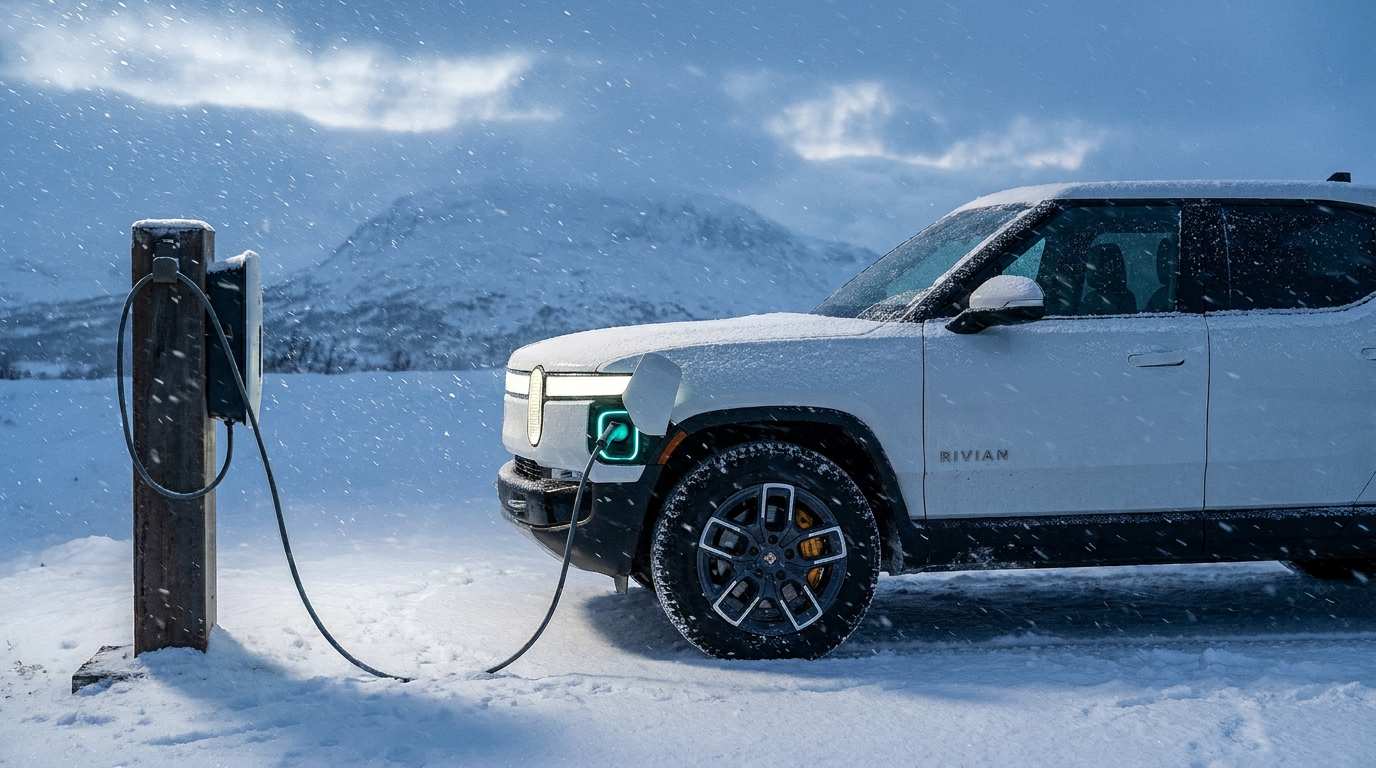
- Sodium-ion cells retain up to 90% of their capacity at -40°C, solving the winter range loss associated with lithium batteries.
- While cheaper and safer, sodium batteries currently have lower energy density, making them best suited for city cars and grid storage.
For the past decade, the electric vehicle revolution has been entirely dependent on a single, highly reactive metal: lithium. It is light, energy-dense, and proven, but it is also expensive, geographically constrained, and notoriously temperamental in freezing temperatures. In 2026, the automotive industry is finally breaking that monopoly. Sodium-ion batteries, long considered a heavy and underperforming laboratory curiosity, have officially entered mass production and are hitting public roads.[1]
The shift marks one of the most significant hardware disruptions in the history of modern transportation. In early 2026, CATL—the world’s largest battery manufacturer—partnered with Changan Automobile to launch the Nevo A06, the world’s first mass-produced passenger EV powered by a sodium-ion pack. This is not a pilot program or a concept car; it is a commercial reality that fundamentally alters the economics of electric mobility.[1][5]
To understand why this matters, one must look at the underlying chemistry. In a standard lithium-ion battery, lithium ions shuttle back and forth between a cathode and an anode to store and release energy. A sodium-ion battery performs the exact same mechanical function, but it swaps the lithium for sodium. Because sodium ions are physically larger and heavier than lithium ions, the internal architecture of the battery had to be completely redesigned.[1][2]

Traditional lithium-ion cells rely on graphite anodes and cathodes made with expensive metals like cobalt and nickel. Sodium-ion cells, however, utilize hard carbon anodes and cathodes built from layered oxides or Prussian blue analogues. This structural pivot eliminates the need for the most controversial and costly minerals in the EV supply chain, relying instead on materials that can be synthesized cheaply and abundantly.[1]
The primary advantage of this new chemistry is raw abundance. Sodium is roughly one thousand times more common in the Earth's crust than lithium, and it can be extracted from ordinary rock salts or seawater. This ubiquity insulates automakers from the volatile price spikes and geopolitical bottlenecks that have historically plagued lithium mining. By stripping out cobalt and copper—often replacing copper current collectors with cheaper aluminum—manufacturers are driving battery costs to unprecedented lows.[1][3]
Chinese automotive giant BYD is aggressively capitalizing on this cost advantage. The company has developed a third-generation sodium-ion platform and is scaling a massive 30-gigawatt-hour production facility in Xuzhou. Industry data indicates that BYD is targeting a stabilized manufacturing cost baseline of just $0.04 per watt-hour by 2027, a price point that would make EVs cost-competitive with the cheapest internal combustion engine vehicles on the market.[1][6]

Chinese automotive giant BYD is aggressively capitalizing on this cost advantage.
But cost is not the only breakthrough; sodium-ion technology possesses a unique superpower that lithium lacks: extreme cold-weather resilience. Lithium-ion batteries suffer severe range degradation and sluggish charging in freezing conditions because the cold thickens the liquid electrolyte, slowing the movement of ions. Sodium-ion cells maintain their chemical agility even in deep freezes.[4][5]
CATL’s Naxtra sodium-ion cells can retain roughly 90 percent of their usable capacity at temperatures as low as minus 40 degrees Celsius. Furthermore, they can accept a fast charge even when the battery pack is frozen solid, a feat that would permanently damage a standard lithium cell. For drivers in Canada, Scandinavia, and the northern United States, this eliminates the dreaded winter range anxiety that has been a major barrier to EV adoption.[1][5]

Safety profiles also see a marked improvement. Sodium-ion batteries are significantly less prone to thermal runaway—the unstoppable chain reaction that causes lithium-ion battery fires. They can be safely discharged to zero volts for transport and storage, whereas lithium batteries degrade if fully depleted. Earlier this year, CATL's cells became the first sodium-based EV traction batteries to pass China's grueling GB 38031-2025 safety standard, cementing their viability for consumer vehicles.[2][3][5]
Despite these triumphs, the technology requires a distinct compromise: energy density. Because sodium is heavier and larger than lithium, it simply cannot pack as much energy into the same physical footprint. Current first-generation sodium-ion cells achieve an energy density of roughly 175 watt-hours per kilogram. While this is a massive leap from early prototypes, it still trails behind the 250-plus watt-hours per kilogram offered by premium lithium-ion chemistries.[1][2][5]
Consequently, sodium-ion batteries are not going to replace lithium in luxury sedans or heavy-duty trucks that demand 500-mile ranges. Instead, the market is bifurcating. Lithium will continue to dominate the premium, long-range sector, while sodium-ion is perfectly positioned to conquer the market for affordable city cars, micro-mobility scooters, and commercial delivery fleets.[1][2]
Automakers are already finding creative ways to bridge the density gap. CATL is developing hybrid battery packs that integrate both sodium-ion and lithium-ion cells into a single unit. This hybrid approach relies on the sodium cells to handle cold-weather starts and daily low-range driving, while the lithium cells provide the deep energy reserves needed for long highway road trips, offering the best of both chemistries.[5]
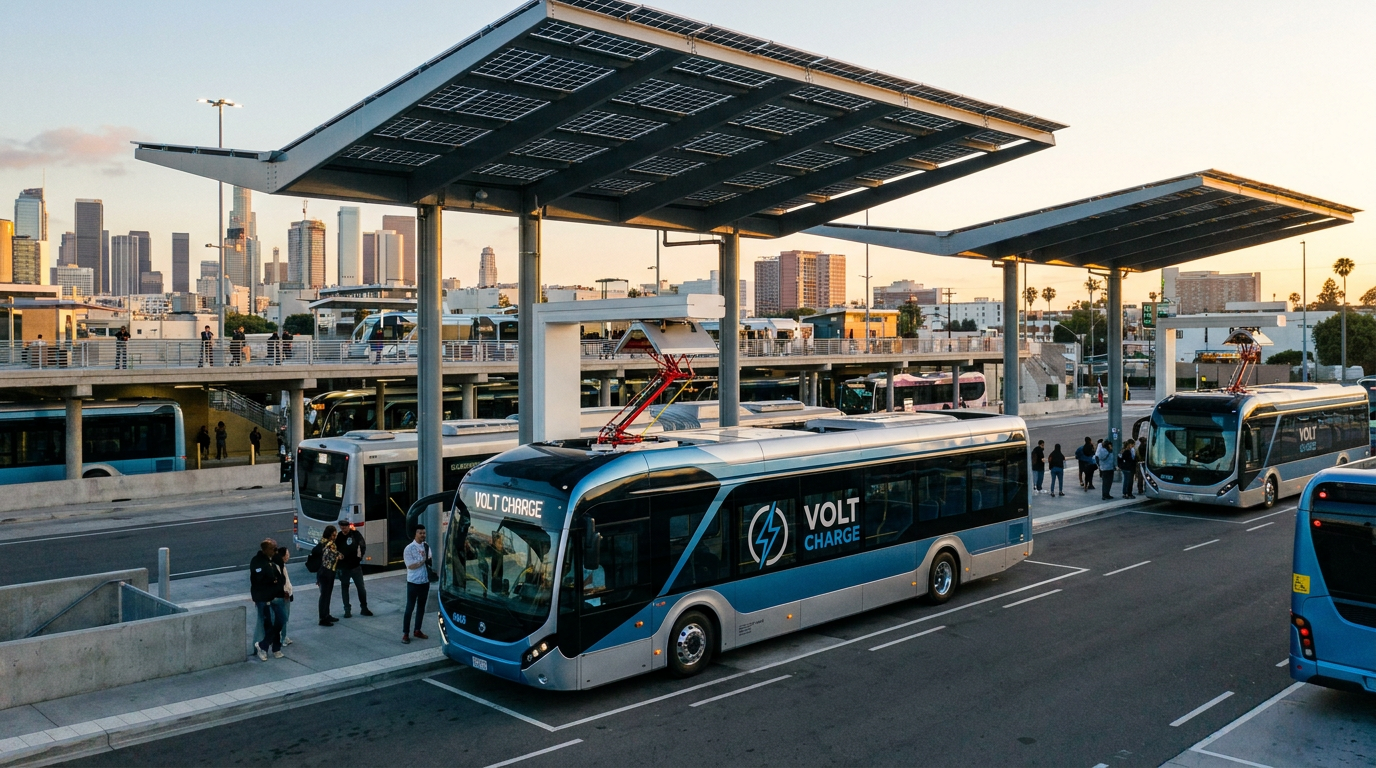
Beyond passenger vehicles, the most profound impact of sodium-ion technology may actually unfold on the power grid. As the world transitions to solar and wind energy, utility companies desperately need cheap, massive-scale stationary batteries to store power for when the sun sets or the wind dies down. Because weight and size are irrelevant for a battery sitting in a field, sodium's lower energy density is a non-issue, making it the ideal candidate for grid storage.[2][4]

BYD has recognized this dynamic, heavily pivoting its polyanion sodium systems toward stationary energy storage rather than just automotive applications. As production scales globally, the rise of sodium-ion ensures that the electrification of the global economy will not be bottlenecked by the supply of a single rare metal. By turning to one of the most common elements on Earth, the battery industry has secured a cheaper, safer, and more resilient path forward.[3][5][6]
How we got here
2021
CATL unveils its first-generation sodium-ion battery prototype, proving the chemistry can be viable outside the laboratory.
2024
Early commercial sodium-ion cells begin deployment in pilot grid-storage projects and electric two-wheelers.
Early 2026
The Changan Nevo A06 launches in China, becoming the world's first mass-produced passenger EV powered by a sodium-ion battery.
Mid 2026
CATL's sodium-ion cells officially pass China's stringent GB 38031-2025 EV safety standards, clearing the path for global mass production.
Viewpoints in depth
The Automakers' Strategy
Using sodium to break the lithium cost floor.
For battery giants like CATL and BYD, sodium-ion is a strategic lever to decouple EV manufacturing from volatile lithium commodity markets. By utilizing abundant materials and eliminating expensive metals like cobalt and nickel, manufacturers can dramatically lower the price floor for entry-level vehicles. They argue that while sodium cannot match lithium's energy density, the vast majority of daily commutes do not require 400-mile ranges, making cheaper, fast-charging sodium packs the perfect fit for mass-market adoption.
The Cold-Climate Perspective
Solving the winter range anxiety problem.
Drivers in northern latitudes have long struggled with lithium-ion's fragility in the cold, often experiencing up to a 40% drop in range during freezing winters. For these consumers and fleet operators, sodium-ion's ability to retain 90% of its capacity at -40°C is a game-changer. This camp argues that reliable, predictable performance in extreme weather is far more valuable for daily usability than the higher theoretical range of a lithium battery that degrades the moment the temperature drops.
The Grid Storage View
Prioritizing scale and cost over weight.
Energy analysts and utility providers view sodium-ion's lower energy density as completely irrelevant for stationary applications. When batteries are bolted to the ground to store solar and wind energy, weight and volume do not matter—only the cost per kilowatt-hour and cycle life. This sector believes sodium-ion will ultimately find its largest market not in cars, but in massive grid-scale installations, providing the cheap, safe, and abundant storage required to stabilize renewable energy grids.
What we don't know
- Whether sodium-ion energy density can eventually scale high enough to compete in the 400-mile premium EV segment.
- How quickly global battery recycling infrastructure will adapt to process sodium-ion chemistries alongside lithium.
- If future drops in lithium commodity prices might narrow the cost advantage that sodium currently enjoys.
Key terms
- Energy Density
- The amount of energy a battery can store relative to its weight or volume, usually measured in watt-hours per kilogram (Wh/kg).
- Thermal Runaway
- A dangerous, unstoppable chain reaction within a battery cell that generates extreme heat and can lead to fires, most commonly associated with damaged lithium-ion batteries.
- Hard Carbon Anode
- A specialized carbon material used in sodium-ion batteries to store the larger sodium ions, replacing the graphite anodes traditionally used in lithium-ion cells.
- Cathode
- The positive electrode in a battery where current flows out during discharge; in sodium batteries, these are made from cheap, abundant materials rather than expensive cobalt or nickel.
Frequently asked
Will a sodium-ion battery give my EV less range?
Yes, currently sodium-ion batteries have a lower energy density than premium lithium-ion batteries, meaning they offer shorter ranges (typically 150-250 miles) for the same physical battery size.
Why are sodium-ion batteries better in the winter?
Sodium-ion chemistry remains highly active in freezing temperatures, allowing the battery to retain up to 90% of its capacity at -40°C and accept fast charges without damage, unlike lithium-ion cells.
Are sodium-ion batteries safer than lithium-ion?
Yes. They are significantly less prone to thermal runaway (battery fires) and can be safely discharged to zero volts without permanently damaging the battery's internal structure.
Will sodium replace lithium in all electric cars?
No. The industry expects the two technologies to coexist. Lithium will power long-range and performance vehicles, while sodium will dominate affordable city cars and grid storage.
Sources
Source coverage
6 outlets
3 viewpoints surfaced






[1]EleportAutomakers & Battery Manufacturers
Sodium Ion Vs Lithium Ion EV Batteries Differences Explained
Read on Eleport →[2]Drive Electric TNGrid Storage Sector
What are Sodium-Ion Batteries and How Do They Compare to Lithium-Ion?
Read on Drive Electric TN →[3]Bolt.EarthAutomakers & Battery Manufacturers
Sodium-Ion vs Lithium-Ion Batteries for EVs: Which Wins?
Read on Bolt.Earth →[4]EV Infrastructure NewsCold-Climate Consumers
Sodium-ion vs lithium-ion batteries: the complete guide
Read on EV Infrastructure News →[5]Battery Industry TechGrid Storage Sector
How Sodium-Ion Technology Is Disrupting the Global Battery Market in 2026
Read on Battery Industry Tech →[6]Securities DailyGrid Storage Sector
Why BYD is building a 0.04 USD sodium battery fortress
Read on Securities Daily →
Every angle. Every day.
Get automotive stories with full source coverage and perspective breakdowns delivered to your inbox.