
US and Iran Reach Tentative Deal to End 100-Day War and Reopen Strait of Hormuz
The United States and Iran have agreed to a 60-day ceasefire to halt a three-month conflict, lifting the US naval blockade and reopening the critical Strait of Hormuz to global shipping. The memorandum of understanding, mediated by Pakistan and Qatar, defers negotiations on Iran's nuclear program.
By Factlen Editorial Team
- US Administration & Domestic Press
- Focuses on the lifting of the naval blockade, the reopening of the Strait of Hormuz, and the deferral of nuclear talks.
- International Mediators & Allies
- Emphasizes the diplomatic breakthrough, the role of Qatar and Pakistan, and the relief for global stability.
- Global Energy Observers
- Analyzes the immediate economic relief of the ceasefire and the specific sanctions lifted on Iranian oil.
- Regional Security Analysts
- Warns of lingering military risks, ambiguous control of the strait, and the unresolved status of Hezbollah.
What's not represented
- · Israeli Government
- · Lebanese Civilians
- · Commercial Shipping Executives
Why this matters
The 100-day conflict triggered a global energy crisis by choking off one of the world's most vital oil transit routes. Reopening the Strait of Hormuz promises immediate relief for global markets, though the fragile 60-day window leaves the underlying nuclear dispute unresolved.
Key points
- The US and Iran agreed to a 60-day ceasefire, halting a 100-day military conflict.
- The deal lifts the US naval blockade and reopens the Strait of Hormuz to global shipping.
- Primary and secondary US sanctions on Iranian oil exports will be temporarily suspended.
- Negotiations regarding Iran's nuclear program have been deferred to a later date.
- A formal signing ceremony is scheduled for Friday in Geneva, Switzerland.
The United States and Iran have reached a historic memorandum of understanding to end more than 100 days of direct military conflict, establishing a 60-day ceasefire and reopening the strategically vital Strait of Hormuz. The breakthrough agreement, mediated heavily by diplomats from Pakistan and Qatar, aims to unwind a devastating war that erupted in late February 2026 following coordinated United States and Israeli strikes on Iranian territory. For months, the conflict has paralyzed the Middle East and sent shockwaves through the global economy, as military engagements expanded across multiple fronts and choked off one of the world's most critical maritime chokepoints. Now, with both Washington and Tehran facing mounting domestic and economic pressures, the two nations have agreed to a temporary cessation of hostilities to create a window for broader diplomatic negotiations.[1][2]
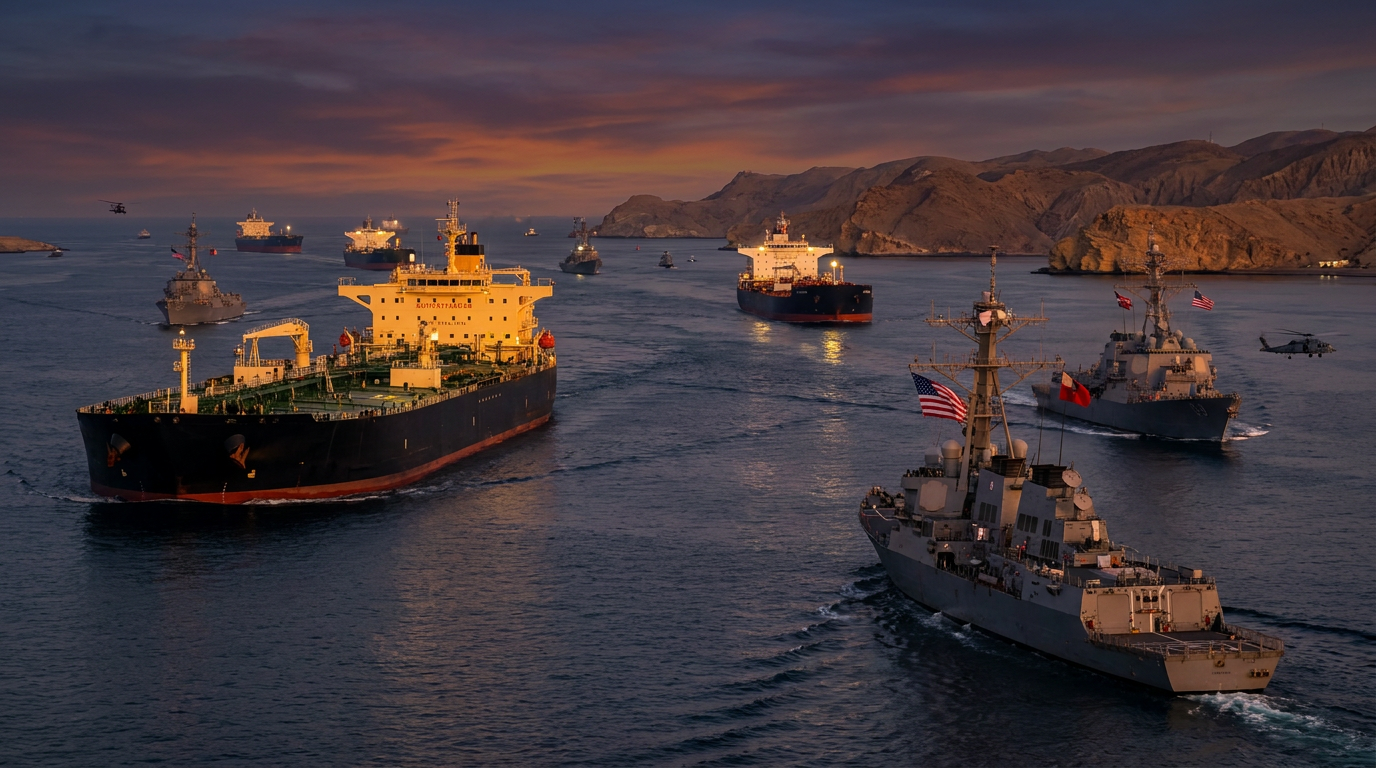
The conflict rapidly escalated into a severe global energy crisis after Tehran effectively closed the Strait of Hormuz to international commercial shipping and the United States retaliated by imposing a strict naval blockade on Iranian ports. The closure of the strait, through which a massive percentage of the world's daily oil supply typically flows, caused crude prices to skyrocket and triggered widespread fears of prolonged energy shortages. President Donald Trump confirmed the tentative peace deal on Sunday, announcing on social media that he had authorized an immediate end to the United States naval blockade. Trump urged global commercial vessels to restart their engines and resume their standard shipping routes, signaling a dramatic de-escalation of the maritime standoff that has defined the last three months of the war.[1][3][4]
According to draft details of the agreement circulated by Iranian state media and confirmed by international mediators, the memorandum mandates a permanent and immediate cessation of military operations on all fronts. Crucially, this explicitly includes the conflict in Lebanon, where Israeli forces and the Iranian-backed militant group Hezbollah have been engaged in intense, highly destructive fighting since the broader war began. The inclusion of the Lebanese theater was a major sticking point during the negotiations, as Tehran sought to protect its regional allies while the United States aimed to secure a comprehensive halt to the violence that has threatened to engulf the entire Middle East. Pakistani Prime Minister Shehbaz Sharif, who played a central role in brokering the deal, emphasized that the immediate termination of hostilities across all these interconnected fronts lays the essential groundwork for the upcoming technical talks.[2][5]

In exchange for Iran's commitment to reopen the Strait of Hormuz and halt its military operations, the United States has agreed to significant, albeit temporary, economic concessions. Washington will lift primary and secondary sanctions on Iranian oil and petrochemical exports for the duration of the 60-day ceasefire, providing immediate relief to Tehran's battered economy. Furthermore, Iranian officials have publicly claimed that the deal guarantees the unconditional release of $24 billion in frozen Iranian assets held overseas. However, United States negotiators and Western diplomats have not publicly verified this specific financial concession, leading to conflicting narratives over the exact economic parameters of the agreement and raising questions about how the funds might be monitored or restricted.[2][4]
Furthermore, Iranian officials have publicly claimed that the deal guarantees the unconditional release of $24 billion in frozen Iranian assets held overseas.
The core geopolitical issue that originally ignited the war—Iran's rapidly advancing nuclear program—has been deliberately deferred to facilitate the immediate ceasefire. The 60-day window is explicitly designed to create breathing room for broader, more complex negotiations regarding Tehran's nuclear capabilities. To achieve this pause in fighting, the United States reportedly dropped its previous maximalist demands, which had included calls for unconditional surrender and regime change in Tehran. Instead, the current framework focuses strictly on unwinding the immediate military and economic consequences of the 100-day war, leaving the ultimate resolution of the nuclear dispute to future diplomatic summits that will test the durability of this fragile truce.[1][4]
Despite the widespread diplomatic optimism surrounding the announcement, security analysts and maritime experts warn that the immediate resumption of global shipping is far from guaranteed. The Institute for the Study of War notes that commercial shipping companies and vessel captains may remain highly hesitant to transit the Strait of Hormuz due to lingering physical risks, including the potential presence of unmapped naval mines. Furthermore, there are conflicting United States and Iranian interpretations over who ultimately "manages" the waterway under the new agreement. Iranian statements suggest the regime expects to maintain administrative control over the strait, a stance that inherently conflicts with the United States' demand for unrestricted, unconditional freedom of navigation for all international vessels.[5]

The international community, desperate for an end to the economic and humanitarian toll of the conflict, has largely welcomed the ceasefire announcement with profound relief. The E4 nations—comprising France, Germany, Italy, and the United Kingdom—issued a joint diplomatic statement praising the breakthrough as a vital opportunity to stabilize the global economy and restore regional security. The European leaders congratulated the mediators in Pakistan and Qatar for their tireless efforts and reiterated their readiness to support the rapid and comprehensive implementation of the agreement. They also emphasized that the urgent, unconditional reopening of the Strait of Hormuz remains the absolute highest priority for global markets.[6]
As the world watches closely, negotiators from both the United States and Iran are currently meeting in Doha, Qatar, to iron out the highly sensitive technical and implementation details of the agreement. These working-level discussions are focused on establishing the exact protocols for lifting the naval blockade, verifying the cessation of hostilities in Lebanon, and coordinating the safe passage of commercial vessels through the previously contested waters. If these preliminary talks hold and the fragile trust between the two adversaries does not collapse, the formal signing ceremony for the memorandum of understanding is scheduled to take place this Friday in Geneva, Switzerland, marking a critical turning point in modern Middle Eastern history.[1][2][4]

Domestically, the peace deal faces intense scrutiny and political polarization in both Washington and Tehran. In the United States, the administration is already fielding criticism from hawkish lawmakers who argue that lifting sanctions and unfreezing billions in assets without securing immediate, ironclad concessions on the nuclear front amounts to a dangerous capitulation. Conversely, Iranian hardliners have voiced strong opposition to the terms, viewing any compromise with the United States as a betrayal of the resistance. Navigating these turbulent domestic waters will be a significant challenge for both governments as they attempt to transition from a fragile 60-day ceasefire into a permanent, comprehensive peace treaty that can withstand the intense pressures of their respective political landscapes.[4]
How we got here
Feb 28, 2026
US and Israel launch strikes on Iran amid tensions over Tehran's nuclear program, sparking the war.
March 2026
Iran effectively closes the Strait of Hormuz and the US imposes a naval blockade, triggering a global energy crisis.
June 14, 2026
President Trump and Iranian officials announce a memorandum of understanding to end hostilities.
June 19, 2026
A formal signing ceremony for the peace deal is scheduled to take place in Geneva, Switzerland.
Viewpoints in depth
US Administration's View
The ceasefire successfully halts a costly war and restores global energy flows while maintaining leverage for upcoming nuclear talks.
For the US administration, the immediate priority was ending the global energy crisis triggered by the closure of the Strait of Hormuz. By agreeing to a 60-day ceasefire and lifting the naval blockade, the US secures the resumption of international shipping without permanently conceding on the core issue of Iran's nuclear program. Officials emphasize that the temporary lifting of sanctions provides a window for diplomacy, rather than a permanent capitulation, keeping economic leverage intact for the deferred nuclear negotiations.
Iranian Leadership's View
The agreement is framed as a strategic victory that forced the US to lift its naval blockade and release frozen assets.
Tehran views the memorandum of understanding as a successful resistance against US and Israeli military pressure. Iranian state media highlights the immediate end to the US naval blockade and the reported release of $24 billion in frozen assets as major concessions extracted from Washington. By deferring the nuclear talks and maintaining ambiguity over the exact management of the Strait of Hormuz, Iranian hardliners argue they have restored the pre-war status quo on their own terms, without surrendering domestic sovereignty or abandoning their regional allies like Hezbollah.
Regional Security Analysts
The fundamental drivers of the conflict remain unresolved, leaving the region vulnerable to renewed hostilities.
Security analysts and think tanks, such as the Institute for the Study of War, caution that the 60-day ceasefire is highly fragile. They point out that the core dispute over Iran's nuclear enrichment capabilities has merely been kicked down the road. Furthermore, the ambiguous status of Hezbollah in Lebanon and conflicting interpretations over who controls the Strait of Hormuz mean that the underlying geopolitical flashpoints are still active. Analysts warn that commercial shipping companies may remain hesitant to transit the strait until these deeper security guarantees are solidified.
What we don't know
- Whether the reported $24 billion in frozen Iranian assets will actually be released without restrictions.
- How quickly commercial shipping companies will feel safe enough to resume full operations in the Strait of Hormuz.
- Whether the 60-day window will be sufficient to reach a lasting agreement on Iran's nuclear program.
- How Israel, which was heavily involved in the initial strikes, will respond to the deferred nuclear talks.
Key terms
- Strait of Hormuz
- A narrow, strategically vital waterway between the Persian Gulf and the Gulf of Oman through which a significant portion of the world's oil supply passes.
- Naval Blockade
- A military operation in which ships are used to prevent vessels from entering or leaving a nation's ports.
- Primary and Secondary Sanctions
- Primary sanctions prohibit US entities from doing business with a country, while secondary sanctions penalize foreign entities that trade with the sanctioned country.
Frequently asked
Why did the US and Iran go to war?
The conflict erupted in late February 2026 following US and Israeli strikes on Iran amid escalating tensions over Tehran's nuclear program.
What happens to Iran's nuclear program under this deal?
The current agreement defers the nuclear issue, establishing a 60-day ceasefire window to negotiate a broader settlement.
Will global oil prices go down?
The reopening of the Strait of Hormuz is expected to ease the global energy crisis, though shipping companies may take time to fully resume operations due to lingering security concerns.
Sources
Source coverage
6 outlets
4 viewpoints surfaced






[1]PBSUS Administration & Domestic Press
Deal is reached to end Iran war and Trump orders stop to U.S. naval blockade
Read on PBS →[2]Al JazeeraInternational Mediators & Allies
US, Iran to sign a 'peace deal' on Friday: What we know
Read on Al Jazeera →[3]AxiosUS Administration & Domestic Press
US, Iran reach deal to extend ceasefire, open strait
Read on Axios →[4]The GuardianGlobal Energy Observers
What's in – and what's not in – the US-Iran peace deal
Read on The Guardian →[5]Institute for the Study of WarRegional Security Analysts
Iran Update Special Report, June 15, 2026
Read on Institute for the Study of War →[6]GOV.UKInternational Mediators & Allies
Joint E4 Leaders' Statement on the US-Iran peace deal: 14 June 2026
Read on GOV.UK →
Every angle. Every day.
Get news politics stories with full source coverage and perspective breakdowns delivered to your inbox.