
Arctic Ocean Has Crossed an Irreversible Chemical Tipping Point, Starving the Marine Food Web
A 20-year data analysis reveals that the Arctic Ocean passed a critical threshold in 2009, shifting to a nutrient-depleted state that threatens the entire marine food chain.
By Factlen Editorial Team
- Marine Biogeochemists
- Focus on the chemical cascade and the shift from light-limited to nitrate-limited conditions.
- Climate & Ecosystem Researchers
- Emphasize the irreversible nature of the tipping point and the compounding effects of ocean stratification.
- Fisheries & Conservation Analysts
- Focus on the downstream economic and biological impacts on higher-trophic species and commercial fishing.
- Factlen Editorial Synthesis
- Evaluates the strength of the evidence and the broader implications for climate modeling.
What's not represented
- · Indigenous Arctic Communities
- · Commercial Fishing Industry Representatives
Why this matters
The Arctic Ocean has quietly crossed an irreversible chemical threshold that is stripping the water of the foundational nutrients required for marine life. This collapse at the base of the food web threatens to starve higher-tier species—from fish to whales—and could severely disrupt major commercial fishing grounds in the North Atlantic.
Key points
- The Arctic Ocean passed an irreversible chemical tipping point around 2009, fundamentally altering its ecosystem.
- Melting sea ice has exposed shallow waters to sunlight, triggering algae blooms that deplete oxygen in the seafloor sediment.
- In oxygen-poor sediments, microbes consume nitrate and convert it to inert gas, stripping the ocean of a vital nutrient.
- The Arctic has shifted from a light-limited system to a nitrate-limited system, severely hindering phytoplankton growth.
- This nutrient famine favors smaller plankton, diminishing energy transfer up the food chain to fish, seabirds, and whales.
- The chemical shift could ripple into the North Atlantic, threatening major commercial fishing grounds.
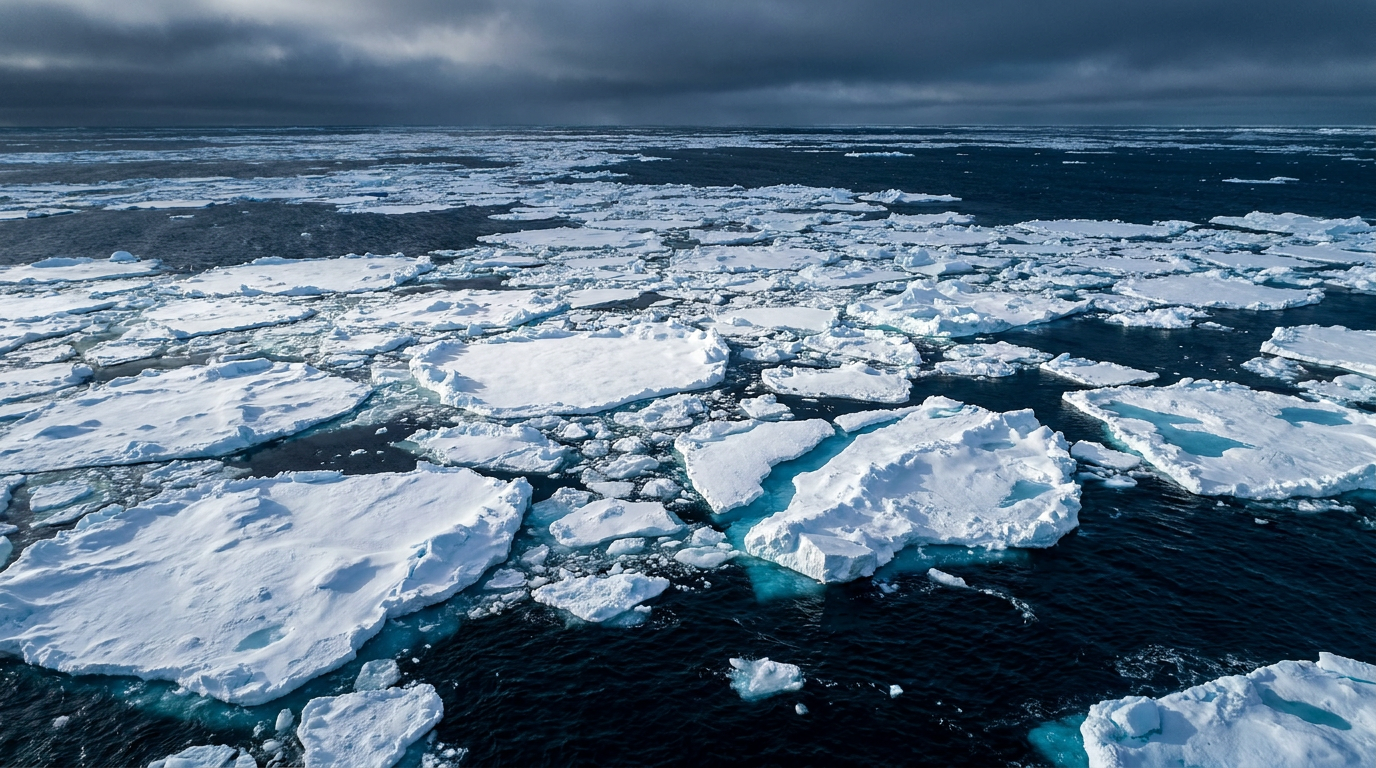
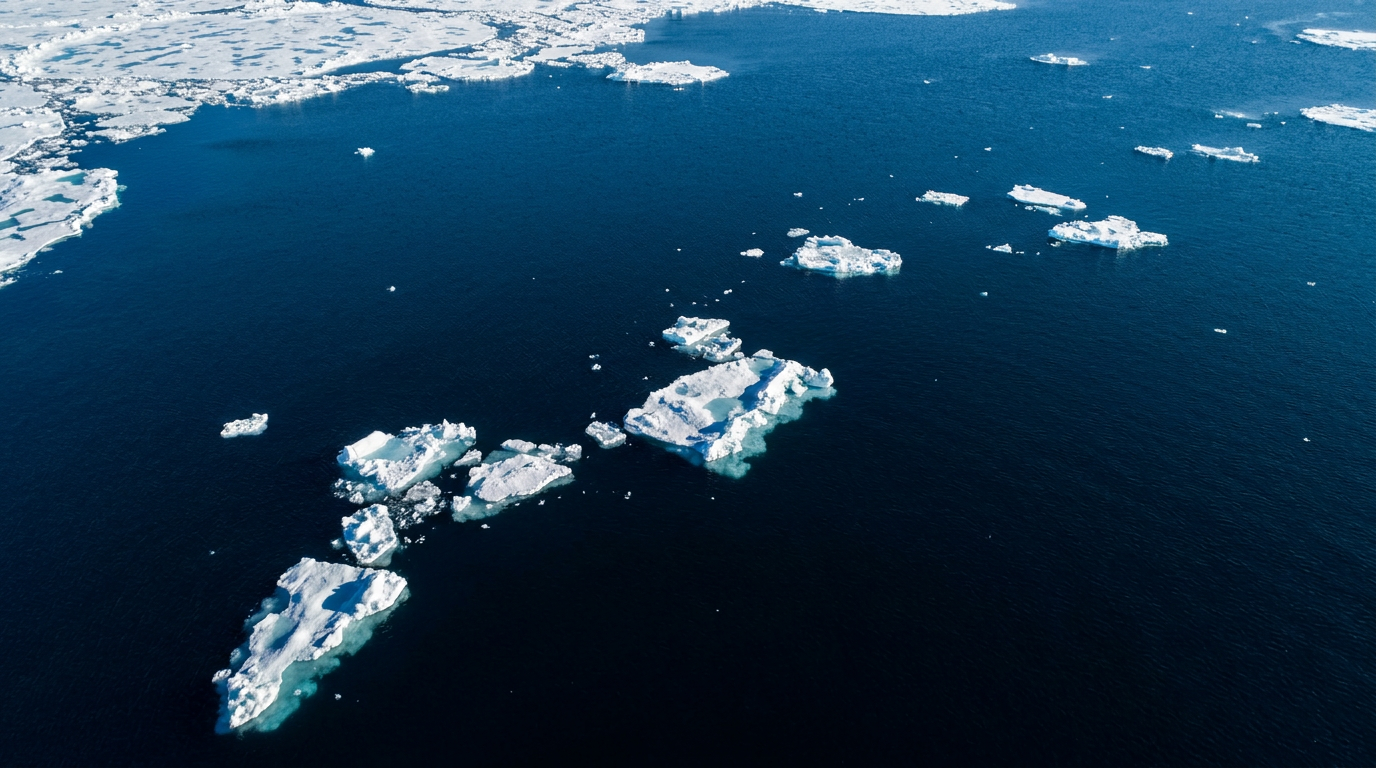
For decades, the narrative of a warming Arctic has focused on the visible disappearance of sea ice and the iconic species that depend on it. But beneath the surface, a far more insidious transformation has taken place. The Arctic Ocean has crossed a hidden, irreversible chemical threshold, fundamentally rewriting the rules of its ecosystem. Driven by accelerating ice loss, the ocean's nitrogen chemistry has shifted, rapidly depleting the core nutrients required to sustain marine life. This is not a future projection; scientists conclude that this tipping point was already passed more than a decade ago, triggering a cascade of consequences that will reshape the region's food web.[1][5]
The definitive evidence emerges from a comprehensive study led by researchers at the University of Edinburgh, published in the journal Communications Earth & Environment. By analyzing two decades of oceanographic data collected from the Fram Strait—a critical marine bottleneck where Arctic waters drain into the North Atlantic—the research team identified a systemic disruption to the ocean's biological foundation. Their findings confirm that the Arctic has transitioned from an ecosystem limited by sunlight to one starved of nitrate, the essential fertilizer for microscopic marine plants.[4][6]
To understand this shift, one must look at the historical baseline of the Arctic Ocean. For millennia, the thick, persistent sea ice acted as a shield, reflecting solar radiation and keeping the waters below in perpetual twilight. Under those conditions, the primary constraint on the growth of phytoplankton—the microscopic organisms at the base of the marine food web—was simply a lack of light. As anthropogenic climate change accelerated the melting of the ice cap, scientists initially expected a boom in marine productivity, assuming that more sunlight would automatically yield more phytoplankton.[2][8]
That assumption held true only briefly. As vast areas of the ocean were exposed to intense, continuous summer sunlight, the Arctic did experience temporary, explosive algae blooms. However, this surge in biological activity set a devastating trap. When these massive blooms of organic matter die, their cells sink to the seafloor. Because nearly half of the Arctic Ocean is underlain by shallow continental shelves, this decaying matter accumulates rapidly in relatively shallow coastal waters, fundamentally altering the chemistry of the sediment.[3][4]

As the sunken organic matter decomposes, it aggressively strips oxygen from the surrounding seafloor sediment. In these newly oxygen-poor environments, marine microbes are forced to adapt their metabolic processes. Instead of using oxygen, these bacteria begin consuming nitrate to survive, converting it into inert nitrogen gas through a process known as benthic denitrification. This microbial mechanism effectively removes the vital nutrient from the marine ecosystem entirely, venting it away as an unusable gas.[2][6]
As the sunken organic matter decomposes, it aggressively strips oxygen from the surrounding seafloor sediment.
The scale of this denitrification is staggering. The Edinburgh research team found that the bacteria are now consuming more nitrate than the Arctic ecosystem can naturally replenish. The very process of sea ice loss has amplified this microbial mechanism across the vast continental shelves, creating a nutrient vacuum. By 2009, the data indicates, the system crossed a critical ecological tipping point. The Arctic Ocean was no longer constrained by the darkness of the ice; it was now constrained by a severe and systemic famine of nitrate.[3][7]
Compounding this chemical depletion is a physical phenomenon known as stratification. As sea ice melts, it dumps massive volumes of cold, fresh water into the ocean. Because fresh water is less dense than the saltier seawater beneath it, it forms a buoyant layer on the surface, acting like a physical lid. This intense stratification prevents the deep, nutrient-rich ocean currents from mixing upward to replenish the surface waters. The ocean is effectively sealed off from its own deep-water fertilizer reserves.[2][5]
The biological consequences of this nutrient collapse are profound and immediate. Phytoplankton require nitrate to grow and reproduce. With the surface waters stripped of this nutrient, the Arctic can no longer support the large, energy-dense species of plankton that historically anchored the food web. Instead, the persistent nitrate depletion heavily favors much smaller, less nutritious species of plankton that can survive on meager resources.[1][7]

This shift at the microscopic level triggers a devastating trophic cascade. Because the new, smaller plankton provide significantly less energy, the trophic connections between predator and prey are weakened. The diminished energy transfer propagates upward through every tier of the ecosystem. Small fish and invertebrates that graze on plankton find themselves starving, which in turn threatens the seabirds, seals, whales, and polar mammals that depend on those fish for survival.[2][3]
The implications extend far beyond the geographic boundaries of the Arctic Circle. The Fram Strait and other Arctic gateways export water into the North Atlantic, carrying the chemical signature of the Arctic with them. Fisheries and economic analysts warn that this nutrient famine could ripple southward, compromising ecosystem stability in major commercial fishing grounds. While the exact timeline of these downstream effects requires further monitoring, the potential for widespread disruption to North Atlantic fish stocks is a looming economic threat.[3][7]
Perhaps the most alarming aspect of this chemical shift is its permanence. The researchers explicitly note that this tipping point is irreversible under current climate conditions. The stratification and denitrification processes are self-reinforcing: ice loss drives stratification, stratification drives nitrate depletion, and the altered microbial balance locks the system into its new, nutrient-poor state. Even if global temperatures were to stabilize and sea ice temporarily increased, the Arctic nutrient system operates on much longer timescales and would not rapidly recover.[2][4]

This phenomenon perfectly illustrates the concept of a climate tipping point—a threshold beyond which a system fundamentally and irreversibly reorganizes itself. The Arctic marine ecosystem has not merely warmed; its foundational chemistry has been rewritten. As policymakers and climate models continue to focus primarily on temperature targets and ice extent, this evidence pack underscores a stark reality: the most profound casualties of climate change are often the invisible chemical bonds that hold an ecosystem together.[5][8]

How we got here
Pre-2000s
Arctic phytoplankton growth is primarily limited by the amount of sunlight penetrating the thick sea ice.
2009
The Arctic Ocean ecosystem passes a critical tipping point, shifting from light-limited to nitrate-limited.
May 2026
University of Edinburgh researchers publish a 20-year data analysis confirming the irreversible chemical shift.
Viewpoints in depth
Marine Biogeochemists
Focus on the chemical cascade and the shift from light-limited to nitrate-limited conditions.
For marine biogeochemists, the story of the Arctic is no longer just about melting ice, but about the invisible chemical reactions happening in the seafloor sediment. They point to the massive increase in benthic denitrification—where microbes convert essential nitrate into inert nitrogen gas—as the true driver of ecosystem collapse. By analyzing decades of data from the Fram Strait, these researchers argue that the fundamental chemistry of the ocean has been rewritten, shifting the Arctic from a system constrained by darkness to one starved of nutrients.
Climate & Ecosystem Researchers
Emphasize the irreversible nature of the tipping point and the compounding effects of ocean stratification.
Climate researchers highlight the self-reinforcing feedback loops that make this tipping point irreversible. They focus on how the influx of fresh meltwater creates a buoyant 'lid' on the ocean surface, preventing deep, nutrient-rich waters from mixing upward. From this perspective, the physical loss of sea ice and the resulting stratification have locked the Arctic into a new, impoverished state. They argue that even if ice loss were temporarily halted, the nutrient deficit would persist for generations.
Fisheries & Conservation Analysts
Focus on the downstream economic and biological impacts on higher-trophic species and commercial fishing.
Conservationists and fisheries analysts are primarily concerned with the trophic cascade triggered by this nutrient famine. Because nitrate depletion favors smaller, less nutritious plankton, the energy transfer up the food chain is severely diminished. This camp warns that the starvation of small fish will inevitably impact apex predators like whales and polar bears. Furthermore, they caution that as these nutrient-depleted waters flow south through the Fram Strait, the ecological degradation could disrupt major commercial fishing grounds in the North Atlantic.
Factlen Editorial Synthesis
Evaluates the strength of the evidence and the broader implications for climate modeling.
The Factlen Editorial Team assesses that the evidence for this chemical tipping point is highly robust, grounded in 20 years of continuous oceanographic sampling rather than mere predictive modeling. The synthesis highlights a critical blind spot in public climate discourse: the overemphasis on visible metrics like ice extent at the expense of invisible, systemic chemical shifts. This evidence pack underscores that the Arctic ecosystem has already fundamentally reorganized itself, necessitating a shift in how global climate models account for marine nutrient cycles.
What we don't know
- The exact timeline for when the nutrient famine will begin to measurably impact commercial fish stocks in the North Atlantic.
- How specific apex predators, such as different species of whales and seals, might adapt their migratory patterns in response to the shifting food web.
- Whether any localized regions within the Arctic might retain enough deep-water mixing to serve as micro-refuges for larger plankton species.
Key terms
- Benthic denitrification
- A microbial process in seafloor sediments where bacteria convert nitrate into inert nitrogen gas, removing it from the ecosystem.
- Phytoplankton
- Microscopic, plant-like organisms that form the base of the marine food web.
- Stratification
- The layering of ocean water, where lighter, fresh meltwater sits on top of denser, salty water, preventing vertical mixing.
- Trophic cascade
- An ecological phenomenon triggered by the addition or removal of top predators or base nutrients, causing reciprocal changes throughout the food web.
- Fram Strait
- The ocean passage between Greenland and Svalbard, serving as a major bottleneck where Arctic waters drain into the North Atlantic.
Frequently asked
Why is the loss of nitrate so dangerous for the Arctic?
Nitrate is the foundational fertilizer for phytoplankton. Without it, the base of the food web collapses, starving everything from small fish to whales.
Can this chemical shift be reversed?
Researchers state it is irreversible under current climate conditions. Even if sea ice temporarily increases, the nutrient system takes much longer to recover.
How does this affect people outside the Arctic?
The nutrient famine is expected to ripple southward into the North Atlantic, potentially disrupting major commercial fishing grounds.
Sources
Source coverage
8 outlets
4 viewpoints surfaced








[1]New ScientistClimate & Ecosystem Researchers
Arctic Ocean reaches tipping point that could be dire for marine life
Read on New Scientist →[2]Live ScienceClimate & Ecosystem Researchers
The Arctic Ocean has crossed a tipping point that is wreaking havoc on the region's food chain
Read on Live Science →[3]Oceanographic MagazineFisheries & Conservation Analysts
Arctic ocean passes 'irreversible' chemical tipping point
Read on Oceanographic Magazine →[4]Communications Earth & EnvironmentMarine Biogeochemists
Benthic denitrification amplified by sea ice loss drives nitrate depletion in the Arctic Ocean
Read on Communications Earth & Environment →[5]Factlen Editorial TeamFactlen Editorial Synthesis
Synthesis by Factlen editorial team
Read on Factlen Editorial Team →[6]University of EdinburghMarine Biogeochemists
Arctic Ocean ecosystem passed a tipping point around 2009, study finds
Read on University of Edinburgh →[7]Tech ExploristFisheries & Conservation Analysts
Arctic Ocean ecosystem passed a tipping point around 2009
Read on Tech Explorist →[8]National Institutes of HealthClimate & Ecosystem Researchers
Tipping Points in the Arctic Marine Ecosystem
Read on National Institutes of Health →
More in science
See all 5 stories →Brain-Computer Interfaces
At-Home Brain Implant Restores Independent Communication for Paralyzed ALS Patient
0 sources

Arctic Ecosystem
Arctic Ocean Reaches Nutrient Tipping Point as Sea Ice Retreats
0 sources
Arctic Tipping Point
Arctic Ocean Crosses Irreversible Chemical Tipping Point, Starving Marine Food Web
0 sources
Every angle. Every day.
Get science stories with full source coverage and perspective breakdowns delivered to your inbox.