
Why the Strait of Hormuz Peace Deal Won't Immediately Fix Global Inflation
A preliminary US-Iran agreement aims to reopen the world's most critical energy chokepoint, but central bankers and economists warn the inflationary damage is already embedded in global supply chains.
By Factlen Editorial Team
- Central Bankers & Economists
- Focuses on the sticky nature of inflation and the lag in supply chain normalization, arguing that rates must stay high despite the peace deal.
- Geopolitical & Security Analysts
- Emphasizes Iran's strategic leverage and the fragility of the peace deal, viewing the Strait as a potent weapon of mass disruption.
- Global Trade Monitors
- Highlights the physical bottleneck of stranded oil and LNG, and the cascading effects on global food security and developing nations.
What's not represented
- · Shipping and logistics operators facing skyrocketing freight insurance premiums.
- · Agricultural producers in the Global South struggling with fertilizer shortages.
Why this matters
The closure of the Strait of Hormuz has stranded 20% of the world's oil and LNG, driving up the cost of fuel, fertilizer, and food globally. Even as the waterway reopens, the resulting inflation will continue to impact household budgets, interest rates, and grocery prices for months to come.
Key points
- A preliminary US-Iran peace deal aims to reopen the Strait of Hormuz, unblocking 20% of global oil trade.
- Central banks warn that the inflationary shock is already embedded in the economy and will persist for months.
- The European Central Bank raised interest rates to 2.25% in response to Eurozone inflation hitting 3.2%.
- Developing nations face severe food security risks as stranded LNG shipments halt global fertilizer production.
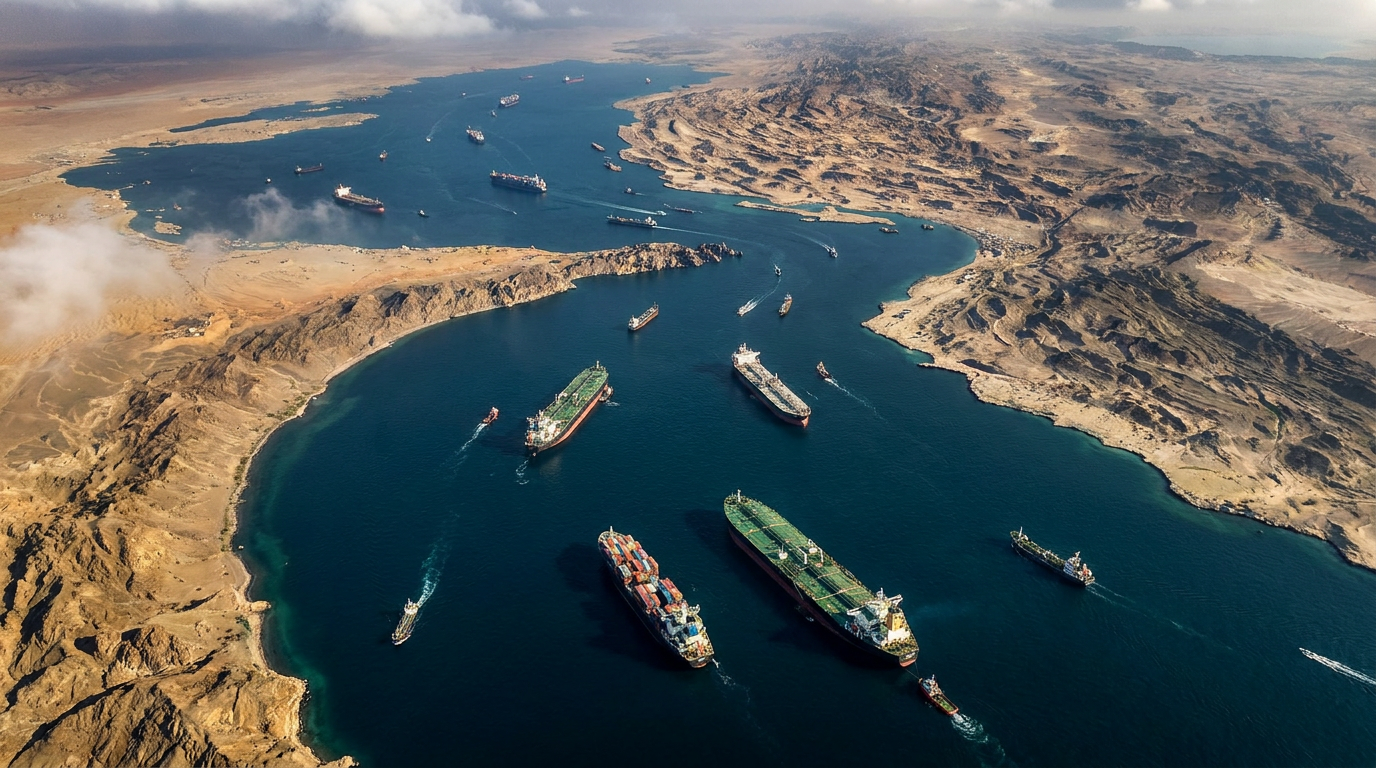
The announcement of a preliminary US-Iran peace deal has raised hopes that the Strait of Hormuz—the world's most critical energy chokepoint—will soon reopen to commercial shipping. U.S. President Donald Trump declared an end to the naval blockade, signaling a potential resumption of the 20% of global oil trade that has been stranded since the conflict erupted in February 2026.[7]
Financial markets initially reacted with relief, anticipating a sharp drop in energy costs. However, central bankers, intelligence officials, and energy economists are warning that the global economic shock triggered by the closure is far from over. The disruption has fundamentally altered supply chains, and the cascading effects on inflation, food security, and global trade will likely persist for months, even if the physical waterway is cleared immediately.[2][4][6][8]
To understand the magnitude of the shock, one must look at the sheer volume of energy that relies on the Strait of Hormuz. In normal times, approximately 20 million barrels of crude oil and 80 million tonnes of liquefied natural gas pass through the narrow channel annually. This represents roughly one-fifth of global oil consumption and a quarter of the world's LNG trade.[5][6]

When the Islamic Revolutionary Guard Corps effectively shut down the strait, it triggered what the International Energy Agency has characterized as a historic supply disruption. Alternative routes, such as pipelines bypassing the strait in Saudi Arabia and the United Arab Emirates, possess only a fraction of the necessary capacity, leaving millions of barrels stranded and rendering the world's spare production capacity largely inaccessible.[5]
The immediate consequence was a violent spike in energy markets. Brent crude prices surged, and LNG spot prices in Asia more than doubled as buyers scrambled to secure alternative supplies. This energy bottleneck is the primary driver of the current economic crisis, acting as a tax on global growth and a catalyst for widespread inflation.[6]
The inflationary wave has already crashed onto European shores. Eurozone consumer price inflation accelerated to 3.2% in May 2026, driven largely by the soaring cost of imported fuel and natural gas. This figure sits uncomfortably above the European Central Bank's mandated 2% target, forcing policymakers into a difficult corner.[3]

In response, the ECB recently raised its main deposit rate to 2.25%, marking its first rate hike since 2023. ECB President Christine Lagarde and Chief Economist Philip Lane have explicitly warned that the inflation unleashed by the Middle East conflict is widening beyond just energy. The higher costs of transport and manufacturing are now bleeding into the prices of everyday goods and services.[3][4]
In response, the ECB recently raised its main deposit rate to 2.25%, marking its first rate hike since 2023.
Even with a peace deal on the table, central bankers remain hawkish. ECB Governing Council member Gabriel Makhlouf recently cautioned that an end to the conflict does not guarantee an immediate end to the economic shock. Infrastructure damage, elevated freight insurance premiums, and the sheer logistical backlog mean that energy prices will likely adjust with a significant lag.[2][4]
Four months of elevated energy prices means that the pipeline of inflation is already full, and secondary effects on food and services will be felt well into next year. This phenomenon, known as second-round effects, occurs when companies pass their increased operational costs onto consumers, embedding inflation deeper into the broader economy.[3][4]

Beyond the industrialized West, the closure of the Strait has triggered a severe crisis in the developing world. Standard economic models often underestimate the impact of energy shocks because they miss the bottleneck mechanism, where energy disruptions cascade into other critical sectors.[6]
Natural gas is a primary feedstock for the production of nitrogen-based fertilizers. As LNG shipments from Qatar and other Gulf states were blocked, fertilizer production stalled, and prices skyrocketed. This dynamic directly threatens global food security, particularly during the crucial Northern Hemisphere planting season.[6]
Research from the Kiel Institute for the World Economy highlights that developing nations in South Asia, Sub-Saharan Africa, and the Middle East are bearing the brunt of this crisis. While the aggregate GDP loss for a country like the United States might be relatively moderate, nations highly dependent on imported energy and fertilizers face food price increases and welfare losses that are exponentially larger.[6]

Geopolitically, the crisis has demonstrated the immense leverage Iran wields over the global economy. U.S. intelligence reports indicate that Tehran views its control over the Strait of Hormuz as a weapon of mass disruption, potentially more potent than its conventional military capabilities.[1][8]
Analysts warn that Iran may be reluctant to fully relinquish this leverage, even under the terms of an interim peace agreement. The ability to throttle global energy markets provides Tehran with a powerful tool to ensure compliance with ceasefire terms and to extract further concessions during ongoing negotiations.[7][8]
Furthermore, the physical security of the strait remains precarious. The proliferation of asymmetric warfare tactics, such as drone swarms, smart mines, and shore-to-ship missiles, means that commercial shipping companies will require substantial security guarantees before resuming normal operations.[1][7]
The coming months will test the resilience of the global economy and the durability of the US-Iran peace deal. While the prospect of reopening the Strait of Hormuz offers a glimmer of hope, the structural damage to supply chains, the entrenched inflationary pressures, and the lingering geopolitical mistrust ensure that the economic fallout of the 2026 Iran war will be felt for years to come.[2][4][7]
How we got here
Feb 2026
US-Israel conflict with Iran escalates, leading to the effective closure of the Strait of Hormuz.
Mar 2026
Global energy markets experience a historic supply disruption, with Brent crude and LNG prices surging.
May 2026
Eurozone inflation accelerates to 3.2%, driven by the cascading effects of the energy shock.
Jun 12, 2026
The European Central Bank raises interest rates to 2.25% to combat widening inflation.
Jun 14, 2026
The US and Iran announce a preliminary peace deal aimed at reopening the Strait of Hormuz.
Viewpoints in depth
Central Banks' View
Focuses on the lag in supply chains and sticky inflation.
Central bankers argue that even if oil flows resume immediately, the economic damage is already 'in the pipeline.' The months-long disruption has forced manufacturers and transport companies to absorb massive costs, which they are now passing on to consumers. Consequently, institutions like the ECB maintain that interest rates must remain elevated to prevent these 'second-round effects' from permanently embedding higher inflation into the broader economy.
Geopolitical Analysts' View
Focuses on Iran's strategic leverage and the fragility of the peace deal.
Security experts view the Strait of Hormuz not just as a transit route, but as Iran's primary 'weapon of mass disruption.' They argue that Tehran is unlikely to fully relinquish its control over the waterway, as the ability to throttle 20% of the world's oil provides unmatched leverage over the United States and its allies. Analysts caution that the interim peace deal remains highly fragile, and commercial shipping will require substantial security guarantees before returning to normal operations.
Developing Nations' Reality
Focuses on the bottleneck effect and the cascade into global food prices.
For the Global South, the crisis extends far beyond the price of gasoline. The blockade of liquefied natural gas (LNG) has severely disrupted the production of nitrogen-based fertilizers, triggering a secondary crisis in global agriculture. Economists highlight that developing nations heavily dependent on imported energy and fertilizers are bearing the brunt of the shock, facing exponential increases in food prices and severe threats to food security during critical planting seasons.
What we don't know
- How quickly commercial shipping companies will feel secure enough to resume normal transit through the Strait.
- Whether the interim US-Iran peace deal will hold long enough to fully clear the logistical backlog.
- The exact timeline for when elevated fertilizer prices will fully translate into higher grocery costs globally.
Key terms
- Strait of Hormuz
- A narrow, strategically critical waterway between the Persian Gulf and the Gulf of Oman through which 20% of global oil passes.
- Second-round effects
- An economic phenomenon where initial price shocks, like higher energy costs, bleed into the broader economy by raising the prices of everyday goods, services, and wages.
- Liquefied Natural Gas (LNG)
- Natural gas that has been cooled to a liquid state for easier and safer non-pipeline transport, heavily relied upon for global energy and fertilizer production.
- Bottleneck mechanism
- A supply chain vulnerability where a disruption in a critical primary input (like energy) halts the production of secondary essential goods (like fertilizer and food).
Frequently asked
Will the US-Iran peace deal immediately lower inflation?
No. Central bankers warn that the infrastructure damage and supply chain backlog mean elevated prices are already 'in the pipeline' and will take months to normalize.
How much of the world's oil goes through the Strait of Hormuz?
Approximately 20% of globally traded crude oil and 25% of liquefied natural gas (LNG) pass through the strait.
Why are food prices affected by the Strait's closure?
Natural gas is a primary ingredient in nitrogen-based fertilizers. The blockade of LNG shipments stalled fertilizer production, which cascaded into higher global food prices.
Why did the European Central Bank raise interest rates?
The ECB raised rates to 2.25% to combat inflation that reached 3.2% in May, aiming to prevent the energy price shock from permanently raising the cost of other goods and services.
Sources
Source coverage
8 outlets
3 viewpoints surfaced








[1]ForbesGeopolitical & Security Analysts
Trump’s War Now Means Iran Can Shut Strait Of Hormuz Anytime, U.S. Intel Finds
Read on Forbes →[2]BloombergCentral Bankers & Economists
ECB’s Makhlouf Sees Lingering Price Pressures Despite Iran Deal
Read on Bloomberg →[3]The GuardianCentral Bankers & Economists
ECB raises eurozone interest rates as Iran war stokes inflation
Read on The Guardian →[4]Financial PostCentral Bankers & Economists
ECB's Lane Says Inflation Is in the Pipeline Despite Iran Deal
Read on Financial Post →[5]International Energy AgencyGlobal Trade Monitors
Strait of Hormuz - About
Read on International Energy Agency →[6]Kiel Institute for the World EconomyGlobal Trade Monitors
The Cost of Closing the Strait of Hormuz: Energy Bottlenecks and Global Food Security
Read on Kiel Institute for the World Economy →[7]Atlantic CouncilGeopolitical & Security Analysts
Experts react: The US and Iran just announced an interim peace deal. Here's what we know so far.
Read on Atlantic Council →[8]TRT WorldGeopolitical & Security Analysts
US intelligence warns Iran unlikely to open Strait of Hormuz soon — report
Read on TRT World →
Every angle. Every day.
Get business stories with full source coverage and perspective breakdowns delivered to your inbox.