
UK Investigates Reports of Russian Warship Firing Warning Shots at British Yacht in English Channel
The UK Ministry of Defence is investigating reports that a Russian navy frigate fired warning shots near a British-registered civilian yacht in the English Channel.

The United Kingdom's Ministry of Defence has launched an urgent investigation following reports that a Russian naval vessel fired warning shots at a British-registered civilian yacht in the English Channel. The encounter, which took place on Tuesday, marks a sharp and unexpected escalation of maritime tensions just off the southern British coast.
According to defense sources, the civilian yacht reported that the Russian warship discharged its weapons at a distance of approximately 500 yards. While no injuries or structural damage were reported by the civilian crew, the discharge of naval weaponry in one of the world's most congested shipping lanes has triggered immediate alarm across European defense establishments.[1][2]
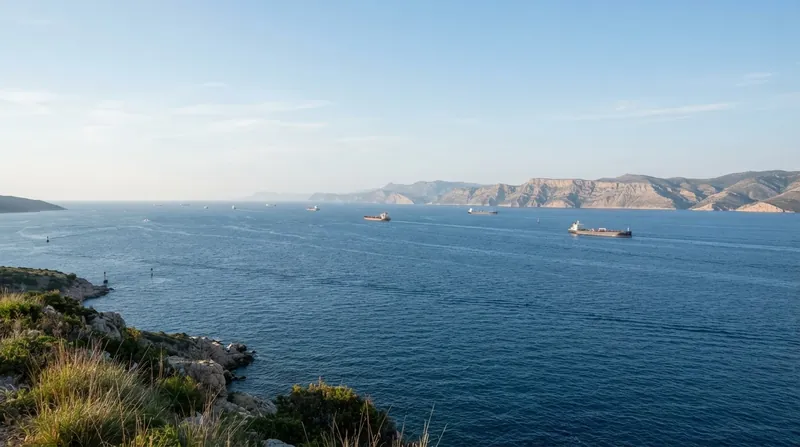
The incident unfolded approximately 20 nautical miles south of the Isle of Wight, placing the vessels just outside UK territorial waters but squarely within the international waters of the Channel. At the time of the confrontation, the Royal Navy offshore patrol vessel HMS Mersey was already on station, actively shadowing the Russian warship.
This shadowing is a standard, long-standing protocol for foreign military vessels transiting the strait. Following the reported gunfire, a seaboat deployed from a second British patrol vessel, HMS Tyne, intercepted the civilian yacht to gather preliminary details and visually confirm the safety of those aboard. The yacht was subsequently cleared to continue its journey unhindered.[2][5]
Military analysts and regional media have identified the Russian vessel involved as an Admiral Grigorovich-class frigate, a heavily armed, modern warship frequently utilized by the Russian Navy for power projection and escort duties.
While Russian warships periodically transit the English Channel en route to or from their home ports in the Baltic or Northern fleets, they are strictly and continuously monitored by NATO forces. Discharging weapons—even as a warning or signaling mechanism—near an unarmed civilian craft represents a severe departure from routine transit behavior and violates the established norms of safe seamanship in crowded international straits.[2]
The Ministry of Defence has publicly confirmed the ongoing investigation into the Channel incident but has deliberately withheld further operational specifics while the inquiry remains active. A spokesperson stated only that the department was "investigating reports of an incident in the Channel."
This measured public response reflects the extreme sensitivity of the situation; confirming an unprovoked hostile act by a Russian military vessel against a British-flagged ship would demand a forceful diplomatic, and potentially military, response from London. Consequently, investigators are meticulously reviewing radar tracks, acoustic data, and eyewitness testimonies to establish the exact sequence of events.[1][2]
The warning shots cannot be viewed in a vacuum, as they arrive during a week of unprecedented British action against Russian maritime interests in the exact same waters. Just days prior to the frigate's transit, Royal Marine Commandos and officers from the National Crime Agency executed a daring, high-stakes boarding operation in the Channel.
Their target was the Smyrtos, a suspected Russian "shadow fleet" oil tanker. This unprecedented UK-led interdiction was designed to crack down on vessels actively circumventing international sanctions, marking a newly aggressive phase in Britain's economic warfare against Moscow's energy revenues.[1][3][4]
The legal and diplomatic fallout from the tanker seizure escalated concurrently on Tuesday. Ajay Pant, the 38-year-old captain of the intercepted shadow fleet vessel, appeared in a British court and was formally remanded into custody. Pant faces severe charges of breaching international sanctions by allegedly transporting 98,000 tonnes of prohibited Russian oil to a third country.
The successful seizure of the Smyrtos and the subsequent criminal prosecution of its captain represent a significant escalation in London's willingness to aggressively enforce the Western embargo, directly challenging the lucrative shadow logistics network that funds the Russian state.[3]
Despite the glaring geographical and temporal proximity of the two events, UK defense sources have cautioned against prematurely linking the frigate's warning shots to the seizure of the Smyrtos. Preliminary assessments currently treat the yacht encounter as an isolated, albeit highly reckless, incident rather than a coordinated military reprisal for the lost tanker.
Defense analysts note that Russian naval doctrine does not typically involve harassing random civilian yachts as a form of state retaliation. However, the sheer density of these confrontations underscores the English Channel's rapid transformation into a volatile theater of the broader geopolitical standoff.[4]
The presence of the shadow fleet itself has already elevated the baseline risk in the Channel. These vessels, often aging tankers sailing under flags of convenience with opaque ownership structures and inadequate insurance, pose a massive environmental and navigational hazard. By actively intercepting these ships, the UK is attempting to force them out of its adjacent waters. However, this aggressive enforcement inherently increases the friction between British maritime authorities and Russian state interests, creating an environment where misunderstandings or shows of force by transiting Russian warships become increasingly likely.[3][4]
The maritime friction mirrors a broader, rapid deterioration in bilateral relations between London and Moscow. In the days leading up to the Channel incidents, Russia's Federal Security Service (FSB) expelled two British diplomats from the country. The FSB publicly accused the diplomats of conducting an "undeclared intelligence presence" within the British Embassy, a charge the UK government has dismissed as baseless retaliation. This diplomatic tit-for-tat, combined with the aggressive naval posturing and economic interdictions, highlights a bilateral relationship that has effectively flatlined, leaving very few channels open for de-escalation.[5]
For civilian mariners, the incident introduces a chilling new variable into one of the world's busiest commercial arteries. The English Channel sees hundreds of commercial ships, ferries, and recreational yachts pass through its waters daily.
The prospect of a heavily armed frigate firing warning shots at a private yacht shatters the assumption of safe passage that underpins global maritime trade. Shipping industry groups and recreational sailing associations are likely to demand clearer guidance from the UK government on how to navigate safely when Russian naval assets are operating in the vicinity.[2]
As the Ministry of Defence concludes its investigation into the frigate's actions, the Royal Navy remains on a heightened state of alert. The standing practice of escorting and monitoring foreign warships through waters close to the United Kingdom will undoubtedly be reinforced, potentially with heavier assets deployed to shadow future Russian transits.
The ultimate outcome of the investigation will determine whether London treats the warning shots as a dangerous lapse in judgment by a single Russian captain, or as a deliberate, state-sanctioned escalation designed to test British resolve in its own backyard.[5]
Key points
- The UK Ministry of Defence is investigating reports that a Russian frigate fired warning shots near a British yacht.
- The incident occurred in international waters approximately 20 nautical miles south of the Isle of Wight.
- The civilian yacht reported no injuries or damage and continued its journey after being checked by the Royal Navy.
- The encounter follows the UK's recent seizure of a Russian shadow fleet oil tanker in the same area.
What we don’t know
- Whether the warning shots were a deliberate provocation authorized by Russian command or a localized decision by the frigate's captain.
- What specific actions the UK Ministry of Defence will take if the investigation confirms an unprovoked hostile act.
- How the incident will impact the routing and insurance premiums of commercial shipping in the English Channel.
How we got here
Last week
UK Royal Marine Commandos board and seize the Russian shadow fleet tanker Smyrtos in the English Channel.
Days prior
Russia's FSB expels two British diplomats, accusing them of espionage.
Tuesday morning
A Russian frigate fires warning shots near a UK-registered yacht 20 nautical miles south of the Isle of Wight.
Tuesday afternoon
The captain of the seized Smyrtos tanker is remanded into custody by a British court.
- UK Defense Establishment
- Argues that the English Channel must remain secure for civilian transit and that aggressive enforcement against the shadow fleet is necessary.
- Russian Strategic Posture
- Views the Channel as an international waterway for power projection and frames UK interdictions as hostile provocations.
- International Maritime Observers
- Deeply concerned about the militarization of a vital shipping lane and the risks of escalation in a congested chokepoint.
Perspectives this story doesn't cover
- The civilian yacht's crew
- Commercial shipping insurers
Sources
Source coverage
5 outlets
3 viewpoints surfaced





- [1]NYTInternational Maritime Observers
Russian Navy Ship Accused of Firing Warning Shots at U.K. Yacht
Read on NYT → - [2]BBCUK Defense Establishment
UK investigating reports Russian warship fired warning shots near yacht in English Channel
Read on BBC → - [3]The GuardianUK Defense Establishment
Russian tanker captain remanded into custody after vessel seized in Channel
Read on The Guardian → - [4]EuractivInternational Maritime Observers
Russian warship fired 'warning shots' at yacht in Channel: UK defence source
Read on Euractiv → - [5]The Moscow TimesRussian Strategic Posture
Russian Frigate Reportedly Fired 'Warning Shots' at British Yacht in Channel
Read on The Moscow Times →
More in News & Politics
See all →Defense Tech
Ukraine Deploys Domestically Built FP-7 Ballistic Missile in Combat for First Time
6 sources

Border Conflict
Pakistan Launches Second Wave of Airstrikes on Afghan Drone Sites as Taliban Vows Retaliation
5 sources

UN General Assembly
Netanyahu Attacks Enemies and Allies in Fiery UN Speech, Sparking Mass Envoy Walkout
8 sources

Russia-Ukraine War
Ukraine Launches Largest Drone Attack on Moscow as Russian Elections Conclude
8 sources
Comments
Every angle. Every day.
Get News & Politics stories with full source coverage and perspective breakdowns, free every day.