
US and Iran Reach Tentative Truce to End 100-Day War and Reopen Strait of Hormuz
The United States and Iran have agreed to a 14-point Memorandum of Understanding to halt hostilities, lift naval blockades, and launch a 60-day window for nuclear negotiations. However, the deal's survival is threatened by ongoing disputes over Israeli troop deployments in southern Lebanon.
By Factlen Editorial Team
- Washington & Western Allies
- Prioritizes reopening global shipping lanes and securing a pathway to a new nuclear containment deal.
- Tehran & Allied Proxies
- Demands immediate financial relief and insists the truce must protect its regional allies, particularly Hezbollah.
- Israeli Security Establishment
- Maintains that it is not bound by the U.S.-Iran agreement and will continue operations to secure its northern border.
- Diplomatic Mediators
- Focuses on de-escalation, humanitarian relief, and ensuring the 60-day negotiation window does not collapse.
What's not represented
- · Lebanese civilians displaced by the conflict
- · Global shipping conglomerates
Why this matters
The reopening of the Strait of Hormuz immediately stabilizes global energy markets and lowers shipping costs, directly impacting inflation and consumer gas prices. However, if the fragile ceasefire in Lebanon collapses due to ongoing Israeli operations, the U.S. could be rapidly pulled back into a direct regional conflict.
Key points
- The U.S. and Iran have agreed to a 14-point MoU to end 100 days of direct military conflict.
- The deal immediately reopens the Strait of Hormuz and lifts the U.S. naval blockade on Iranian ports.
- A 60-day negotiation window will be launched to forge a permanent nuclear containment treaty.
- Israel maintains it is not bound by the agreement and plans to keep troops in southern Lebanon, a move Iran says violates the truce.
The 100-day conflict that choked global shipping and ignited the Middle East is on the verge of a fragile, high-stakes pause. The United States and Iran have agreed to a 14-point Memorandum of Understanding (MoU) designed to halt hostilities, reopen the Strait of Hormuz, and lift the U.S. naval blockade on Iranian ports. Mediated by Pakistan and Qatar, the agreement is scheduled to be formally signed in Geneva, Switzerland, this Friday. The breakthrough follows months of intense military exchanges that sent global energy markets into a tailspin, disrupted international supply chains, and displaced over a million people across the Levant. U.S. President Donald Trump announced the framework on social media, declaring the deal "complete" and urging global shipping companies to immediately resume transit through the critical Middle Eastern waterways.[1][3][7]
The immediate economic relief mechanisms are central to the MoU's architecture. According to draft details released by Iranian state media and confirmed by regional diplomats, the agreement mandates the complete lifting of the U.S. naval blockade within 30 days. This blockade, enforced by a coalition of Western naval assets, had effectively paralyzed Iran's primary export terminals. In tandem, the agreement stipulates the unfreezing of $24 billion in Iranian assets held in foreign accounts. These funds, long trapped by a web of international sanctions, are expected to be released in tranches during the upcoming negotiation period, providing a vital lifeline to Tehran's battered domestic economy.[1][3]
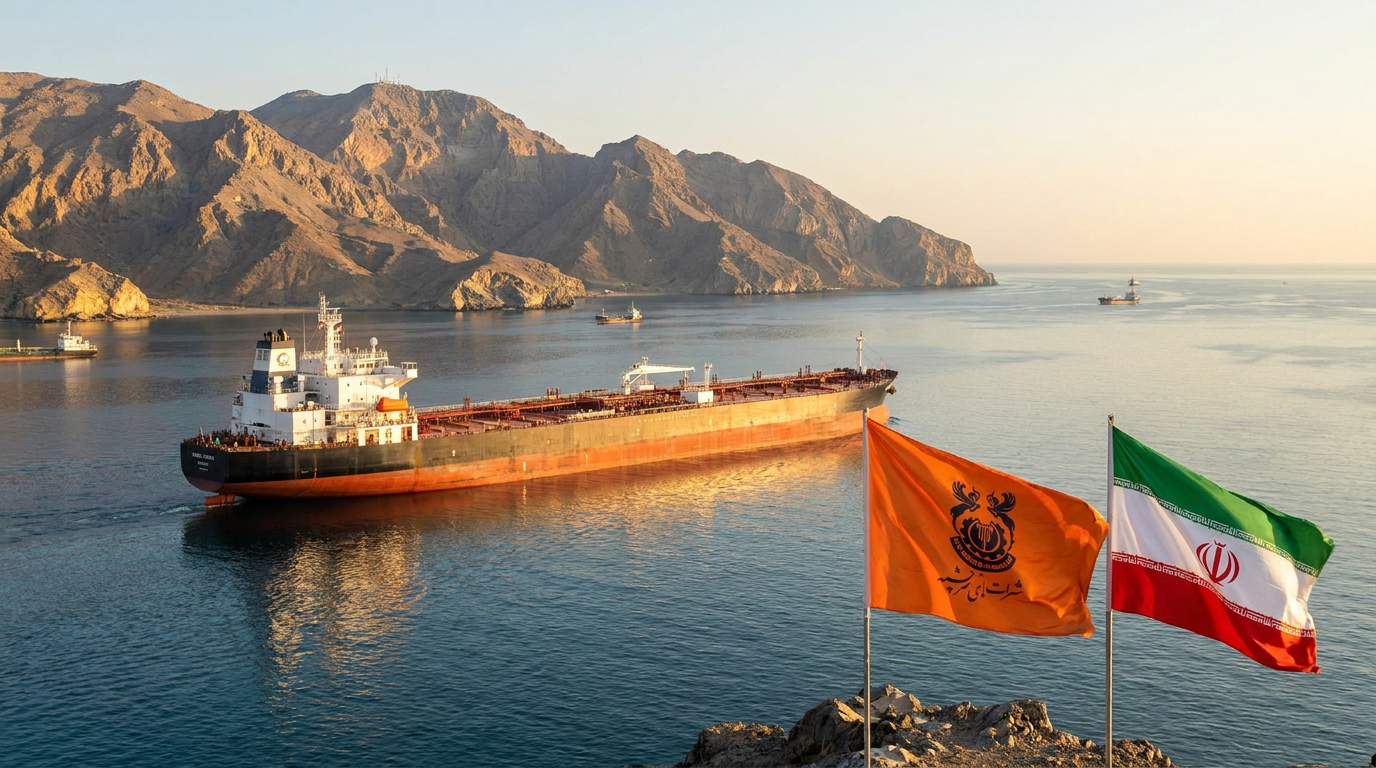
In exchange for this financial and maritime relief, Iran has committed to a permanent cessation of direct hostilities and the immediate reopening of the Strait of Hormuz. This narrow waterway between the Persian Gulf and the Gulf of Oman is arguably the world's most critical maritime choke point, through which roughly a fifth of the globe's daily oil consumption passes. The de facto Iranian blockade of the strait over the past three months had triggered a global energy crisis, forcing shipping conglomerates to reroute vessels and driving up freight insurance premiums. The mere prospect of unhindered oil flows immediately sent global crude prices tumbling, offering a much-needed reprieve to an inflation-weary global economy.[1][3]

The diplomatic architecture of the truce relies heavily on regional mediators who maintained open channels when direct Washington-Tehran communication collapsed. Pakistan and Qatar served as the primary conduits for the backchannel negotiations, shuttling draft proposals between the warring capitals. The Qatari Ministry of Foreign Affairs released a statement praising the "determination of both the American and Iranian sides" to resolve their differences through peaceful means. By hosting the preliminary talks and guaranteeing the initial steps of the MoU, Doha and Islamabad have positioned themselves as the vital guarantors of a truce that remains highly vulnerable to miscalculation or sudden escalation by rogue actors.[1][8]
Beyond the immediate military de-escalation, the MoU establishes a strict 60-day negotiating window to forge a comprehensive final settlement. This broader treaty would primarily address Iran's nuclear program, which has advanced significantly since the collapse of previous international accords. The goal is to establish a verifiable framework that permanently caps Tehran's uranium enrichment levels in exchange for the total lifting of legacy economic sanctions. The 60-day window represents a high-pressure sprint for diplomats; failure to reach a permanent accord could trigger a snapback of the naval blockade and a resumption of the devastating regional war.[1][3]
Beyond the immediate military de-escalation, the MoU establishes a strict 60-day negotiating window to forge a comprehensive final settlement.
To incentivize a final nuclear agreement, the Trump administration has reportedly floated unprecedented financial carrots. The Financial Times reported that the United States is prepared to allow the establishment of a $300 billion international investment fund for Iran if Tehran agrees to strict, verifiable nuclear limits and a permanent end to its proxy warfare. While President Trump publicly dismissed the specific $300 billion figure as "fake news" on social media, diplomatic sources indicate that massive foreign direct investment packages are indeed on the table. This economic integration strategy aims to make the financial cost of future Iranian military adventurism prohibitively high.[3][6][7]

However, the most volatile component of the agreement lies outside the direct control of either Washington or Tehran: the ongoing presence of the Israel Defense Forces (IDF) in southern Lebanon. The MoU explicitly calls for a ceasefire "across all fronts, including Lebanon." Hezbollah, the heavily armed Lebanese militant group backed by Iran, swiftly welcomed the agreement. In a written statement, Hezbollah framed Lebanon's inclusion as a victory for Iranian steadfastness and warned that it would not accept any attacks that violate Lebanon's sovereignty. For Tehran, ensuring that its primary regional ally survives the conflict intact is a non-negotiable pillar of the truce.[2][3]
The Israeli government, however, has bluntly rejected the premise that a bilateral pact between Washington and Tehran dictates its military posture. Israeli National Security Minister Itamar Ben-Gvir stated unequivocally that "Trump's agreement does not bind us," reflecting a broader consensus within the Israeli security establishment. Prime Minister Benjamin Netanyahu has vowed to maintain a security buffer zone in southern Lebanon, arguing that IDF troops must remain in the territory to prevent Hezbollah from launching cross-border anti-tank missiles and to allow tens of thousands of displaced Israelis to safely return to their homes in the north. Israel insists it is not a party to the Geneva agreement and retains full freedom of operation.[3][4]
This fundamental disconnect creates a dangerous diplomatic collision course that could unravel the entire MoU before the ink is dry. Iranian Foreign Minister Abbas Araghchi delivered a stark warning to foreign diplomats in Tehran, declaring that any continued Israeli occupation of Lebanese territory—or further Israeli airstrikes—would be viewed by the Islamic Republic as a direct violation of the U.S.-Iran agreement. Araghchi's ultimatum effectively holds Washington responsible for reining in Israeli military operations, a dynamic that places immense pressure on the U.S. administration to force a withdrawal that Israel currently refuses to execute.[4]

The Lebanese government finds itself trapped in the middle of this geopolitical tug-of-war, bearing the brunt of the humanitarian crisis. Prime Minister Nawaf Salam is pursuing frantic diplomatic efforts with the U.S. State Department to secure a full Israeli withdrawal, while a fragile, tense quiet has temporarily settled over the southern border. Analysts at the Stimson Center note that while Washington and Beirut have historically tried to separate the U.S.-Iran negotiating track from the Israel-Lebanon conflict, the new MoU effectively merges them. This linkage makes the survival of the broader nuclear and maritime peace deal entirely contingent on the unpredictable actions of Israeli and Hezbollah commanders on the ground.[2][5]
Despite the glaring loopholes regarding Lebanon, the broader international community has exhorted all parties to seize the diplomatic opening. United Nations Secretary-General Antonio Guterres praised the framework as a "critical step" toward a peaceful settlement, emphasizing that the global economy cannot sustain another prolonged closure of Middle Eastern shipping lanes. European allies, who have borne the brunt of the energy price spikes, have quietly signaled their willingness to participate in the proposed Iranian investment funds, provided the International Atomic Energy Agency (IAEA) is granted unfettered access to Iranian nuclear facilities during the 60-day window.[3][8]

As Friday's signing ceremony in Switzerland approaches, the immediate test will be the waters of the Persian Gulf. If oil tankers can safely transit the Strait of Hormuz without incident, the economic dividends of the truce will materialize quickly, building crucial momentum for the diplomats. Yet the ultimate success of the MoU rests on a precarious sequence of events: maintaining discipline among proxy forces, bridging the massive gap on nuclear enrichment limits, and somehow resolving the entrenched Israeli-Hezbollah standoff without shattering the fragile U.S.-Iran consensus. The 100-day war may be pausing, but the diplomatic minefield it leaves behind is just as explosive.[1][2][3]
How we got here
March 2026
The U.S.-Israel war on Iran begins, triggering a de facto Iranian blockade of the Strait of Hormuz and a U.S. naval blockade of Iranian ports.
May 2026
Global energy markets experience severe volatility as the 100-day conflict disrupts roughly a fifth of the world's daily oil supply.
June 14, 2026
U.S. President Donald Trump announces that a deal with Iran is 'complete' and urges global shipping to resume.
June 19, 2026
The formal signing ceremony for the 14-point Memorandum of Understanding is scheduled to take place in Geneva, Switzerland.
Viewpoints in depth
Washington's Strategic View
The U.S. prioritizes reopening global shipping lanes and securing a pathway to a new nuclear containment deal.
For the U.S. administration, the immediate priority is macroeconomic stability. The 100-day war and the closure of the Strait of Hormuz posed an unacceptable risk to global energy prices and supply chains. By offering the unfreezing of $24 billion and floating the prospect of a massive international investment fund, Washington hopes to incentivize Tehran to accept strict, verifiable limits on its nuclear enrichment program during the 60-day window, effectively trading economic integration for regional demilitarization.
Tehran's Red Lines
Iran demands immediate financial relief and insists the truce must protect its regional allies, particularly Hezbollah.
Iranian leadership views the MoU as a validation of its 'resistance' strategy. Tehran's primary focus is securing the immediate lifting of the U.S. naval blockade and accessing its frozen foreign reserves to stabilize its domestic economy. However, Iran has drawn a strict red line regarding Lebanon: it considers any ongoing Israeli military presence or operations in southern Lebanon as a direct violation of the ceasefire, attempting to use the U.S. agreement as a shield to protect Hezbollah's infrastructure.
Israel's Security Imperative
Israel maintains that it is not bound by the U.S.-Iran agreement and will continue operations to secure its northern border.
The Israeli security establishment fundamentally rejects the idea that a bilateral agreement between Washington and Tehran can dictate Israel's tactical posture. Prime Minister Benjamin Netanyahu and his cabinet argue that a physical security buffer zone in southern Lebanon is non-negotiable to prevent cross-border attacks and allow displaced Israeli citizens to return home. Israel insists it retains full freedom of operation against Hezbollah, setting up a direct clash with Iran's interpretation of the truce.
What we don't know
- Whether Israel will ultimately withdraw its forces from southern Lebanon to prevent the U.S.-Iran deal from collapsing.
- If the 60-day negotiation window will be sufficient to bridge the massive gaps regarding Iran's nuclear enrichment limits.
- Whether the proposed $300 billion international investment fund will materialize or face insurmountable political opposition in Washington.
Key terms
- Memorandum of Understanding (MoU)
- A formal, written agreement between two or more parties that establishes a framework for cooperation, often serving as a precursor to a legally binding treaty.
- Strait of Hormuz
- A narrow, strategically vital waterway between the Persian Gulf and the Gulf of Oman through which approximately 20% of the world's oil consumption passes.
- Naval Blockade
- A military operation in which naval vessels patrol a specific area to prevent goods, ships, or personnel from entering or leaving a country's ports.
- Buffer Zone
- A designated neutral or demilitarized area intended to separate hostile forces and prevent cross-border attacks.
Frequently asked
What does the U.S.-Iran agreement actually do?
The 14-point MoU establishes a ceasefire, lifts the U.S. naval blockade on Iran, reopens the Strait of Hormuz, and creates a 60-day window to negotiate a broader nuclear deal.
How much money is Iran receiving in this deal?
The agreement unfreezes $24 billion in Iranian assets that were previously held in foreign accounts due to international sanctions.
Does this agreement end the fighting in Lebanon?
The MoU calls for a ceasefire on all fronts, including Lebanon. However, Israel states it is not bound by the agreement and intends to keep troops in southern Lebanon, which Iran says violates the truce.
Who mediated the negotiations between the U.S. and Iran?
The backchannel negotiations were primarily mediated by the governments of Pakistan and Qatar, who shuttled draft proposals between Washington and Tehran.
Sources
Source coverage
8 outlets
4 viewpoints surfaced








[1]Al JazeeraTehran & Allied Proxies
US, Iran to sign a 'peace deal' on Friday: What we know
Read on Al Jazeera →[2]BBCIsraeli Security Establishment
Fragile quiet in Lebanon as US-Iran truce leaves unanswered questions
Read on BBC →[3]The GuardianIsraeli Security Establishment
US-Iran agreement: Trump says strait of Hormuz will be 'completely open'
Read on The Guardian →[4]CBS NewsTehran & Allied Proxies
Iran says Israeli troops must leave Lebanon under agreement with U.S.
Read on CBS News →[5]Stimson CenterDiplomatic Mediators
The US-Iran MOU: Regional Realignments and Lebanon's Precarious Position
Read on Stimson Center →[6]Financial TimesWashington & Western Allies
US considers $300bn fund for Iran if peace deal is upheld
Read on Financial Times →[7]Truth SocialWashington & Western Allies
Donald Trump official statement on Iran deal
Read on Truth Social →[8]Ministry of Foreign Affairs QatarDiplomatic Mediators
Qatar Welcomes the Agreement Reached on the Memorandum of Understanding Between the United States and Iran
Read on Ministry of Foreign Affairs Qatar →
Every angle. Every day.
Get news politics stories with full source coverage and perspective breakdowns delivered to your inbox.