
USMNT 2026 World Cup Preview: Expectations, Tactics, and the Path to the Quarterfinals
As co-hosts of the expanded 2026 World Cup, the United States Men's National Team faces unprecedented pressure to make a deep tournament run. With a talented core in their prime, the USMNT's success will hinge on tactical discipline and defensive stability under Mauricio Pochettino.
By Factlen Editorial Team
- Optimistic Supporters
- Believe the "Golden Generation" and home-field advantage will propel the US to a historic quarterfinal or semifinal run.
- Tactical Realists
- Acknowledge the attacking talent but worry that defensive frailties and transition vulnerabilities could lead to an early knockout exit.
- Global Skeptics
- View the US as a tier below the true global elite and expect traditional powerhouses to ultimately dominate the tournament.
What's not represented
- · Traveling International Fans
- · Domestic Club Managers
Why this matters
The 2026 World Cup is the largest sporting event in North American history, and the performance of the host nation will heavily influence the tournament's domestic momentum. A deep run by the USMNT could fundamentally shift the trajectory of soccer's popularity in the United States.
Key points
- The USMNT enters the 2026 World Cup on home soil with arguably its most talented roster ever, led by Christian Pulisic.
- Manager Mauricio Pochettino has implemented an aggressive, high-pressing tactical system designed to overwhelm opponents.
- The United States is favored to top Group D, which includes Paraguay, Australia, and Türkiye.
- Defensive vulnerabilities, particularly in transition and on set pieces, remain the team's biggest obstacle to a deep run.
- Reaching the quarterfinals is widely considered the benchmark for a successful tournament for the host nation.
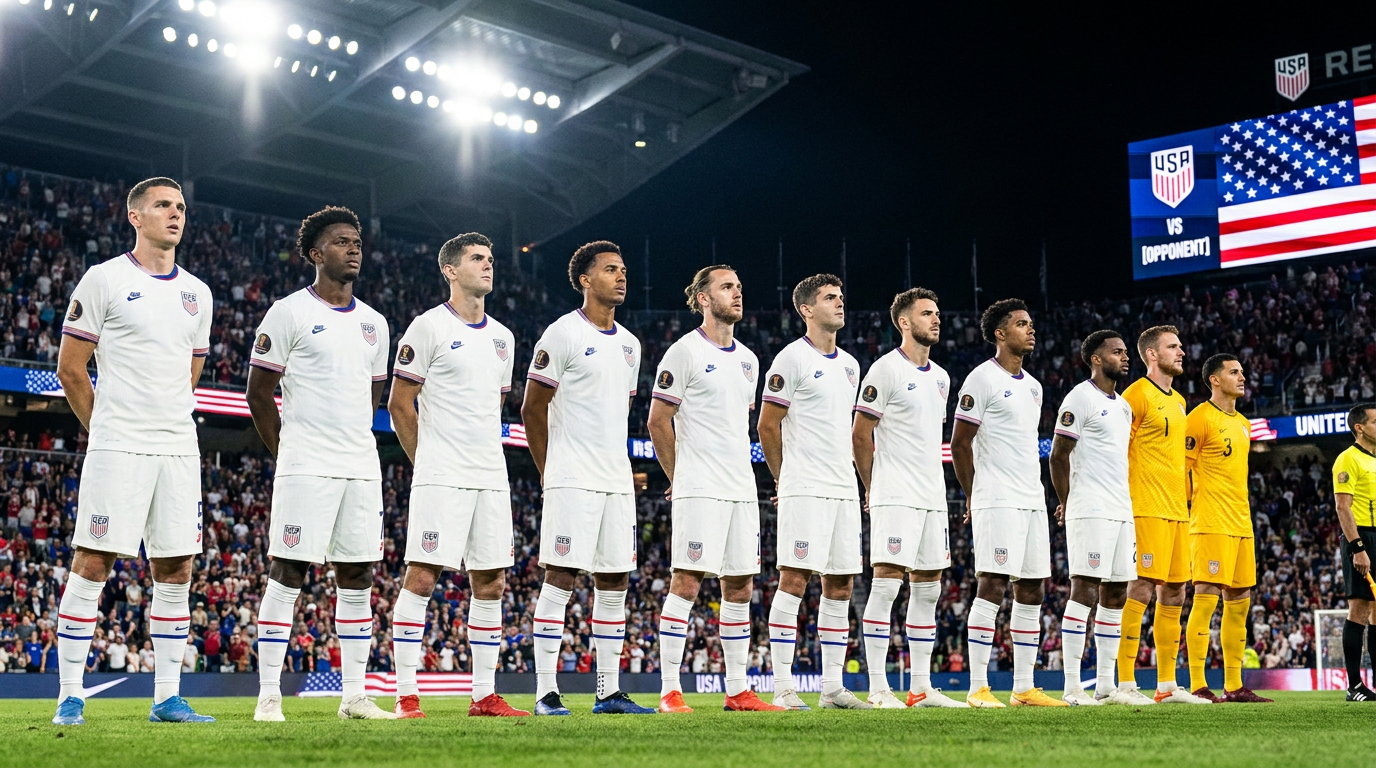
The 2026 FIFA World Cup has officially arrived in North America, bringing with it the highest expectations in the history of the United States Men's National Team. Competing on home soil across a sprawling continent, the USMNT is looking to leverage a roster heavily populated by talent from Europe's top leagues to make a historic tournament run. For a squad long dubbed the "Golden Generation," this expanded 48-team World Cup represents the ultimate proving ground. The sheer scale of the event, combined with the unprecedented pedigree of the American players, has created a pressure-cooker environment where merely participating is no longer sufficient.[1][2]
Under the guidance of newly appointed manager Mauricio Pochettino, the squad is attempting to bridge the gap between regional CONCACAF dominance and true global elite status. Because the United States earned an automatic berth as co-hosts alongside Canada and Mexico, the team entirely bypassed the traditional, grueling qualification cycle. While this guaranteed their spot on the sport's biggest stage, it also meant the squad missed out on the competitive tension of high-stakes qualifiers. Instead, Pochettino has had to rely exclusively on international friendlies and regional tournaments to instill his tactical philosophy, demanding a culture of intensity and aggression to prepare the team for the unforgiving nature of knockout football.[1][2][8]
The USMNT's path to the knockout stages begins in Group D, a highly competitive but manageable quartet featuring Paraguay, Australia, and Türkiye. Analysts and betting markets widely consider the United States the favorite to top the group, a crucial objective for securing a favorable seed in the Round of 32. However, navigating this balanced group will require tactical flexibility, as each opponent presents a distinct stylistic hurdle that will test different aspects of the American game plan. Dropping points early could expose the hosts to a much more difficult bracket against established tournament heavyweights.[3][4]

The group stage presents a fascinating clash of footballing cultures. Paraguay brings trademark South American grit, featuring a roster bolstered by dynamic Major League Soccer standouts like Diego Gómez and Premier League talent. Australia, meanwhile, offers a completely different challenge; the Socceroos are renowned for their highly organized, collective resilience and a willingness to sit deep, absorb pressure, and strike on the counter-attack. Finally, the group finale against Türkiye is widely projected to be the deciding fixture for the top spot. The Turkish squad boasts significant European pedigree and elite technical playmakers, including Real Madrid's teenage sensation Arda Güler, who possesses the individual brilliance to unlock any defense.[4]
To navigate these challenges, the United States will rely on the most potent attacking core in the program's history. Christian Pulisic remains the undeniable focal point and talisman of the squad. Now thriving in Italy's Serie A with AC Milan, the versatile forward has rediscovered his top form, consistently delivering double-digit goal tallies over recent domestic campaigns. Pulisic's ability to operate fluidly across the frontline, take on defenders one-on-one, and deliver in high-leverage moments will dictate the ceiling of the American attack.[1][2]
To navigate these challenges, the United States will rely on the most potent attacking core in the program's history.
Pulisic is joined by a dynamic supporting cast that includes striker Folarin Balogun and winger Tim Weah, but the engine of the team operates in the midfield through Weston McKennie. Heading into his second World Cup after a series of strong seasons at Juventus, McKennie has consistently delivered in big moments for both club and country. His elite ability to beat an opponent's press, quickly switch the field of play, and arrive late in the penalty area makes him indispensable. With 12 international goals to his name, McKennie provides a crucial secondary scoring threat that relieves the pressure on the primary forwards.[3]

Tactically, Pochettino has instilled a high-octane, attack-minded system, often utilizing a fluid 3-4-2-1 or 4-3-3 shape depending on the phase of play. The system relies heavily on overlapping fullbacks like Antonee Robinson and Sergiño Dest to push high up the pitch, providing width and allowing the wingers to cut inside. To balance this forward momentum, Tyler Adams drops into a deep midfield role to shield the backline, win the ball, and quickly launch rapid transition attacks. It is an entertaining, modern approach designed to force turnovers high up the pitch and overwhelm opponents with sheer athleticism and pace.[2][6]
However, this aggressive, man-oriented pressing system carries inherent risks that elite opponents can ruthlessly punish. The USMNT's defensive transition remains a significant point of concern, as technically secure teams can exploit the vast spaces left behind by the advancing American fullbacks. In recent pre-tournament friendlies, the United States occasionally leaked goals by allowing counter-attacks to progress too easily, even when they had numbers back. At the World Cup level, where matches are often decided by razor-thin margins and momentary lapses in concentration, these structural vulnerabilities could prove fatal against clinical finishing.[2][4]
Pundits and former players have also highlighted collective defending and set-piece vulnerability as the team's primary Achilles' heels. Historically, the United States has taken pride in its physical presence and aerial dominance, but recent defensive frailties have raised alarms. Consequently, the fitness of rising center-back Chris Richards is viewed as critical to the team's success. Richards provides much-needed defensive balance, recovery speed, and aerial ability. If he is fully fit, the American defense looks significantly more resolute; without him, Pochettino may be forced to shuffle a backline that has not had enough time to build cohesive chemistry.[3][4][6]

While the USMNT commands the spotlight at home, the broader global context of the tournament reminds fans of the massive chasm between regional contenders and true World Cup favorites. The global betting markets and statistical models still heavily favor traditional footballing titans to lift the trophy in July. In a shocking early twist to the tournament, France recently overtook Spain as the outright betting favorite after the Spanish squad suffered a stunning scoreless draw against 67th-ranked Cape Verde—a result statistical models immediately flagged as one of the biggest upsets in World Cup history.[5][7]
For the United States, the projection and benchmark for a successful tournament are clear: reaching the quarterfinals. The program has not advanced past the Round of 16 since the 2002 tournament in South Korea and Japan, suffering knockout-stage heartbreaks in 2010, 2014, and 2022. Achieving a quarterfinal berth on home soil would represent a monumental milestone, validating the hype surrounding this generation of players and providing a massive boost to the sport's domestic growth. Reaching the semifinals would be viewed as a transcendent, historic overachievement.[4][8]

Ultimately, the USMNT's 2026 World Cup fate rests on their ability to marry Pochettino's attacking freedom with rigorous defensive organization. If they can maintain their structural discipline while unleashing the creative flair of Pulisic, McKennie, and Balogun, they have the requisite quality to top Group D and secure a favorable path through the early knockout rounds. The coming weeks will definitively answer whether the United States can finally translate its immense potential into a landmark performance on the world's biggest stage.[2][3]
How we got here
June 2022
The USMNT secures qualification for the 2022 World Cup, eventually reaching the Round of 16 in Qatar.
June 2026
The 2026 World Cup kicks off across North America, with the US bypassing qualification as co-hosts.
June 12, 2026
The USMNT opens its Group D campaign against Paraguay at SoFi Stadium in Los Angeles.
June 19, 2026
The United States faces Australia at Lumen Field in Seattle in a crucial second group-stage match.
June 25, 2026
The USMNT concludes group play against Türkiye, a match widely expected to decide the group winner.
Viewpoints in depth
Optimistic Supporters
Focus on the unprecedented talent level of the current squad and the power of home-field advantage.
This camp points to the sheer number of Americans playing in Europe's top five leagues as proof that the USMNT has finally arrived on the global stage. With Christian Pulisic thriving at AC Milan and Weston McKennie delivering at Juventus, supporters argue the US has the individual brilliance to break down stubborn defenses. Furthermore, they emphasize that host nations historically overperform at World Cups, suggesting the raucous crowds in NFL-sized stadiums will provide the emotional fuel needed to push past the Round of 16 and into uncharted quarterfinal territory.
Tactical Realists
Emphasize structural vulnerabilities and the inherent risks of Mauricio Pochettino's aggressive pressing system.
While acknowledging the team's attacking upgrades, tactical analysts remain deeply concerned about the USMNT's defensive transition. They argue that pushing fullbacks like Antonee Robinson and Sergiño Dest high up the pitch leaves gaping holes that elite international teams will ruthlessly exploit. This camp closely monitors the fitness of center-back Chris Richards, viewing him as the linchpin of a defense that has historically struggled with set pieces and collective organization. For the realists, advancing past the group stage is expected, but a deep run requires a level of pragmatic defending the team has yet to consistently demonstrate.
Global Skeptics
Maintain that the traditional footballing powers are still a tier above the United States.
From a global betting and statistical perspective, the USMNT is still viewed as a mid-tier contender rather than a true threat to win the tournament. Skeptics point to the immense depth and pedigree of nations like France, Brazil, and England, arguing that the US lacks the world-class depth required to survive a grueling seven-game tournament. They note that while the US might dominate regional CONCACAF play, matching up against a tactically disciplined European side or a battle-tested South American giant in the knockout rounds usually exposes the gap in overall squad quality.
What we don't know
- Whether center-back Chris Richards will be fully fit to anchor the defense throughout the grueling tournament schedule.
- How the USMNT will respond to the unprecedented pressure of playing a World Cup on home soil as a genuine contender.
- Which team they will face in the Round of 32, as the expanded 48-team format introduces new knockout-stage variables.
Key terms
- CONCACAF
- The governing body for soccer in North America, Central America, and the Caribbean.
- Group Stage
- The opening phase of the World Cup where teams are divided into groups of four, playing each other once to determine who advances.
- Knockout Rounds
- The single-elimination phase of the tournament following the group stage, starting with the Round of 32.
- Overlapping Fullback
- A defensive player who pushes high up the sidelines to join the attack and provide crosses into the penalty area.
- Set Piece
- A play starting with a dead ball, such as a corner kick or free kick, often used as a prime goal-scoring opportunity.
Frequently asked
Who is in the USMNT's World Cup group?
The United States is in Group D alongside Paraguay, Australia, and Türkiye.
Who is the manager of the USMNT?
Mauricio Pochettino, an Argentine manager known for his high-intensity tactical style, is leading the team.
What is the best World Cup finish for the USMNT?
The USMNT reached the semifinals in the inaugural 1930 World Cup, but their best modern finish is reaching the quarterfinals in 2002.
Did the US have to qualify for the 2026 World Cup?
No, the United States received an automatic berth as one of the three host nations, alongside Canada and Mexico.
Sources
Source coverage
8 outlets
3 viewpoints surfaced








[1]Sports IllustratedOptimistic Supporters
USMNT 2026 World Cup Preview: Roster, Schedule and Expectations
Read on Sports Illustrated →[2]World Soccer TalkTactical Realists
United States 2026 World Cup preview: Squad breakdown, key player, and tactical analysis
Read on World Soccer Talk →[3]PrizePicksTactical Realists
Team USA World Cup 2026: Predictions, Starting Lineup & Preview
Read on PrizePicks →[4]MLS SoccerOptimistic Supporters
USMNT World Cup preview: Expectations, tactics & Group D outlook
Read on MLS Soccer →[5]FOX SportsGlobal Skeptics
2026 World Cup: France Alone Atop Oddsboard After Spain's Shocking Draw
Read on FOX Sports →[6]NBC SportsTactical Realists
2026 World Cup group stage preview: Chaos, darkhorses, and USMNT hopes
Read on NBC Sports →[7]Economics ObservatoryGlobal Skeptics
World Cup 2026: Measuring the biggest shocks and tracking the favourites
Read on Economics Observatory →[8]OneFootballOptimistic Supporters
USMNT World Cup expectations: Why the quarterfinals are the benchmark
Read on OneFootball →

More in sports
See all 7 stories →Injury
Stanley Cup Finals Injury Report: Resilience and Depth Define Crucial Game 6
0 sources
Standings
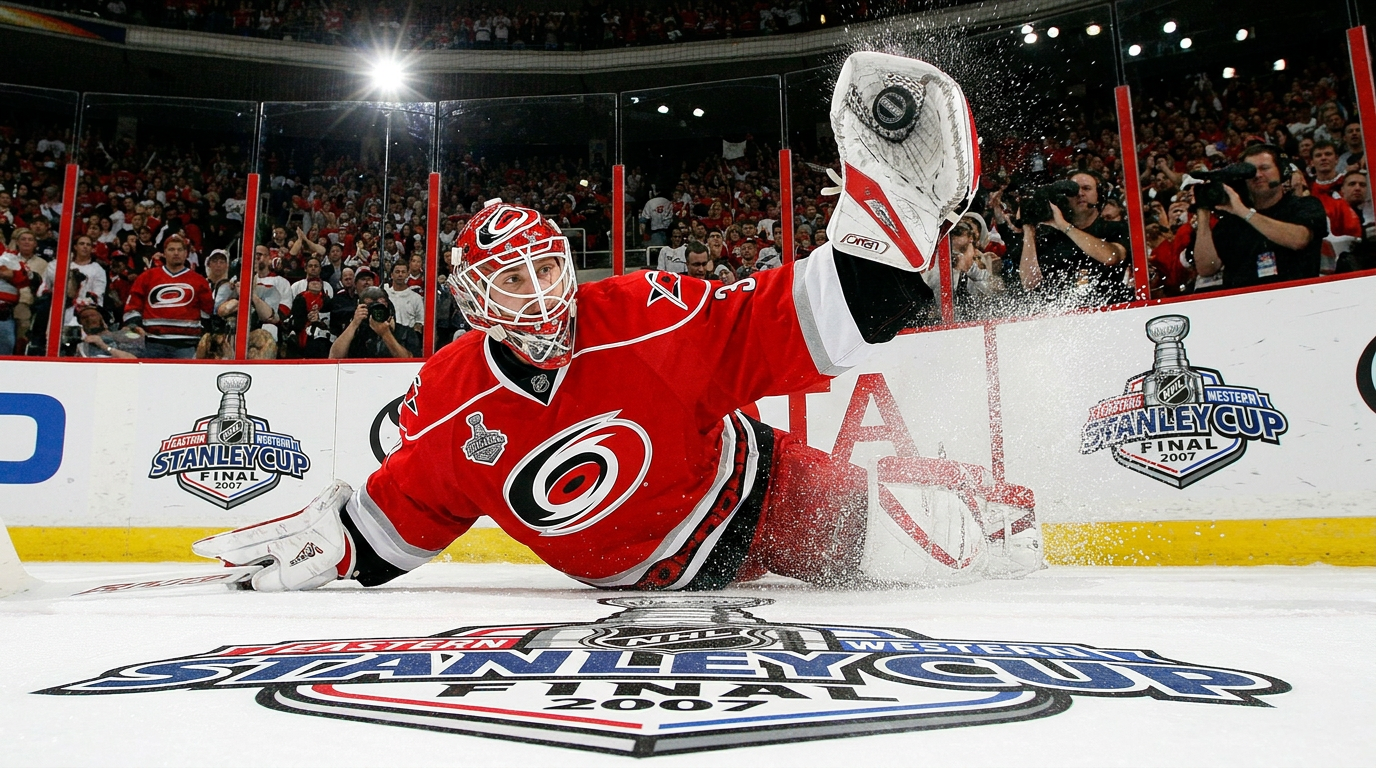
Global Ice Hockey Standings: Hurricanes Hoist the Stanley Cup as 2026 Championship Season Peaks
0 sources

Injury
Midsummer Reinforcements: All-Star Returns Inject Life Into June Baseball
0 sources
Standings
White Sox and Mariners Surge in Mid-June MLB Standings as Underdogs Take Center Stage
0 sources

Every angle. Every day.
Get sports stories with full source coverage and perspective breakdowns delivered to your inbox.