
How Electric Air Taxis Are Finally Moving From Science Fiction to Commercial Reality
Electric vertical takeoff and landing (eVTOL) aircraft are clearing final regulatory hurdles, with the first commercial passenger flights scheduled for 2026.
By Adrien Caron

For decades, the promise of the "flying car" has been a staple of science fiction, perpetually hovering just out of reach while everyday commuters remained stuck in ground-level gridlock. But in 2026, the aviation industry is finally crossing the threshold from digital rendering to commercial reality. The vehicles arriving on the market do not look like traditional cars with wings; instead, they are Electric Vertical Takeoff and Landing (eVTOL) aircraft.
Designed to operate in dense urban environments, these sleek machines represent a fundamental reimagining of how humans move through cities. By combining the vertical lift capabilities of a helicopter with the forward-cruising efficiency of a fixed-wing airplane, eVTOLs are engineered to turn a grueling 90-minute urban commute into a seamless seven-minute hop across the skyline.[3]
The race to commercialize this technology has narrowed significantly over the past year. Two California-based frontrunners, Joby Aviation and Archer Aviation, have separated themselves from a crowded field of well-funded startups by clearing the hardest regulatory gates and establishing firm timelines for commercial service. While US commercial launches are pending final regulatory approval, both companies are advancing rapidly toward international debuts.
Joby and Archer are firmly committed to carrying paying passengers in the United Arab Emirates—specifically in Dubai and Abu Dhabi—by the end of 2026. These early international routes will serve as a highly visible global showcase, proving that the technology can operate reliably in extreme climates while integrating into existing transit networks.[1][2]
The UAE's aggressive timeline is the result of a top-down governmental push to reinvent the nation as a global leader in smart city infrastructure. In Dubai, the Road and Transit Authority has partnered directly with infrastructure developers to build a dedicated launch network connecting the international airport with key hubs like the Dubai Marina and Palm Jumeirah.
Meanwhile, in Abu Dhabi, local aviation authorities are actively rewriting regulations to accommodate "hybrid vertiports" that can service both traditional helicopters and the new wave of electric aircraft, creating a turnkey environment for manufacturers to launch their fleets.[2]
To understand why eVTOLs are suddenly viable after years of false starts, one must look at the underlying mechanism powering them: Distributed Electric Propulsion (DEP). Traditional helicopters rely on a single massive combustion engine and a highly complex mechanical rotor system.
This architecture presents a single point of failure; if the main engine or tail rotor fails, the aircraft is in immediate peril. DEP replaces that centralized, mechanically complex system with multiple smaller, independent electric motors—typically six to twelve—distributed evenly across the aircraft's wings and frame. This distributed architecture fundamentally changes the safety equation for low-altitude urban flight.[3]
The true brilliance of Distributed Electric Propulsion lies in its software-driven redundancy. If one of the electric motors fails mid-flight, the centralized flight computer processes the anomaly in milliseconds. It instantly redistributes power to the remaining rotors, adjusting their speed and pitch to maintain perfect stability without requiring the pilot to take drastic corrective action.
This level of multi-channel integration is only possible because of recent, massive breakthroughs in computing power and sensor miniaturization. Ten years ago, the sensors were not small enough, the processors were not fast enough, and the software could not run the complex algorithms required to balance a dozen independent thrust vectors simultaneously.[3]
Beyond computing, the physical bottleneck has always been energy storage. Vertical lift demands a massive, sudden burst of energy that traditional batteries simply could not provide without overheating or weighing the aircraft down. Today, high-density lithium-ion battery packs have finally crossed the threshold required for commercial flight.
During takeoff, the aircraft uses its rotors to lift straight up from a compact landing pad. Once airborne, the rotors tilt forward—or the aircraft transitions to separate forward-thrust propellers—allowing it to glide on fixed wings. This wingborne cruise phase is highly energy-efficient, enabling ranges of up to 100 miles on a single charge at speeds reaching 200 mph.
The specific chemistry of these batteries is a closely guarded competitive advantage. Current iterations rely on highly optimized lithium-ion cells that balance energy density—the amount of power stored per pound—with thermal stability. Because vertical takeoff generates immense heat, the battery packs are integrated with advanced liquid cooling systems. Looking ahead, the industry is heavily investing in solid-state batteries, which promise to double the current flight range and eliminate the flammability risks associated with liquid electrolytes, though those remain a few years away from commercial deployment.[3]
The shift to electric propulsion solves the two fatal flaws that have historically prevented traditional helicopters from serving as mass urban transit: noise and operating cost. Helicopters operate at a deafening 100-plus decibels, making them a severe nuisance in densely populated areas and severely limiting where they can legally land. eVTOLs, by contrast, operate at roughly 65 to 70 decibels during flight.
This is comparable to the volume of a normal human conversation or the hum of a modern dishwasher. The acoustic footprint is so small that the aircraft blend into the ambient background noise of a city, opening up the possibility of high-frequency flights over residential neighborhoods.
Economically, the simplicity of electric drivetrains drastically reduces the burden of ongoing maintenance. Without the thousands of moving parts, fluids, and extreme temperatures found in a traditional turbine engine, operators expect to drive the per-mile cost of flight down to between $3 and $6.
While early commercial flights will likely be priced at a premium—targeting business travelers and luxury airport transfers—the long-term goal of the industry is to make air taxis cost-competitive with premium ground-based ridesharing services. This economic shift is what transforms the eVTOL from a toy for the ultra-wealthy into a genuine public utility.
However, building a functional, quiet, and affordable aircraft is only half the battle; the true obstacle is regulatory certification. The Federal Aviation Administration (FAA) requires manufacturers to prove that these radically new designs are as safe as traditional commercial airliners before they can carry the general public.
Joby Aviation has reached the fourth stage of the FAA's rigorous five-stage type-certification process, entering Type Inspection Authorization with its production-conforming aircraft. Meanwhile, Archer Aviation recently became the first manufacturer to close phase three, securing 100 percent FAA acceptance of its structural Means of Compliance.[1]
Another major logistical hurdle is the human element: who will fly these machines? While the ultimate vision for eVTOLs is fully autonomous flight, regulators require a human pilot in the cockpit for the foreseeable future. This has triggered a race to train a new class of aviators.
Because eVTOLs use fly-by-wire systems where the computer handles the micro-adjustments of the rotors, flying them is fundamentally different—and arguably much easier—than flying a traditional helicopter. Manufacturers are currently deploying advanced flight simulators to airline partners to begin training commercial pilots on these simplified, intuitive control schemes.[2]
To bridge the gap between closed-course testing and full commercial service, the FAA has launched the eVTOL Integration Pilot Program (eIPP). This forward-looking initiative allows pre-certified aircraft to begin demonstration operations across 26 states starting in the summer of 2026.
By putting the aircraft in the sky over American cities, the eIPP aims to familiarize the public and local regulators with the technology, gathering crucial data on how the vehicles perform in diverse weather conditions and varied airspace configurations. Full US revenue passenger service is expected to follow in 2027, culminating in a major showcase at the Los Angeles 2028 Summer Olympics.[2]
Despite the aircraft being nearly ready for prime time, the surrounding physical ecosystem remains a significant bottleneck. A functional air taxi network requires a web of "vertiports"—specialized landing pads located on downtown rooftops, retrofitted parking structures, and existing airport terminals. These facilities cannot simply be painted circles on concrete; they must be equipped with megawatt-level fast-charging infrastructure capable of turning around an entire fleet of aircraft in 10 to 20 minutes. Installing this level of electrical draw without overwhelming the local municipal power grid is a massive civil engineering challenge.[3]
Furthermore, these vertiports require advanced fire suppression systems specifically designed for lithium-ion battery incidents, as well as seamless passenger boarding facilities that keep turnaround times under ten minutes. Air traffic management presents another critical hurdle. Integrating hundreds of low-flying, high-speed aircraft into the airspace above major cities requires an Unmanned Aircraft System Traffic Management (UTM) network. This digital infrastructure must safely and autonomously coordinate eVTOLs, delivery drones, and traditional aircraft in real-time, ensuring safe separation in increasingly crowded skies.[3]
Integrating hundreds of low-flying, high-speed aircraft into the airspace above major cities requires an Unmanned Aircraft System Traffic Management (UTM) network.
The path forward is clear but undeniably steep. The 2026 commercial launches in the UAE will serve as the ultimate proving ground for the industry, testing not just the aircraft hardware, but the entire passenger experience, the turnaround logistics, and the operational economics in a demanding real-world environment.
If Joby and Archer successfully execute these early commercial routes, it will mark the dawn of a genuinely new category of transportation. The question is no longer whether electric air taxis will fly, but how quickly our cities can adapt their infrastructure to accommodate the three-dimensional commute.[2]
Key points
- Electric air taxis (eVTOLs) are transitioning from prototypes to commercial reality, with passenger flights slated for 2026 in the UAE.
- The aircraft use Distributed Electric Propulsion, relying on multiple independent motors to eliminate single points of failure.
- By replacing combustion engines with electric batteries, eVTOLs operate at a fraction of the noise and cost of traditional helicopters.
- Leading manufacturers Joby and Archer are navigating the final stages of the FAA's rigorous type-certification process.
Open questions
- Whether the municipal power grids in major cities can handle the megawatt-level charging demands of a high-frequency air taxi fleet.
- How quickly the FAA will finalize the remaining certification stages for US-based commercial passenger service.
- The exact price point for early consumer flights and how long it will take to reach the targeted $3 per mile.
Timeline
2009
Joby Aviation is founded to explore the possibilities of electric vertical flight.
2018
Archer Aviation enters the market, accelerating the race for commercialization.
2024
Joby completes its first piloted demonstration flights in urban environments.
2025
Archer receives 100% FAA acceptance of its structural Means of Compliance.
Summer 2026
FAA eVTOL Integration Pilot Program begins pre-certified demo flights across 26 US states.
Late 2026
First commercial passenger flights scheduled to launch in Dubai and Abu Dhabi.
- eVTOL Manufacturers
- Companies building the aircraft argue that the technology is ready and will democratize urban air travel.
- Aviation Regulators
- Agencies overseeing airspace prioritize rigorous safety validation over aggressive commercial timelines.
- Urban Infrastructure Planners
- City planners warn that the physical and electrical infrastructure required for air taxis is lagging behind the aircraft themselves.
Perspectives this story doesn't cover
- Local residents in proposed flight paths
- Traditional helicopter charter operators
Sources
Source coverage
3 outlets
3 viewpoints surfaced



- [1]Drone IntelligenceeVTOL Manufacturers
Joby vs Archer: eVTOL Certification Race (2026)
Read on Drone Intelligence → - [2]Aviation WeekAviation Regulators
Archer, Joby Advance UAE Commercial Launches In 2026
Read on Aviation Week → - [3]IntergalacticeVTOL Manufacturers
Everything you need to know about eVTOLs
Read on Intergalactic →
More in Automotive & Transportation
See all →eVTOL Manufacturing
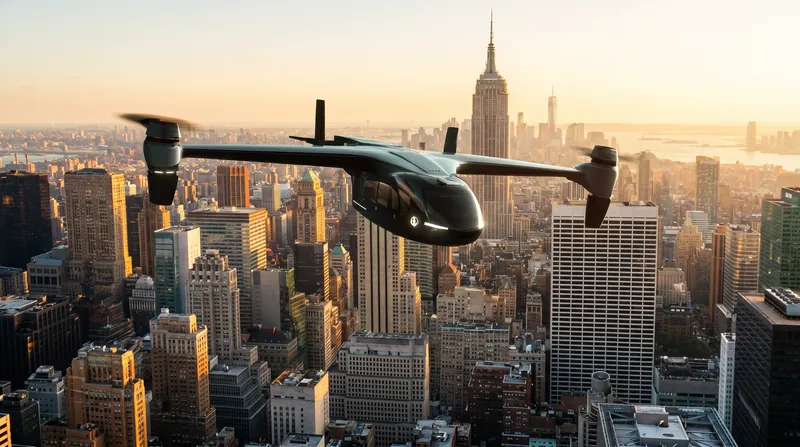
Toyota Takes Majority Stake in New Joint Venture with Joby to Mass-Produce eVTOL Aircraft
4 sources
Advanced Air Mobility
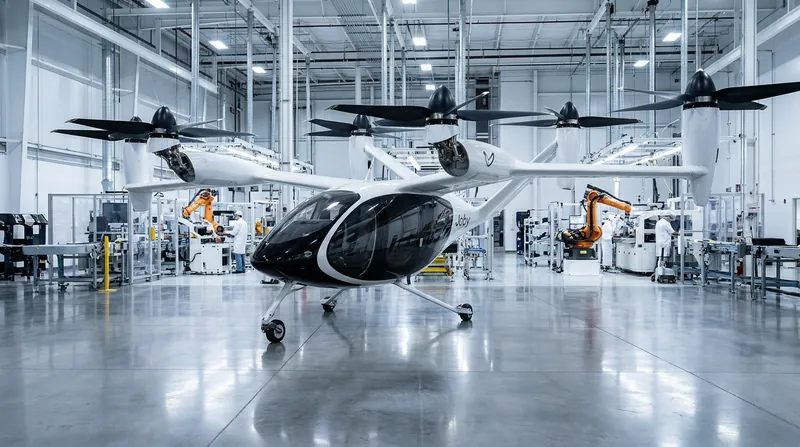
The 2026 eVTOL Breakthrough: How Air Taxis Work and When You Can Ride One
5 sources
Aviation Tech
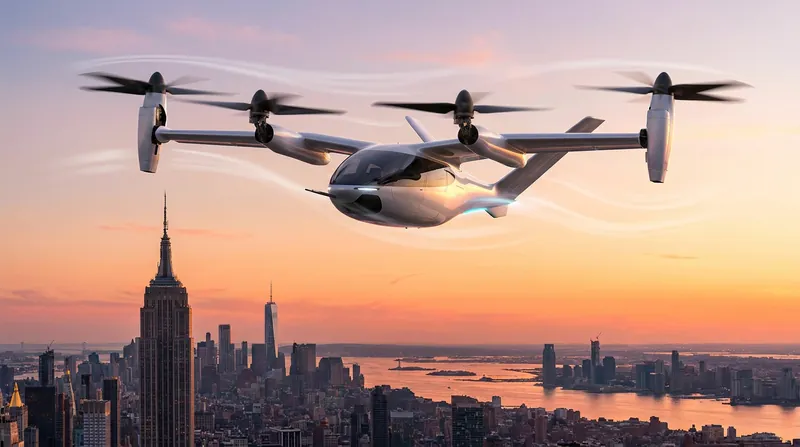
The 'All-Wing' Aircraft Revolution: How JetZero's Blended Wing Body Aims to Cut Fuel Burn by 50%
3 sources
Aircraft Design
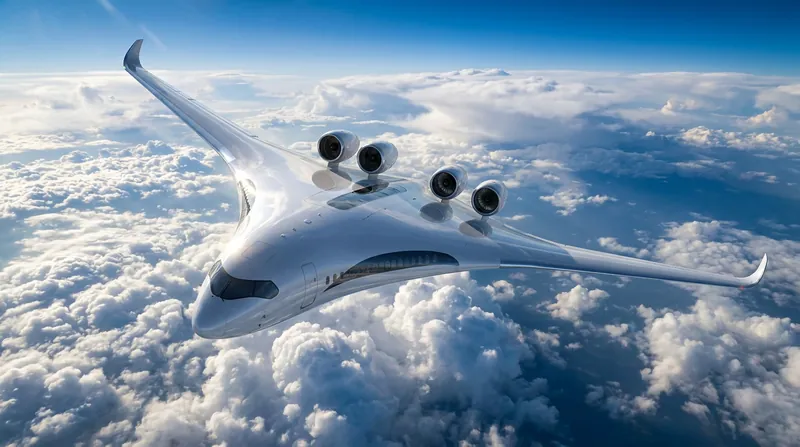
How the Blended Wing Body is Rewriting the Rules of Aviation
3 sources
Comments
Every angle. Every day.
Get Automotive & Transportation stories with full source coverage and perspective breakdowns, free every day.