
2026 Electric SUVs: Rivian R2 vs. Tesla Model Y 'Juniper' Comparison
Tesla's heavily updated Model Y and Rivian's highly anticipated R2 offer two distinct visions for the modern family EV. We break down the trade-offs between aerodynamic street performance and rugged, boxy utility.
By Factlen Editorial Team
- Street Performance Advocates
- Prioritizes aerodynamic efficiency, highway range, and sports-car-like handling.
- Outdoor Utility Seekers
- Values ground clearance, versatile cargo space, and genuine off-road capability.
- Value & Efficiency Analysts
- Focuses on the financial bottom line, base pricing, and standard equipment.
What's not represented
- · Traditional Automakers
- · Used EV Buyers
Why this matters
The midsize electric SUV is the primary vehicle for millions of families. Choosing between the aerodynamic efficiency of the updated Model Y and the rugged utility of the new Rivian R2 dictates not just your daily commute, but your weekend capabilities, charging experience, and long-term ownership costs.
Key points
- The 2026 Tesla Model Y 'Juniper' and Rivian R2 represent two distinct philosophies in the midsize electric SUV market.
- Tesla's Model Y prioritizes aerodynamic efficiency, offering up to 391 miles of range and a lower starting price of $41,630.
- The Rivian R2 embraces a rugged, boxy design, providing 9.6 inches of ground clearance and 90.1 cubic feet of cargo space.
- Despite its upright shape, the Rivian R2 Performance achieves a 109 MPGe rating, slightly edging out the Model Y Performance.
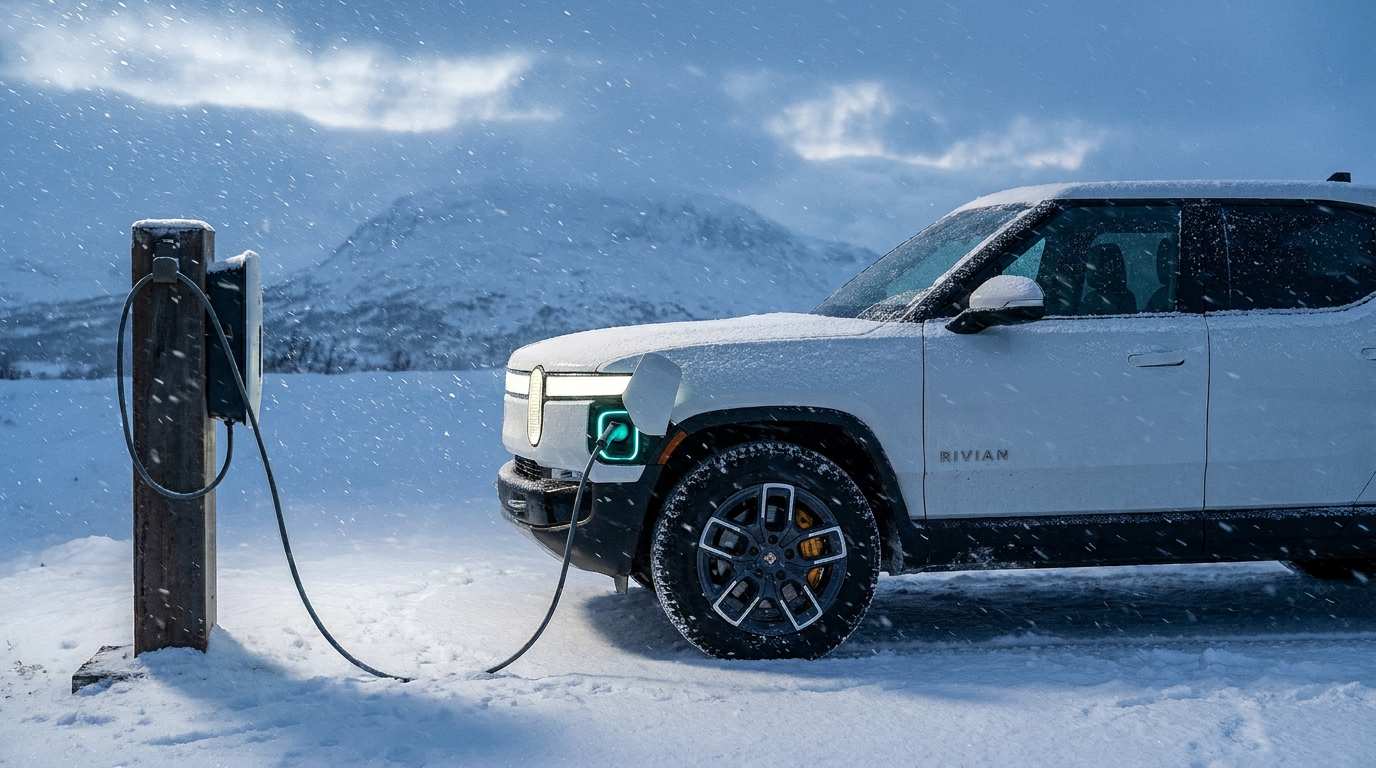
- Both vehicles now share the same charging ecosystem, as the Rivian R2 features a native NACS port for Supercharger access.
The midsize electric SUV segment has officially entered its heavyweight era in 2026. For years, the Tesla Model Y has dominated the global market, offering a blend of range, software, and charging infrastructure that rivals struggled to match. Now, the landscape has shifted. Tesla has rolled out its comprehensive "Juniper" refresh, refining the Model Y with a quieter cabin, upgraded suspension, and sharper styling. Simultaneously, Rivian has launched the R2, a slightly smaller but significantly boxier SUV designed to bring the brand's rugged, go-anywhere ethos to a mainstream price point. This is no longer a battle of early adopters; it is a direct comparison of two fundamentally different philosophies for the modern family vehicle.
The financial baseline for this comparison reveals two distinct market strategies. Following a recent price cut, the base rear-wheel-drive Rivian R2 starts at $46,485, pushing it closer to the heart of the mainstream market. However, Tesla maintains a distinct advantage in absolute affordability, with the entry-level Standard Model Y starting at $41,630. As buyers move up the trim ladder, the pricing converges. The top-tier Rivian R2 Performance Launch Edition commands $59,485, while the Tesla Model Y Performance sits just below it at $58,880. Both vehicles now offer access to the same charging infrastructure, as the Rivian R2 features a native NACS port, eliminating the need for adapters at Tesla Superchargers.[1][8]
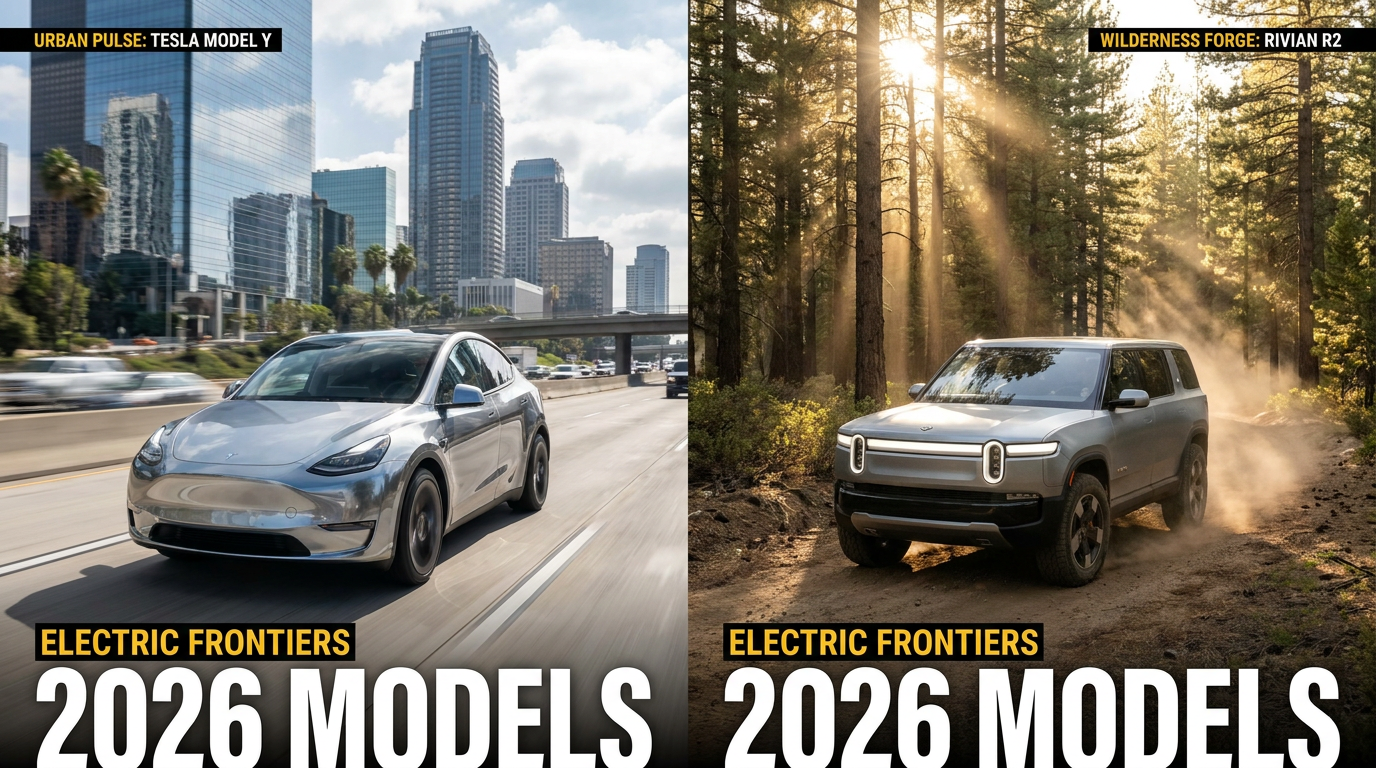
Visually and dimensionally, the two SUVs take entirely different approaches to the same footprint. The Model Y prioritizes aerodynamic efficiency with a sleek, teardrop roofline that cuts through the wind. The Rivian R2 embraces a traditional, upright SUV silhouette, measuring slightly shorter in length but significantly taller. This boxy greenhouse translates directly into interior volume. The R2 offers a massive 90.1 cubic feet of total storage with the seats folded flat, compared to the Model Y's 76 cubic feet. Even the front trunks reflect this divergence, with the Rivian offering 5.2 cubic feet to the Tesla's 4.1.[2][3][5]

The explicit case for the Tesla Model Y centers on its peerless street performance and maximum highway range. The evidence is found in its aerodynamic profile and powertrain efficiency. The Long Range All-Wheel Drive variant can achieve up to 391 miles on a single charge, a benchmark that remains difficult to beat. Furthermore, the Juniper update introduced frequency selective passive damping, which dramatically improves the ride quality over rough pavement while maintaining the sharp, sports-car-like steering that Tesla owners expect. For drivers who spend the vast majority of their time on paved roads and highways, the Model Y offers a highly refined, dynamic driving experience.[4][8]
The argument against the Tesla Model Y is its lack of rugged utility and its compromised cargo shape. The evidence lies in its physical geometry. With a ground clearance of just 6.0 to 6.6 inches, the Model Y is strictly a pavement and light-gravel vehicle. Its sloping rear roofline, while excellent for aerodynamic drag, severely limits the ability to haul tall, boxy items like furniture or large dog crates. Additionally, Tesla's minimalist interior forces drivers to rely entirely on the central touchscreen, lacking a dedicated driver gauge cluster, which some buyers find distracting.[2][5]
Conversely, the explicit case for the Rivian R2 relies on its adventure-ready versatility and superior off-road geometry. The evidence is undeniable: the R2 boasts a massive 9.6 inches of ground clearance, 32-inch tires, and approach and departure angles that make it genuinely trail-capable. Inside, the utility continues with dual gloveboxes, pop-out cupholders, and front and rear seats that fold completely flat, effectively turning the cabin into a cargo van or a hard-shell tent for camping. Rivian also includes a 12.3-inch digital gauge cluster directly in front of the driver, complementing the 15.6-inch main display.[2][3][5]
Conversely, the explicit case for the Rivian R2 relies on its adventure-ready versatility and superior off-road geometry.
The argument against the Rivian R2 is its higher cost of entry and its lower maximum range. The evidence is clear in the spec sheets. The absolute maximum range for the R2 tops out at 330 miles on the Premium and Performance trims, falling 61 miles short of Tesla's Long Range model. Furthermore, the base R2 costs nearly $5,000 more than the base Model Y, and configuring an R2 with all-wheel drive and a premium interior quickly pushes the transaction price past $57,000. For budget-conscious buyers, the Rivian premium may be difficult to justify.[1][7][8]

Interestingly, the efficiency comparison yields a surprising result that challenges conventional aerodynamic wisdom. Despite carrying an extra 370 pounds and presenting a much less aerodynamic shape to the wind, the Rivian R2 Performance achieves a 109 MPGe combined rating from the EPA. This actually beats the Tesla Model Y Performance, which is rated at 104 MPGe. Analysts attribute this remarkable feat to Rivian's advanced powertrain engineering and the highly optimized new platform, proving that a boxy off-roader does not have to be an energy hog.[2]
Inside the cabin, both automakers have focused on elevating comfort, but in different ways. Tesla's Juniper update finally brought ventilated front seats, a much-requested feature, along with a new 8-inch rear touchscreen for passengers and a significantly quieter cabin thanks to improved sound insulation. Rivian, meanwhile, leans into premium, rugged textures. The R2's interior materials are designed to be easily cleaned after a weekend in the dirt, and the cabin feels airy and open thanks to the expansive headroom and panoramic glass roof.[6][8]
Ultimately, choosing between these two exceptional electric SUVs comes down to lifestyle requirements rather than one being objectively superior. The Tesla Model Y fits well when buyers prioritize maximum highway range, street-handling dynamics, and a lower starting price for daily commuting. It is the ideal choice for families who want a sleek, highly efficient road-trip machine with proven software and a sports-car-like driving feel.
Conversely, the Tesla Model Y does not fit well when owners need to navigate rough forest service roads, regularly haul bulky, boxy equipment, or desire a traditional SUV driving position. Its low ground clearance and sloping roofline are inherent limitations for serious outdoor utility.

The Rivian R2 fits well when families need maximum interior volume, genuine off-road capability, and a rugged aesthetic without sacrificing daily comfort. It is the perfect vehicle for buyers who want the versatility of fold-flat seats for camping, the confidence of 9.6 inches of ground clearance, and the convenience of native Supercharger access.
However, the Rivian R2 does not fit well when budget is the absolute strictest priority, or when a driver demands the absolute maximum highway range available in the segment. It is also less suited for buyers who prefer the low-slung, aggressive cornering of a street-tuned crossover over the commanding, upright stance of a traditional SUV.
How we got here
March 2020
Tesla begins deliveries of the original Model Y, which quickly becomes the world's best-selling vehicle.
March 2024
Rivian officially unveils the R2 midsize SUV, targeting the heart of the EV market.
Early 2026
Tesla rolls out the comprehensive 'Juniper' refresh for the Model Y, updating its suspension, interior, and styling.
June 2026
Rivian announces a $2,000 price cut for the base R2 and accelerates its production timeline.
Late 2026
The first Rivian R2 Premium and Performance models begin arriving in customer driveways.
Viewpoints in depth
Street Performance Advocates
Prioritizes aerodynamic efficiency, highway range, and sports-car-like handling.
This perspective argues that the vast majority of SUV owners rarely leave paved roads. Therefore, the ideal electric vehicle should maximize aerodynamic efficiency to squeeze every possible mile out of its battery. They favor the Model Y for its low center of gravity, frequency selective damping, and teardrop shape, viewing boxy off-road designs as an unnecessary compromise of highway range and cornering dynamics.
Outdoor Utility Seekers
Values ground clearance, versatile cargo space, and genuine off-road capability.
This camp believes an SUV should actually be capable of utility and adventure. They argue that the sloping rooflines of modern crossovers ruin cargo space for bulky items. For them, the Rivian R2's 9.6 inches of ground clearance, fold-flat seats, and dual gloveboxes represent a return to true SUV form, prioritizing the ability to reach remote campsites and haul gear over achieving maximum highway efficiency.
Value & Efficiency Analysts
Focuses on the financial bottom line, base pricing, and standard equipment.
These analysts look strictly at the numbers. They point out that Tesla's aggressive pricing strategy makes the base Model Y nearly $5,000 cheaper than the entry-level Rivian R2. However, they also note the surprising efficiency of the R2 Performance, which achieves 109 MPGe despite its boxy shape. This camp evaluates the trade-offs between Tesla's lower cost of entry and Rivian's higher standard utility.
What we don't know
- How Rivian's long-term reliability and service network will scale as the R2 reaches mass-market production volumes.
- Whether Tesla will introduce an off-road focused trim of the Model Y to directly counter the R2's rugged appeal.
- The exact real-world highway range degradation the R2 will experience when equipped with its most aggressive all-terrain tires.
Key terms
- NACS Port
- North American Charging Standard, the plug design pioneered by Tesla that allows vehicles to use the Supercharger network without an adapter.
- MPGe
- Miles Per Gallon Equivalent, a metric used by the EPA to compare the energy efficiency of electric vehicles to traditional gas cars.
- Frequency Selective Passive Damping
- A suspension technology that automatically adjusts its stiffness based on the frequency of bumps in the road, improving ride comfort.
- Torque Vectoring
- A system that controls the amount of power sent to each individual wheel, improving grip and handling on slippery or uneven terrain.
- Frunk
- A front trunk, an enclosed storage space located under the hood where a traditional gas engine would normally sit.
Frequently asked
Which SUV has more cargo space?
The Rivian R2 offers significantly more cargo space, with 90.1 cubic feet total compared to the Model Y's 76 cubic feet, largely due to its boxy design.
Can the Rivian R2 use Tesla Superchargers?
Yes, the 2026 Rivian R2 comes equipped with a native NACS port, allowing it to plug directly into Tesla Superchargers without an adapter.
Which vehicle is better for off-roading?
The Rivian R2 is the clear winner for off-roading, featuring 9.6 inches of ground clearance and 32-inch tires, compared to the Model Y's 6.0 to 6.6 inches of clearance.
Is the Tesla Model Y faster than the Rivian R2?
While both are incredibly fast, the Rivian R2 Performance slightly edges out the Model Y Performance in acceleration, though the Model Y Long Range offers a higher top range.
Sources
Source coverage
8 outlets
3 viewpoints surfaced








[1]EdmundsValue & Efficiency Analysts
The base rear-wheel-drive R2 just got a $2,000 price cut
Read on Edmunds →[2]ElectrekValue & Efficiency Analysts
Rivian R2 vs Tesla Model Y spotted side-by-side: Detailed size comparison
Read on Electrek →[3]CarBuzzOutdoor Utility Seekers
Here's every way the new SUV is ready to beat the Model Y at its own game
Read on CarBuzz →[4]CarwowStreet Performance Advocates
Rivian R2 vs Tesla Model Y: which electric SUV is best?
Read on Carwow →[5]CarConfectionsOutdoor Utility Seekers
2027 Rivian R2 vs. 2026 Tesla Model Y: Specs Comparison
Read on CarConfections →[6]Tesla AccessoriesStreet Performance Advocates
2026 Tesla Model Y Juniper: The Definitive Guide to the Refresh
Read on Tesla Accessories →[7]The AutopianValue & Efficiency Analysts
The Rivian R2 Configurator Is Out, And The Cheapest One I'd Buy Costs $57,245
Read on The Autopian →[8]RivianOutdoor Utility Seekers
Experience the Rivian R2
Read on Rivian →
Every angle. Every day.
Get automotive stories with full source coverage and perspective breakdowns delivered to your inbox.