
Trump Agrees to Send Iran Peace Deal to Congress as GOP Demands Vote
President Trump has agreed to submit his preliminary peace agreement with Iran to Congress for review following mounting pressure from Republican lawmakers. The deal, which establishes a 60-day window for nuclear negotiations, faces deep skepticism on Capitol Hill ahead of a ceremonial signing in Geneva.
By Factlen Editorial Team
- Diplomatic & Regional Observers
- Focus on the mechanics of the ceasefire, the upcoming Geneva summit, and the broader Middle East implications of the agreement.
- U.S. Legislative Skeptics
- Focus on Congress's constitutional role, demanding a formal vote and scrutinizing the deal's nuclear safeguards to ensure it outlasts the current administration.
- Iranian Domestic Voices
- Highlight the internal skepticism in Iran regarding the economic benefits and the durability of an agreement with the U.S. government.
What's not represented
- · Israeli government officials
- · European allies who were part of the original 2015 JCPOA
Why this matters
This agreement pauses a major international conflict and reopens vital global shipping lanes, directly impacting global energy prices. However, the looming congressional battle will determine whether the ceasefire translates into a permanent, legally binding treaty or collapses under domestic political pressure.
Key points
- President Trump agreed to send the preliminary Iran peace agreement to Congress for review.
- Republican lawmakers are demanding a formal vote to ensure the deal's long-term durability.
- The pact reopens the Strait of Hormuz and establishes a 60-day window for nuclear negotiations.
- A ceremonial signing event is scheduled for Friday in Geneva, Switzerland.
- Iranian citizens and officials remain highly skeptical about the agreement's longevity.
- Iran's demand that Israel withdraw from Lebanon remains a major regional sticking point.
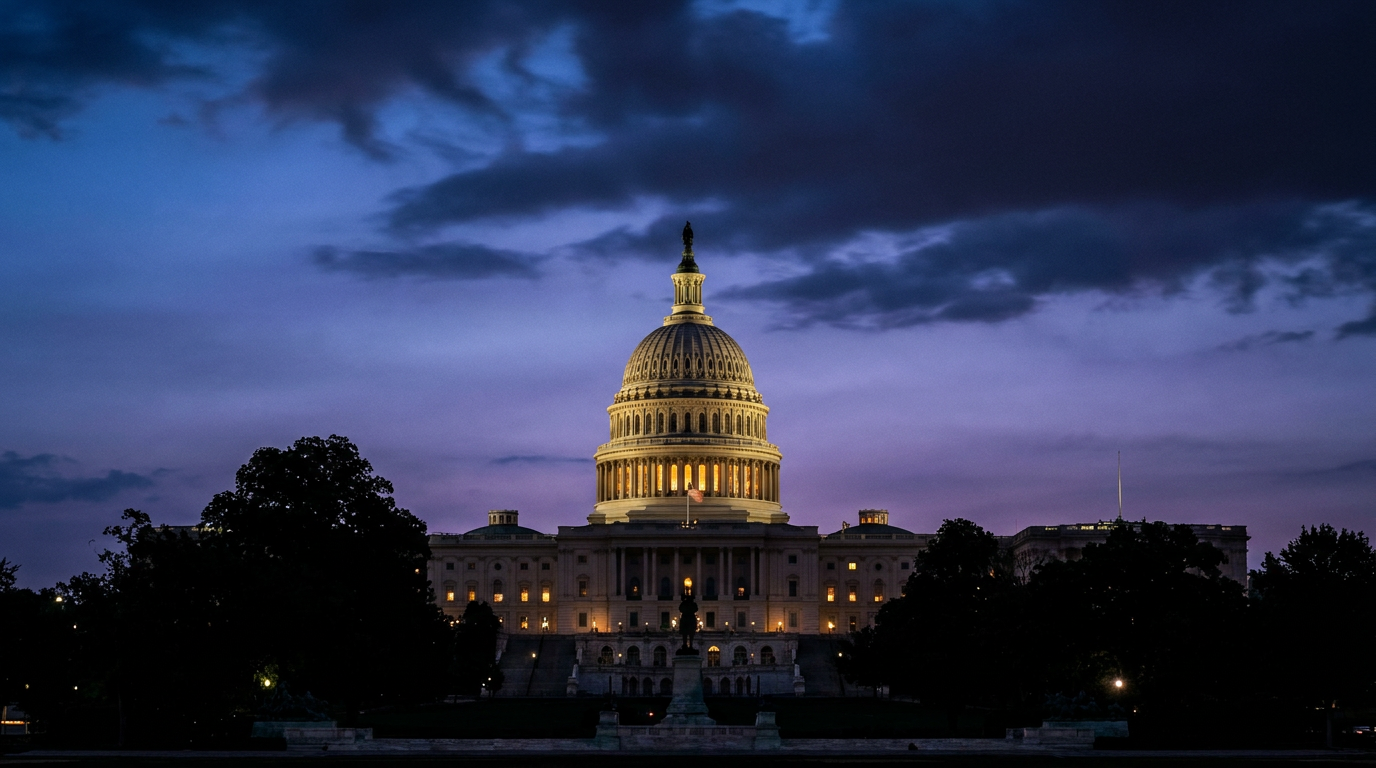
President Donald Trump has officially agreed to submit his newly announced preliminary peace agreement with Iran to the United States Congress for a comprehensive review, bowing to mounting and vocal pressure from Republican lawmakers who are aggressively demanding a formal legislative vote on the pact. The preliminary deal, which aims to definitively end months of direct, costly military conflict between the two nations, has brought a significant wave of relief to global energy markets and international allies. However, it has simultaneously sparked intense scrutiny and unease on Capitol Hill, where lawmakers are deeply wary of an executive-only arrangement that bypasses the legislative branch. The push for a vote highlights a brewing constitutional and political showdown over who holds the ultimate authority to cement long-term foreign policy, especially concerning an adversary that has been a focal point of American national security strategy for decades.[1][3]
The foundational framework of the newly signed agreement centers on an immediate and comprehensive ceasefire, the reopening of the vital Strait of Hormuz to international commercial shipping, and the complete lifting of the United States naval blockade that has choked the region's waterways. In exchange for these immediate de-escalation measures, the two nations have established a strict 60-day window to negotiate a final, comprehensive settlement regarding the future of Iran's nuclear capabilities. This two-phased approach is designed to stop the immediate bloodshed and economic disruption while providing a structured timeline for diplomats to address the far more complex and entrenched issue of uranium enrichment and international weapons inspections.[1][2]
The initial memorandum of understanding was executed electronically over the weekend, featuring the digital signatures of President Trump, Vice President JD Vance, and Iranian Parliament Speaker Mohammad Bagher Ghalibaf—a highly unusual diplomatic protocol that underscores the urgency of the ceasefire. To formalize the pact on the world stage, a ceremonial signing event is currently scheduled to take place this Friday in Geneva, Switzerland. Geneva, widely recognized as the "Peace Capital" of the world, has a long and storied history of hosting landmark international treaties and high-stakes diplomatic summits, providing a neutral backdrop for what the administration hopes will be a legacy-defining foreign policy achievement.[2][6]

Despite the undeniable diplomatic breakthrough of halting active hostilities, the lack of immediate, publicly available details regarding the memorandum's specific clauses has left many in Washington feeling deeply uneasy. Republicans on Capitol Hill, who fiercely opposed the 2015 Obama-era Joint Comprehensive Plan of Action (JCPOA) and who generally disfavor any form of diplomatic dealmaking with Tehran, are now navigating a highly complex political reality. They find themselves forced to evaluate and potentially endorse a major peace agreement negotiated by their own party leader, balancing their traditional hawkish stance on Middle Eastern policy with their political loyalty to the Trump administration.[2][4]
Several prominent GOP senators have publicly broken their silence to insist that the agreement must face a formal congressional vote to ensure its legal and political longevity. Senator James Lankford of Oklahoma forcefully argued that an executive agreement is entirely insufficient for a matter of this magnitude, stating, "If you want a deal to last, it can't be an executive agreement. We've got to have a vote of Congress to be able to solidify it long term." This sentiment reflects a broader anxiety that without legislative buy-in, any deal could be easily dismantled by a future administration, rendering the current diplomatic efforts ultimately futile.[3][5]
Senator Lindsey Graham, a close ally of the president but a longtime, vocal hawk on Iran policy, echoed the firm demand for robust legislative oversight. He pointedly noted that under the Iran Nuclear Agreement Review Act (INARA)—a piece of legislation passed with bipartisan support during the Obama administration—any international deal concerning Iran's nuclear material must legally be submitted to Congress for a thorough review and a potential vote of disapproval. Graham emphasized that while he is "pulling for a deal," the administration cannot bypass the established legal framework designed to give the American people a voice in nuclear non-proliferation agreements.[1][3]
Senator Lindsey Graham, a close ally of the president but a longtime, vocal hawk on Iran policy, echoed the firm demand for robust legislative oversight.
Speaking to a gaggle of international reporters on the sidelines of the Group of Seven summit in Évian-les-Bains, France, President Trump appeared to welcome the prospect of congressional involvement, projecting confidence in the deal's merits. "I like the idea, send it to Congress please," the president remarked casually, adding that the negotiations are now entering a crucial "second stage" which he believes will actually be easier to navigate than the initial, fraught ceasefire talks. The administration maintains that bringing Congress into the fold will ultimately strengthen the U.S. negotiating position by demonstrating a unified domestic front during the upcoming 60-day technical talks.[3]

However, not all Republicans are demanding a high-stakes showdown on the Senate floor, revealing fractures within the party's approach to the conflict. Senator Eric Schmitt of Missouri argued that a formal up-or-down vote is not strictly necessary, framing the current geopolitical choice as a stark binary between losing a catastrophic war and engaging in an endless "forever war." Schmitt praised the president for charting a pragmatic middle path, suggesting that the executive branch possesses the necessary constitutional authority to manage the immediate crisis without being bogged down by prolonged congressional debates that could derail the fragile peace process.[1][5]
Meanwhile, the upper echelons of GOP leadership are treading incredibly carefully, avoiding any definitive statements that could either undermine the president or commit them to a flawed agreement. Senate Majority Leader John Thune and senior Senator Chuck Grassley have both explicitly stated that they are withholding all substantive judgment until they receive formal, classified briefings on the exact terms of the memorandum. These closed-door briefings, expected to take place later this week, will be critical in determining whether the administration can secure the necessary political backing to move forward with the second phase of negotiations.[2]
The profound skepticism radiating from Washington is closely mirrored by deep, systemic doubts within Iran itself. While ordinary Iranian citizens have expressed a palpable sense of relief over the cessation of devastating military strikes and the potential stabilization of their battered economy, there is widespread public anger and institutional skepticism regarding the durability of any agreement signed by the Trump administration. Given the administration's history of unilaterally withdrawing from the 2015 JCPOA, many Iranians fear that the current ceasefire is merely a temporary tactical pause rather than a genuine pivot toward lasting peace and economic normalization.[3]

Regional complications also threaten to severely disrupt the fragile peace, highlighting the interconnected nature of Middle Eastern conflicts. Iranian officials have publicly and forcefully stated that the tentative deal requires Israel to completely withdraw its military forces from Lebanon—a stringent condition that the Israeli government has already firmly and categorically rejected. This stark disagreement underscores the significant divergence between broader U.S. diplomatic objectives and Israel's immediate security imperatives, posing a major hurdle for negotiators attempting to finalize a comprehensive regional settlement.[1][6]
As the critical 60-day negotiation window officially opens, the Trump administration faces an unprecedented dual challenge. Diplomats must hammer out highly complex technical details to verifiably dismantle Iran's estimated 400-kilogram stockpile of highly enriched uranium, while political operatives must simultaneously sell the final, finalized package to a deeply skeptical and highly polarized U.S. Congress. The ultimate outcome of these parallel efforts will determine whether the upcoming Geneva summit marks the definitive end of a historic war, or merely serves as a temporary, fleeting pause in a decades-long geopolitical struggle.[2][3]
How we got here
2015
The U.S. and world powers sign the JCPOA nuclear agreement with Iran.
2018
During his first term, President Trump withdraws the U.S. from the JCPOA, reinstating sanctions.
February 2026
Joint U.S.-Israeli military strikes on Iran mark the beginning of a direct, months-long conflict.
June 14, 2026
President Trump, VP JD Vance, and Iranian officials electronically sign a preliminary agreement to end the war.
June 16, 2026
Trump agrees to send the deal to Congress for review amid mounting pressure from Republican lawmakers.
June 19, 2026
A ceremonial signing of the agreement is scheduled to take place in Geneva.
Viewpoints in depth
Congressional Republicans' view
Lawmakers argue that any durable agreement must survive beyond a single presidency, requiring a formal legislative vote.
Republican lawmakers are wary of repeating the perceived mistakes of the 2015 JCPOA and want strict, verifiable limits on Iran's nuclear program before any sanctions are permanently lifted. They argue that an executive agreement is inherently fragile and that a formal vote under the Iran Nuclear Agreement Review Act is necessary to give the American people a voice and ensure the deal outlasts the current administration.
The Trump Administration's view
The administration frames the preliminary pact as a massive diplomatic victory that ended a costly war and reopened global shipping lanes.
The White House views the agreement as a successful use of American leverage, bringing Iran to the negotiating table from a position of U.S. strength. They characterize the upcoming 60-day window as a "second stage" that will allow diplomats to secure a far better and more comprehensive nuclear deal than the Obama-era agreement, ultimately stabilizing the Middle East.
Iran's domestic view
Iranian citizens and officials remain deeply skeptical of the U.S. government's reliability despite the cessation of military strikes.
While relieved by the end of active hostilities, the Iranian public harbors deep doubts about the durability of any agreement signed by the Trump administration. Memories of the U.S. withdrawal from the 2015 nuclear deal fuel widespread skepticism that the current ceasefire will translate into lasting economic relief or survive future political shifts in Washington.
What we don't know
- The exact technical requirements Iran must meet regarding its nuclear program during the 60-day window.
- Whether the agreement will secure enough congressional support to pass a formal vote of approval.
- How Israel's ongoing military operations in Lebanon will impact the finalization of the U.S.-Iran pact.
Key terms
- Strait of Hormuz
- A crucial shipping chokepoint between the Persian Gulf and the Gulf of Oman through which a significant portion of the world's oil passes.
- Iran Nuclear Agreement Review Act (INARA)
- A 2015 U.S. law that gives Congress the right to review and potentially vote on any agreement related to Iran's nuclear program.
- JCPOA
- The Joint Comprehensive Plan of Action, the 2015 nuclear deal between Iran and world powers from which the U.S. withdrew during President Trump's first term.
Frequently asked
What does the preliminary U.S.-Iran agreement do?
It establishes an immediate ceasefire, reopens the Strait of Hormuz, ends the U.S. naval blockade, and sets a 60-day window to negotiate limits on Iran's nuclear program.
Will Congress get to vote on the deal?
President Trump has indicated he will send the agreement to Congress for review, and many Republican lawmakers are demanding a formal vote to solidify the pact long-term.
When and where will the deal be officially signed?
A ceremonial signing event is scheduled to take place this Friday in Geneva, Switzerland.
How does this affect Israel and Lebanon?
The agreement's impact on the region remains complicated; Iran has demanded Israel withdraw from Lebanon as part of the deal, a condition Israel has firmly rejected.
Sources
Source coverage
6 outlets
3 viewpoints surfaced






[1]AP NewsDiplomatic & Regional Observers
Trump's Iran deal greeted with skepticism and scrutiny on Capitol Hill
Read on AP News →[2]SemaforU.S. Legislative Skeptics
Trump faces Republican skepticism of his Iran deal
Read on Semafor →[3]The GuardianIranian Domestic Voices
‘Everyone is angry for different reasons’: scepticism in Iran as peace deal nears
Read on The Guardian →[4]Fox NewsU.S. Legislative Skeptics
Trump's Iran deal sparks GOP demands for vote as Congress remains in the dark
Read on Fox News →[5]The Washington PostDiplomatic & Regional Observers
Republicans on Capitol Hill say they need more information about the agreement
Read on The Washington Post →[6]Al JazeeraDiplomatic & Regional Observers
Geneva to host Iran-US deal event: What other pacts have been signed there?
Read on Al Jazeera →

More in news politics
See all 13 stories →Information Science
The Evidence Pack: Which Fact-Checking Methods Actually Change Minds?
0 sources

Geopolitics
The 2026 US-Iran Security Pact: Mechanisms, Regional Impact, and Enforcement
0 sources
Civic Innovation
Fact Check: Can Citizens' Assemblies Actually Cure Political Polarization?
0 sources

U.S.-Iran Relations
U.S. and Iran Reach Framework Peace Deal to End War and Reopen Strait of Hormuz
0 sources

Every angle. Every day.
Get news politics stories with full source coverage and perspective breakdowns delivered to your inbox.