
US and Iran Reach Ceasefire Framework to Reopen Strait of Hormuz, but Implementation Hurdles Loom
The United States and Iran have agreed to a 60-day ceasefire to end their months-long war, paving the way to reopen the Strait of Hormuz, though disputes over maritime tolls, naval mines, and Israeli operations in Lebanon threaten the fragile truce.
By Factlen Editorial Team
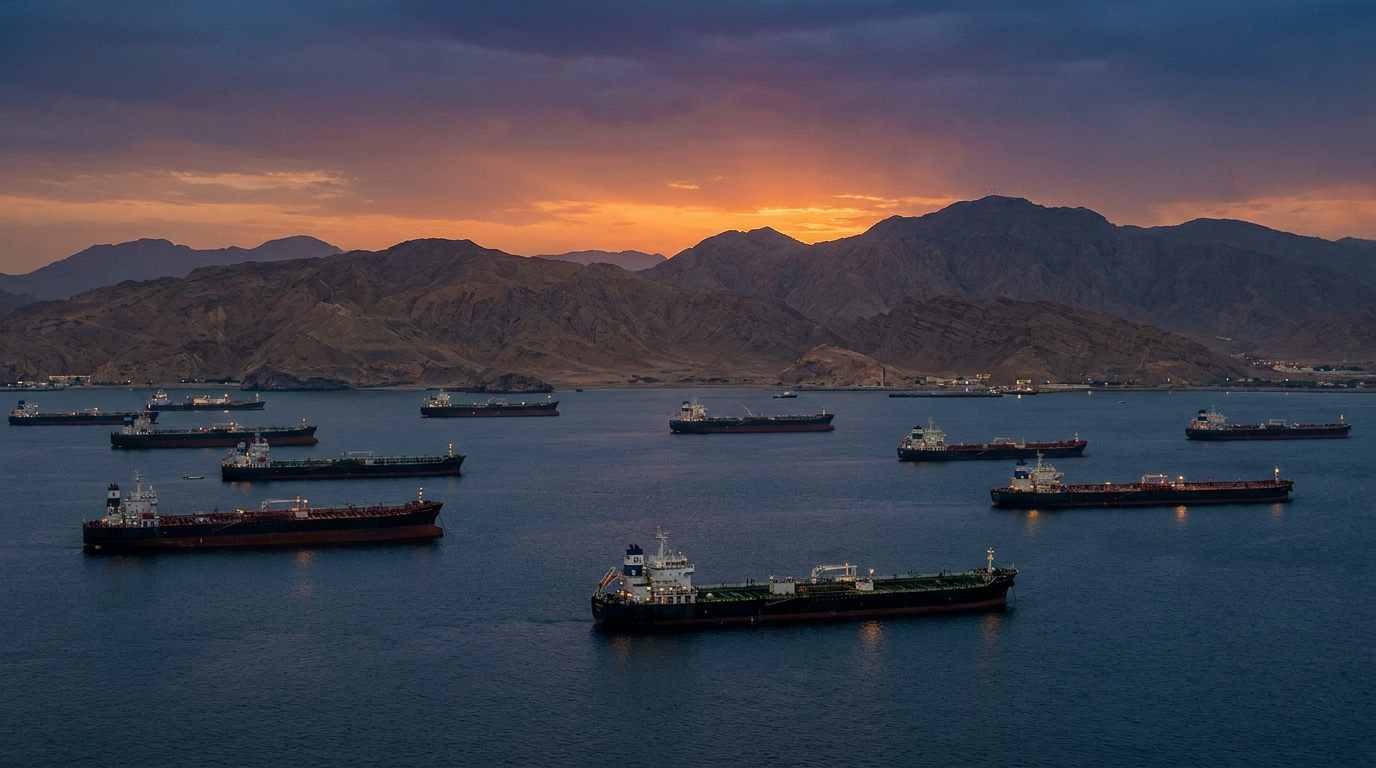
- US Administration
- Emphasizes the immediate reopening of the strait, toll-free transit, and the destruction of nuclear material before sanctions relief.
- Iranian Government & Hardliners
- Demands upfront unfreezing of assets, insists on charging maritime service fees, and ties the deal's survival to an Israeli withdrawal from Lebanon.
- Global Shipping Industry
- Welcomes the political resolution but remains highly cautious, citing the 40-50 day timeline for mine clearance and exorbitant war-risk insurance premiums.
- Israeli Leadership
- Rejects the constraints of the US-Iran bilateral deal, prioritizing the ongoing military campaign to degrade Hezbollah in southern Lebanon.
What's not represented
- · Stranded seafarers and their families
- · Lebanese civilians caught in the ongoing crossfire
- · Omani maritime authorities tasked with joint management
Why this matters
The closure of the Strait of Hormuz choked off 20% of the world's oil supply and spiked global energy prices. While this ceasefire promises to ease inflation and restore global shipping, the physical danger of naval mines and ongoing regional fighting mean the economic relief will not be immediate.
Key points
- The US and Iran have agreed to a 60-day ceasefire, scheduled to be signed in Geneva on Friday.
- The deal aims to lift the US naval blockade on Iranian ports and reopen the Strait of Hormuz to commercial shipping.
- Maritime experts warn it could take 40 to 50 days to clear the estimated 1,000 naval mines from the waterway.
- The two nations dispute key terms, including whether transit will be toll-free and if $12 billion in Iranian assets will be released upfront.
- Israel has stated it is not bound by the agreement and will continue its military operations against Hezbollah in Lebanon.
The United States and Iran have reached a preliminary agreement to halt a devastating months-long war, establishing a 60-day ceasefire designed to reopen the Strait of Hormuz and pull the global economy back from the brink. The memorandum of understanding, brokered with the help of Pakistan, Qatar, and Oman, is scheduled for a formal signing ceremony in Geneva on Friday.[1][2]
If implemented, the deal would unwind the immediate consequences of a conflict that erupted in late February following US and Israeli strikes on Iran. The war effectively choked off the Strait of Hormuz—a vital maritime chokepoint that historically handles one-fifth of the world's traded oil and natural gas.[4][7]
The core architecture of the truce relies on a mutual stand-down. The United States has agreed to lift its naval blockade on Iranian ports, while Tehran has committed to ending its blockade of the Strait. The broader, more intractable issue of Iran's nuclear program—the ostensible catalyst for the war—has been deferred to technical negotiations that will take place during the 60-day window.[1][4]

Despite the diplomatic breakthrough, the physical reality of the waterway remains treacherous. While US President Donald Trump declared that the route would be "completely open" by Friday, maritime security experts warn that restoring pre-war shipping traffic will be a slow and dangerous process.[2][10]
During the conflict, Iran laid an estimated 1,000 naval mines across the strait. Western maritime security sources estimate that a comprehensive sweeping operation utilizing conventional minesweepers and state-of-the-art underwater drones will take 40 to 50 days.[5][10]
Until those mine-free routes are definitively established, the shipping industry is exercising extreme caution. Approximately 1,000 commercial ships and 20,000 seafarers remain stranded in the Arabian Gulf. War-risk insurance premiums currently sit between 1% and 4% of a vessel's total value—adding up to $8 million per transit for a standard oil tanker—making immediate voyages financially unviable for many operators.[5][6]

Beyond the logistical hurdles, the text of the agreement is already the subject of a fierce contested narrative. The US administration insists the strait will operate on a "toll-free" basis for the long term. However, Iranian officials and Islamic Revolutionary Guard Corps media claim that Iran and Oman will jointly manage the waterway and charge maritime "service fees" for navigation and security.[8][9]
Beyond the logistical hurdles, the text of the agreement is already the subject of a fierce contested narrative.
A similar dispute surrounds the economic incentives designed to bring Tehran to the table. Iranian state media has reported that the US will unfreeze $12 billion in Iranian assets upfront. US officials, including Vice President JD Vance, have firmly denied this, stating that no economic relief will flow until Iran meets specific compliance benchmarks, including allowing International Atomic Energy Agency inspectors to dismantle highly enriched uranium stockpiles.[3][7]
The most immediate threat to the ceasefire, however, may lie outside the bilateral US-Iran relationship. Israel, which joined the US in launching the initial February offensive, is not a party to the Geneva agreement.[2][4]
Israeli officials, including Prime Minister Benjamin Netanyahu, have stated that the Trump-brokered deal does not bind their military. On Monday, the Israel Defense Forces maintained their operations in southern Lebanon, where they are engaged in heavy fighting with the Iranian-backed militant group Hezbollah.[2][3]

This ongoing theater of war severely complicates the truce. Iranian Foreign Minister Abbas Araghchi warned that Tehran considers Israel and Hezbollah to be implicit parties to the agreement, declaring that any continued Israeli occupation of Lebanese territory would be viewed as a direct violation of the memorandum.[3][9]
Hezbollah itself has signaled a willingness to adhere to the ceasefire, framing the US-Iran deal as a precursor to a full Israeli withdrawal from Lebanon. However, if Israel continues its campaign to degrade Hezbollah's infrastructure, Iran may face intense domestic pressure from hardliners to abandon the Geneva framework entirely.[8][9]
For the White House, the deal represents a critical political victory ahead of the US midterm elections, promising relief at the gas pump and an end to a war that has cost American taxpayers an estimated $30 billion. Global equity markets rallied on the news, and crude oil prices dropped nearly 5% on Monday.[1][7]
Yet in Tehran, the political calculus is fraught. Iranian moderates view the deal as essential to rescuing a domestic economy crippled by the war and the US blockade. Hardliners, remembering the US withdrawal from the 2015 nuclear accord, remain deeply skeptical, demanding verifiable, upfront sanctions relief before making any irreversible concessions.[4][9]
As diplomatic teams converge on Geneva to finalize the technical annexes, the world watches to see if the political framework can survive the realities on the ground. With mines still floating in the Gulf and artillery still firing in Lebanon, the path from a signed memorandum to a lasting peace remains perilously narrow.[4][10]
How we got here
Late Feb 2026
US and Israeli strikes on Iran trigger a broader regional war, leading Iran to blockade the Strait of Hormuz.
March–May 2026
Global energy prices soar as 20% of the world's oil supply is choked off and 1,000 commercial ships are stranded in the Gulf.
June 14, 2026
The US and Iran announce a preliminary framework for a 60-day ceasefire and the reopening of the strait.
June 19, 2026
Scheduled formal signing of the memorandum of understanding in Geneva, initiating technical nuclear talks.
July–August 2026
Estimated 40-to-50-day window required for underwater drones and minesweepers to clear the Strait of Hormuz of naval mines.
Viewpoints in depth
US Administration's view
The White House frames the deal as a decisive victory that reopens global trade without conceding leverage.
US officials, including President Trump and Vice President JD Vance, emphasize that the agreement achieves the primary goal of reopening the Strait of Hormuz on a "toll-free" basis. They maintain a hard line on economic relief, insisting that no frozen assets will be released until Iran demonstrably complies with nuclear inspections and begins destroying its highly enriched uranium stockpiles. For the administration, the deal is a geopolitical win that eases domestic gas prices ahead of the midterm elections while keeping maximum pressure on Tehran's nuclear ambitions.
Iranian Hardliners' view
Iranian factions demand immediate economic relief and view any compromise on maritime sovereignty as unacceptable.
Remembering the US withdrawal from the 2015 nuclear accord, Iranian hardliners are deeply skeptical of Washington's promises. They insist that $12 billion in frozen assets must be released upfront and maintain that Iran, alongside Oman, retains the sovereign right to charge "service fees" for ships transiting the Strait of Hormuz. Furthermore, they view the regional proxy network as non-negotiable, warning that if Israel continues its military operations against Hezbollah in Lebanon, Iran should abandon the ceasefire entirely.
Global Shipping Industry's view
Maritime operators welcome the political truce but refuse to risk vessels until the physical waterway is proven safe.
While politicians celebrate the reopening of the strait, shipping associations like BIMCO and maritime security firms warn that the physical reality is far more dangerous. With an estimated 1,000 naval mines deployed by Iran, experts project a 40-to-50-day clearance operation using advanced underwater drones. Until independent observers verify the routes are mine-free and war-risk insurance premiums—currently costing up to $8 million per transit—drop significantly, major commercial carriers will remain anchored, leaving global supply chains constrained.
What we don't know
- Whether Iran will actually permit International Atomic Energy Agency inspectors to dismantle its highly enriched uranium stockpiles.
- How shipping companies will navigate the exorbitant war-risk insurance premiums during the 40-to-50-day mine clearance period.
- Whether ongoing Israeli military operations in southern Lebanon will cause Iranian hardliners to abandon the ceasefire framework.
Key terms
- Strait of Hormuz
- A narrow, strategically vital waterway between the Persian Gulf and the Gulf of Oman, through which approximately 20% of the world's traded oil passes.
- Naval Blockade
- A military operation in which forces prevent ships from entering or leaving a specific port or region, used by both the US and Iran during the conflict.
- War-Risk Insurance
- Specialized maritime insurance that covers damage or loss of a vessel due to acts of war, terrorism, or confiscation; premiums spike during active conflicts.
- Highly Enriched Uranium
- Uranium that has been processed to contain a high concentration of the U-235 isotope, making it capable of being used in nuclear weapons.
Frequently asked
When does the ceasefire officially begin?
The memorandum of understanding is scheduled to be formally signed on Friday, June 19, in Geneva, which will initiate a 60-day ceasefire period.
Will gas and oil prices drop immediately?
While global crude prices dropped nearly 5% on the news of the deal, experts warn it will take weeks or months for shipping traffic to normalize due to the presence of naval mines.
Is the war completely over?
The agreement is a 60-day framework to halt hostilities and negotiate a broader peace, but ongoing fighting between Israel and Hezbollah in Lebanon threatens to derail the truce.
What happens to Iran's nuclear program?
The immediate agreement defers the nuclear issue. Technical negotiations regarding the dismantling of highly enriched uranium will take place during the 60-day ceasefire window.
Sources
Source coverage
10 outlets
4 viewpoints surfaced










[1]AxiosUS Administration
US, Iran reach deal to extend ceasefire, open strait
Read on Axios →[2]Associated PressIsraeli Leadership
Iran and U.S. reach an initial deal to extend the ceasefire and open the Strait of Hormuz but challenges remain
Read on Associated Press →[3]CBS NewsIsraeli Leadership
Live Updates: Iran says deal with U.S. requires Israeli forces to leave Lebanon
Read on CBS News →[4]The GuardianIsraeli Leadership
US-Iran peace deal hinges on shipping, sanctions relief and deferred nuclear talks
Read on The Guardian →[5]ReutersGlobal Shipping Industry
Operation to remove Iranian mines from Strait of Hormuz could take weeks, experts say
Read on Reuters →[6]Seatrade Maritime NewsGlobal Shipping Industry
Strait of Hormuz set to reopen under US – Iran peace deal
Read on Seatrade Maritime News →[7]Center for Strategic and International StudiesUS Administration
The United States and Iran Announce a Deal to End the War | State of Play
Read on Center for Strategic and International Studies →[8]Institute for the Study of WarIranian Government & Hardliners
Iran Update Special Report, June 15, 2026
Read on Institute for the Study of War →[9]Al JazeeraIranian Government & Hardliners
Hardliners and moderates: What do Iran’s factions think of deal with US?
Read on Al Jazeera →[10]BBCGlobal Shipping Industry
Three reasons ships are not going through the Strait of Hormuz yet
Read on BBC →
More in news politics
See all 5 stories →Domestic Terrorism
FBI Thwarts Multi-Phase Terror Plot Targeting White House UFC Event
0 sources
Information Quality
The Evidence for 'Prebunking': How Psychological Inoculation is Defeating Misinformation
0 sources

White House Plot
FBI Thwarts Drone and Sniper Terror Plot Targeting White House UFC Event
0 sources

Every angle. Every day.
Get news politics stories with full source coverage and perspective breakdowns delivered to your inbox.